Solar-Powered Telecom Towers: Off-Grid Clean Energy
Discover how off-grid solar cell tower systems with LiFePO4 batteries replace diesel generators on remote telecom sites, cutting fuel costs by up to 90%.
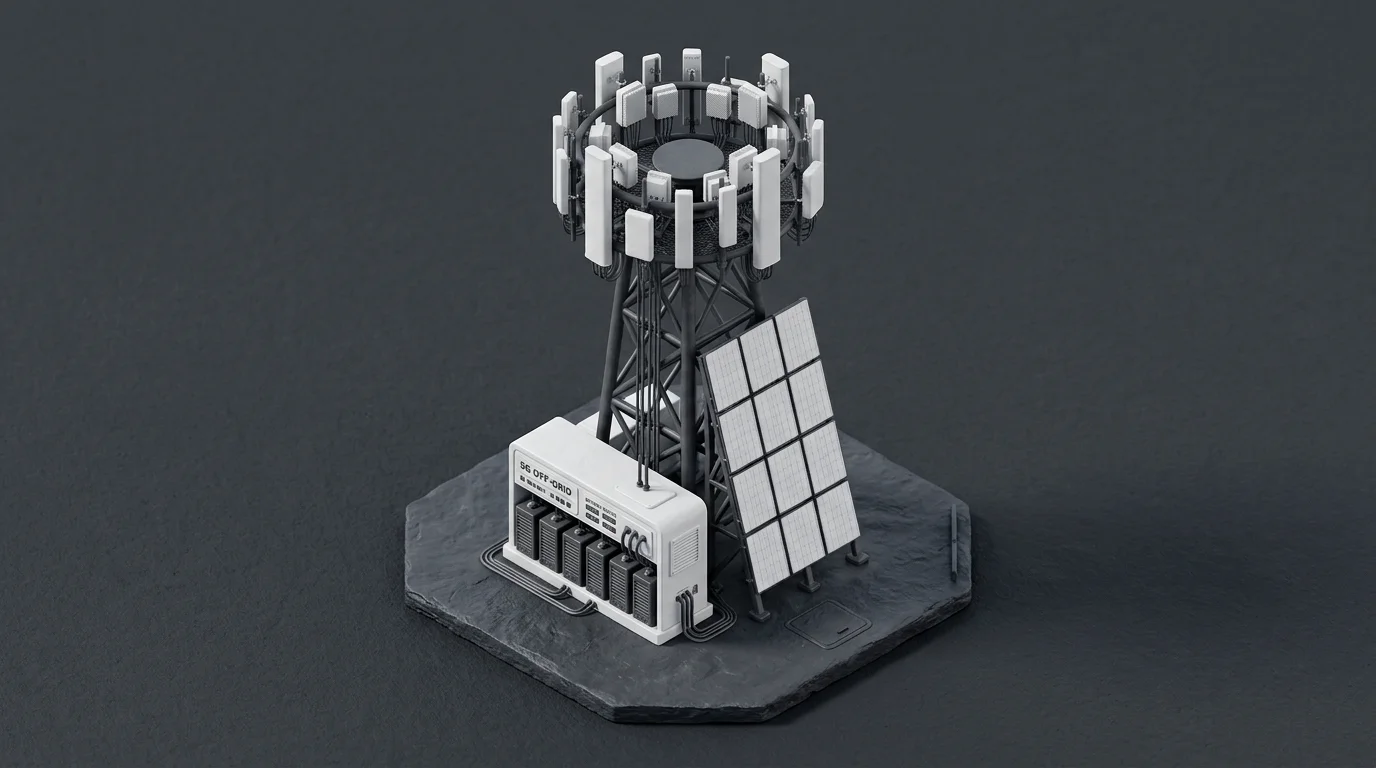
An off-grid solar cell tower is a self-contained wireless base station powered by an on-site solar panel array and industrial lithium battery storage. Instead of running noisy diesel generators around the clock, these clean hybrid systems generate reliable direct current electricity to power 4G and 5G radios in remote areas without any utility grid connection.
Telecommunications networks rely on thousands of remote mobile phone towers to deliver wireless service. Many of these cell towers sit in rural regions far away from the electrical grid. For decades, tower companies ran heavy diesel generators day and night to keep these base stations powered.
Today, high fuel costs and environmental goals are speeding up a major change. Solar photovoltaic (PV) systems paired with modern lithium batteries are replacing continuous diesel generation. These off-grid hybrid power systems keep cell towers running without interruption while slashing operating costs.
Why Remote Cell Towers Are Transitioning to Solar
A standard remote cell tower consumes between 1.5 kW and 8 kW of continuous power. When powered only by diesel generators, a single site consumes 8,000 to 12,000 liters of fuel each year. Delivering diesel to mountaintops and distant rural locations adds massive shipping expenses and maintenance overhead.
Solar hybrid power systems reduce diesel engine runtime from 24 hours per day to less than 3 hours, saving telecom operators up to 90 percent on fuel costs.
By adding solar panels and battery storage, tower operators transform their energy footprint. Solar energy powers the telecommunications equipment during daylight hours while simultaneously charging storage batteries.
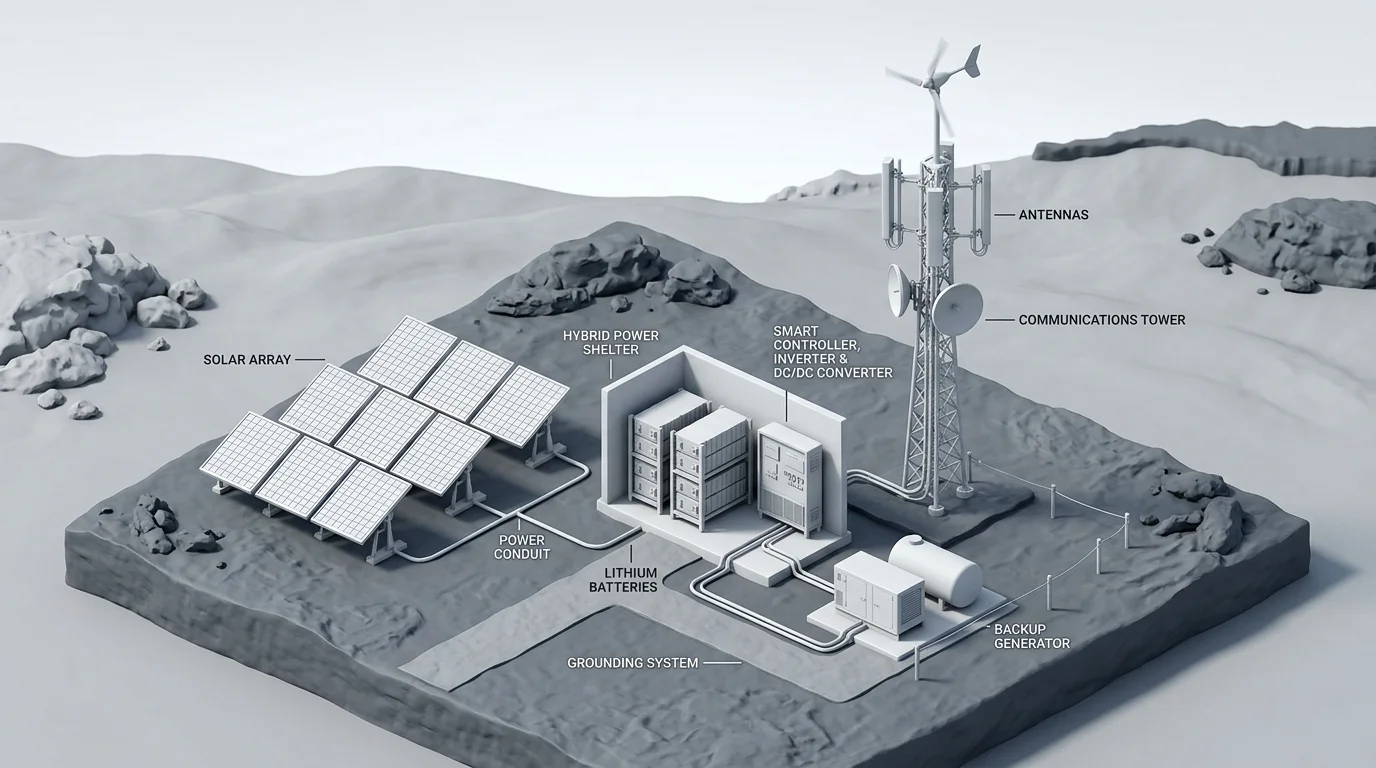
How Solar Telecom Hybrid Power Systems Work
Modern off-grid telecom installations operate as self-contained microgrids. They combine multiple energy sources and smart controls to guarantee 99.999 percent uptime.
Solar PV Energy Generation
Solar arrays mounted near the tower capture sunlight and convert it into DC electricity. Typical systems range from 5 kWp to 20 kWp depending on local weather and signal equipment demand.
Battery Storage Charging
Excess solar power charges rack-mounted Lithium Iron Phosphate (LiFePO4) or Sodium-ion batteries. These energy storage racks supply constant -48V DC power to the base station.
Smart Hybrid Power Management
An intelligent controller monitors battery charge levels and power load. It switches between solar power, battery storage, and an emergency generator automatically.
Automated Generator Cycling
If storm clouds linger for days, the smart controller runs the backup diesel generator for short periods to recharge batteries quickly at maximum efficiency.
Off-Grid Solar Cell Tower Sizing Benchmarks
Sizing an off-grid solar power system for a remote cell tower depends on continuous electrical load and the required days of autonomous battery backup.
| Tower Site Type | Continuous Power Load | Daily Energy Usage | Recommended Solar Array | LiFePO4 Battery Storage (-48V DC) | Generator Runtime Reduction |
|---|---|---|---|---|---|
| Rural Repeater / Small Cell | 500 Watts | 12 kWh / day | 2.5 kWp to 3.5 kWp | 15 kWh (300 Ah) | 95 percent |
| Standard 4G/5G Macro Tower | 2,000 Watts (2 kW) | 48 kWh / day | 8 kWp to 12 kWp | 50 kWh (1,000 Ah) | 88 percent |
| High-Capacity Multi-Tenant Hub | 5,000 Watts (5 kW) | 120 kWh / day | 20 kWp to 28 kWp | 120 kWh (2,500 Ah) | 82 percent |
Because telecom transmission radios run natively on -48V direct current, connecting solar charge controllers directly to a DC battery bus eliminates DC-to-AC-to-DC conversion losses, boosting system efficiency by twelve to fifteen percent over traditional AC setups. Learn more about AC vs. DC coupled battery configurations for commercial energy storage.
Diesel Power vs. Solar Hybrid Telecom Systems
Comparing traditional diesel generator operations with solar hybrid systems shows dramatic financial and environmental benefits for tower companies.
Legacy Diesel Generators
Requires frequent refueling trips, engine oil changes every 250 hours, and creates continuous noise and carbon emissions.
Solar + Battery Hybrid
Cuts fuel consumption by up to 90 percent, extends generator lifespans by 5 times, and enables remote cloud monitoring.
Key Components of a Telecom Solar Installation
Building a durable off-grid telecom power system requires specialized hardware rated for extreme weather:
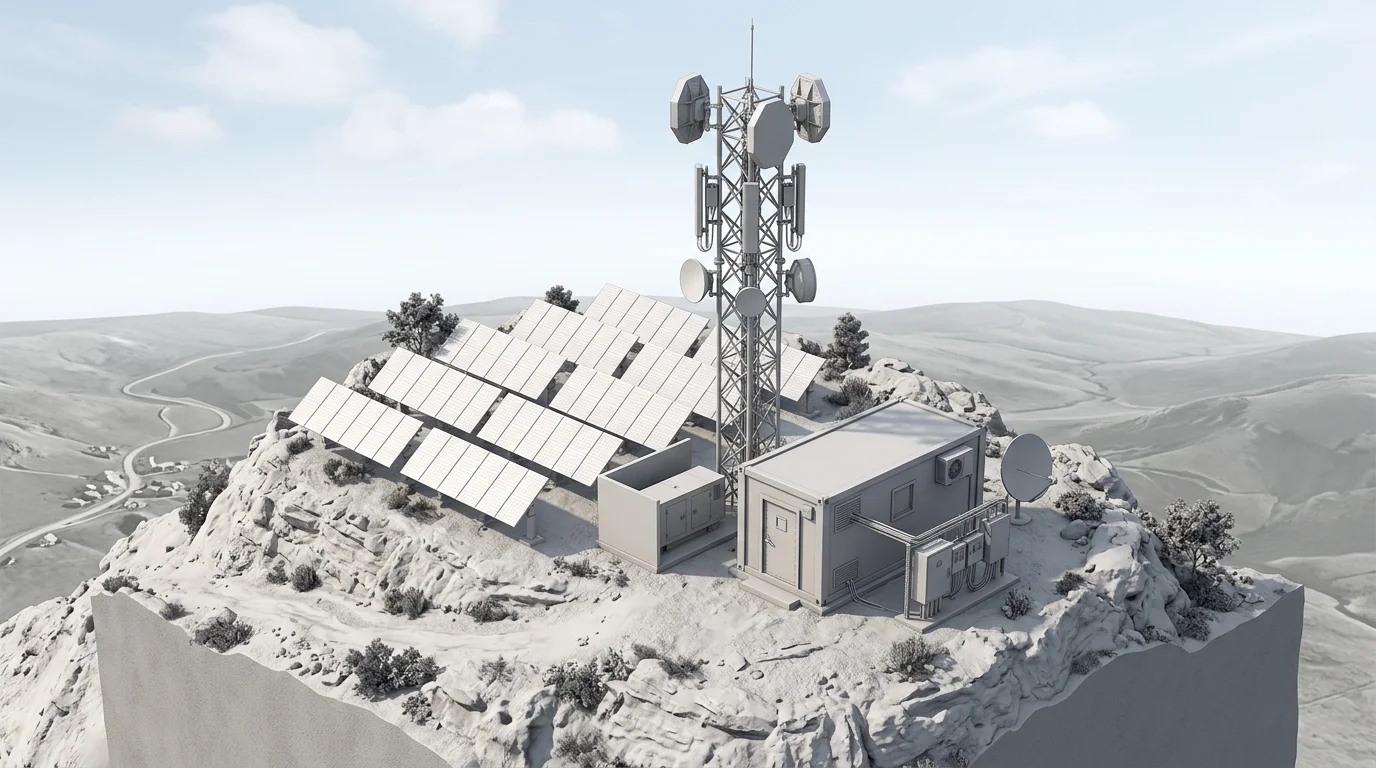
- High-Efficiency Solar Modules: Bifacial N-type TOPCon panels gather light from both sides, maximizing output on small tower compound footprints.
- Telecom Lithium Battery Racks: Standardized -48V DC LiFePO4 battery modules offer over 6,000 charge cycles and operate reliably in high heat.
- Hybrid Rectifiers & Controllers: Solar charge controllers regulate voltage and report system health back to network operations centers via satellite or cellular telemetry.
- Enclosed Climate-Controlled Shelters: Weatherproof equipment cabinets protect batteries and power electronics from dust, moisture, and extreme temperature changes.
Environmental and Economic ROI
Replacing continuous diesel generation with solar energy provides immediate return on investment for network operators:
- Lower Fuel Costs: Savings on diesel fuel and transport logistics cover initial hardware costs within 2 to 4 years.
- Reduced Maintenance Expenses: Running generators fewer hours dramatically reduces mechanical wear and service call costs.
- Lower Carbon Footprint: Each solar hybrid cell tower reduces carbon emissions by 25 to 30 metric tons per year.
- Improved Network Resilience: Dual energy sources ensure mobile signals remain online during fuel shortages or natural disasters.
Frequently Asked Questions
Most remote cellular towers need between 5 kWp and 20 kWp of solar capacity paired with 15 kWh to 60 kWh of lithium battery storage, depending on site equipment load and regional sun hours.
The smart controller automatically switches to the backup diesel generator when battery levels drop below a set threshold. The generator runs at optimal efficiency to top off the batteries, then shuts down.
Lithium Iron Phosphate (LiFePO4) batteries last up to 4 times longer, handle heat better, charge faster, and take up far less space than legacy lead-acid batteries.
Yes. Urban cell towers use rooftop solar arrays to cut grid power costs during peak electricity pricing hours and provide seamless battery backup during grid outages.
Telecommunications transmission equipment and baseband units run natively on -48V direct current. Running on native DC avoids double-inversion energy losses from changing DC solar power into AC and back again. A pure -48V DC bus is simpler, safer, and far more reliable in remote weather extremes.