Virtual Power Plants: How Solar and Battery Networks Support the Grid
Learn how Virtual Power Plants aggregate residential solar panels and battery storage to stabilize the grid, prevent blackouts, and earn money for homeowners.
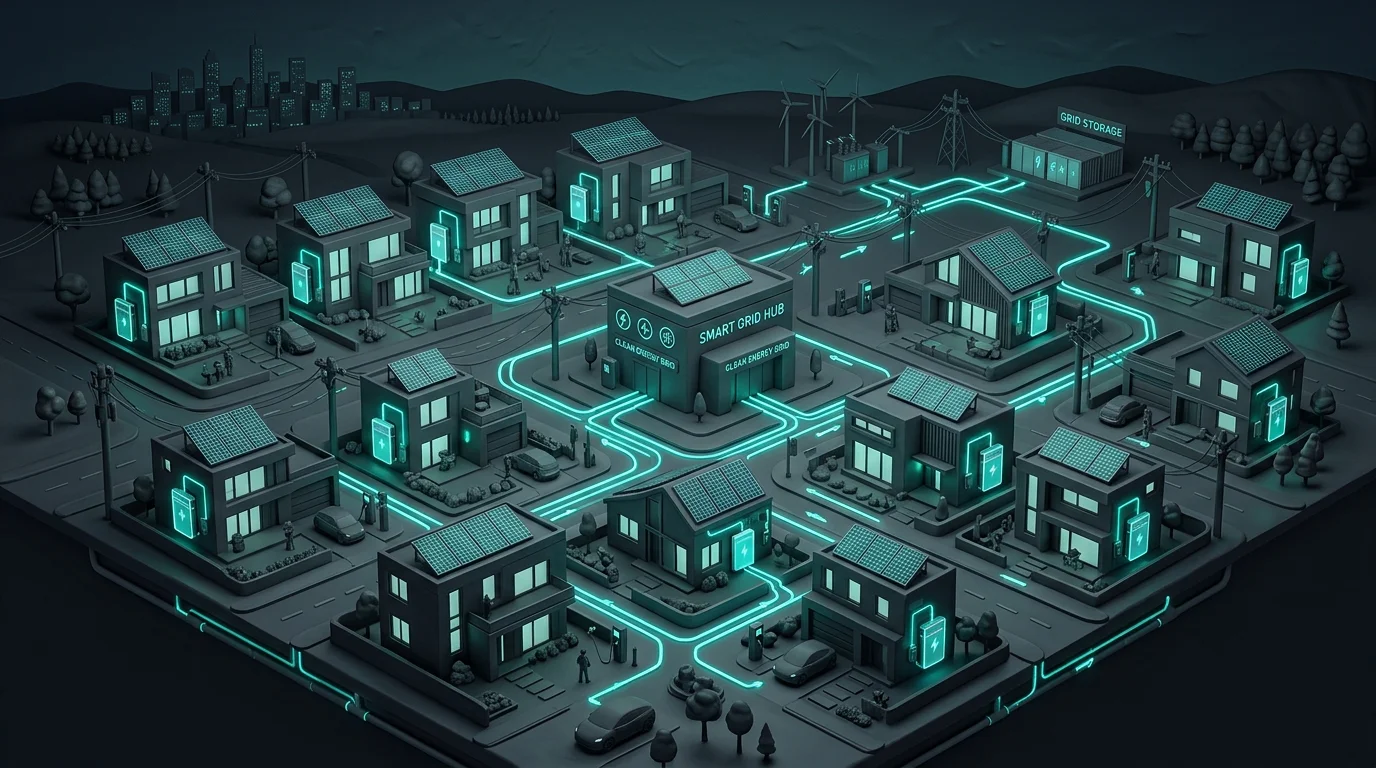
Traditional power plants rely on large central stations that burn fossil fuels or harness massive turbines to produce electricity. When energy demand spikes during hot summer afternoons, utility companies turn on expensive peaker plants to keep up with power consumption.
A Virtual Power Plant (VPP) transforms this centralized system into a smart distributed network. Instead of building one massive power plant, a VPP links together thousands of rooftop solar arrays, residential batteries, electric vehicles, and smart thermostats. Guided by cloud software, these distributed energy resources work together to supply clean power directly when and where the local grid needs it most.
How Virtual Power Plant Technology Works
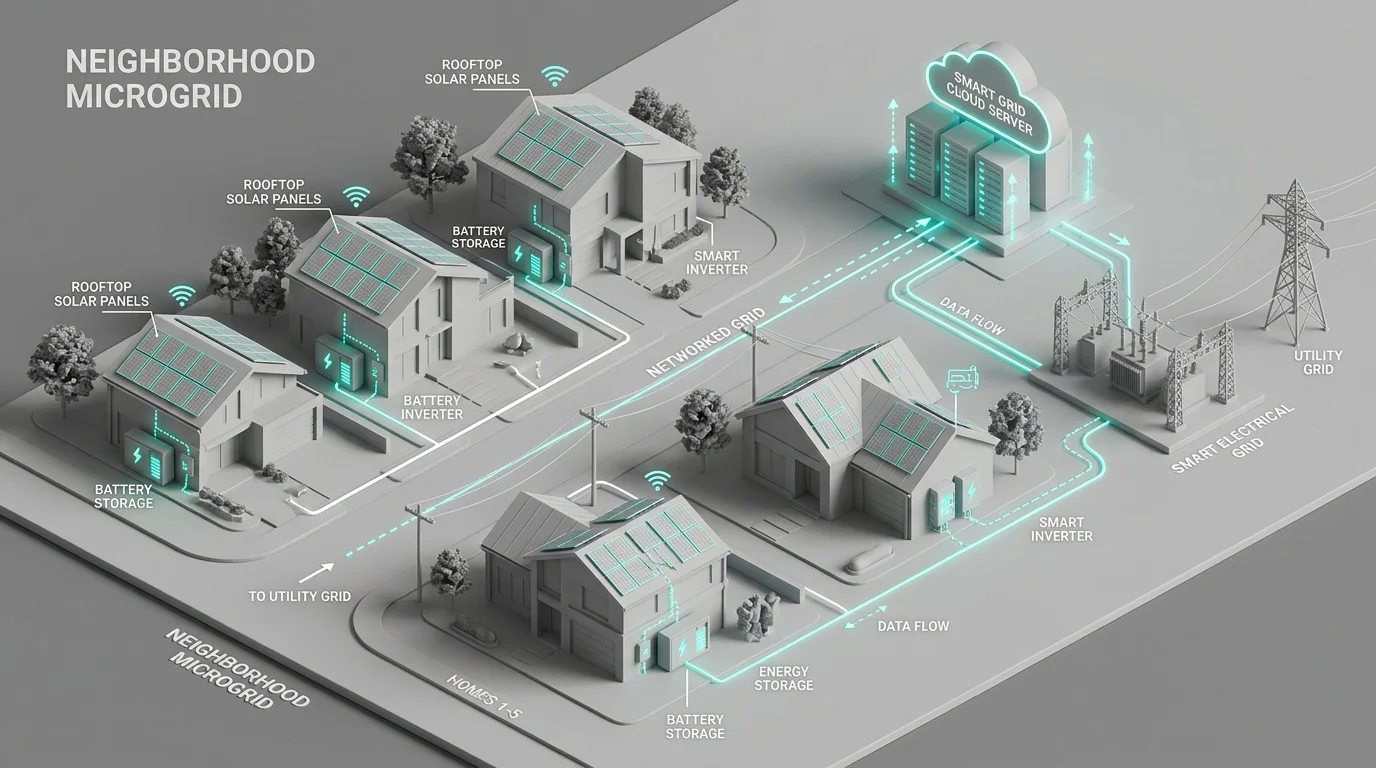
A Virtual Power Plant connects individual home clean energy systems into a single managed network. Advanced software monitors local power demand and coordinates battery dispatches automatically.
Distributed Energy Generation
Rooftop solar panels convert sunlight into direct current electricity during peak sunny hours. Smart hybrid inverters store this excess energy into home battery systems instead of exporting it back to the grid immediately.
Cloud Platform Aggregation
Specialized management software tracks thousands of connected batteries across neighborhoods in real time. The software calculates available stored energy, battery state of charge, and expected weather conditions without disturbing home backup reserves.
Instant Grid Power Dispatch
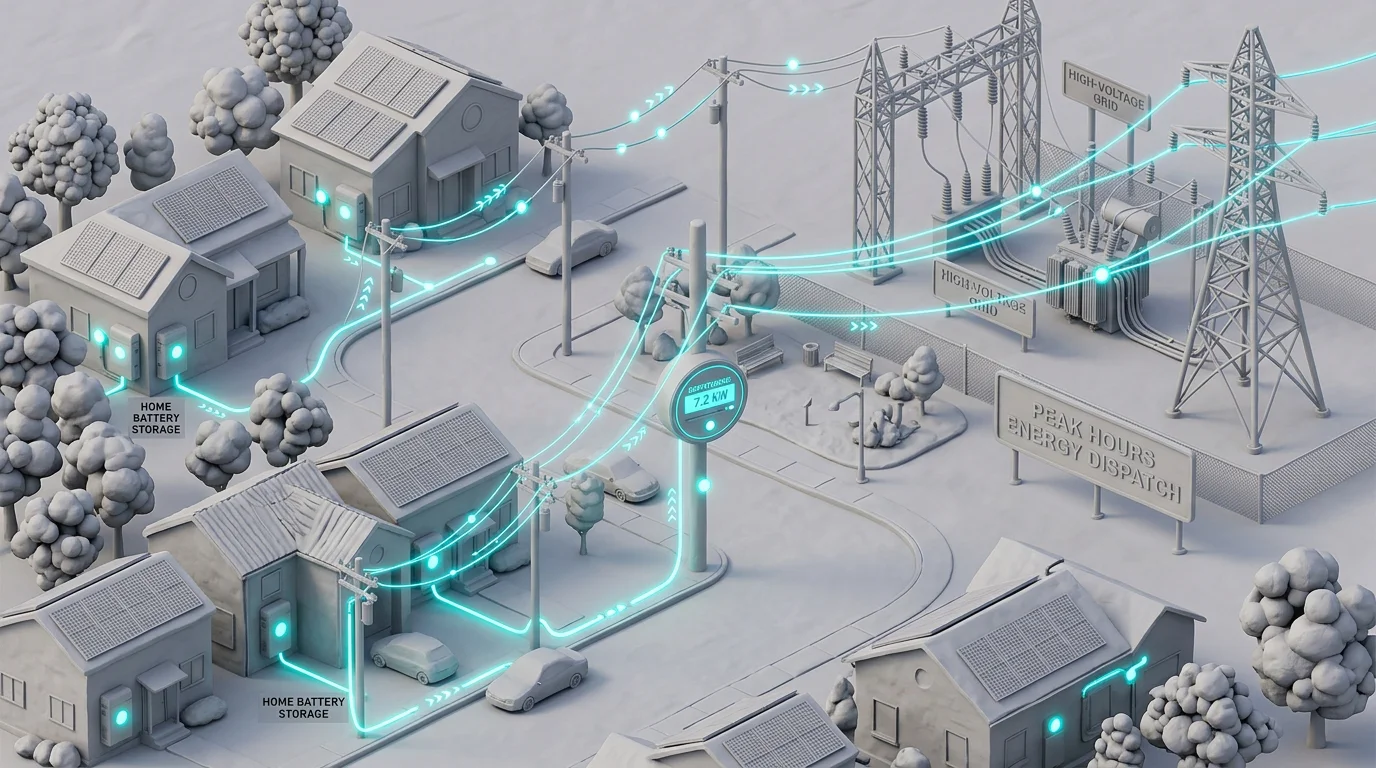
When electricity demand spikes on the utility grid, the VPP platform signals participating batteries to discharge a small portion of stored energy simultaneously. This instant power supply balances local voltage and reduces heavy load stress on utility substations.
Comparing Grid Backup Architectures
Choosing between traditional fossil fuel peaker plants and modern Virtual Power Plants highlights major differences in speed, environmental impact, and consumer cost savings.
Fossil Fuel Peaker Plant
- Requires burning natural gas or oil during peak demand hours
- High operational expenses and costly carbon emissions
- Takes minutes to start generators and ramp up power output
- Centralized points of failure during extreme weather events
- Increases utility rates to maintain standby capacity
Virtual Power Plant Network
- Uses clean solar energy stored in neighborhood home batteries
- Zero localized carbon emissions during power dispatches
- Sub-second automatic response to grid frequency fluctuations
- Decentralized design improves overall community grid resilience
- Pays cash incentives and energy credits directly to homeowners
Key Benefits of Joining a Virtual Power Plant
Participating in a VPP program delivers financial and operational rewards for homeowners and utility providers alike.
Cash Payouts and Utility Bill Savings
Homeowners enrolled in VPP programs receive direct financial compensation from utility companies or battery aggregators. When the grid requests battery support during emergency peak events, participants earn performance credits or cash payments ranging from $500 to $2,500 annually. These payouts significantly shorten the payback period of home solar battery installations.
Enhanced Grid Stability and Blackout Prevention
Heatwaves and extreme weather events put tremendous strain on aging power lines. By supplying extra power locally, VPP networks prevent transformer overloads and reduce rolling blackouts. Because electricity is generated and consumed within the same neighborhood, power losses across long transmission lines drop dramatically.
Cleaner Neighborhood Air and Lower Carbon Emissions
Replacing fossil fuel peaker plants with aggregated battery reserves prevents tons of carbon dioxide and particulate pollution from entering local air. VPPs maximize the utilization of clean solar energy generated during the day, storing clean power for evening use when demand is highest.
Homeowner Requirements for Participation
Enrolling your home in a Virtual Power Plant program requires a few standard components:
- Rooftop Solar Array: A solar energy system sized to handle your daily household power needs and generate excess battery charging energy.
- Compatible Home Battery Storage: A lithium battery system (such as Tesla Powerwall, Enphase IQ, or Sol-Ark storage) with connected capacity of at least 10 kWh.
- Smart Hybrid Inverter: An inverter capable of bidirectional communication with utility software for controlled power dispatch.
- Utility VPP Program Enrollment: Agreement to allow automated battery dispatches during peak grid emergency events, while maintaining a guaranteed minimum energy reserve for emergency home backup.
Frequently Asked Questions
No. Virtual Power Plant software maintains a strict backup reserve level, typically keeping 20% to 30% of your battery capacity set aside strictly for home emergency backup. If grid power drops completely, the VPP automatically detaches and preserves remaining battery power for your household appliances.
Earnings depend on your battery size and local utility dispatch rates. Most participating homeowners earn between $500 and $2,500 per year through direct cash payouts, bill credits, or upfront battery purchase rebates provided by utility incentive programs.
Yes. Modern battery control apps allow homeowners to adjust event preferences or opt out of specific grid dispatches if they expect severe local weather or need full battery capacity at home.
Yes. Bi-directional electric vehicle chargers (Vehicle-to-Grid or V2G technology) enable EV batteries to act as mobile storage units for VPP networks, allowing parked electric cars to supply power to the grid during peak hours.