Vertical Bifacial Solar Fences: Engineering, Costs, and Energy Yield
Learn how vertical bifacial solar fences produce clean power with dual daily peaks, resist snow and dirt, and turn boundary fences into power generators.
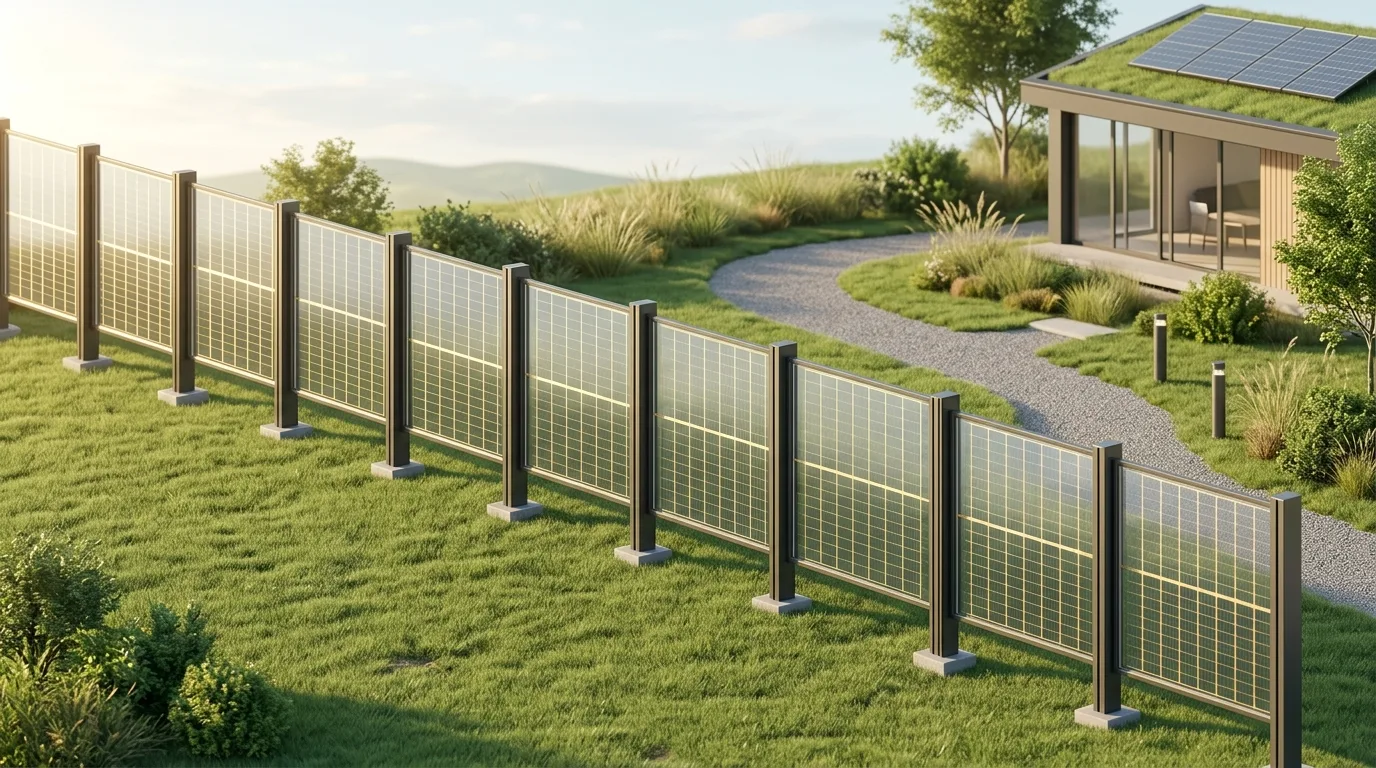
Property owners often spend thousands of dollars building traditional wooden or chain-link fences that sit idle and generate zero income. At the same time, homeowners and rural facilities frequently lack adequate unshaded roof space or open field acreage to install traditional ground-mounted solar panels.
A vertical solar fence solves both problems at once. By mounting double-sided vertical bifacial solar panels directly upright into perimeter posts, property boundaries transform into productive clean power stations.
Unlike rooftop systems that face south and peak only at solar noon, a bifacial solar fence faces east and west. This unique upright orientation captures bright morning sunlight on one side and golden afternoon light on the other, delivering power right when homes and the electrical grid need it most.
How Vertical Bifacial Solar Fences Generate Power
Standard solar panels are monofacial, meaning they only absorb light from the front surface. In contrast, vertical bifacial solar panels feature dual layers of tempered glass that allow photovoltaic cells to absorb sunlight from both the front and back faces simultaneously.
When installed upright in a north-to-south running fence line, the panel faces point east and west. This orientation unlocks three distinct performance advantages:
- Dual-Peak Energy Generation: The east face captures early morning sunlight as families wake up and start their day. The west face catches late afternoon light when air conditioning and household appliances peak. This dual-curve pattern matches real-world energy consumption far better than traditional noon-peaking systems.
- The Ground Albedo Boost: Vertical panels collect light reflecting off surrounding terrain, including light-colored gravel, green grass, white concrete walkways, and winter snow. This ground reflection can boost total system energy output by 10% to 25%.
- Natural Cooler Operating Temperatures: Traditional rooftop solar panels absorb massive heat from dark asphalt shingles, which reduces cell efficiency. Vertical panels enjoy constant open airflow on both sides, allowing them to run cooler and maintain higher electrical conversion rates.
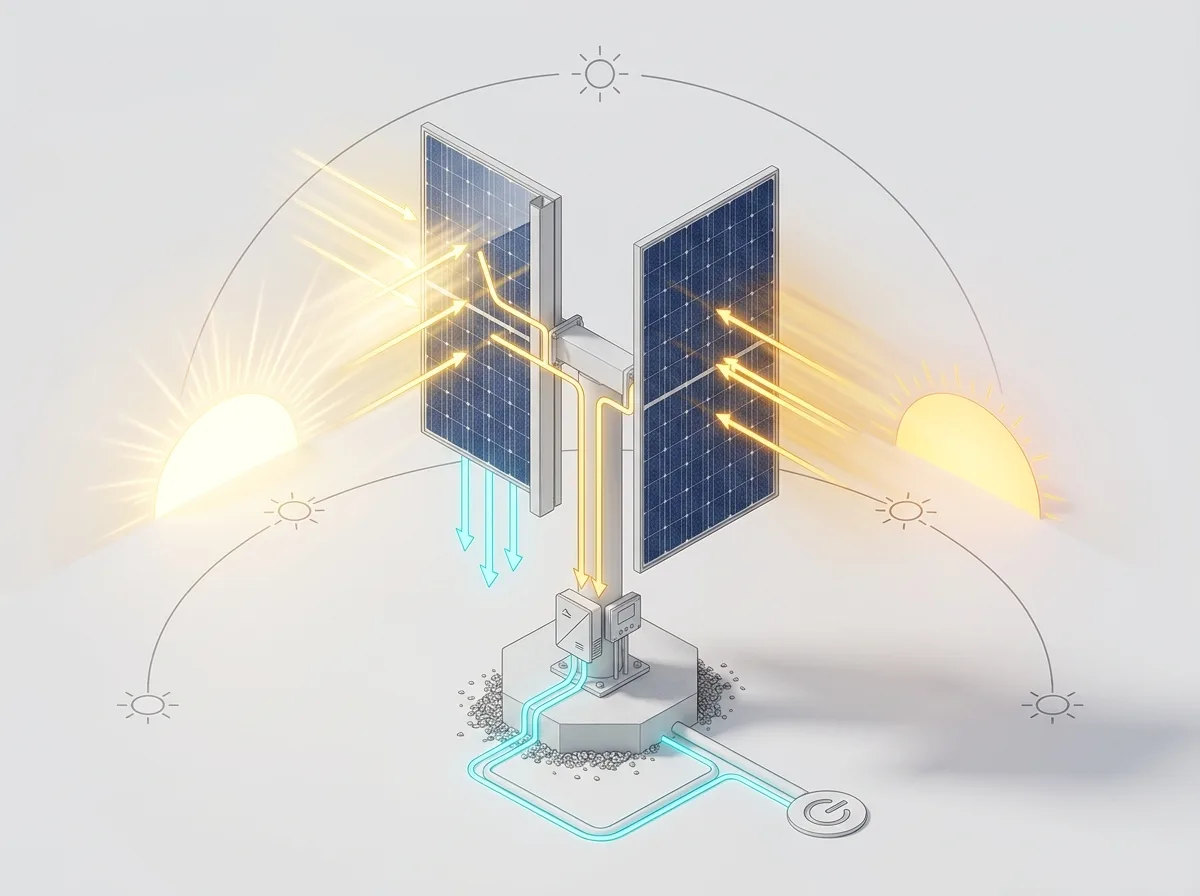
Because the panels stand completely upright at a 90-degree angle, they also avoid dust buildup. Wind and rain create a natural self-cleaning effect, so dirt washes away without manual scrubbing.
Step-by-Step Installation and Structural Engineering
Building a vertical solar fence requires sturdy ground foundations that can resist wind pressure while protecting internal electrical wiring from moisture and impacts.
1. Deep Anchor Foundation
Steel I-beams or heavy helical ground screws are driven deep into stable soil. These foundations resist high lateral wind loads without requiring wide concrete footings.
2. Structural Framing & Conduits
Heavy-duty aluminum posts and horizontal rails are assembled along the property line. Internal raceways hide all high-voltage DC cabling safely inside the metallic posts.
3. Bifacial Module Mounting
Double-glass bifacial panels with anti-glare coatings are secured between posts using rubber-damped compression clamps to isolate vibrations from passing traffic or wind.
4. Inverter Connection
The system connects to rapid-shutdown microinverters or a centralized hybrid inverter, routing clean alternating current power straight to the main circuit breaker.
Understanding Solar Fence Cost and Financial Returns
When evaluating total solar fence cost, it is helpful to look at the combined savings. If a property owner already plans to install boundary fencing, the net cost of the solar upgrade is much lower because the structural posts serve a double purpose.
Installed costs for vertical bifacial fencing generally range between $2.40 and $3.50 per watt. In addition, vertical fences qualify for federal and local clean energy investment tax credits, lowering the real out-of-pocket investment significantly.
Traditional Privacy Fence
Requires regular painting, staining, or replacement every 10 to 15 years with zero financial payback or utility bill savings.
Vertical Bifacial Solar Fence
Provides privacy, perimeter security, and decades of free electricity with morning and evening peak power production.
Standard Ground-Mount Array
Low installation cost, but consumes valuable open yard or farm acreage that cannot be used for gardens, recreation, or farming.
Agrivoltaics Solar Fencing and Agricultural Integration
One of the largest growth areas for vertical solar technology is in agriculture. Farmers and commercial growers often hesitate to install large solar arrays because every acre dedicated to solar racking is an acre lost for crop cultivation.
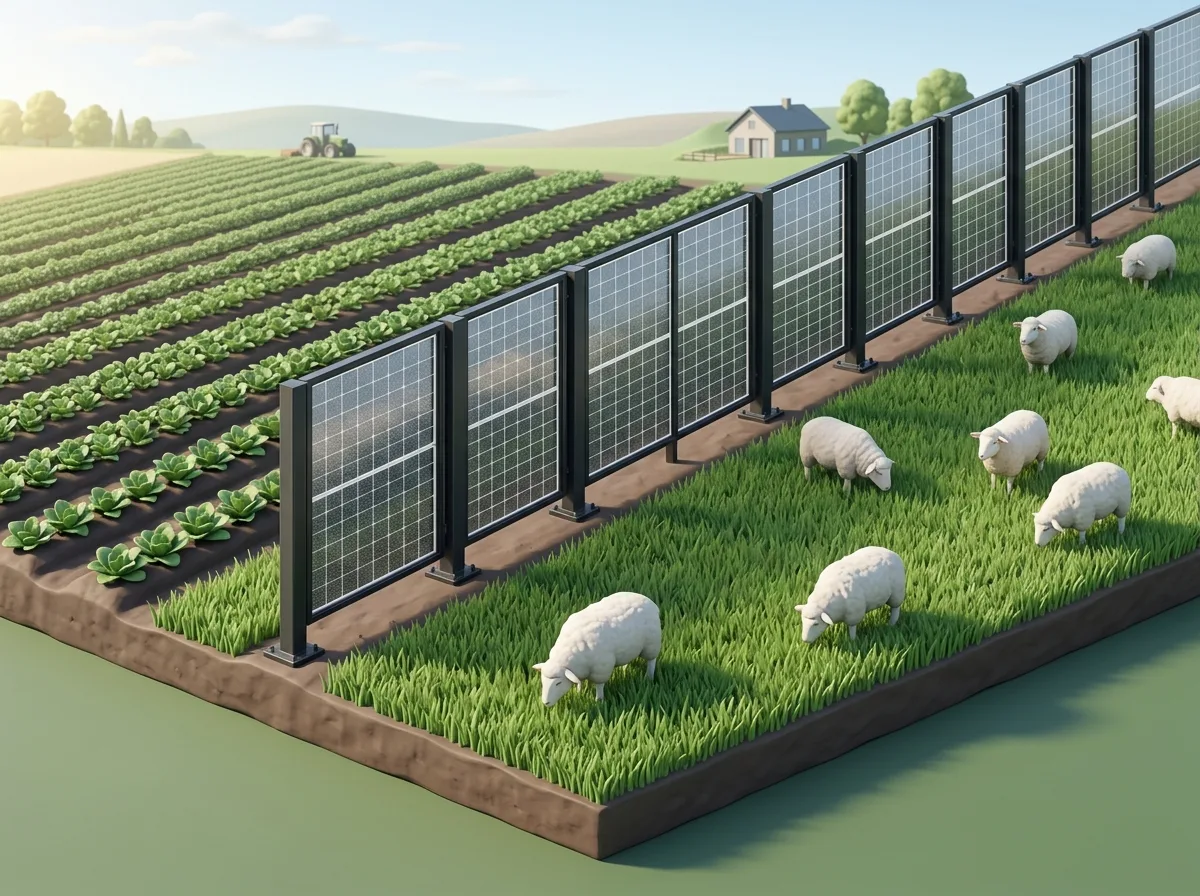
Agrivoltaics solar fencing solves this challenge completely. Because the panels stand straight up, farming equipment can drive directly alongside the fence line. Crops grow right up to the boundary, and cattle or sheep can graze safely in adjacent pastures.
Key agricultural and cold-climate benefits include:
- Zero Lost Cultivation Acreage: The fence occupies the existing boundary perimeter, keeping 99% of field acreage open for tractors and seeding.
- Superior Winter Snow Performance: Heavy snow easily covers angled rooftop panels, shutting down electricity output for days or weeks. Vertical panels cannot collect snow. Better yet, the white snow on the ground reflects up to 80% of ambient light straight into the vertical panels.
- Windbreak Protection for Crops: Vertical arrays act as micro-windbreaks, reducing soil erosion and shielding fragile vegetables or young saplings from harsh gusts.
Frequently Asked Questions About Solar Fences
Yes. Commercial vertical solar fences are engineered with deep helical ground anchors or concrete footings rated for winds up to 130 miles per hour. The double-tempered architectural glass resists hail impacts and severe weather far better than standard wooden fence pickets.
A standard vertical bifacial fence produces roughly 150 to 220 watts of peak power per linear meter, depending on the panel height and cell efficiency. A 30-meter property fence line can easily house a 5 to 6 kilowatt solar power system.
Yes. Because bifacial modules capture diffuse daylight from both sides and reflect ambient light from surrounding grass and terrain, they continue producing reliable electricity even in cloudy conditions.
Yes. The photovoltaic panels, inverters, wiring, and associated mounting hardware qualify under the federal clean energy investment tax credit, allowing owners to deduct 30% of eligible equipment and installation costs.