Solar Powered Heat Pumps: The Ultimate Home Electrification Guide
Learn how solar panels and heat pumps work together to create a 300% to 400% efficient home heating and cooling system with zero utility power.
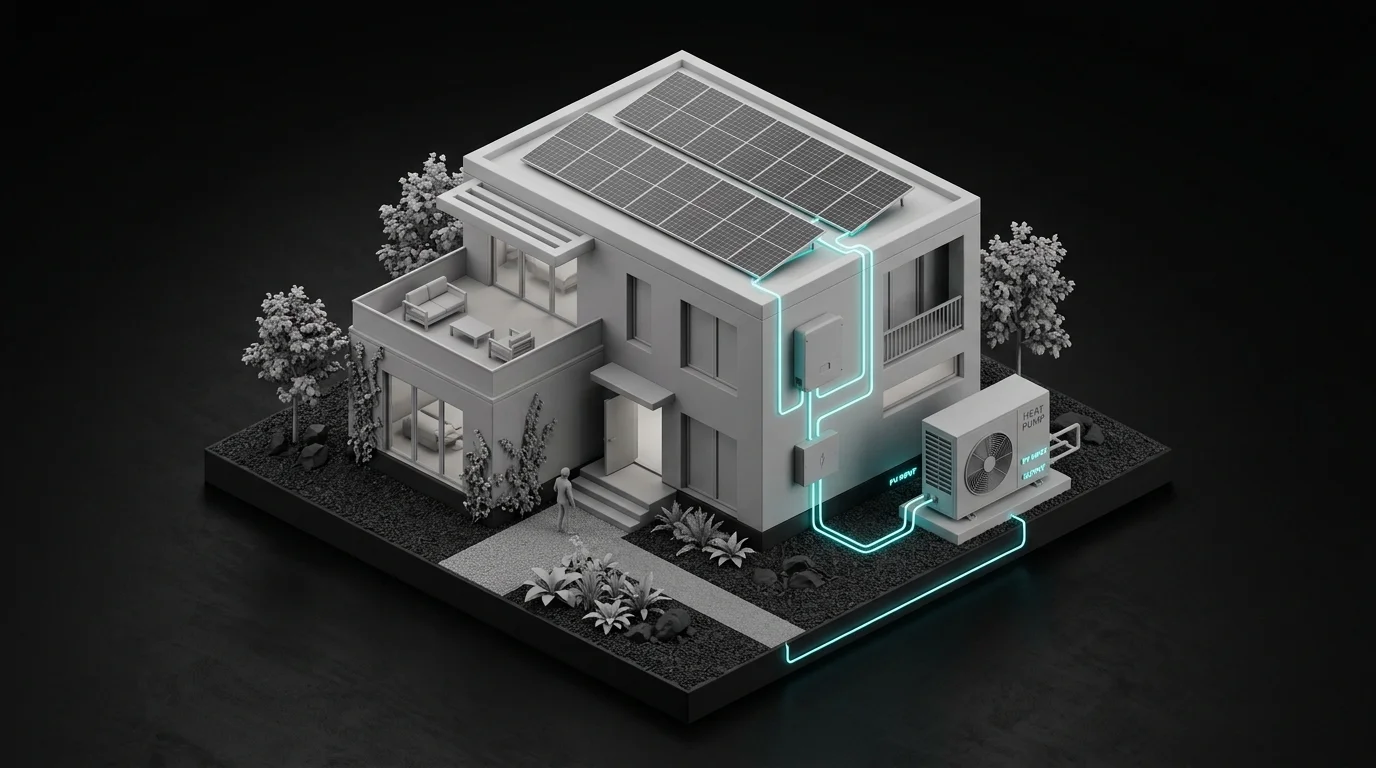
Heating and cooling make up more than half of the energy used in a typical home. Traditional furnaces burn fossil fuels like natural gas, propane, or oil to generate heat. Standard air conditioners use large amounts of electricity from the power grid.
Pairing rooftop solar panels with a modern heat pump provides a smart alternative. This combination creates a fully electrified system that warms your home in winter and cools it in summer using free energy from the sun.
How Solar Panels and Heat Pumps Work Together
A heat pump does not burn fuel to create warmth. Instead, it acts like a two-way air conditioner. It moves thermal energy from outdoor air into your home during winter, and pumps indoor heat outside during summer.
Because moving heat takes much less energy than creating it, modern air-source heat pumps achieve an efficiency rating of 300% to 400%. This metric is known as the Coefficient of Performance (COP). For every 1 kilowatt-hour (kWh) of electricity used, the heat pump transfers 3 to 4 kWh of heating or cooling energy into your home.
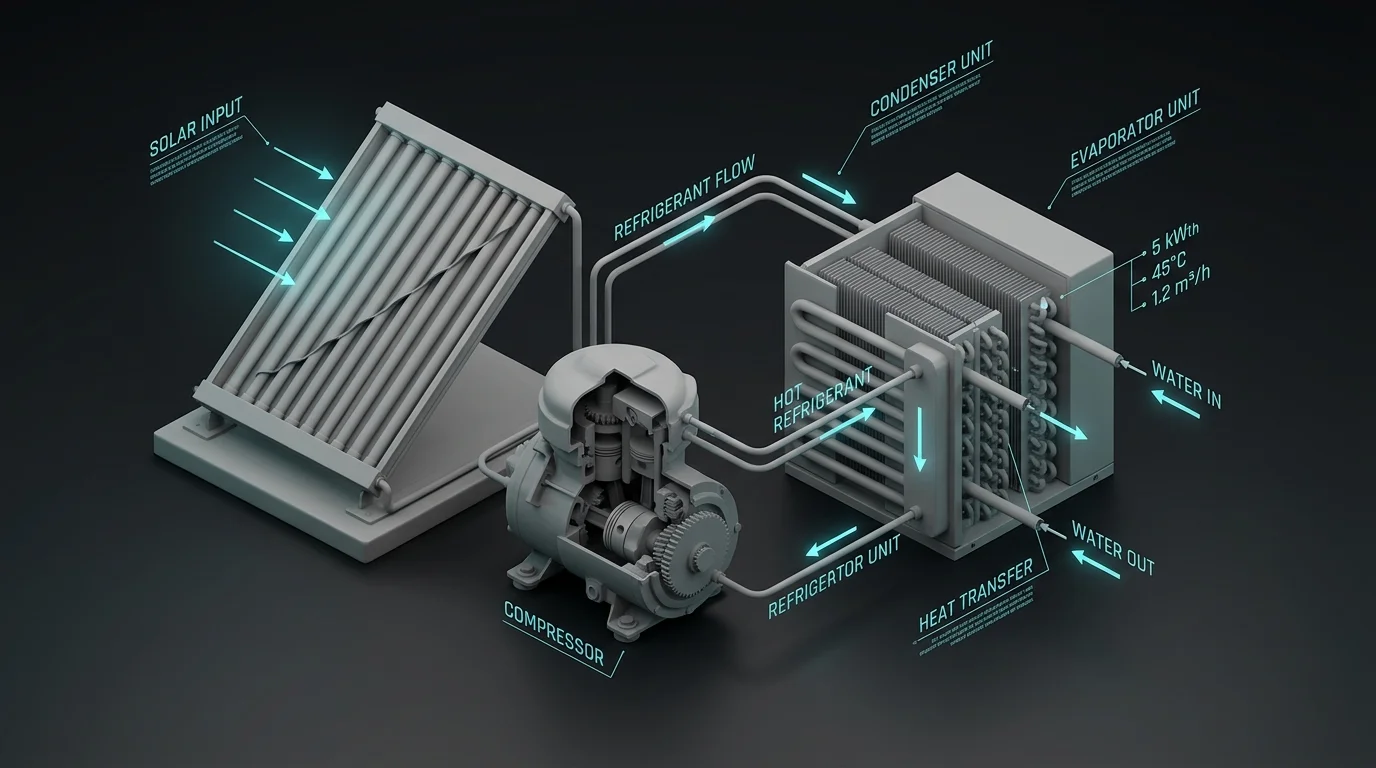
When you power this high-efficiency system with solar electricity, your heating and cooling costs drop close to zero.
Solar Array Generates Clean DC Power
Rooftop solar modules convert sunlight into direct current electricity throughout the day, providing clean energy to your electrical panel.
Inverter Converts Energy for HVAC Use
A solar inverter converts DC electricity into alternating current (AC) power, running the heat pump compressor and variable-speed fan.
Thermal Energy Is Transferred Efficiently
The heat pump refrigerant loop transfers ambient thermal energy indoors or outdoors, multiplying every unit of solar power by three to four times.
How Many Solar Panels Do You Need for a Heat Pump?
The size of the solar array needed depends on the heating capacity of the unit and your local climate. Heat pumps are measured in tons of cooling and heating capacity. A typical 2,000-square-foot home usually requires a 3-ton heat pump.
An efficient 3-ton heat pump uses roughly 2,500 to 4,000 kWh of electricity per year for combined heating and cooling. To offset that demand completely, you will need to add extra solar panels to your roof.
2-Ton Heat Pump Setup
3-Ton Heat Pump Setup
4-Ton Heat Pump Setup
Assuming modern 400-watt solar panels operating in an area with average sunlight, each panel generates about 500 kWh of electricity per year. Adding 8 to 10 solar panels provides around 4,000 kWh of clean power, covering the entire annual energy demand of your heat pump.
Battery Storage and Thermal Buffering
Solar panels generate electricity during daylight hours. Heat pumps, however, often need to run heavy heating cycles during cold winter nights. To run your heat pump cleanly around the clock, you have two primary energy storage options.
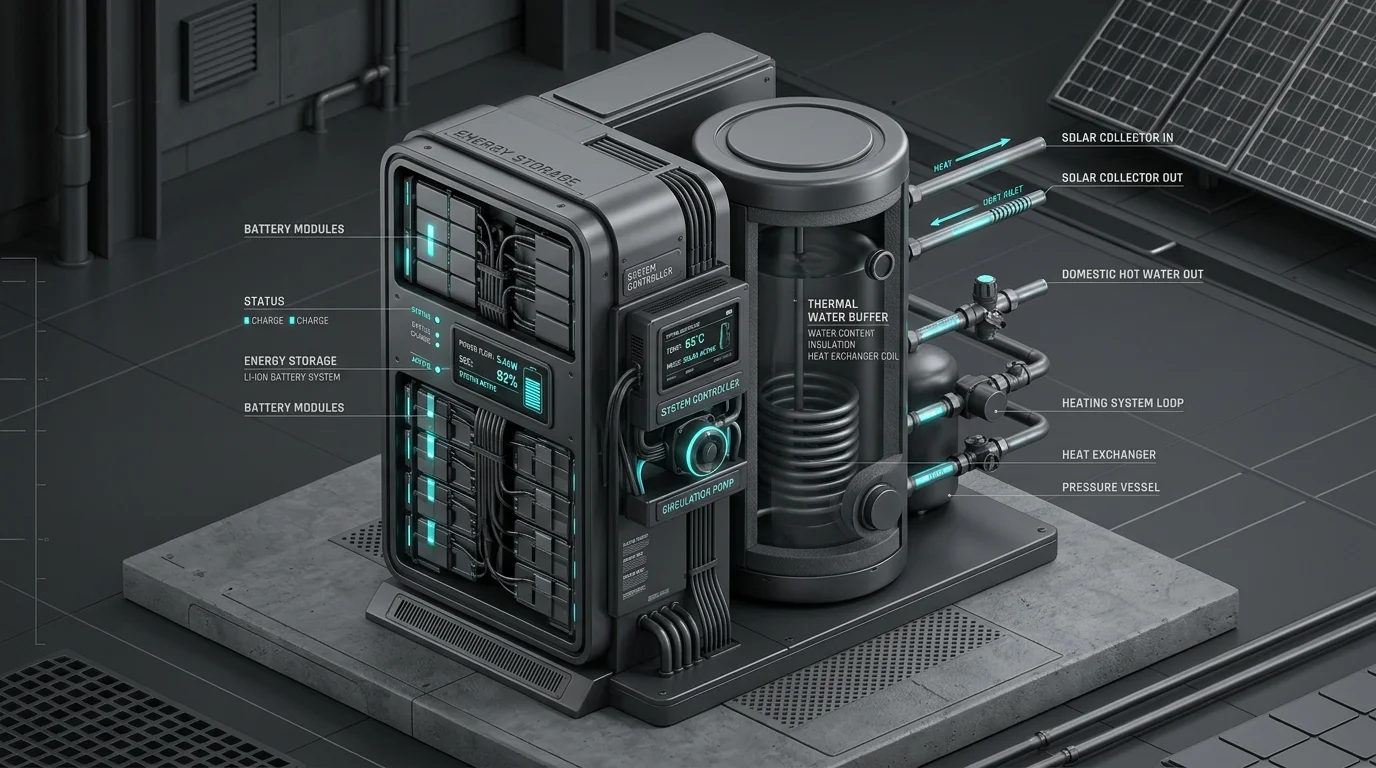
1. Lithium Battery Storage Systems
A home battery bank stores excess solar power generated during peak midday sunlight. When the sun goes down, the battery supplies power to keep the heat pump compressor running without relying on grid power.
2. Thermal Storage and Water Buffer Tanks
A thermal buffer tank uses surplus solar electricity during the day to heat water stored in an insulated storage tank. That stored thermal energy is then circulated through radiant floor tubing or water fan coils at night. Thermal storage is often cheaper per kilowatt-hour than electrochemical batteries.
Installation Costs and Financial ROI
Combining a heat pump with a solar array involves an upfront investment, but it yields substantial long-term utility savings.
- Heat Pump Equipment & Installation: $4,000 to $12,000 depending on tonnage, ductwork, and efficiency ratings.
- Dedicated Solar Capacity (3 kW to 4 kW): $8,000 to $12,000 before federal and regional incentives.
- Combined System Investment: $12,000 to $24,000 total installed cost.
By eliminating heating bills for natural gas or fuel oil and reducing summer air conditioning electricity bills, homeowners typically save between $2,000 and $4,000 per year. In most regions, a solar-powered heat pump system pays for itself within 5 to 7 years.
Yes, but only if your solar installation includes a battery backup system or a grid-interactive inverter with islanding capability. Standard grid-tied solar inverters shut down during outages for safety, so a battery is required to keep the heat pump running when the main grid fails.
Modern cold-climate heat pumps operate efficiently down to sub-zero temperatures (down to -15 degrees Fahrenheit). They use variable-speed compressors and advanced refrigerants to extract ambient heat from frigid outdoor air.
Installing the heat pump first is often recommended. Replacing an old gas furnace or inefficient air conditioner with a heat pump changes your household electric consumption. Knowing your exact power usage after heat pump installation allows your solar installer to size your rooftop array accurately.