Solar Panel Degradation Rates: 25-Year Performance Analysis and Prevention
Learn how solar panel degradation rates affect long-term energy yield. Explore NREL data, LID vs PID mechanics, and performance across TOPCon, HJT, and PERC technologies.
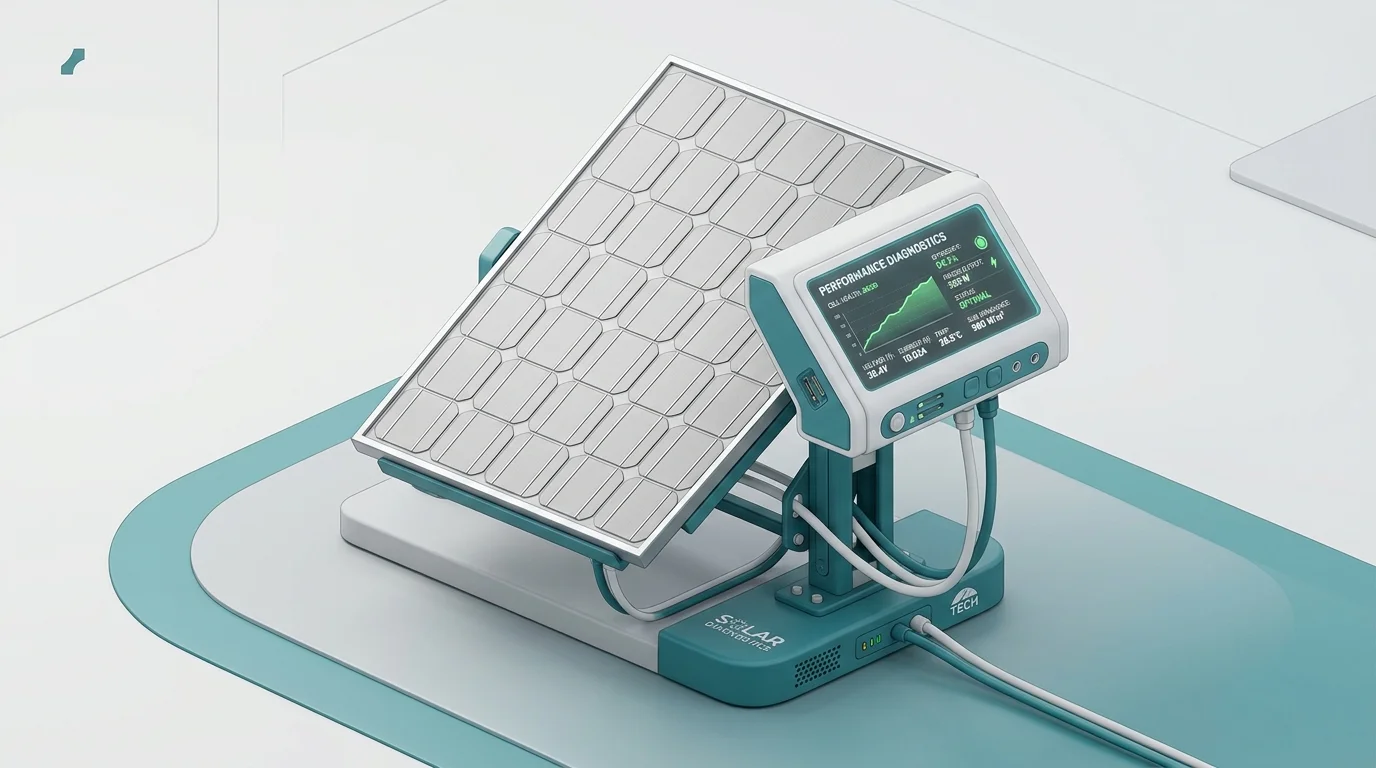
Solar panels are built to generate clean electricity for decades. However, like any electronic equipment exposed to constant weather and sunlight, solar panels experience a slow reduction in output over time. This power loss is known as solar panel degradation.
Understanding degradation rates is essential when planning a solar installation. It helps homeowners and businesses project long-term electricity generation, return on investment, and warranty coverage accurately.
In this guide, we break down what causes solar panels to lose efficiency, examine real-world data from national laboratories, compare degradation rates across modern panel technologies, and explore steps to minimize performance loss.
What is Solar Panel Degradation?
Solar panel degradation refers to the gradual decline in a photovoltaic panel’s power production capacity over time. A panel rated at 400 watts will produce slightly less power each year due to physical and chemical changes in its silicon cells, glass encapsulant, and wiring.
According to research from the National Renewable Energy Laboratory (NREL), the median degradation rate for modern silicon solar panels is approximately zero point five percent per year. This means a standard solar panel retains roughly eighty-eight percent of its original rated output after twenty-five years of continuous operation.
Modern solar panel degradation is predictable and slow. High-quality panels maintain strong electricity output well beyond their standard warranty periods.
Primary Causes of Solar Panel Degradation
Solar panels face severe environmental stress every day. Heat, ultraviolet radiation, and electrical voltage all contribute to output decline. Here are the three primary microscopic mechanisms responsible for efficiency loss:
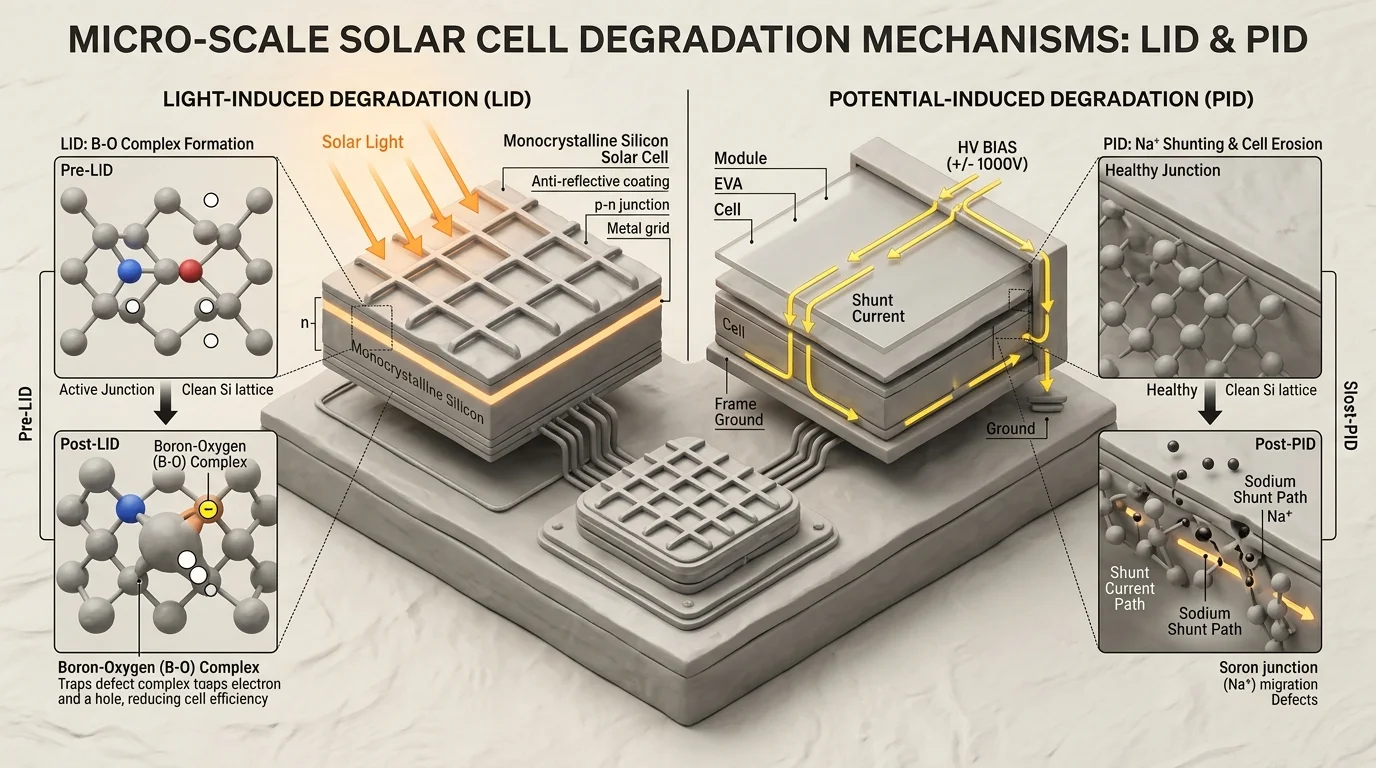
Light-Induced Degradation (LID)
Light-Induced Degradation occurs during the first few days or weeks after a new solar panel is exposed to sunlight. In traditional P-type silicon cells, boron atoms combine with oxygen impurities under sunlight. This boron-oxygen complex traps electrons, causing an initial efficiency drop of one to three percent.
Potential-Induced Degradation (PID)
Potential-Induced Degradation happens when high voltage differences between the solar cells and the grounded aluminum frame cause stray electrical currents to leak. Over time, sodium ions migrate into the silicon lattice, shunting cell junctions and reducing total current flow.
Thermal Cycling and Moisture Ingress
Daily temperature changes cause solar panel components to expand and contract. Over thousands of day and night cycles, thermal stress creates microscopic cracks in silicon cells and solder joints. Meanwhile, moisture ingress can corrode internal metallic contacts.
Degradation Rates by Solar Cell Technology
Not all solar panels degrade at the same rate. Advances in silicon wafer manufacturing and cell contact structures have dramatically reduced annual power loss in newer panel types.
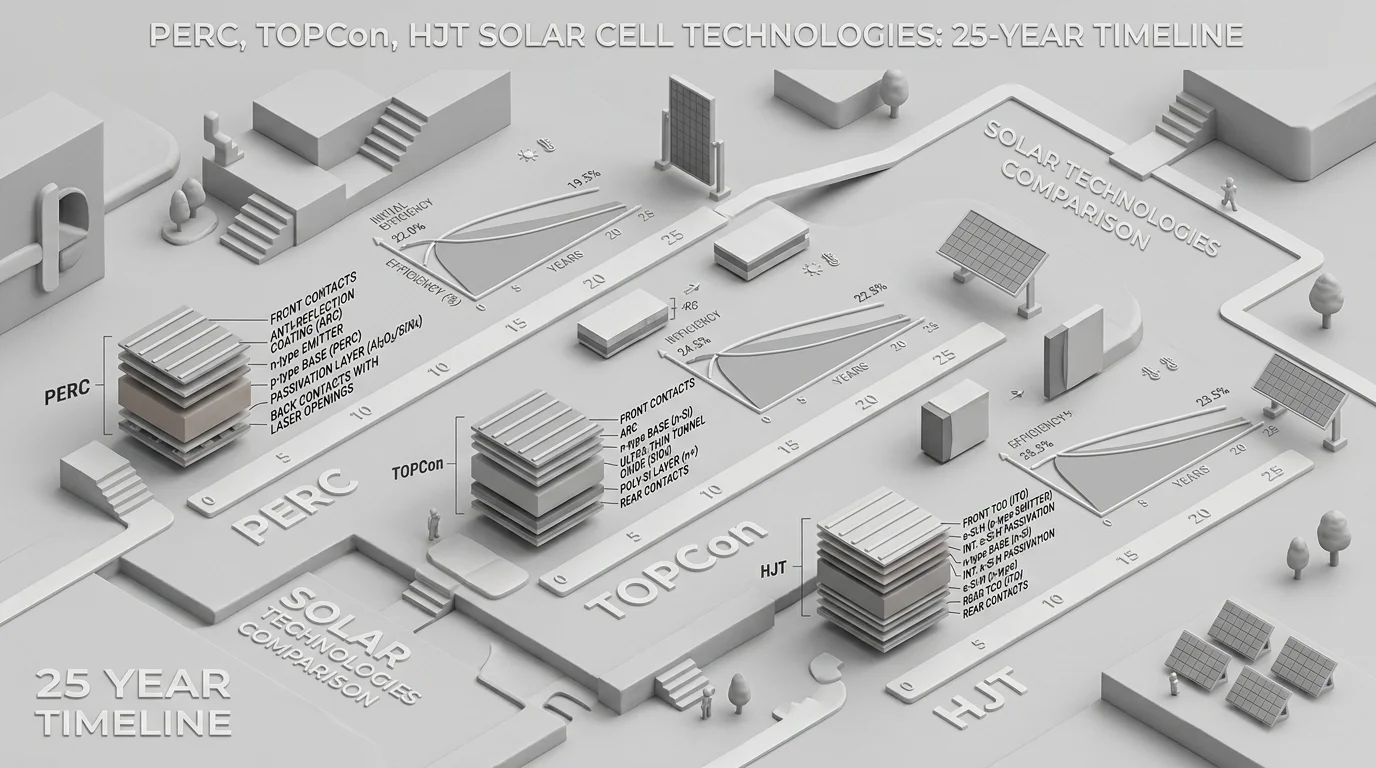
Here is how modern panel architectures compare in long-term performance:
N-Type HJT & TOPCon Panels
- Immune to boron-oxygen Light-Induced Degradation
- Low annual degradation rate of zero point two five to zero point four percent
- Retains eighty-eight to ninety-four percent capacity at year twenty-five
- Superior temperature coefficient in high-heat climates
- Backed by thirty-year linear performance warranties
P-Type PERC Panels
- Initial first-year LID output drop of one to two percent
- Higher annual degradation rate of zero point five to zero point seven five percent
- Retains eighty to eighty-six percent capacity at year twenty-five
- Higher sensitivity to extreme summer heat
- Standard twenty-five year linear performance warranties
Impact of Climate on Long-Term Degradation
Operating environment plays a significant role in solar panel longevity. NREL field studies highlight distinct degradation averages based on local weather conditions:
- Temperate Climates: Installations in mild climates experience average degradation rates of zero point four to zero point five percent per year. Modest seasonal temperature shifts preserve solder connections and encapsulant layers.
- Hot Arid Climates: Desert environments experience average degradation rates of zero point eight to one point zero percent per year due to extreme daily thermal cycling and intense ultraviolet exposure.
- Coastal Environments: Marine environments expose panels to airborne salt spray. High-quality double-glass modules with anti-corrosive frames are required to prevent Potential-Induced Degradation.
How to Protect Solar Panels from Accelerated Degradation
While natural degradation cannot be completely stopped, proper system design and maintenance prevent premature output loss:
- Choose N-Type Silicon Modules: Selecting N-type TOPCon or Heterojunction (HJT) panels eliminates initial LID and delivers the lowest annual degradation rate available.
- Install Inverters with Anti-PID Features: Modern string and hybrid inverters often include anti-PID circuitry that restores cell polarization during nighttime hours.
- Maintain Adequate Airflow: Mounting panels at least four inches above the roof surface maintains cooling airflow beneath modules, reducing thermal stress.
- Schedule Routine Inspections: Annual thermal imaging inspections help detect microcracks or failing bypass diodes before they lead to permanent hot spots.
Frequently Asked Questions
An annual degradation rate of zero point five percent or lower is considered excellent for residential and commercial solar panels. Premium N-type panels achieve degradation rates as low as zero point two five percent per year.
No. Solar panels do not stop producing electricity when their warranty expires. A panel with a zero point five percent annual degradation rate will still operate at roughly eighty-eight percent efficiency after twenty-five years and can continue producing clean power for thirty to forty years.
LID (Light-Induced Degradation) occurs early in a panel’s life due to light exposure reacting with boron impurities in P-type silicon. PID (Potential-Induced Degradation) occurs over time when high electrical voltage causes ion migration between the cell matrix and the panel frame.