Solar Generators for Whole-House Backup: Sizing, Cost, and Setup
Learn how modern solar generators provide reliable whole-house power backup. Discover sizing formulas, LiFePO4 battery chemistry, cost breakdowns, and transfer switch integration.
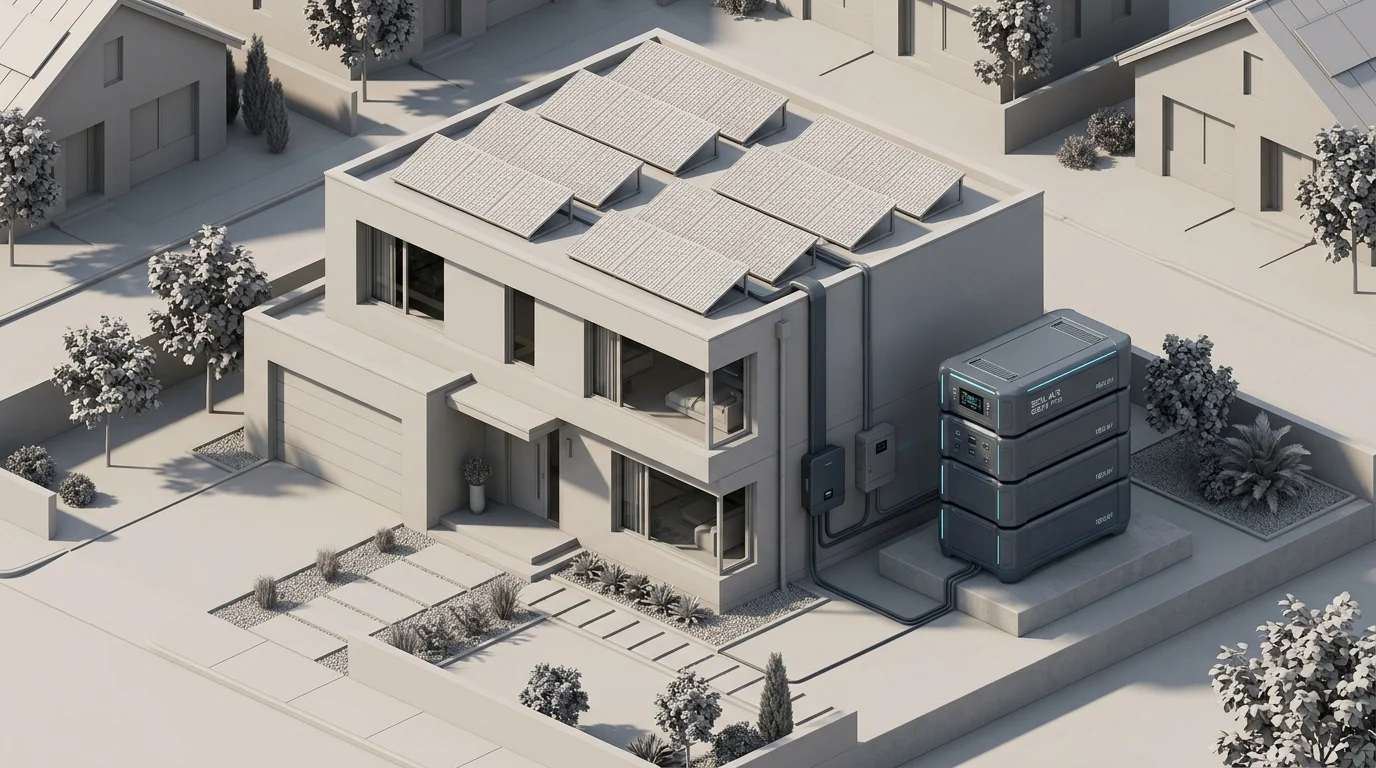
Power outages caused by severe storms, equipment failures, and grid overload are becoming more frequent. For homeowners seeking reliable emergency backup, traditional gas generators used to be the primary option. However, noisy engines, hazardous carbon monoxide emissions, and fuel storage challenges have led many families to choose clean solar generators instead.
A whole-house solar generator combines high-capacity lithium iron phosphate (LiFePO4) batteries, a powerful sine wave inverter, and high-efficiency solar panels into a clean energy workstation. Modern high-output units can run essential household appliances, including central air conditioners, refrigerators, water pumps, and medical equipment during prolonged outages.
In this guide, we break down how whole-house solar generators work, how to size a system for your household electrical load, estimated costs, and how to connect one safely to your home electrical panel.
How a Whole-House Solar Generator Works
Unlike small portable power stations built for camping or charging phones, a whole-house solar generator is engineered to run high-wattage 120V and 240V appliances simultaneously.
The system consists of four primary hardware components working together:
- Solar Array: High-wattage rigid rooftop panels or portable ground-mount solar panels capture sunlight and generate direct current (DC) power.
- LiFePO4 Battery Bank: Advanced lithium iron phosphate battery cells store energy safely with over 3,500 to 6,000 cycle lifespans.
- Pure Sine Wave Inverter: Converts direct current power into clean 120V/240V alternating current (AC) electricity that powers sensitive home electronics.
- Smart Transfer Switch: Automatically isolates your home from the utility grid during a power outage and routes stored solar energy to your critical circuit breaker subpanel.
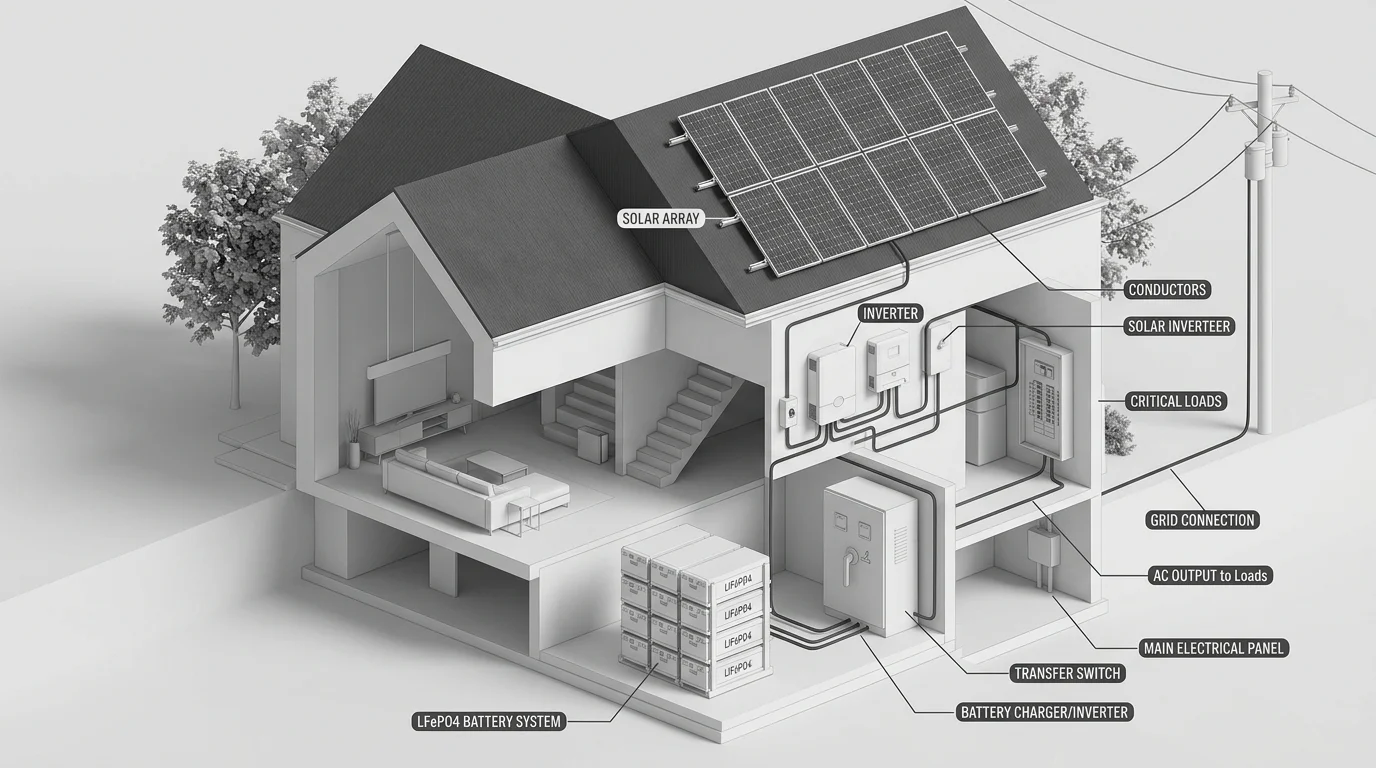
When a power blackout occurs, high-end solar generators feature automatic transfer switchover speeds as fast as 10 to 20 milliseconds. This ultra-fast switch prevents desktop computers, internet routers, and refrigerators from turning off.
Sizing Your Solar Generator for Whole-Home Backup
To select the right battery capacity and inverter output, you need to calculate two critical numbers: total continuous running watts and total daily energy consumption in kilowatt-hours (kWh).
Step 1: Calculate Continuous and Surge Wattage
Inverter continuous output determines how many appliances you can turn on at the exact same time. Motor-driven appliances like air conditioners, sump pumps, and refrigerators require high surge power (starting watts) for a few seconds when starting up.
- Refrigerator: 150W continuous (1,200W surge)
- Central Air Conditioner (3-ton): 3,500W continuous (7,000W surge)
- Well Pump (1/2 HP): 1,000W continuous (2,100W surge)
- LED Lights and Electronics: 300W continuous (300W surge)
For basic whole-home critical backup, choose a solar generator with at least a 3,600W to 7,200W continuous AC inverter output.
Step 2: Calculate Total Daily Energy Storage (Wh or kWh)
Battery capacity measures how long your system can run appliances without sunlight. Multiply appliance wattage by the hours of operation per day:
- Refrigerator running 8 active hours: 150W x 8h = 1,200Wh (1.2kWh)
- LED lighting for 6 hours: 150W x 6h = 900Wh (0.9kWh)
- TV and Wi-Fi router for 5 hours: 200W x 5h = 1,000Wh (1.0kWh)
- Microwave and cooking appliances: 1,500W x 0.5h = 750Wh (0.75kWh)
Total basic daily consumption equals approximately 3.85kWh. Adding a 25 percent safety cushion means a 5kWh battery system provides full 24-hour backup for essential home loads.
Solar Generator vs. Fuel Generator vs. Permanent Wall Battery
How does a modular solar generator compare with traditional gas generators or fixed wall-mounted lithium batteries?
Whole-House Solar Generator
- Zero fuel costs, zero engine maintenance, zero noise
- Modular expandability up to 45kWh+ with plug-and-play battery expansion units
- Dual solar and grid fast charging options
- Indoor safe operation with zero toxic carbon monoxide emissions
- Eligible for 30 percent federal clean energy tax credits
Gas or Propane Standby Generator
- Unlimited run-time as long as fuel is constantly supplied
- High noise level (65dB to 75dB) and loud engine vibration
- Requires monthly oil checks, filter changes, and spark plug maintenance
- Loud outdoor installation required due to deadly carbon monoxide exhaust
- No federal solar tax incentives available
Integrating a Solar Generator with Your Home Electric Panel
To power home wall outlets and ceiling lights directly, a solar generator must connect safely to your home wiring through a manual or automatic transfer switch.
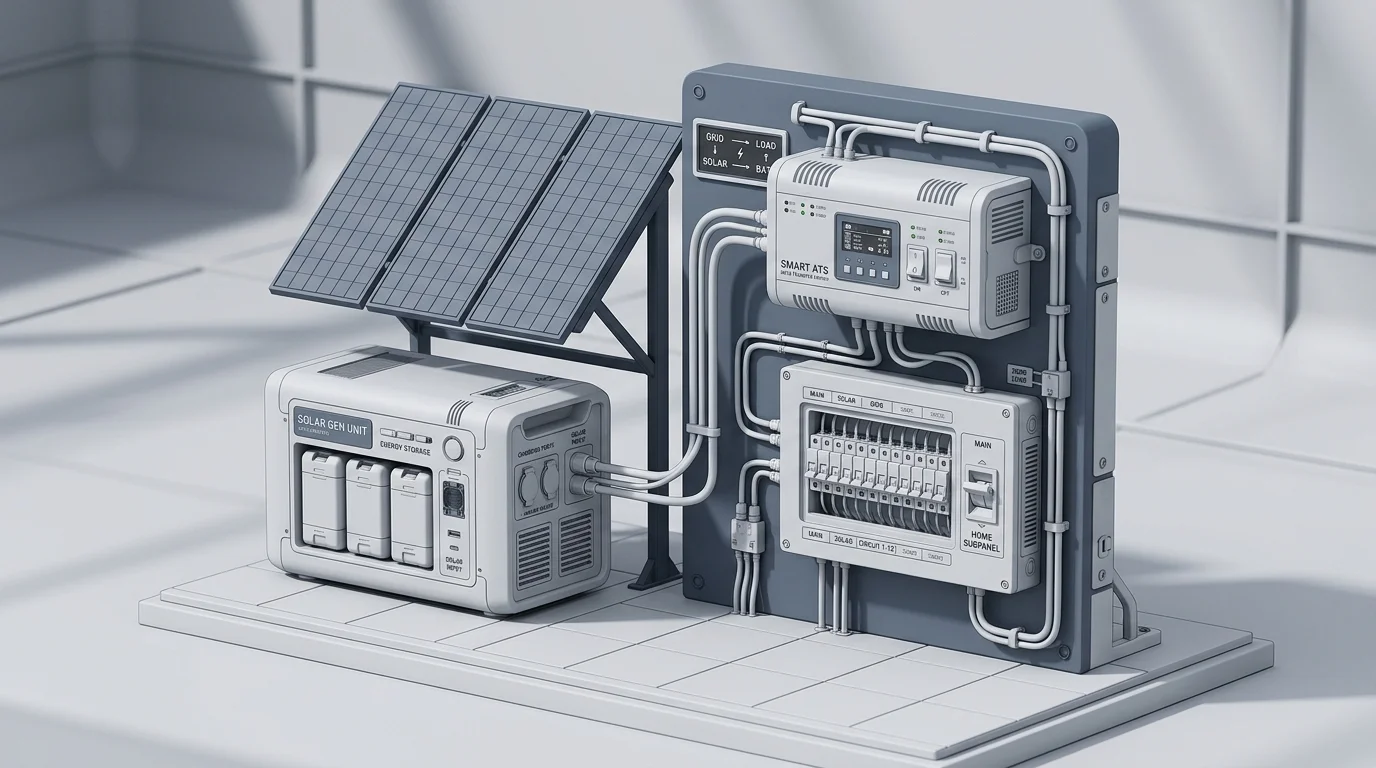
Install a Critical Loads Subpanel
A licensed electrician installs a 6 to 10 circuit transfer switch subpanel next to your main breaker box. You select critical circuits such as kitchen outlets, lights, garage door opener, and internet router.
Connect Heavy-Duty Generator Power Cable
Run a heavy-gauge 30-amp or 50-amp power inlet cable from the generator AC output port into the transfer switch box.
Set Up Solar Charging Inputs
Connect your rooftop solar panel wire leads into the high-voltage MPPT solar charge controller ports on the solar generator. This recharges the batteries automatically during daylight hours.
Connecting your system through a transfer switch guarantees that backfeeding into the utility grid cannot occur, protecting utility workers repairing power lines down the street.
Frequently Asked Questions
Yes. Solar generators equipped with 240V split-phase AC output and a 5,000W or higher continuous inverter rating can easily start and run 3-ton to 5-ton central air conditioners or heat pumps.
LiFePO4 (Lithium Iron Phosphate) batteries last between 3,500 and 6,000 full charge cycles before dropping to 80 percent original capacity. For daily home backup use, this equates to 10 to 15 years of operational lifespan.
Yes. Energy storage systems with a capacity of 3 kilowatt-hours (kWh) or greater qualify for the 30 percent Residential Clean Energy Credit, significantly lowering the overall net installation cost.