Sodium-Ion Solar Batteries: Sustainable Low-Cost Energy Storage
Discover how sodium-ion solar batteries provide low-cost, sustainable, and high-safety energy storage for residential and commercial solar systems.
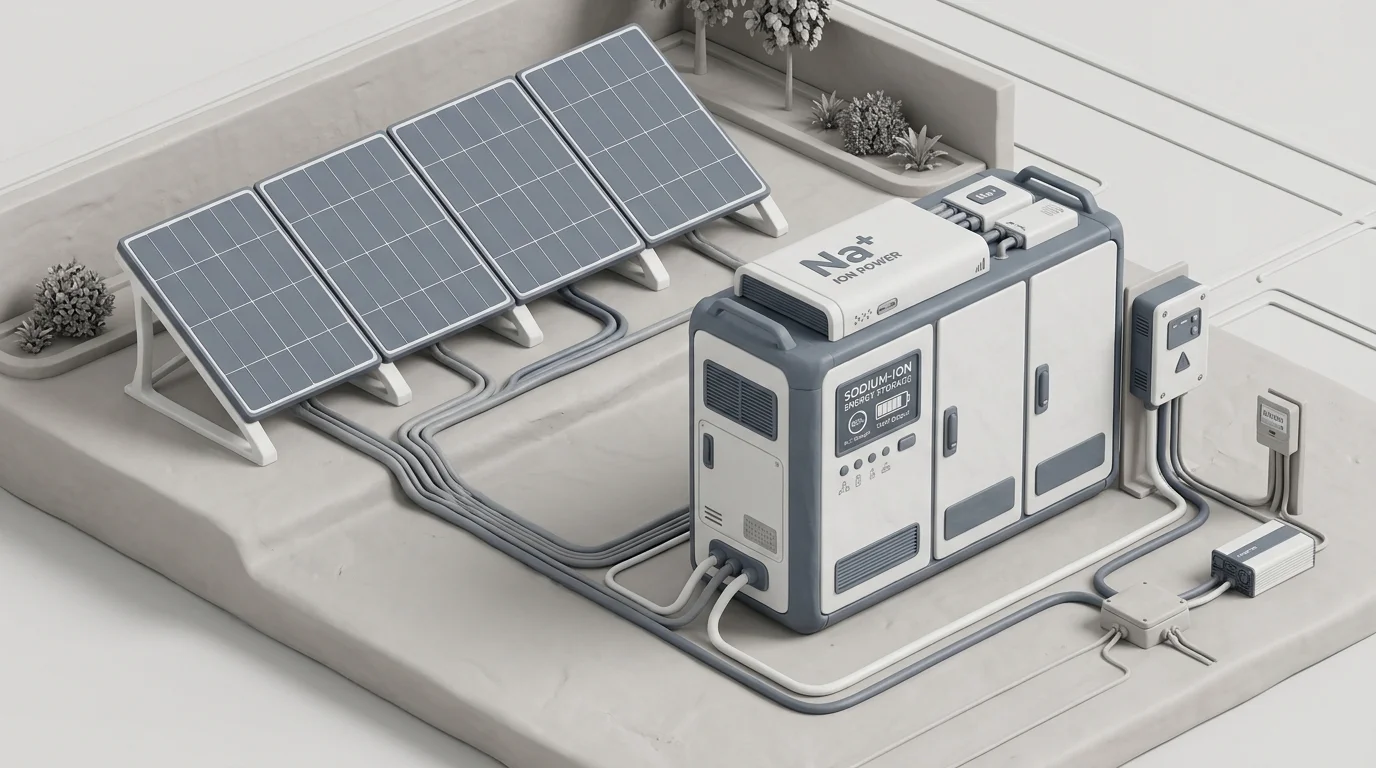
Solar energy storage is evolving rapidly. For years, lithium-ion batteries like Lithium Iron Phosphate (LiFePO4) have dominated home energy storage. However, growing demand for raw materials like lithium and cobalt has created supply challenges and high costs.
Sodium-ion solar batteries are emerging as a game-changing alternative. By using salt-based sodium chemistry, these batteries offer a lower cost, safer, and highly sustainable way to store solar power.
In this guide, we will explore how sodium-ion batteries work, compare them to lithium-ion systems, and explain why they are ideal for stationary solar energy storage.
How Sodium-Ion Solar Batteries Work
At a fundamental level, sodium-ion batteries store and release electrical energy using chemical reactions similar to lithium-ion batteries. Instead of moving lithium ions, they move sodium ions between a positive electrode (cathode) and a negative electrode (anode).
Sodium is one of the most abundant elements on Earth. It is extracted easily from common salt (sodium chloride). This makes the raw materials for sodium-ion batteries cheap and widely available anywhere in the world.
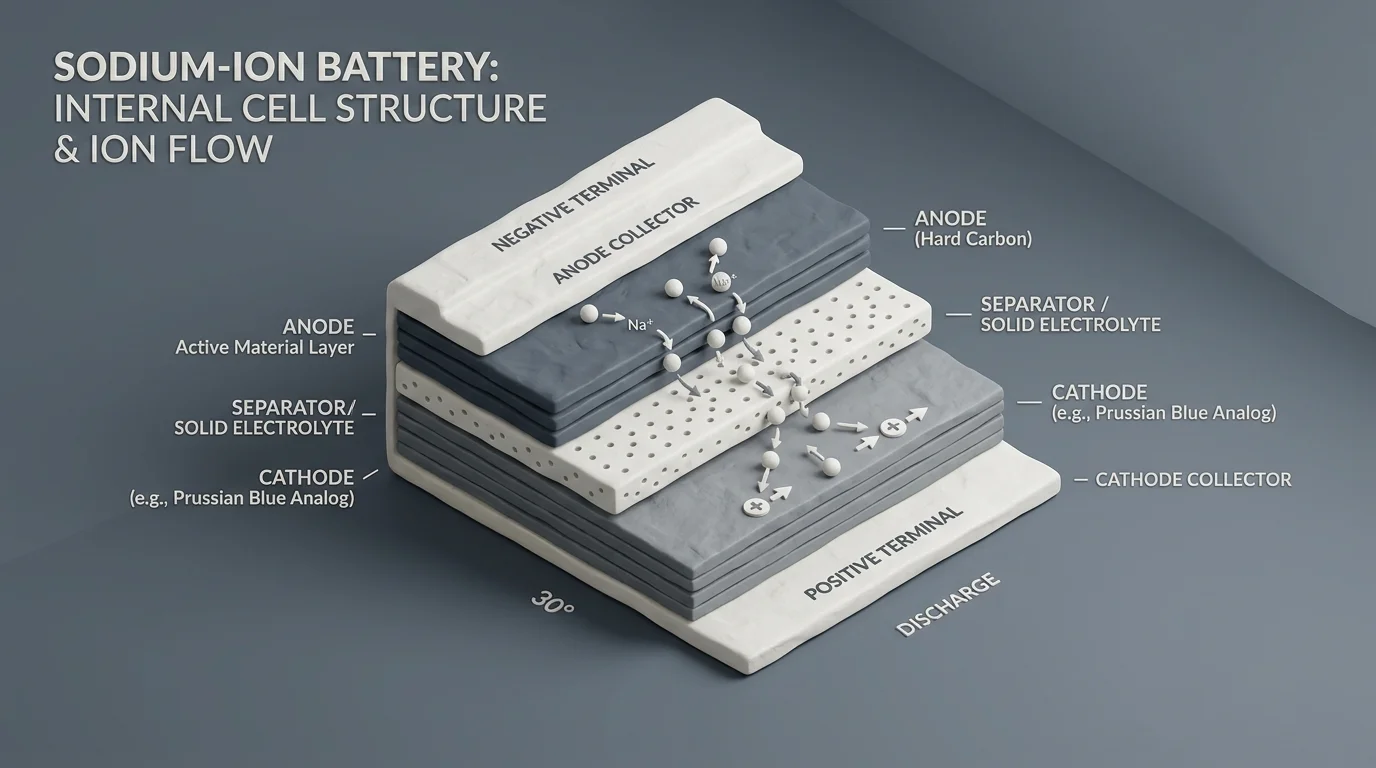
Inside a sodium-ion cell:
- Hard Carbon Anode: Sodium ions insert into porous carbon structures during charging.
- Prussian Blue Analog Cathode: Sodium ions move back into the iron-based structure during discharging to generate electric current.
- Aluminum Current Collectors: Unlike lithium batteries that require expensive copper foil, sodium-ion cells use cheap aluminum foil for both positive and negative terminals.
Sodium-Ion vs. Lithium Iron Phosphate (LiFePO4)
While lithium batteries store more energy per pound, weight is rarely a concern for stationary home batteries mounted on a wall or placed in a garage. Here is how sodium-ion compares directly with popular lithium-ion storage systems:
Sodium-Ion Battery Storage
- Significantly lower raw material and cell manufacturing costs
- Zero risk of thermal runaway fires or overheating
- Exceptional performance in extreme cold down to -40°C
- Uses earth-abundant sodium salt instead of scarce lithium
- Over 4,000 to 6,000 cycle lifespan at 80% DoD
LiFePO4 Lithium Batteries
- Higher volumetric energy density in smaller cabinets
- Higher initial equipment cost per kilowatt-hour
- Requires active thermal management in freezing climates
- Relies on lithium supply chains and copper current collectors
- Over 6,000 cycle lifespan with mature supply chain
Cell manufacturing costs for sodium-ion batteries are dropping toward $40 to $60 per kWh. This represents a 40 percent savings compared to conventional lithium-ion cells.
Key Benefits of Sodium-Ion Storage for Solar Systems
Choosing sodium-ion technology for your home or business solar installation provides several major advantages:
Superior Thermal Safety and Cold Weather Range
Sodium-ion batteries are non-flammable and immune to thermal runaway. They operate safely across extreme temperature ranges from -40°C up to 60°C. In freezing temperatures, sodium-ion cells maintain up to 85 percent of their capacity, whereas lithium batteries lose significant power without internal heaters.
Earth-Abundant Raw Materials
Sodium is 1,200 times more abundant in the Earth’s crust than lithium. Because sodium batteries use abundant salt, iron, and aluminum rather than rare minerals, they reduce reliance on vulnerable global supply chains and lower environmental mining impacts.
High Round-Trip Efficiency for Solar Discharge
Modern sodium-ion solar storage systems achieve round-trip energy efficiency between 85 percent and 88 percent. They comfortably support daily 4-hour to 8-hour discharge cycles, storing excess daytime solar generation to power your home through the evening and grid outages.
Integrating Sodium-Ion Storage with Home Solar Arrays
Sodium-ion battery banks integrate seamlessly with standard solar inverters and hybrid solar controllers.
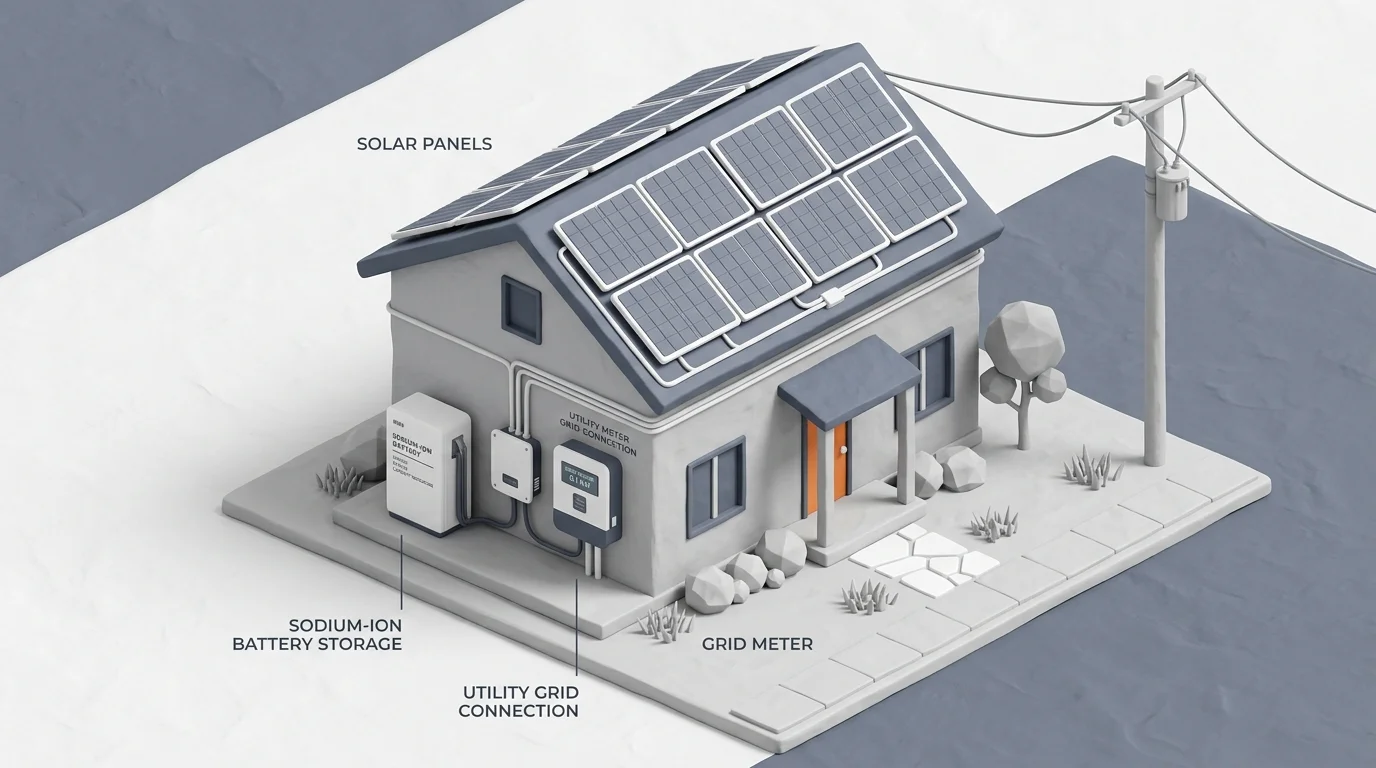
Because sodium-ion batteries operate at standard direct current (DC) voltage ranges, solar installers can connect sodium storage to existing rooftop solar panel setups without needing special custom wiring.
As production scales, sodium-ion technology will make whole-home solar backup affordable for millions of households who were previously priced out of lithium battery storage.
Frequently Asked Questions
Yes. Sodium-ion battery cells cost significantly less to produce because sodium salt, aluminum, and iron are much cheaper and more abundant than lithium, cobalt, and copper.
No. Sodium-ion chemistry is thermally stable and non-flammable. It resists thermal runaway and operates safely across broad temperature ranges without overheating risks.
Commercial sodium-ion solar batteries are rated for 4,000 to 6,000 charge and discharge cycles at 80 percent depth of discharge. This translates to an operational lifespan of 12 to 15 years in daily residential solar use.