Smart Electrical Panels: The Complete Solar and Load Management Guide
Discover how smart electrical panels optimize solar systems, extend battery backup runtime by 40%, and eliminate expensive utility service upgrades.
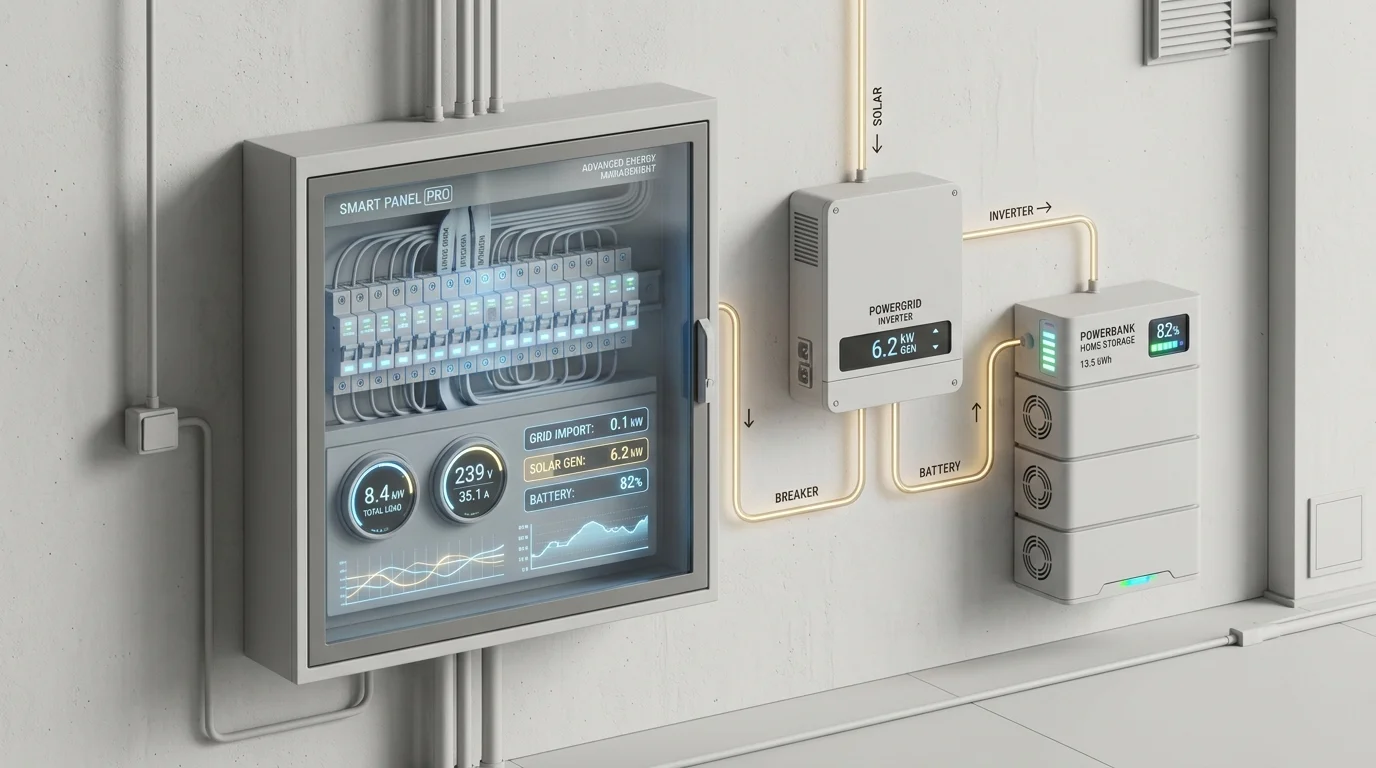
Traditional electrical breaker panels have remained largely unchanged for decades. They use simple mechanical switches that trip when too much electrical current flows through a wire. While these standard breaker boxes keep homes safe from electrical fires, they operate completely blind to how much energy individual appliances consume in real time.
As homeowners install rooftop solar panels, home battery storage, heat pumps, and Level 2 electric vehicle chargers, traditional breaker panels quickly reach their limits. A smart electrical panel replaces mechanical breakers with intelligent, digital controls and energy meters on every circuit. By combining microprocessors, cloud connectivity, and automated load shedding, smart panels transform a home into an active microgrid that optimizes clean power, prevents grid overload, and extends battery backup life.
How Smart Electrical Panels Work
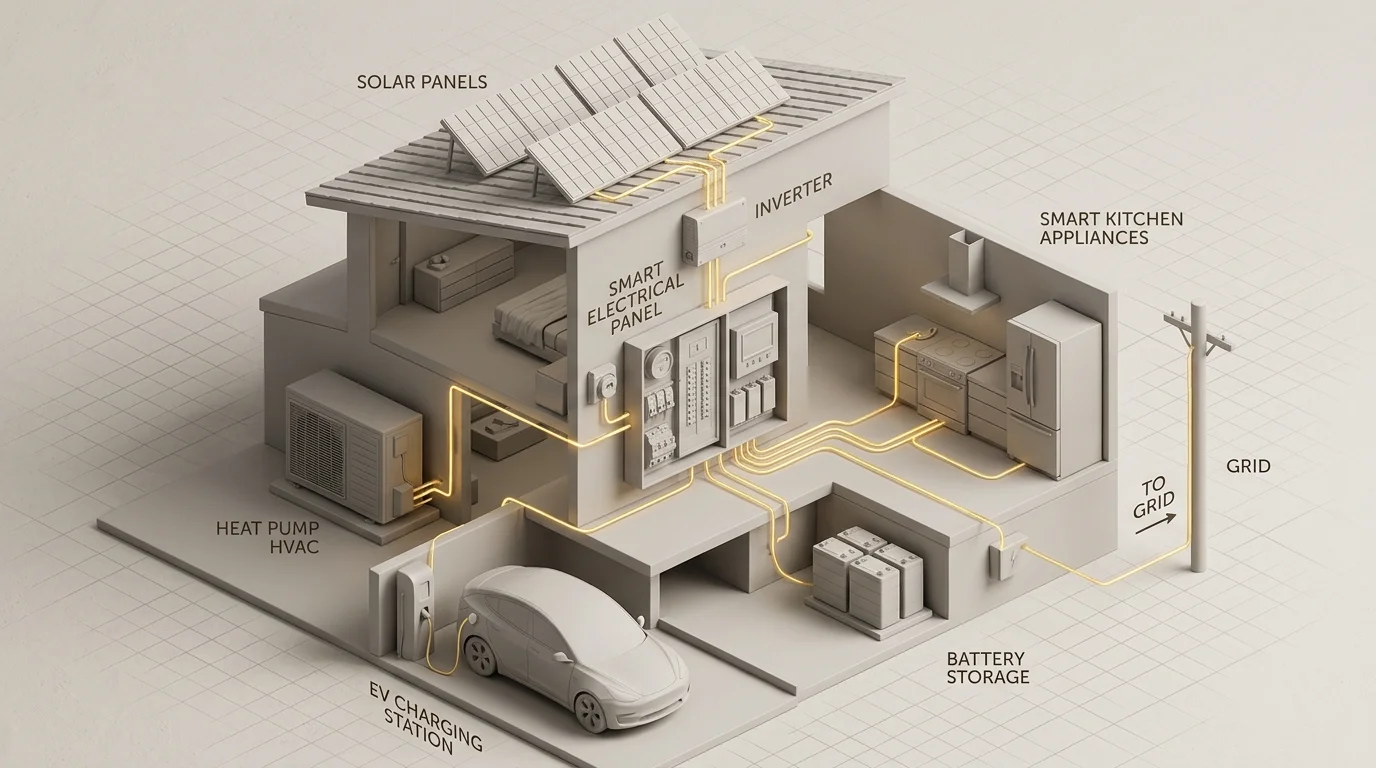
A smart electrical panel acts as the central command center for all electrical energy entering and moving through your home. It connects your utility power line, rooftop solar array, battery storage, and major household circuits into a single responsive digital platform.
Circuit-Level Energy Monitoring
High-precision current sensors measure electrical voltage, current, and wattage across every breaker 24 hours a day. The panel records exactly when and where electricity is consumed with sub-second accuracy.
Solar and Battery Orchestration
Smart control software monitors real-time rooftop solar generation. When solar production peaks during the afternoon, the panel directs excess power to charge batteries or run heavy appliances before sending extra power to the grid.
Automated Dynamic Load Shedding
During power outages or peak utility rate periods, the panel automatically turns off non-essential circuits. This intelligent load management keeps critical appliances running while protecting home battery reserves.
Mobile App and Cloud Control
Homeowners can monitor power usage, toggle individual breakers on or off, and adjust backup priorities from anywhere using a smartphone app.
Avoiding Expensive Utility Service Upgrades
One of the largest hidden expenses when installing residential solar, heat pumps, or EV chargers is a main electrical service upgrade. Many older homes have 100-amp or 150-amp electrical panels. When adding high-draw electric equipment, standard electrical codes often require upgrading the home to 200-amp or 400-amp service.
A utility service upgrade often requires digging up lawns to lay thicker utility wires, replacing utility pole transformers, and waiting months for utility company approvals. These utility upgrades routinely cost between $2,500 and $8,000.
Smart electrical panels eliminate the need for a physical utility service upgrade through automated energy management. Under national electrical safety standards (including NEC Article 705.12 and UL 3141 Energy Management System certifications), a smart panel dynamically throttles or pauses heavy loads (like an EV charger or electric water heater) if total household power draws approach the main breaker limit. This allows homeowners to install full solar and battery systems on existing 100-amp or 150-amp electrical service without expensive utility line trenching.
Comparing Top Smart Electrical Panel Systems
Homeowners looking to modernize their electrical distribution can choose between full panel replacements and modular add-on smart panels.
SPAN Smart Panel
- Replaces existing breaker box with a complete digital panel
- Per-circuit monitoring and digital switching on all 32 slots
- Seamless direct integration with Tesla Powerwall, Enphase, and SolarEdge
- Extends home battery runtime by up to 40 percent in blackouts
- Equipment cost: $3,500 to $4,500 plus installation
Lumin Smart Panel
- Installs as a companion subpanel alongside your existing breaker box
- Monitors and manages high-draw circuits (EV chargers, heat pumps, ovens)
- Universal compatibility with any standard breaker panel brand
- Lower initial hardware cost without replacing the main panel enclosure
- Equipment cost: $1,800 to $2,500 plus installation
Extending Battery Storage Lifespan and Backup Runtime
In a typical home solar and battery setup without smart controls, a whole-home backup system can drain battery reserves quickly during a grid outage. If an electric water heater, central air conditioner, and electric oven turn on at the same time, a 13.5 kWh home battery can run dry in just a few hours.
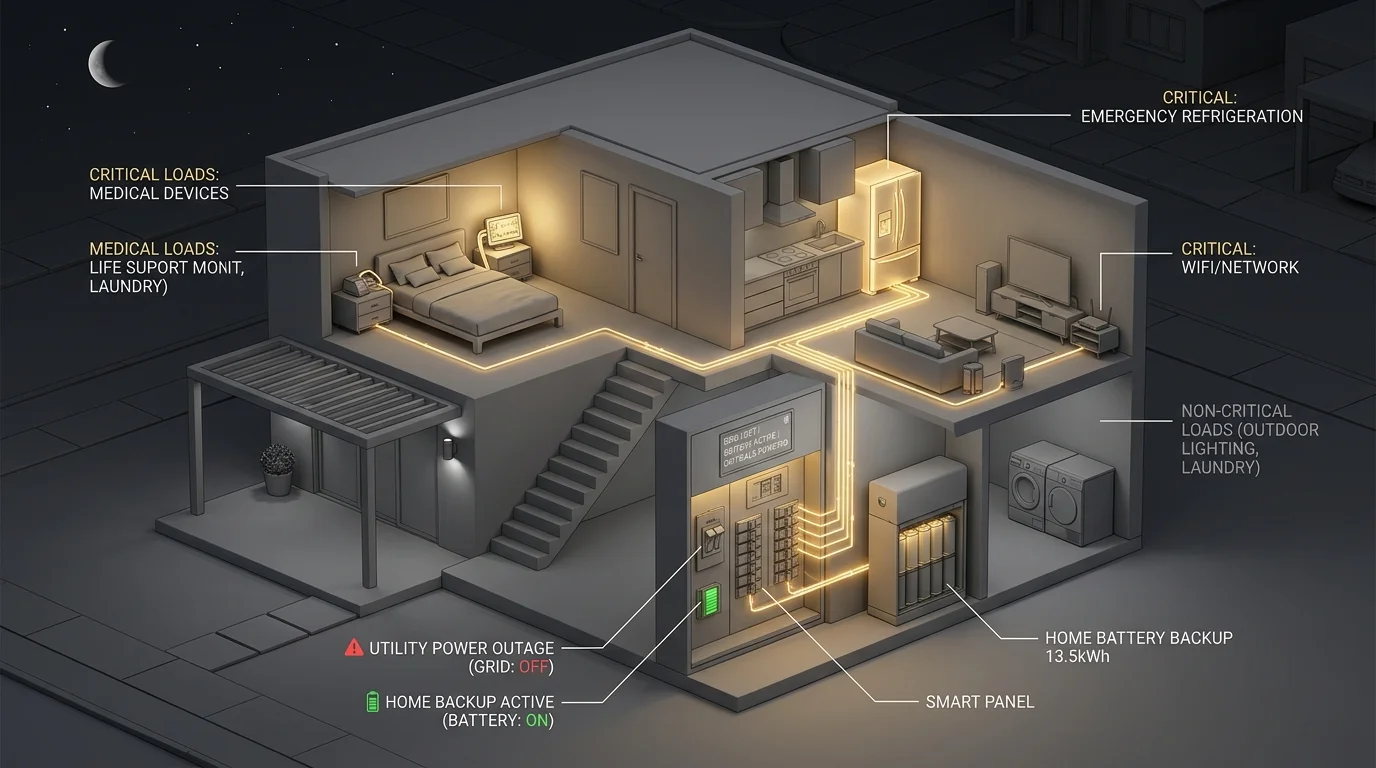
A smart electrical panel changes this dynamic completely through real-time load prioritization:
1. Essential Must-Have Circuits
Critical loads like medical devices, refrigeration, home internet routers, and basic LED lighting remain continuously powered throughout the entire blackout event.
2. Nice-to-Have Managed Circuits
Moderate loads such as kitchen convenience outlets, television sets, and microwave ovens receive power only when the home battery state of charge is above a set threshold (for example, above 50 percent capacity).
3. Non-Essential Sheddable Circuits
High-draw appliances like swimming pool pumps, electric clothes dryers, hot tubs, and Level 2 EV chargers are automatically paused the instant the utility grid goes down.
By shedding power-hungry appliances and managing moderate loads intelligently, smart panels increase battery backup runtime by 40 percent or more. This allows a single home battery to easily sustain a household through multi-day power outages.
Financial ROI, Equipment Costs, and Tax Incentives
Upgrading to a smart electrical panel offers substantial long-term value, energy bill savings, and safety enhancements.
| Cost & Value Factor | Traditional 200A Panel Upgrade | Smart Electrical Panel (SPAN / Lumin) |
|---|---|---|
| Hardware Equipment Cost | $500 to $1,200 | $1,800 to $4,500 |
| Electrical Installation Labor | $1,500 to $3,000 | $1,500 to $3,000 |
| Utility Service Line Upgrade | $2,500 to $8,000 (often required) | $0 (avoided via dynamic load control) |
| Total Net Project Investment | $4,500 to $12,200 | $3,300 to $7,500 |
| Circuit-Level Energy Telemetry | None | Real-time monitoring for every circuit |
| Battery Outage Extension | 0% | Up to 40% longer runtime |
| Virtual Power Plant (VPP) Ready | Requires extra hardware | Built-in automated grid response |
Homeowners installing smart electrical panels in combination with solar panels and battery storage can also qualify for federal clean energy tax credits (such as Section 25C and Section 25D electrical panel upgrade incentives), offsetting 30 percent of the total hardware and installation costs.
Frequently Asked Questions
No, solar panels can connect to a traditional breaker panel. However, a smart electrical panel allows you to monitor production accurately, balance energy loads, avoid expensive utility line upgrades, and maximize battery backup runtime during emergencies.
Yes. Smart panels include UL-certified dynamic load management software that continuously monitors total power draw. If electrical usage approaches the main breaker rating, the panel momentarily pauses non-critical loads like EV chargers, allowing homeowners on 100-amp or 150-amp service to add solar and heat pumps safely.
When the grid goes down, the smart panel communicates with your battery storage system and instantly sheds high-draw appliances like water heaters and pool pumps. It keeps critical circuits like refrigeration and lighting running, extending battery life by up to 40 percent.
Yes. Leading smart panels like SPAN store all automated load shedding rules locally on the physical panel hardware. They also offer direct local Wi-Fi and Bluetooth connections, allowing you to control breakers even when your home internet connection is offline.