Photovoltaic Thermal Hybrid Solar Panels: Complete Guide to PVT Power
Learn how hybrid photovoltaic thermal (PVT) solar panels produce clean electricity and domestic hot water simultaneously, boosting total roof energy yield.
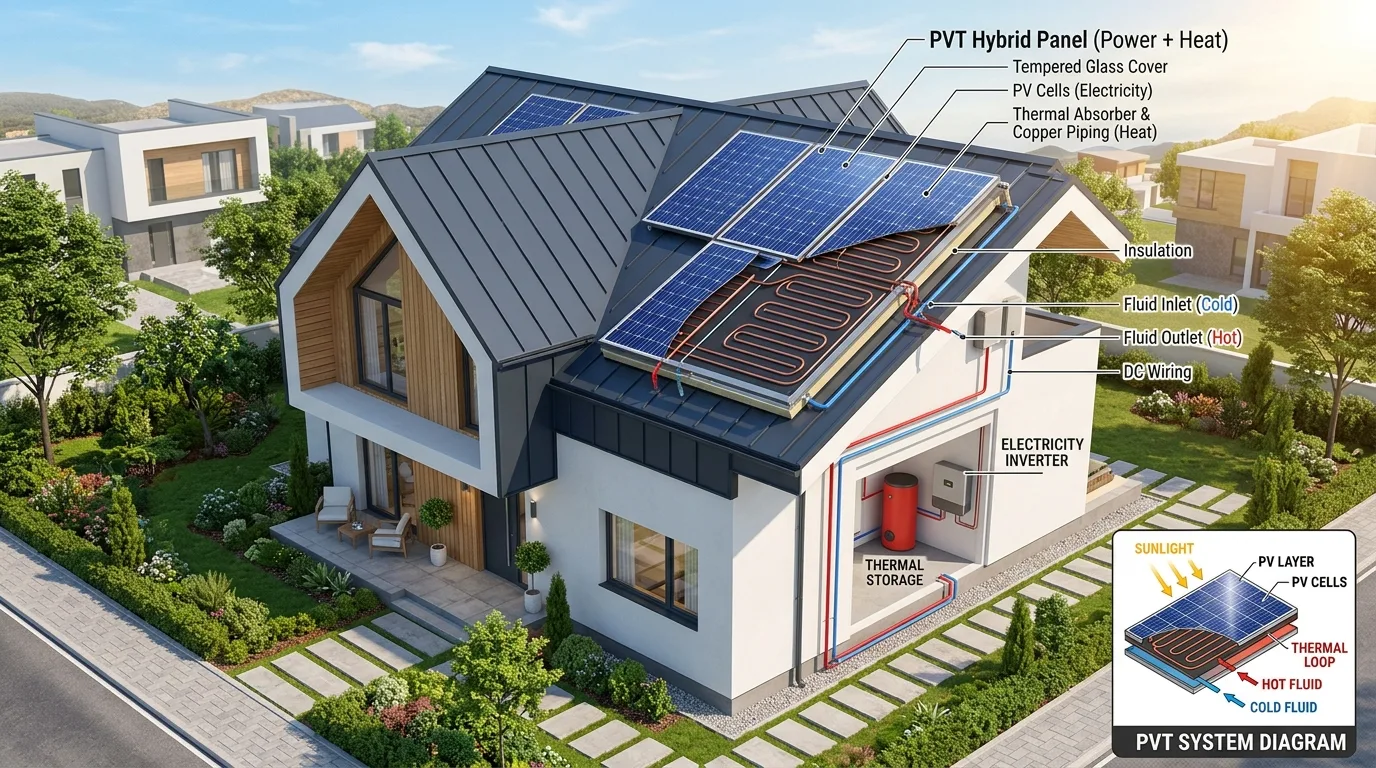
Standard solar panels face a hidden engineering paradox every single day. Sunlight contains two forms of energy: light photons and ambient heat. While solar cells need light to generate electricity, excessive heat actually hurts their performance. On a hot summer afternoon, standard rooftop solar panels can reach temperatures exceeding 150 degrees Fahrenheit. For every degree above normal operating temperature, silicon solar cells lose efficiency and produce less power.
At the same time, most households and commercial facilities spend substantial amounts of money every month heating water for showers, washing machines, and indoor space heating. Traditional solar thermal collectors can heat water efficiently, but they generate zero electricity. Homeowners with limited roof space often face a frustrating choice between generating electricity or producing hot water.
Photovoltaic thermal hybrid solar panels, commonly known as PVT panels, solve both problems simultaneously. By combining solar electric cells and a hydronic heat absorber into a single unified module, PVT technology captures sunlight to produce electricity while harvesting the waste heat to warm domestic water and indoor spaces.
How PVT Hybrid Solar Panels Work
A standard photovoltaic module converts only 18% to 23% of incoming sunlight into usable electricity. The remaining 75% or more of solar radiation turns into heat that warms up the module glass and silicon wafers.
In a hybrid PVT panel, a specially engineered thermal absorber plate is attached directly to the underside of the photovoltaic cells. As water or a glycol fluid mixture flows through embedded copper or aluminum tubes within this absorber plate, it actively extracts the heat trapped behind the solar cells.
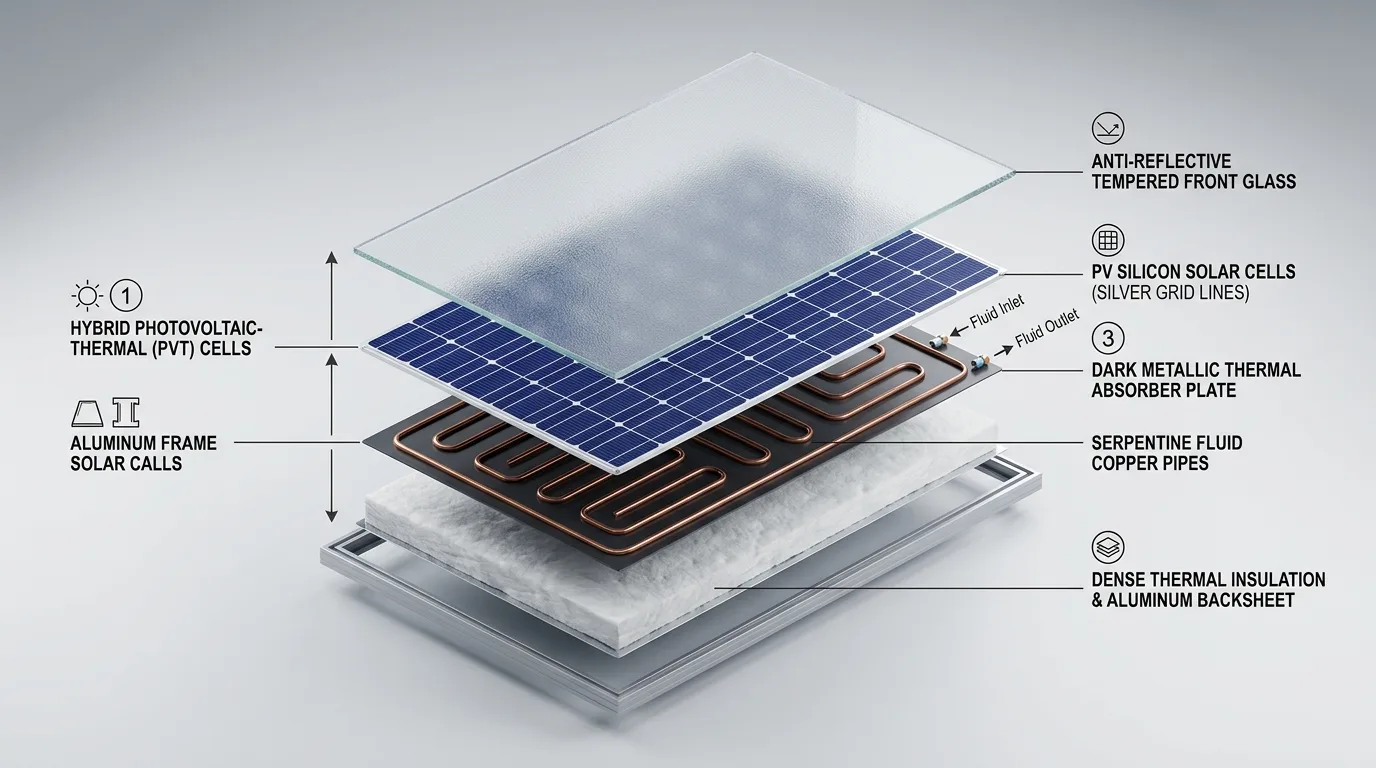
This thermal exchange produces two immediate benefits:
- Active Cell Cooling: Removing heat cools down the photovoltaic cells by 15 to 20 degrees Celsius. Cooler cells operate closer to their ideal laboratory temperatures, increasing electrical power output by up to 15% during the hottest hours of the day.
- Thermal Energy Capture: Instead of wasting heat into the outdoor air, the warm fluid circulates directly into a thermal storage cylinder or heat pump. This water can provide domestic hot water, warm up swimming pools, or supply radiant floor heating.
When you add the electrical efficiency of roughly 20% to the thermal efficiency of up to 60%, a quality PVT hybrid system achieves an astonishing combined solar efficiency between 75% and 85% from the exact same roof footprint.
The Four Steps of the PVT Generation Cycle
Hybrid PVT systems create a continuous closed energy loop between your rooftop and your indoor utility room.
1. Photons Generate Electricity
Sunlight strikes the anti-reflective front glass cover. Monocrystalline silicon solar cells absorb light photons, knocking electrons free to create direct current electricity that feeds into your home inverter.
2. Thermal Absorber Captures Heat
Excess solar radiation passes into a dark metallic thermal absorber plate mounted behind the silicon cells, preventing heat buildup on the front face of the module.
3. Fluid Loop Transfers Energy
A non-toxic water and propylene glycol mixture pumps through serpentine copper pipes behind the absorber, cooling the electrical cells and picking up high-grade thermal energy.
4. Dual Delivery to Your Home
The inverter delivers clean electricity for household appliances and battery storage, while the heated fluid flows into a hot water storage cylinder or water-source heat pump.
Comparing PVT Hybrid Panels to Traditional Solar Options
Choosing the right solar installation depends on your available roof space, your family energy consumption patterns, and your heating needs.
Standard PV Panels
Produces clean electricity, but suffers from efficiency loss in hot weather. Produces zero direct hot water or space heating, requiring separate electric water heaters.
PVT Hybrid Panels
Produces electricity and thermal hot water from one single installation. Cools cells for higher electric output and cuts water heating bills dramatically.
Solar Thermal Collectors
Excellent at heating water during sunny periods, but provides zero electricity for lights, electric vehicles, or home electronics.
Pairing PVT Panels With Modern Heat Pumps
One of the most exciting technical developments in modern building design is pairing hybrid PVT panels with air-to-water or ground-source heat pumps. This combination is often referred to as a PVT-Assisted Heat Pump (PVT-HP) system.
In standard heat pump setups, outdoor units struggle in freezing winter weather because cold ambient air holds less heat. This forces the heat pump compressor to work harder, reducing its Coefficient of Performance (COP).
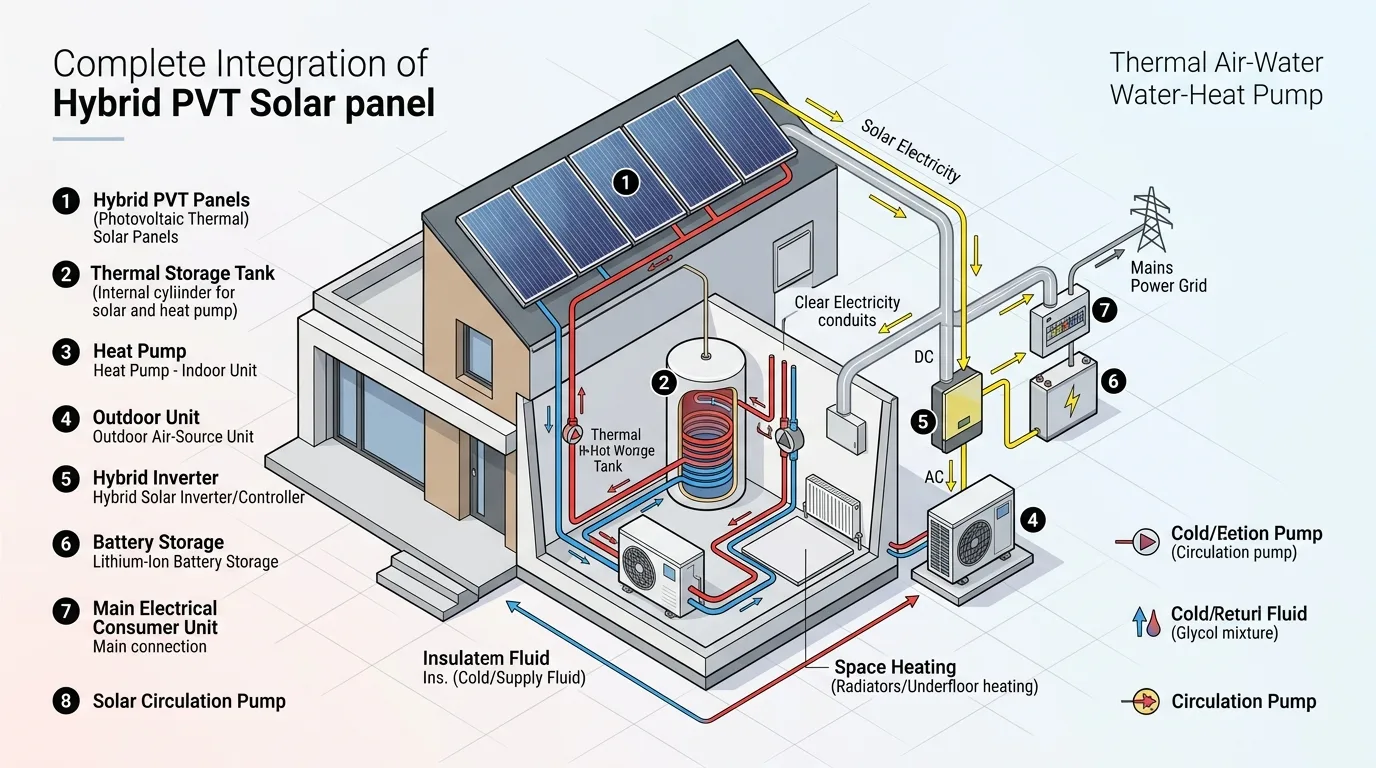
When integrated with a PVT array, the system unlocks several synergies:
- Enhanced Heat Pump Source Temperature: Even on cold, clear winter days, PVT panels can absorb solar heat and feed 15 to 25 degree Celsius fluid directly to the heat pump evaporator. This boost raises heat pump operational efficiency by 20% to 35%.
- Solar Electricity to Run Compressors: The electrical output from the PV portion of the panel directly powers the heat pump compressor and water circulation pumps, enabling true zero-carbon heating.
- Overnight Ground Regeneration: In geothermal systems, heat extracted from the ground during winter can deplete soil temperatures over time. In summer, excess thermal energy from PVT panels can be pumped into the ground loops to recharge subsurface thermal reservoirs.
Where PVT Hybrid Systems Deliver the Highest Value
While standard photovoltaic panels remain the most common choice for large open rural solar farms, hybrid PVT technology is especially valuable in specific real-world scenarios:
- Homes With Limited Roof Area: Urban homes, townhouses, and multi-story residences often have compact roofs. Installing PVT allows homeowners to generate both electricity and water heating without having to choose between two separate systems.
- Properties With High Hot Water Demand: Facilities such as hotels, nursing homes, apartment complexes, gyms, and laundromats consume enormous amounts of hot water daily. For these properties, PVT panels deliver exceptional payback periods of 4 to 7 years.
- Heated Swimming Pools and Spas: Swimming pools act as large thermal heat sinks. Circulating pool water through low-temperature unglazed PVT panels keeps pool water comfortably warm throughout spring and autumn while keeping the solar cells exceptionally cool for peak electrical production.
- Cold Climate Regions With High Solar Irradiance: In sunny but chilly regions, circulating warm fluid through the PVT collectors can help melt rooftop snow buildup, restoring solar electrical production days before standard snow-covered panels would clear on their own.
Frequently Asked Questions About PVT Hybrid Panels
Yes. Because PVT panels combine solar photovoltaic cells, an internal heat exchanger, precision copper tubing, and insulation, hardware costs are approximately 30% to 50% higher than monofacial solar panels. However, because one array replaces both separate solar panels and separate solar thermal collectors, total installation and roof mounting costs are frequently lower.
No, provided the system is filled with the correct closed-loop solar heat transfer fluid. Installers use a mixture of water and food-grade propylene glycol with specialized anti-corrosion inhibitors. This solution remains liquid in temperatures down to minus 30 degrees Fahrenheit, preventing freeze damage to roof pipes and panels.
Yes, PVT systems involve both electrical wiring and closed-loop plumbing. Routine checks include monitoring solar fluid pressure on the utility room gauge, testing glycol pH levels every three to five years, and verifying that circulation pumps and pressure relief valves operate smoothly.
Yes. In many jurisdictions, including the United States federal clean energy investment tax credit, hybrid PVT systems qualify for the full 30% credit covering both the photovoltaic equipment and the solar water heating equipment, as well as associated installation labor and electrical storage.