IBC Solar Panels: Interdigitated Back Contact Technology Explained
Discover how Interdigitated Back Contact (IBC) solar panels work, eliminating front busbars to deliver unmatched efficiency, sleek aesthetics, and shade tolerance.
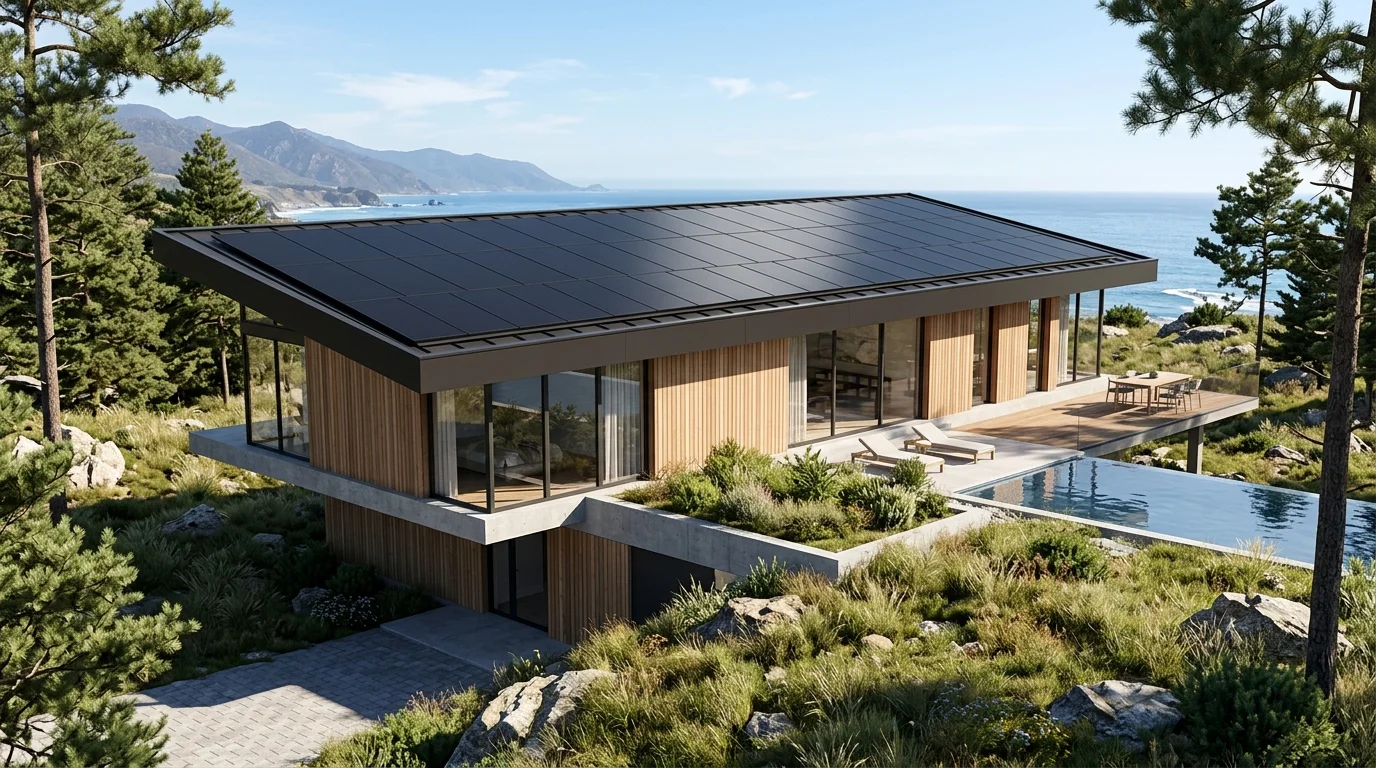
Solar panels have made huge strides over the past decade. Most standard solar panels on home roofs today have visible silver lines and metal strips running across their front surface. These metal strips, known as busbars and contact fingers, collect electricity produced by the silicon wafer. While these front wires work, they also block sunlight from hitting the active solar material underneath.
Interdigitated Back Contact (IBC) solar technology solves this problem with an elegant engineering design. By moving all electrical wiring, busbars, and contact fingers to the rear side of the silicon wafer, IBC solar cells leave the entire front face completely unobstructed.
The result is a solar panel that absorbs more sunlight, delivers higher energy conversion efficiency, operates with superior shade tolerance, and looks like a seamless sheet of obsidian glass on your roof.
In this guide, we explore how IBC solar technology works, compare it with other leading solar cell designs, and examine why back contact architecture is becoming the premium standard in residential solar installations.
How Interdigitated Back Contact (IBC) Cells Work
In a traditional solar cell, sunlight strikes the front surface of a silicon wafer, exciting electrons and generating an electric current. To harvest this current, metal fingers must sit directly on the front surface. These metal lines can block between three and eight percent of the sunlight that would otherwise hit the silicon.
IBC cells take a completely different approach. Both the positive and negative electrical contacts are moved to the back of the cell.
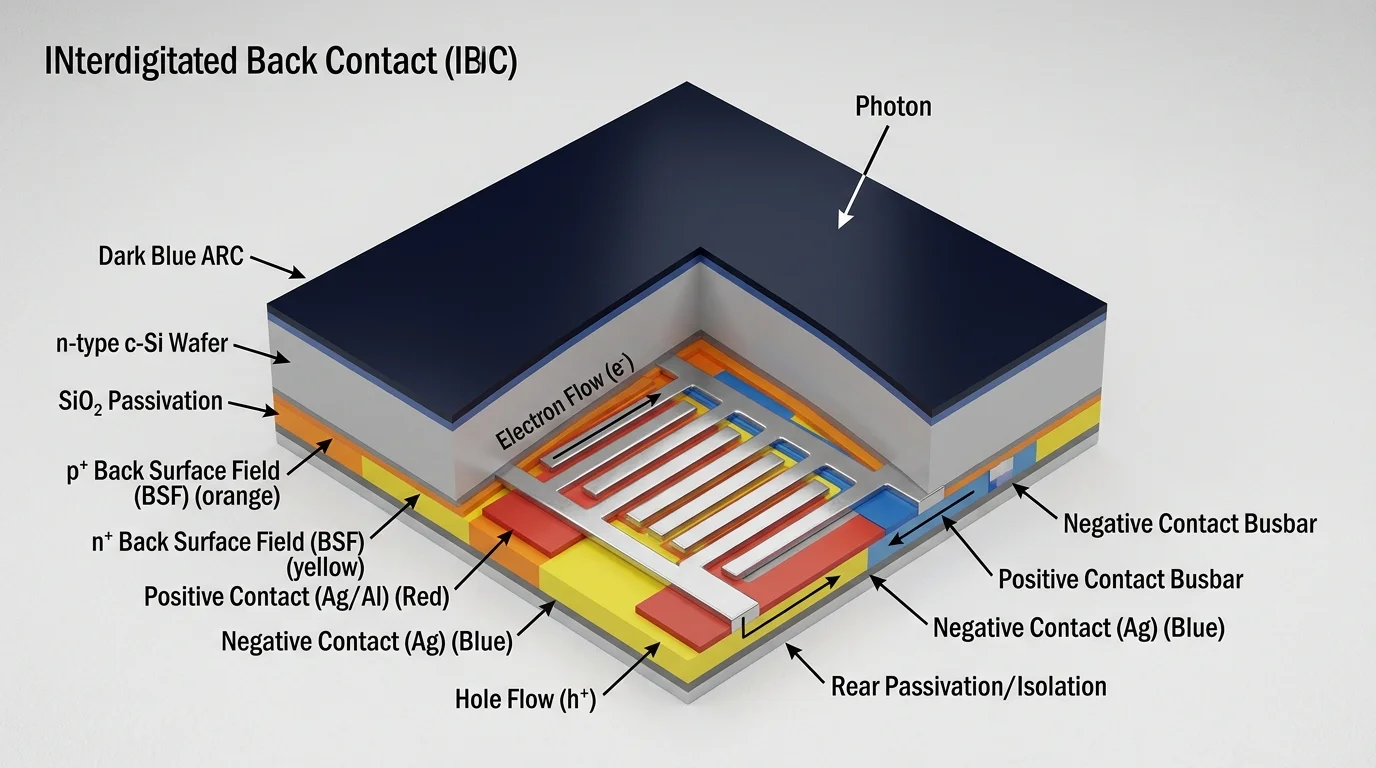
The word “interdigitated” means interlocking like fingers on two hands. On the back of the silicon wafer, manufacturers create alternating strips of positive (p-type) and negative (n-type) silicon. These strips interlock like combs:
- Clean Front Surface: The front surface consists purely of an anti-reflective coating and a passivation layer over the silicon wafer. There are zero metal wires to block incoming photons.
- Bulk Silicon Light Capture: Sunlight penetrates deep into the wafer, creating electron-hole pairs. Because the silicon is ultra-pure n-type silicon, these charge carriers can travel all the way through the wafer to the rear side without getting lost.
- Rear Interlocked Fingers: On the bottom face, alternating positive and negative metallic contacts collect the charges. The positive charges flow into the positive fingers, while electrons flow into the negative fingers.
By moving everything to the back, IBC cells achieve two huge physical advantages. First, one hundred percent of the front surface captures sunlight. Second, engineers can make the rear metal contacts thicker and wider to reduce electrical resistance without worrying about blocking light.
IBC vs. TOPCon vs. PERC: Side-by-Side Comparison
When shopping for modern solar panels, homeowners often weigh IBC technology against N-type TOPCon and traditional P-type PERC panels:
IBC Back-Contact Panels
- Zero front shading for maximum sunlight absorption
- Monolithic deep-black appearance with no visible front wires
- Exceptional low-light performance on cloudy mornings
- Low temperature coefficient of -0.26% per degree Celsius
- Superior resistance against microcracks and hot spots
N-Type TOPCon Panels
- Current industry standard for utility and residential projects
- Uses thin tunnel oxide layer to reduce electron recombination
- Visible front gridlines and busbars across cell faces
- Temperature coefficient around -0.30% per degree Celsius
- Competitive price per watt with strong warranties
While TOPCon panels provide strong value for large ground mounts, IBC panels deliver the highest power density per square foot. If your roof has limited space, IBC panels allow you to produce significantly more clean electricity from the exact same surface area.
Key Advantages of IBC Solar Technology
Back contact design provides benefits that go well beyond basic efficiency numbers:
Complete Front Light Absorption
Without silver metal lines or busbars blocking incoming light, every square millimeter of the front face collects solar energy. This unobstructed aperture allows IBC modules to convert more diffuse light during overcast days, early mornings, and late afternoons.
Architectural All-Black Aesthetics
Traditional solar panels have visible white grid patterns and shiny silver soldering lines. IBC panels have a completely smooth, uniform, deep black finish. For homeowners who care about curb appeal, IBC panels blend seamlessly into roof tiles and modern architecture.
Elimination of Hot Spots and Microcrack Risks
On standard solar panels, continuous thermal expansion and wind flex can crack the delicate front metal fingers, creating high resistance and dangerous hot spots. With IBC, the solid rear contact pad reinforces the entire cell, virtually eliminating cell hot spot degradation.
Partial Shading and Shade Tolerance
One of the biggest concerns for homeowners is how tree branches, chimneys, or vent pipes affect solar production.
In traditional solar panels, all cells in a string are connected in series. When a shadow falls across a few cells, the entire string slows down, like a kink in a garden hose. Furthermore, current from unshaded cells tries to push through the shaded cells, causing localized overheating called hot spots.
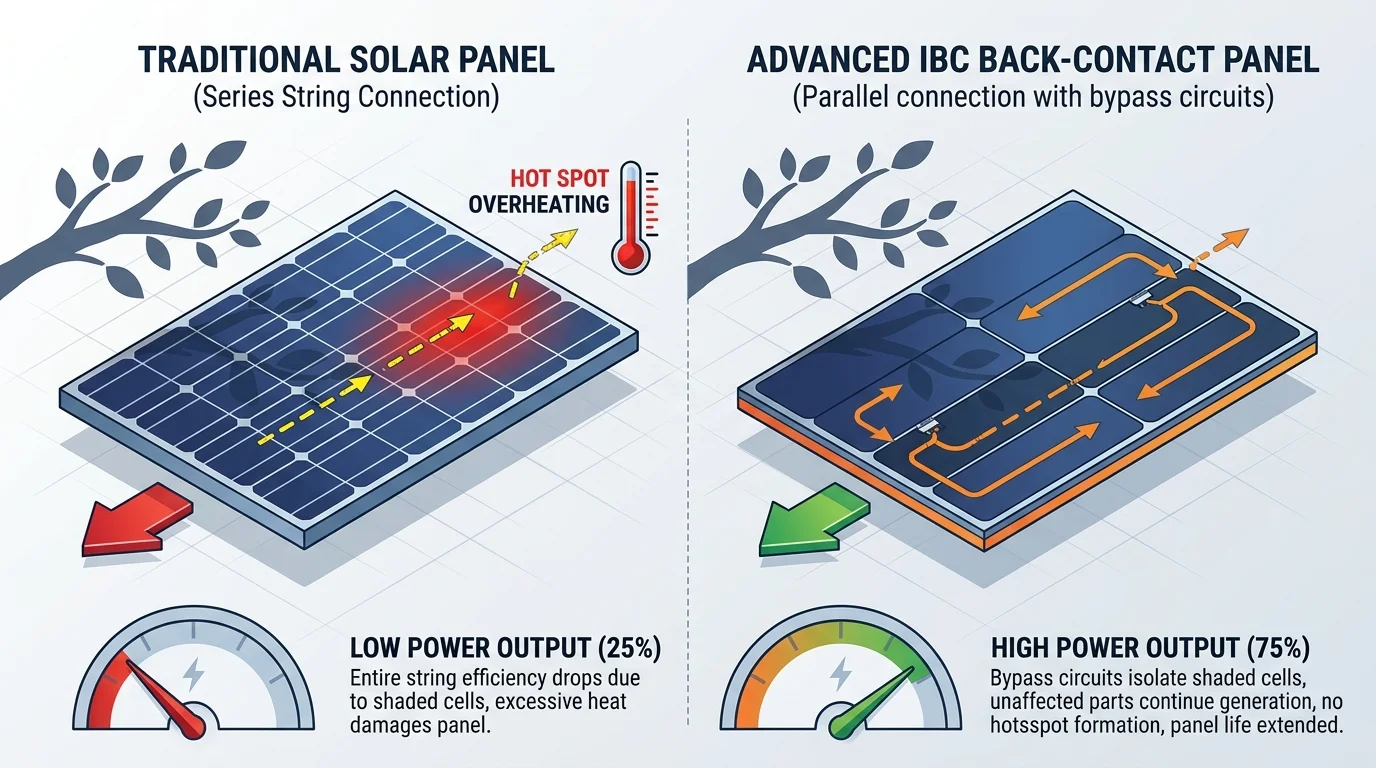
IBC panels handle partial shading much better. Because both contact polarities sit on the rear surface, current can travel across parallel rear paths. When combined with modern integrated bypass diodes, IBC panels isolate only the specific shaded zone while allowing the rest of the panel to keep producing electricity at high capacity.
This makes IBC panels ideal for complex residential roofs that experience intermittent tree shade throughout the day.
Commercial Variations: HPBC, ABC, and TBC
The solar industry uses several names for back-contact variations. Here is how they relate to the IBC family:
- HPBC (Hybrid Passivated Back Contact): Developed by large manufacturers like LONGi, this approach combines back-contact architecture with composite passivation layers, lowering manufacturing costs while maintaining high efficiency.
- ABC (All Back Contact): Pioneered by manufacturers like Aiko Solar, ABC eliminates all front busbars and uses silver-free metalization on the back, reaching commercial module efficiencies above twenty-four percent.
- TBC (TOPCon Back Contact): This design merges TOPCon tunnel oxide passivation with an interdigitated rear layout, combining low surface recombination with zero front shading.
These variations all share the same core philosophy: get the metal out of the sun’s way and let the silicon do its job.
Are IBC Solar Panels Worth It for Your Home?
IBC solar panels typically cost fifteen to twenty-five percent more upfront than standard TOPCon or PERC panels. However, they are worth the investment in specific situations:
- Limited Roof Space: If your roof is small or has unusual roof planes, IBC panels maximize the total kilowatt capacity you can install.
- Strict HOA or Architectural Guidelines: If your homeowners association or local building codes demand aesthetic roof integration, the uniform all-black appearance of IBC panels offers the best curb appeal.
- Hot Climates: Because IBC cells have a very low temperature coefficient (around -0.26% per degree Celsius), they lose less power during sweltering summer afternoons than standard panels.
- Long-Term Ownership: Many IBC panels come with forty-year performance warranties and degradation rates below zero point two five percent per year, providing dependable power for decades.
Frequently Asked Questions
IBC panels move all electrical contacts, fingers, and busbars to the back side of the cell. Standard panels place silver metal lines across the front surface, which blocks between three and eight percent of incoming sunlight.
Because there are no silver contact lines or busbars on the front of the cell, you see only the dark, anti-reflective silicon surface. This creates a uniform, deep black appearance that looks much cleaner on residential roofs.
Yes. IBC panels have parallel current paths on their rear side and work effectively with bypass circuits. If a branch shadows one section of the panel, the unaffected parts continue to produce power with minimal loss and without forming hot spots.
IBC panels are known for their exceptional durability. Because the front surface has no solder joints or metal strips to pull loose over time, many top-tier IBC panels carry warranties of thirty to forty years.