Hybrid Solar Inverters: Technology and Buyer Guide
Learn how hybrid solar inverters combine solar array management, battery storage charging, and grid backup into one single system. Compare costs and features.
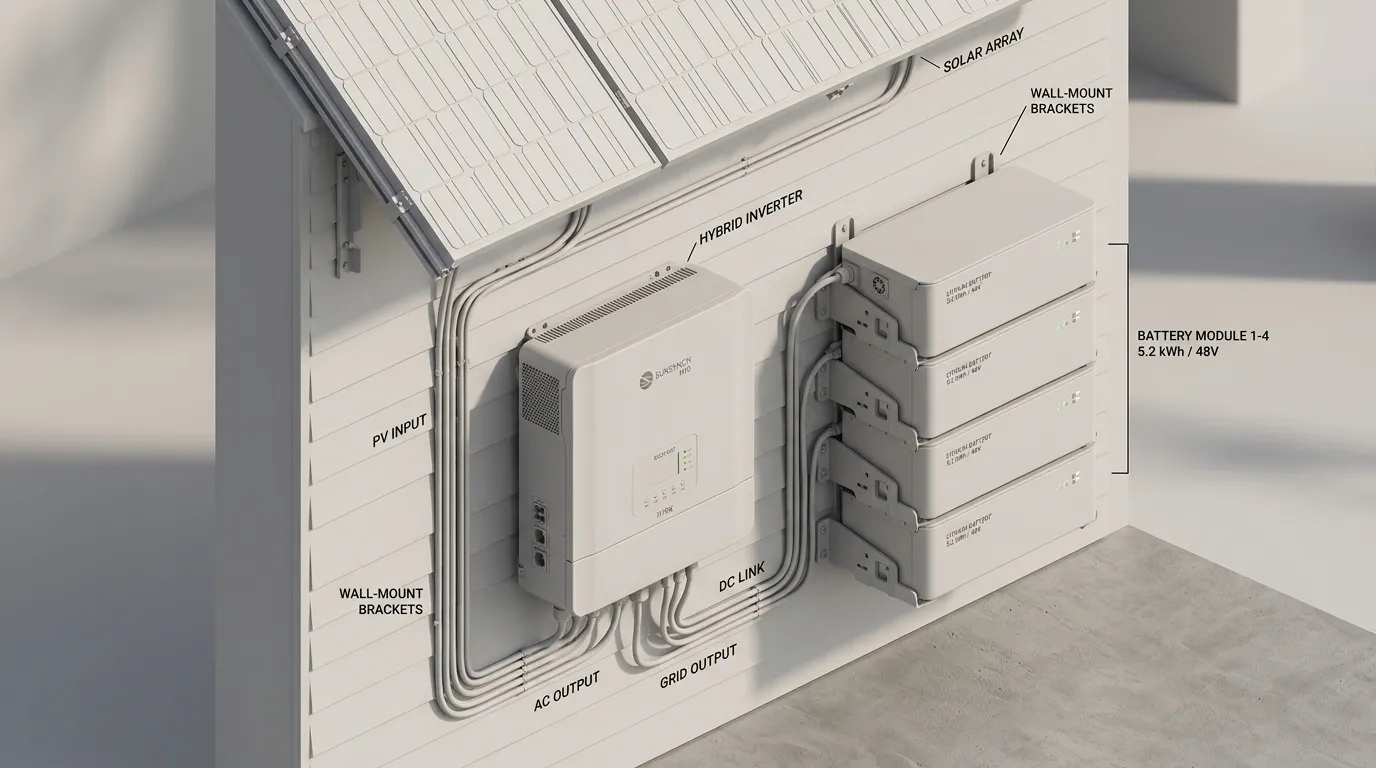
Solar energy systems rely on inverters to function. Solar panels produce direct current (DC) power from sunlight, but home appliances require alternating current (AC) power. In traditional solar setups, homeowners had to purchase a string inverter for the solar panels and a separate charger or inverter for battery storage.
Hybrid solar inverters change this design by combining all three critical jobs into one smart device. A hybrid inverter manages solar panel input, charges battery banks with built-in controllers, and converts power for home appliances. This guide covers how hybrid inverters work, key features, cost comparisons, and selection criteria for home solar systems.
How Hybrid Inverter Technology Works
A hybrid solar inverter acts as the central control hub for your entire power system. It manages electricity from three sources: solar panels, battery storage, and the electrical grid.
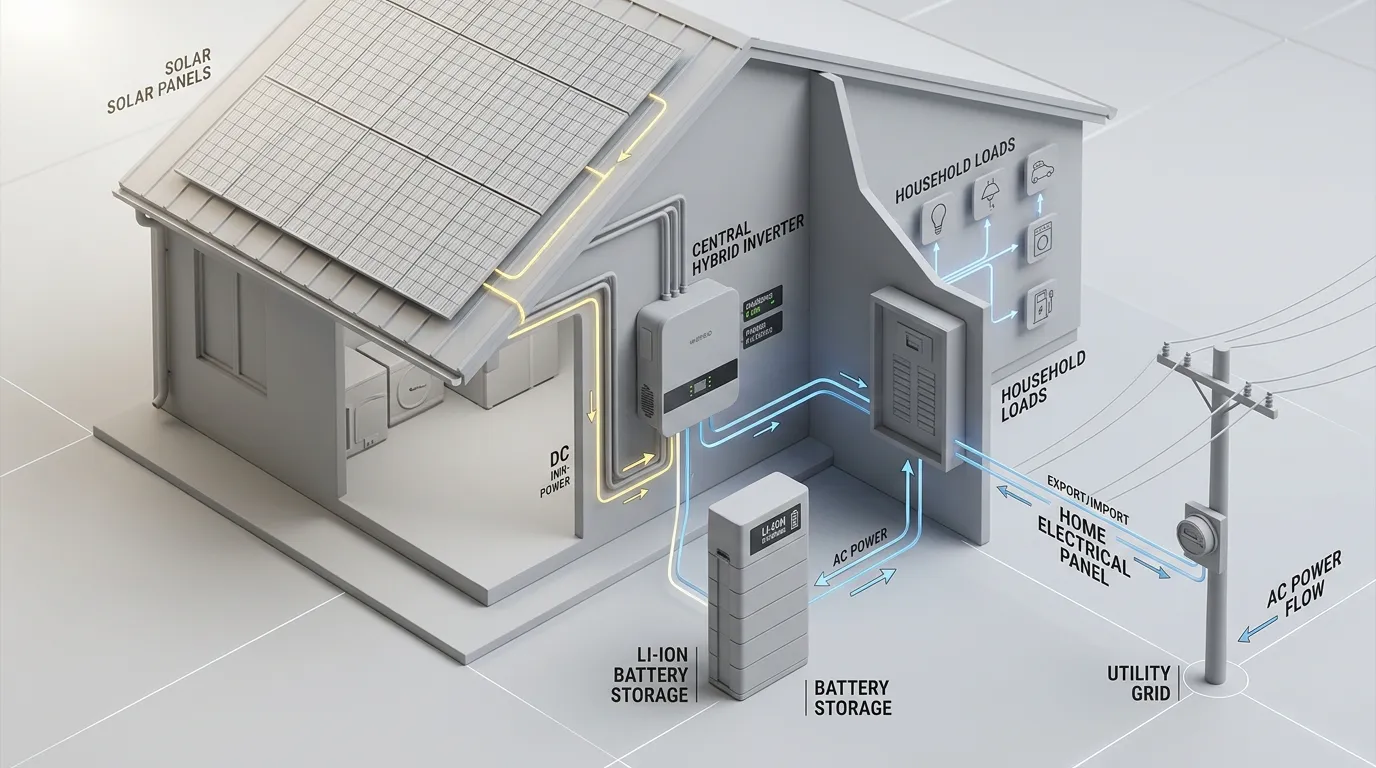
Direct DC Solar Charging
Solar panels output direct current electricity. An internal Maximum Power Point Tracking (MPPT) controller inside the hybrid inverter adjusts voltage to squeeze maximum energy from the array. The unit routes surplus DC electricity straight to battery storage without converting it to AC first.
Pure Sine Wave Conversion
The high-efficiency inverter section converts stored battery DC power or direct solar power into clean AC electricity. Pure sine wave output ensures sensitive home electronics like refrigerators, computers, and heat pumps run smoothly without electrical noise or damage.
Comparing System Architectures
Choosing between a standard string inverter, microinverters, and a hybrid solar inverter comes down to upfront costs, battery readiness, and installation complexity.
Traditional String Inverter
- Converts DC from solar panel strings to AC
- Requires separate battery charge controller for storage
- Higher labor cost when adding batteries later
- Standard efficiency around 95% to 97%
- 10 to 12 year standard hardware warranty
Hybrid Solar Inverter
- All-in-one solar controller, battery charger, and inverter
- Built-in automatic transfer switch for power outage backup
- Saves 20% to 40% compared to buying separate components
- Direct DC-to-DC battery charging with 98%+ efficiency
- 10 to 15 year standard manufacturer warranty
Key Benefits of Hybrid Solar Inverters
Hybrid inverters provide clear advantages for both off-grid homeowners and grid-tied systems.
Integrated Battery Readiness
With standard string inverters, adding a battery requires AC coupling. Power must convert from DC to AC on the roof, then back to DC to charge the battery, and finally to AC for home appliances. Each conversion step loses 4% to 6% of your energy. A hybrid inverter uses direct DC coupling to charge batteries straight from the solar array, preserving overall system efficiency.
Seamless Outage Backup
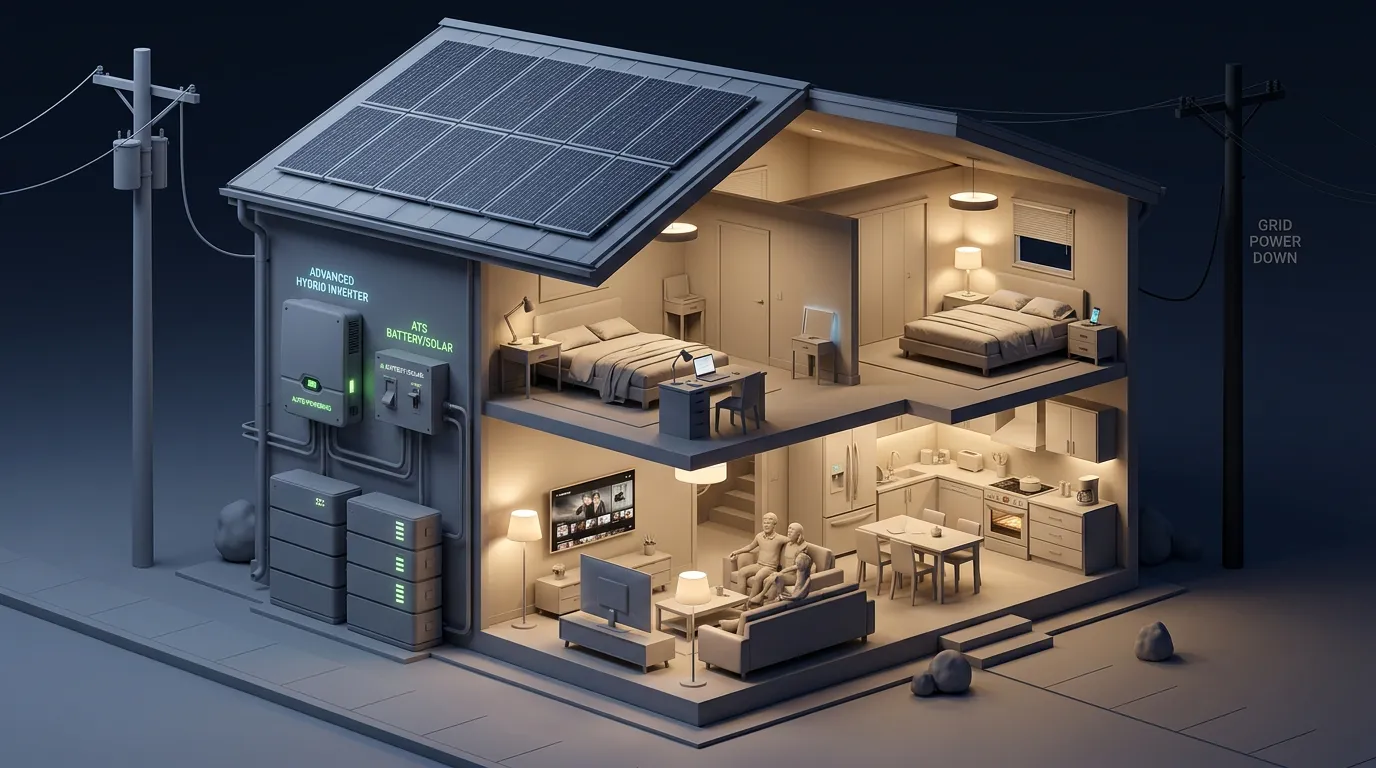
When grid power fails, standard grid-tie inverters shut down to protect utility workers. A hybrid inverter features an Automatic Transfer Switch (ATS). During a power outage, the inverter isolates your home from the grid within 10 to 20 milliseconds. Your home lights, internet, and refrigerators stay powered without interruption.
Cost Savings and Simpler Installation
Buying a single hybrid inverter saves between 20% and 40% compared to purchasing a separate inverter, MPPT controller, and transfer switch. Fewer physical boxes mean fewer wall mounts, fewer high-voltage DC wire connections, and faster installation for contractors.
Important Selection Criteria
When selecting a hybrid inverter for your home or cabin, evaluate these critical performance numbers:
- Continuous Power Rating: Size the inverter continuous wattage to cover your highest simultaneous household load. Common residential sizes range from 5,000 watts (5kW) for small homes to 12,000 watts (12kW) for large properties.
- Surge Power Rating: Air conditioners and water pumps require extra power to start up. Ensure your inverter handles peak surge power for at least 5 seconds.
- Battery Voltage Compatibility: Most modern hybrid inverters work with 48V Lithium Iron Phosphate (LiFePO4) battery racks for high efficiency and safety.
- Grid-Tie vs Off-Grid Certification: Confirm whether the inverter supports net metering export rules (such as IEEE 1547 and UL 1741 standards) if you plan to stay connected to your local utility.
Frequently Asked Questions
Yes, many modern hybrid inverters can operate in grid-tie mode without a battery bank connected. You can install the hybrid inverter today and add lithium batteries later without changing any major wiring.
An off-grid inverter operates completely separated from the utility grid. A hybrid solar inverter can connect to the utility grid to export excess power or import electricity, while also maintaining off-grid battery backup mode during blackouts.
Quality hybrid inverters are built with durable solid-state electronics and high-grade cooling systems. Most manufacturers offer warranties ranging from 10 to 15 years, with an expected operating lifespan of 12 to 15 years.
Most current hybrid inverters feature programmable charge profiles for Lithium Iron Phosphate (LiFePO4), Lithium-ion, and traditional Sealed Lead-Acid batteries. Always check manufacturer battery compatibility lists before purchasing.