Heterojunction Solar Panels (HJT): Technology, Efficiency, and Cost
Discover how Heterojunction (HJT) solar panel technology combines silicon wafer layers with thin film to maximize solar efficiency and durability.

Solar power technology is advancing faster than ever. As homes and businesses seek higher energy output from limited roof space, engineers have developed next-generation solar cell designs.
One of the most promising technologies entering mainstream production is the Heterojunction (HJT) solar panel. HJT solar panels combine two different solar technologies into a single powerful cell. By placing thin amorphous silicon films onto a solid crystalline silicon wafer, HJT cells reach industry-leading sunlight conversion rates and long-term durability.
In this guide, we break down what HJT solar panels are, how they work, and why they represent a giant leap forward in renewable energy.
What is Heterojunction Technology (HJT)?
The word heterojunction means joining two different materials together. In traditional solar cells, the entire cell is made from one single type of crystalline silicon. HJT cells take a hybrid approach.
An HJT solar cell starts with an N-type monocrystalline silicon wafer in the middle. Manufacturers then coat both sides of this wafer with ultra-thin layers of amorphous silicon (thin-film silicon).
This multi-layer sandwich structure creates three distinct advantages:
- Better Light Absorption: The thin-film layers capture wavelengths of light that normal silicon passes through.
- Reduced Surface Recombination: The amorphous silicon passivates the wafer surfaces, preventing generated electrons from getting trapped before they exit the cell.
- Higher Voltage: The resulting junction produces a higher open-circuit voltage, resulting in higher overall panel efficiency.
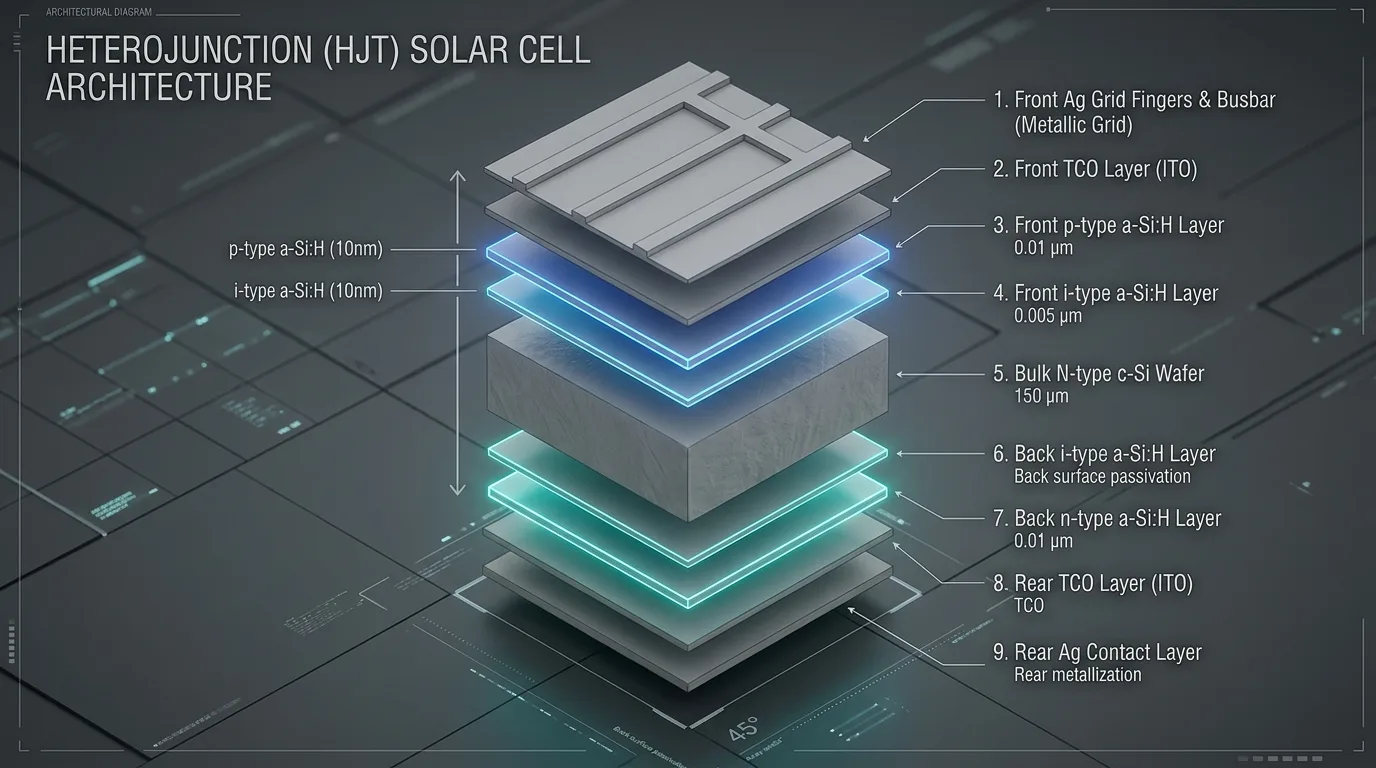
Commercial HJT cell efficiency ranges from twenty-four percent to over twenty-six percent, while total panel module efficiency reaches twenty-two point five percent to twenty-four point five percent.
HJT vs. TOPCon vs. PERC: Side-by-Side Comparison
Solar buyers often compare HJT to other major panel technologies like P-type PERC and N-type TOPCon. Here is how HJT stands out:
HJT Solar Panels
- Cell efficiency between twenty-four and twenty-six percent
- Ultra-low temperature loss of negative zero point two6 percent per degree
- High bifaciality rating up to ninety-five percent
- Immune to Light-Induced Degradation (LID)
- Long warranty with ninety-two percent power output at 25 years
TOPCon Solar Panels
- Cell efficiency between twenty-three and twenty-four point five percent
- Low temperature coefficient of negative zero point two-nine percent
- Bifaciality rating of eighty percent
- Lower initial manufacturing equipment conversion cost
- Standard thirty-year power warranty
Wholesale prices for HJT panels average twenty-five to thirty-five cents per watt. While initial panel costs are slightly higher than older PERC panels, HJT yields significantly more total power over its operational life.
Key Benefits of HJT Solar Panels
Investing in HJT technology provides several clear advantages for solar installations:
Outstanding Hot-Weather Performance
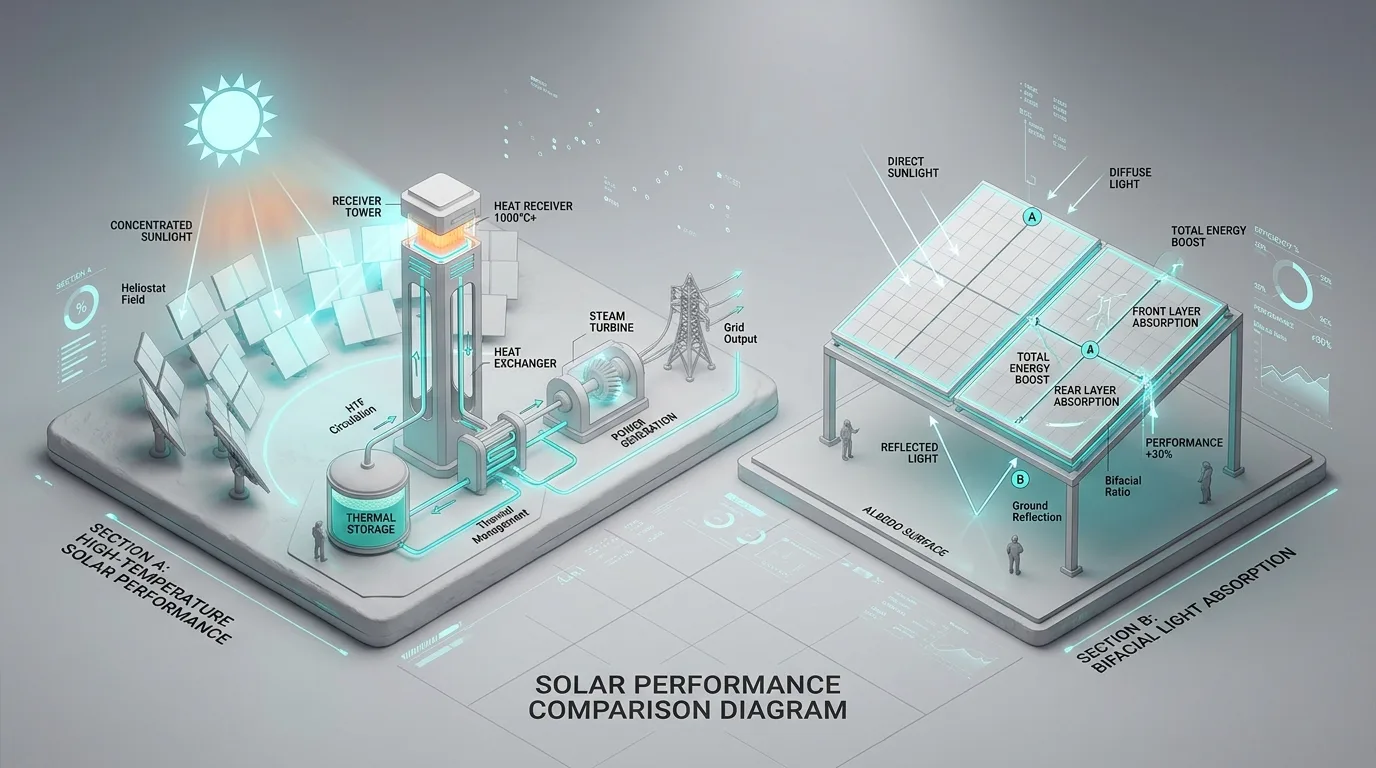
Standard solar panels lose efficiency when temperatures rise above room temperature. HJT panels feature an industry-leading temperature coefficient of negative zero point two-six percent per degree Celsius. On hot summer days when roof temperatures exceed one hundred degrees Fahrenheit, HJT panels generate noticeably more power than standard modules.
Extreme Bifacial Gain
HJT cells are naturally symmetrical. This allows them to capture reflected sunlight from the back of the panel with up to ninety-five percent efficiency relative to the front side. When installed on ground mounts, commercial roofs, or snow-covered surfaces, back-side light reflection boosts total energy yield by ten to thirty percent.
Minimal Annual Degradation
Because HJT uses N-type silicon wafers, it completely eliminates Boron-Oxygen Light-Induced Degradation (LID). Annual performance loss is limited to approximately zero point two-five percent per year. As a result, HJT panels retain over ninety percent of their original rated power after twenty-five years.
Simplified Manufacturing and Environmental Footprint
Building traditional solar cells requires up to fourteen separate high-temperature manufacturing steps. In contrast, HJT cell fabrication requires only six core steps operating at lower processing temperatures (around two hundred degrees Celsius).
This lower thermal budget reduces the carbon footprint and energy needed during panel manufacturing. It also lowers mechanical stress on silicon wafers, allowing thinner wafers to be used without increasing cell breakage during production.
Frequently Asked Questions
Yes. Although HJT panels carry a small upfront price premium, their higher temperature tolerance, strong rear-side bifacial yield, and minimal yearly degradation deliver a higher total energy harvest and lower cost per kilowatt-hour over thirty years.
HJT panels perform exceptionally well in low light. The amorphous silicon layer absorbs diffuse sunlight during early morning, late afternoon, and heavily overcast days more effectively than single-layer crystalline panels.
HJT panels are built to last thirty to forty years. Most manufacturers offer a thirty-year linear performance warranty that guarantees at least ninety percent of original power capacity after twenty-five years.