Vehicle-to-Home Solar: How Bidirectional EV Charging Powers Your Home
Learn how bidirectional EV charging (V2H) turns your electric car into a solar backup battery. Discover hardware requirements, costs, and efficiency.
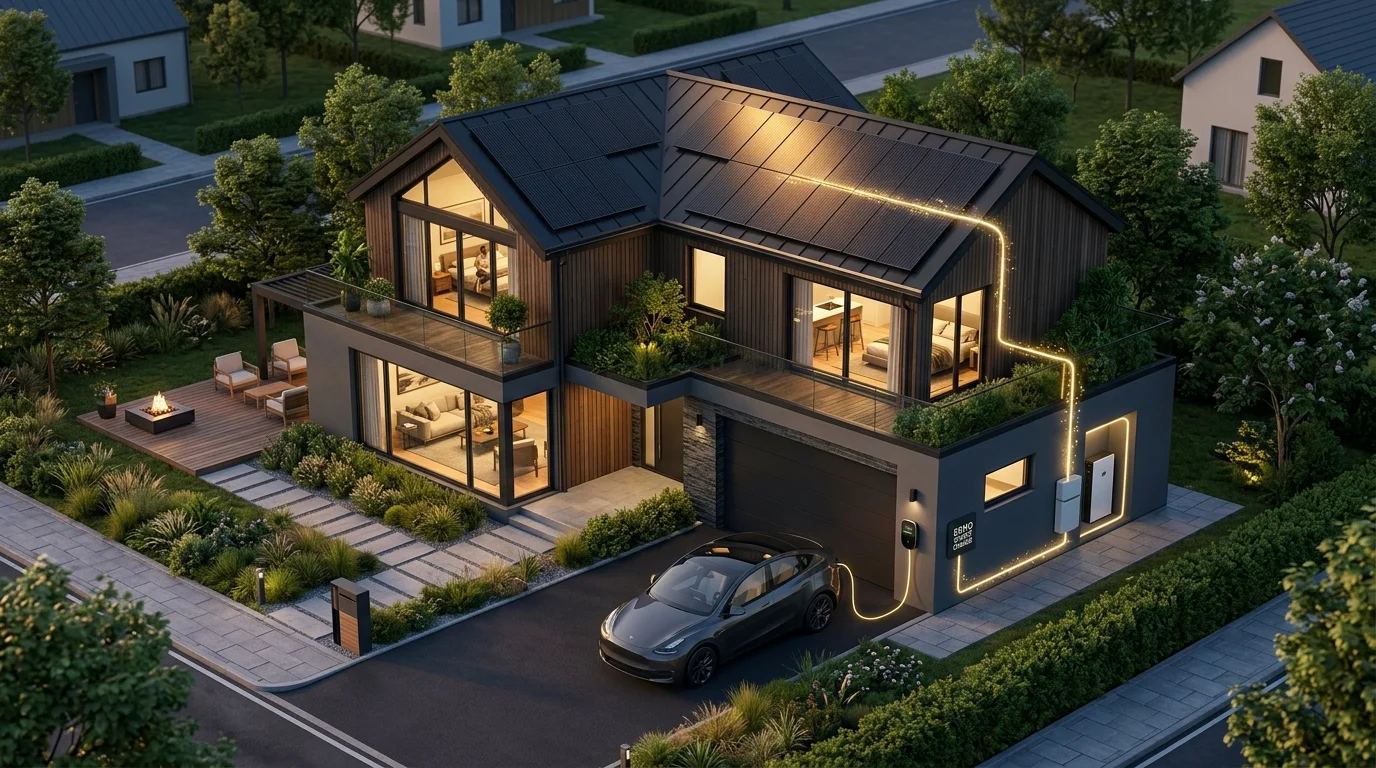
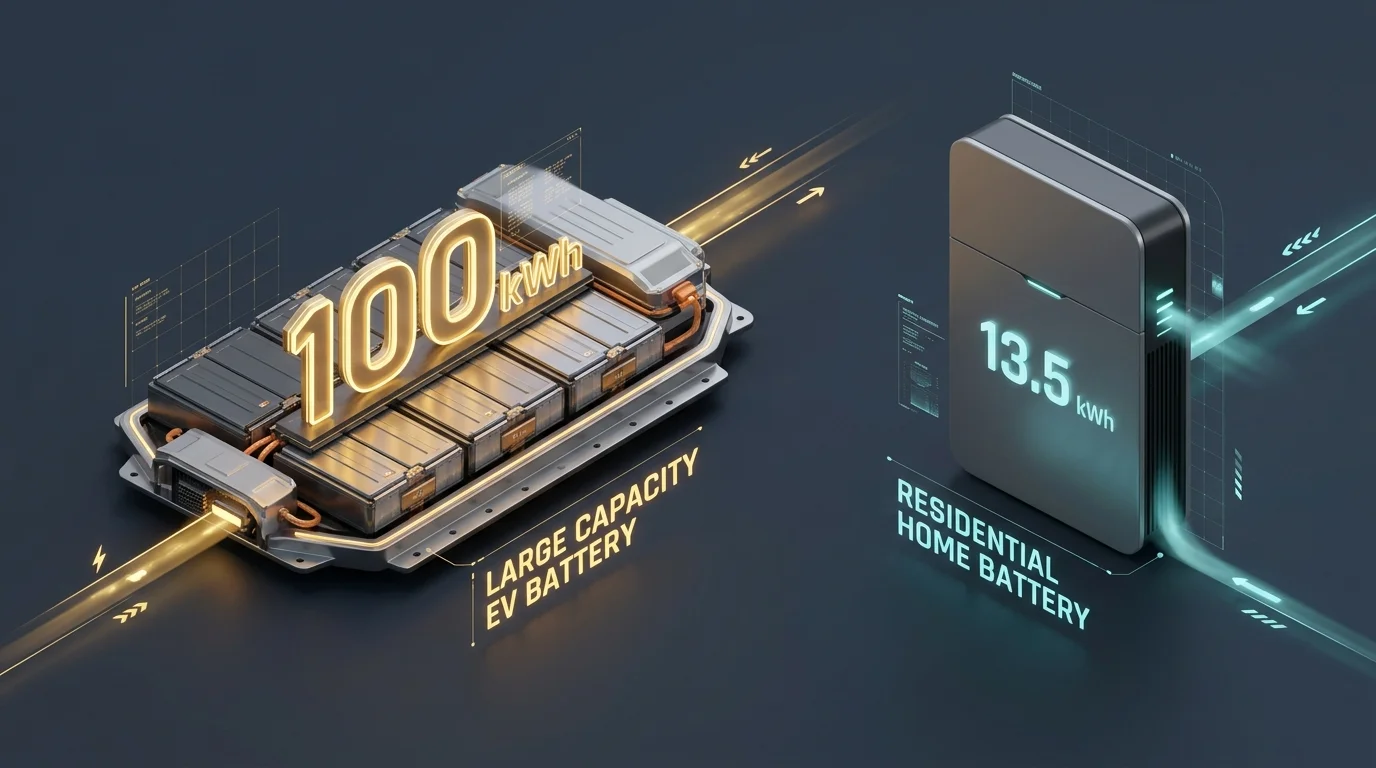
Electric vehicles carry some of the largest battery packs found in modern homes. A typical electric car has a battery capacity between 60 kilowatt-hours (kWh) and 130 kWh. For comparison, a standard wall-mounted home battery holds only 10 to 14 kWh.
Until recently, power could only flow in one direction: from the electric grid or solar panels into your vehicle. Today, bidirectional charging technology changes the equation. With Vehicle-to-Home (V2H) charging, your electric car can send power in reverse. It allows you to store excess rooftop solar electricity during the daytime, and then use that clean power to run your household at night or survive multi-day grid blackouts.
Here is a full breakdown of how vehicle-to-home solar systems work, the hardware you need, and how much backup power an electric car can provide.
Bidirectional Charging at a Glance
Vehicle-to-Home (V2H)
Powers your main breaker panel or critical subpanel through an automatic transfer switch. Runs household lighting, refrigerators, air conditioning, and appliances.
Stationary Home Battery
Permanently installed on the garage wall. Always available at home, but offers significantly less total storage capacity per dollar invested.
Vehicle-to-Load (V2L)
Provides standard 120V or 240V plug outlets on the vehicle body. Great for power tools or camping gear, but cannot power your home electrical panel directly.
How Vehicle-to-Home Solar Works
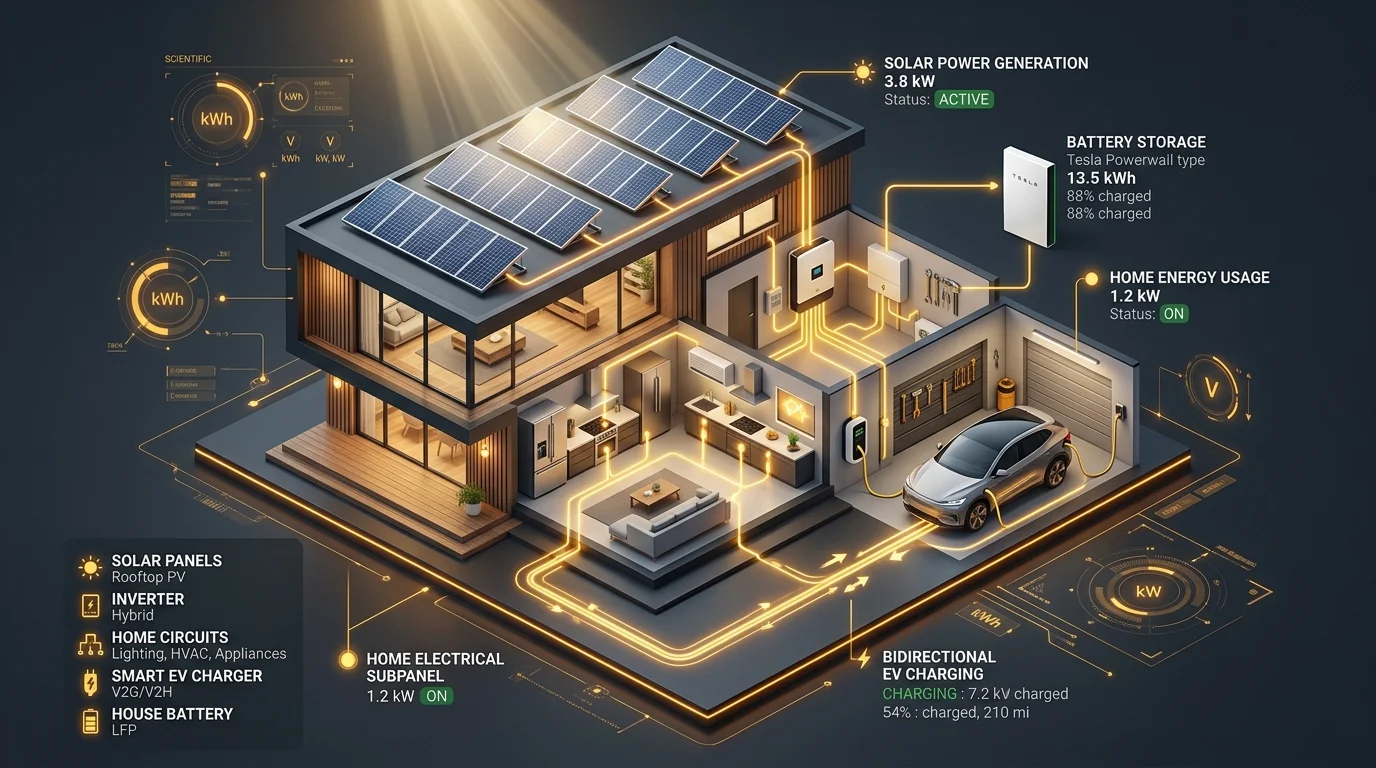
A complete V2H solar setup links four main parts together: rooftop solar modules, a smart bidirectional charger, an automatic transfer switch, and your electric vehicle.
Rooftop Solar Captures Clean Power
During sunny hours, your rooftop solar panels generate Direct Current (DC) electricity. When your home does not need all the electricity right away, the extra power is directed to your driveway or garage.
Smart Charger Fills the EV Battery
The bidirectional charger sends solar energy directly into the vehicle battery pack. Advanced software can automatically prioritize charging the car only when solar production exceeds normal house consumption.
Automatic Grid Isolation
When the sun sets or a grid outage occurs, the system isolates your home from the utility grid. An automatic transfer switch prevents dangerous back-feeding into external power lines while keeping your home circuits active.
Vehicle Discharges Electricity to Home
The vehicle sends stored DC electricity back through the bidirectional inverter. The inverter converts it into standard 120V and 240V Alternating Current (AC) electricity to power your lights, refrigerators, and climate systems.
V2H vs Dedicated Home Batteries: Storage Capacity
The most compelling advantage of V2H is storage scale. A standard residential home consumes between 20 and 30 kWh of electricity per day.
A single wall-mounted home battery provides around 13.5 kWh of usable capacity. This is enough to keep a refrigerator, lights, and basic electronics running for about half a day to one full day. In contrast, an electric pickup truck or SUV with a 100 kWh battery pack holds enough stored electricity to sustain essential home loads for three to seven days without any solar input. When paired with active rooftop solar panels that recharge the vehicle daily, backup duration can extend almost indefinitely.
Essential Hardware for a V2H Solar Setup
Setting up bidirectional charging requires specific electrical hardware certified for home backup use:
- Bidirectional EV Charger / Inverter: Unlike standard Level 2 chargers that only deliver AC power to the car, a bidirectional charger can draw high-voltage DC power from the car and convert it to AC for household use.
- Home Integration System & Transfer Switch: A certified isolation switch (such as an Automatic Transfer Switch or microgrid gateway) safely disconnects your home from the electrical grid during blackouts. This ensures line worker safety and meets National Electrical Code standards.
- Compatible Electric Vehicle: The vehicle must have firmware and hardware that allows bidirectional DC export. Leading vehicles with built-in bidirectional support include the Ford F-150 Lightning, Tesla Cybertruck, GM Ultium vehicles (such as the Silverado EV and Blazer EV), and the Nissan Leaf.
- Smart Electrical Subpanel: Installing a smart electrical subpanel lets you prioritize critical loads like food refrigeration, medical devices, well pumps, and WiFi routers, preserving battery range for when you need to drive.
Energy Efficiency and Battery Health
When electricity moves from solar panels into an EV battery and then back into your home, some energy is lost as heat during the conversion process.
- AC-Coupled Systems: Round-trip efficiency generally ranges from 80% to 85%. Power is converted from DC to AC, then back to DC for storage, and finally to AC for home consumption.
- DC-Coupled Systems: Direct DC charging skips extra conversion steps, achieving round-trip efficiency between 88% and 92%.
Homeowners often ask whether discharging their EV battery into their home will wear out the battery prematurely. Research from national renewable laboratories indicates that discharging power at low home consumption rates (typically 2 to 6 kW) creates far less heat and chemical stress on battery cells than high-speed driving or fast DC charging (which frequently exceeds 150 kW). For most drivers, using V2H for emergency backup or modest evening peak shaving causes minimal impact on overall battery lifespan.
Frequently Asked Questions
No. The vehicle must be manufactured with bidirectional power hardware and approved software protocols (such as ISO 15118-20 or dedicated manufacturer systems). Currently, models like the Ford F-150 Lightning, Tesla Cybertruck, GM Ultium series, Nissan Leaf, and select upcoming Hyundai and Kia models support bidirectional home integration.
With basic energy conservation (running refrigerators, lights, internet, and essential outlets), a 75 kWh to 100 kWh EV battery can power a typical home for 3 to 7 days. If your rooftop solar panels continue generating power during the daytime, the system can recharge the car and extend backup power indefinitely.
Yes, provided you have an automatic transfer switch or home integration gateway installed. The switch isolates your home electrical circuits from the utility grid, creating a safe, self-contained microgrid powered by your EV battery and solar panels.
A complete bidirectional charging system, including the bidirectional charger, home integration switch, and professional electrical installation, typically costs between $5,000 and $10,000. While this is an upfront investment, it is often substantially cheaper than purchasing multiple stationary home battery units to achieve equivalent storage capacity.
Major automakers that sell official V2H integration systems (including Ford, GM, and Tesla) fully cover bidirectional home backup within their standard vehicle and battery warranties. Always verify your specific vehicle warranty terms before connecting third-party bidirectional equipment.