Solar Renewable Energy Certificates (SRECs): How to Earn and Sell Solar Credits
Learn how Solar Renewable Energy Certificates (SRECs) work, how 1 MWh equals 1 credit, state pricing, registries, and the best ways to sell your solar credits.
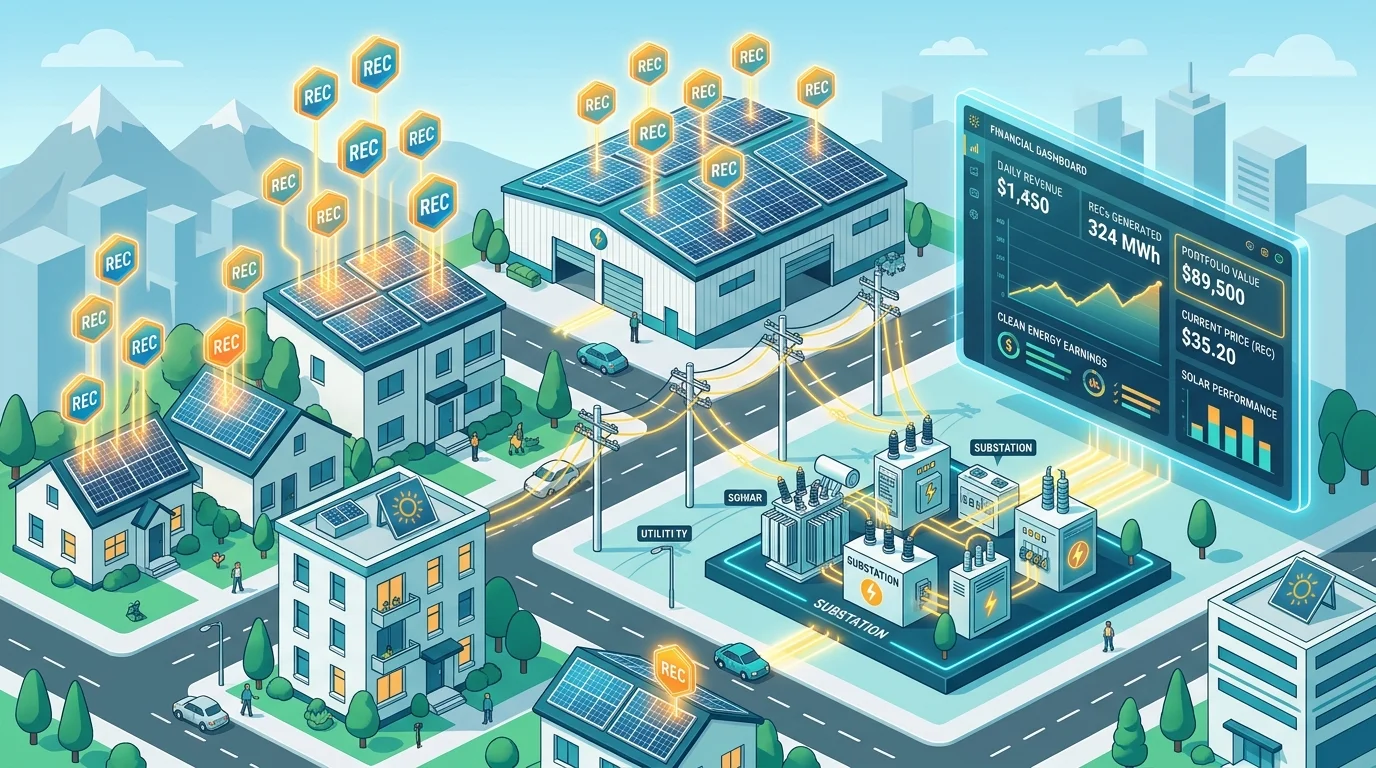
When you install rooftop solar panels, your system generates two separate products at the exact same time. The first product is physical electricity (kilowatt-hours) that powers your home and reduces your utility bill. The second product is the environmental value of producing clean energy instead of burning fossil fuels.
In states with clean energy laws, this environmental value is packaged into a tradeable financial asset called a Solar Renewable Energy Certificate (SREC).
Selling your SRECs can provide hundreds or even thousands of dollars in extra cash income every year. This income comes on top of your monthly electric bill savings and the federal solar tax credit, significantly speeding up your solar payback period.
Here is a complete guide to understanding how SRECs work, how much they are worth, which states offer active markets, and how to sell your credits for maximum profit.
What Is an SREC and How Does It Work?
A Solar Renewable Energy Certificate represents proof that your solar energy system generated and delivered clean electricity.
The standard measurement is straightforward:
- 1 SREC = 1 Megawatt-Hour (1,000 Kilowatt-Hours) of Solar Electricity
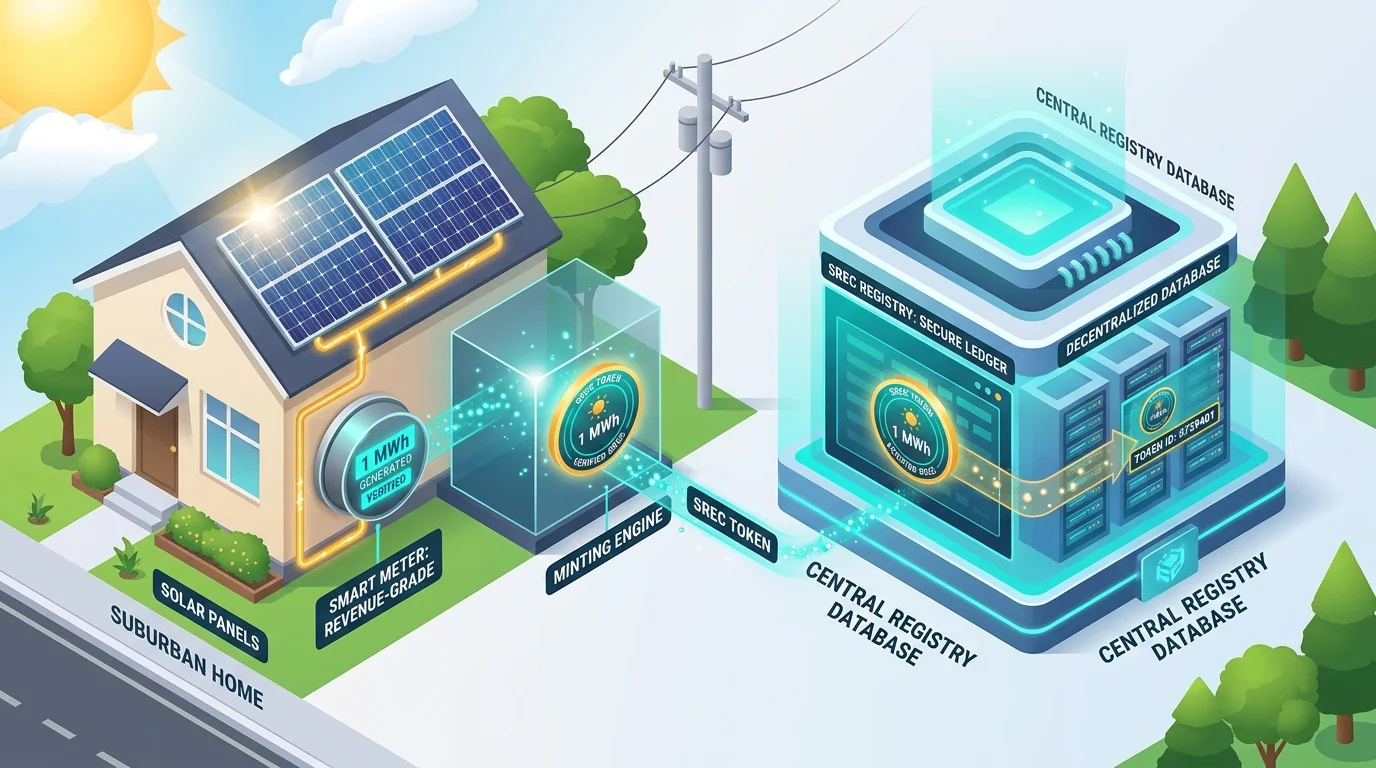
Every time your solar inverter and revenue meter count 1,000 kWh of clean power generation, your state registry mints one new SREC tied to your unique system ID.
You earn SRECs regardless of whether you consume the solar electricity inside your home or export it back to the grid. Even if you use every single kilowatt-hour to power your air conditioning and charge your electric vehicle, you still generate SRECs for the total volume of power produced.
SREC vs. REC: What Is the Difference?
A standard Renewable Energy Certificate (REC) can come from any renewable source, including large wind farms, hydroelectric dams, geothermal plants, or biomass facilities.
An SREC is a specialized solar-only certificate. Because some state laws require power companies to buy clean electricity specifically from solar installations, SRECs trade in their own distinct markets. Because solar targets are strict, SRECs often trade for much higher prices than generic wind or hydro RECs.
Why Do Power Companies Buy SRECs?
Electric utilities and competitive retail electricity suppliers do not buy SRECs out of goodwill. They buy them because state law mandates it.
Many states enforce a policy known as a Renewable Portfolio Standard (RPS). Under an RPS, electric utilities must source a growing percentage of their power supply from renewable energy by specific target dates.
To encourage local rooftop solar adoption, several states include a Solar Carve-Out within their RPS. This rule requires utilities to acquire a specific portion of their renewable quotas strictly from solar generators located within their service territory.
If a utility company fails to collect enough SRECs to meet its annual compliance quota, state regulators impose a steep penalty called the Solar Alternative Compliance Payment (SACP).
Because paying the SACP is an unrecoverable regulatory penalty, utilities prefer to buy SRECs from homeowners and businesses. As a result, the SACP sets a functional price ceiling for SREC values in that state.
SREC Market Values by State
SREC prices are not fixed by the federal government. Instead, they fluctuate based on supply and demand within each state market. When a state sets ambitious solar mandates and supply is tight, SREC prices rise toward the state compliance fee ceiling. When many solar arrays are installed quickly and supply exceeds utility demand, prices soften.
Here is an overview of active SREC and solar incentive markets across key states:
| State / District | Program Structure | Typical Value Per SREC / MWh | Annual Production for 10 kW System | Potential Annual SREC Income |
|---|---|---|---|---|
| Washington, D.C. | SREC Market (10% Solar Carve-Out) | - | 12 MWh (12 SRECs) | ,560 - ,160 |
| New Jersey | SuSI / ADI Fixed SREC-II Program | - (Fixed 15-Year Term) | 13 MWh (13 SRECs) | ,105 - ,170 |
| Massachusetts | SMART Program (Tariff-based model) | - (Declining blocks) | 12 MWh (12 SRECs) | ,800 - ,000 |
| Maryland | SREC Market (PJM-GATS Registry) | - | 13 MWh (13 SRECs) | - |
| Pennsylvania | SREC Market (Open border rules) | - | 12 MWh (12 SRECs) | - |
| Virginia | SREC Market (Clean Economy Act) | - | 14 MWh (14 SRECs) | - |
| Illinois | Illinois Shines (Adjustable Block REC) | - (Upfront 15-Yr Value) | 13 MWh (13 SRECs) | - ,105 |
| Ohio | Open Interstate Trading | - | 12 MWh (12 SRECs) | - |
Note: In high-value markets like Washington D.C. and New Jersey, SREC revenue can pay off the entire upfront cost of a residential solar system in under 4 to 6 years.
Three Ways to Sell Your SRECs
Once your solar system is certified with the state tracking registry, you have three primary options for selling your generated certificates.
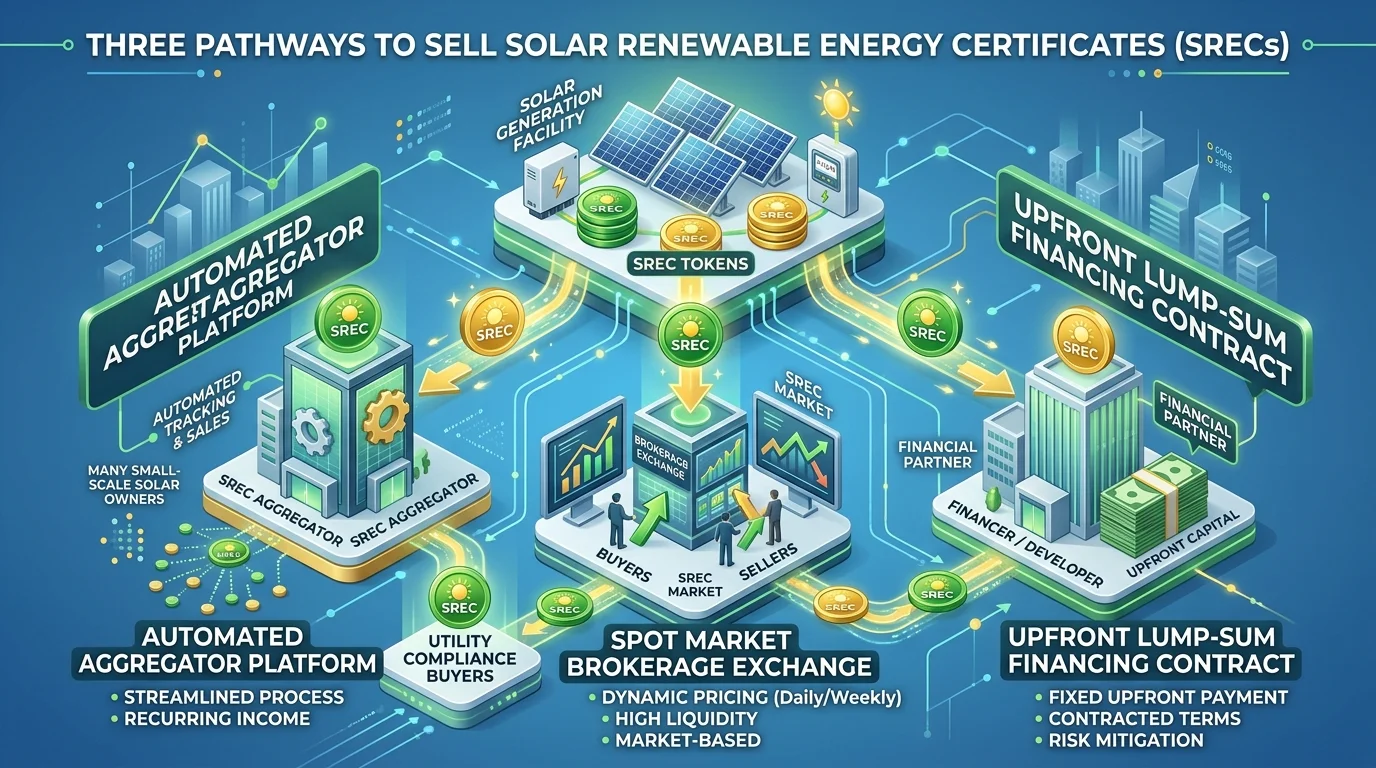
Automated Aggregator
An SREC aggregator (such as SRECTrade or Sol Systems) monitors your solar meter, automatically mints certificates, bundles them with other owners, and sells them at quarterly auctions for a small management fee (typically 3 to 7 percent).
Spot Market Brokerage
You manage your own registry account (such as PJM-EIS GATS) and set limit orders on a live exchange. This allows you to time the market and sell during peak compliance demand, but requires active market monitoring.
Upfront Lump-Sum
You transfer all future SREC rights for 5, 10, or 15 years to a financing partner or state program (like Illinois Shines) in exchange for an immediate upfront check or direct discount on your installation invoice.
Step-by-Step Guide to Claiming and Selling SRECs
To monetize your clean power generation, follow this standard certification and sales process:
Install Revenue-Grade Metering
Your solar installation must include an ANSI C12 certified revenue-grade production meter or a certified smart inverter with cellular reporting to track gross generation.
Obtain State Interconnection Approval
Complete your utility Permission to Operate (PTO) and receive your official state facility certification number from your public utility commission.
Register with Regional Tracking System
Register your solar asset in your regional tracking registry (such as PJM-EIS GATS in the Mid-Atlantic, NEPOOL-GIS in New England, or M-RETS in the Midwest).
Select Broker or Auto-Sell Contract
Link your registry account to an approved SREC aggregator platform. Choose between market-rate spot sales, fixed multi-year forward contracts, or auto-transfer payments.
Important Ownership Rules: Leases vs. Cash Purchase
Who owns the SRECs generated by a rooftop system? The answer depends entirely on your solar financing method:
- Cash Purchase or Solar Loan: When you buy your system with cash or a standard solar loan, you own 100 percent of the SRECs. You keep all ongoing cash income from selling these certificates.
- Solar Lease or Power Purchase Agreement (PPA): When you sign a third-party lease or PPA, the leasing company owns the physical equipment. In almost all standard agreements, the third-party leasing company retains and sells the SRECs. The installer uses this revenue stream to subsidize their low monthly payments.
If you live in a state with strong SREC values, owning your system outright typically offers much higher total financial returns than leasing.
Are SREC Earnings Taxable?
Yes. The Internal Revenue Service (IRS) generally considers income generated from selling SRECs as taxable gross income for homeowners and businesses.
- Reporting: SREC aggregators will issue a Form 1099-MISC or Form 1099-NEC at the end of the tax year if your annual earnings exceed reporting thresholds.
- Tax Offsets: You should consult a qualified tax advisor to understand how depreciation deductions (for commercial arrays) or basis adjustments apply to your clean energy income.
Frequently Asked Questions
Yes. Net metering and SRECs are two completely separate incentive streams that stack together. Net metering credits you on your electric utility bill for the kilowatt-hours you push onto the grid. SRECs reward you for the total gross megawatt-hours of clean electricity your panels produce, regardless of whether that power is consumed in your home or exported.
When you sell a home with an owned solar system, the SREC registration can be transferred to the new homeowner through your aggregator platform. Alternatively, some sellers negotiate to retain the SREC income rights, though transferring ownership to the homebuyer is the standard practice and increases home value.
Yes. In most states, SRECs have a defined shelf life, usually between two and three compliance years from the date of generation. If you do not sell your certificates before the compliance window closes, they expire and lose their market value. Automated aggregator auto-sell contracts prevent accidental expiration.
If your home state does not have an active SREC market, you may be eligible to sell your credits into an open regional market (such as Pennsylvania or Ohio) through an interstate tracking registry. However, out-of-state certificates trade at lower prices than in-state compliance credits.
A standard 8 kW to 10 kW residential rooftop solar system produces between 9,000 and 14,000 kWh (9 to 14 MWh) of electricity annually, depending on local sunlight levels, panel tilt, and roof orientation. This translates to 9 to 14 SRECs earned per year.