Solar Power Purchase Agreements: How Solar PPAs Work
Learn how solar power purchase agreements (PPAs) work, compare fixed and escalating rates, weigh pros and cons, and choose the right solar financing.
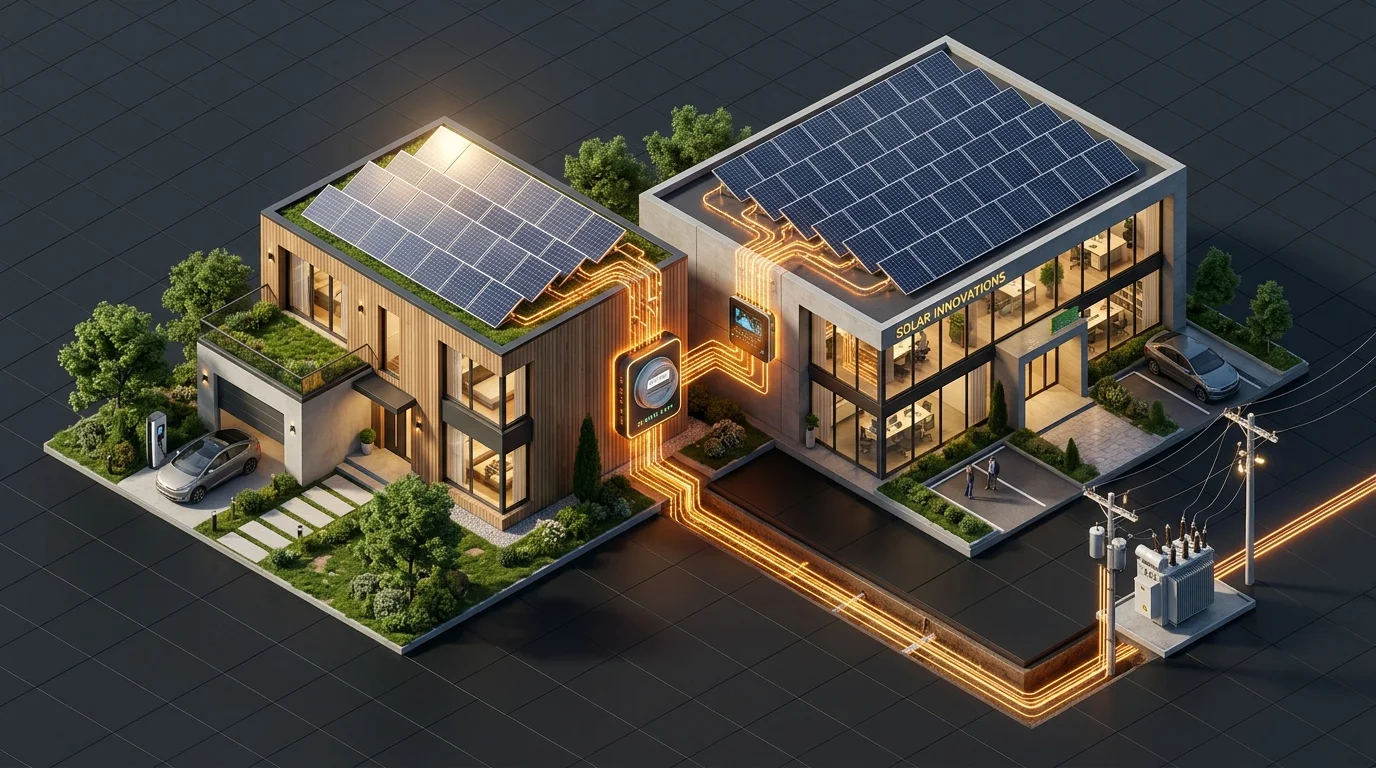
Switching to solar power offers huge utility savings, but the upfront cost of buying solar panels and battery storage can be a significant hurdle. For many homeowners and businesses, a solar power purchase agreement provides an attractive solution. A solar PPA allows you to install rooftop solar panels with zero upfront costs, purchasing the clean electricity generated at a predictable, discounted rate per kilowatt-hour.
Unlike direct solar ownership, where you purchase and maintain the equipment yourself, a solar power purchase agreement is a third-party financing model. The solar company designs, builds, owns, and services the system on your roof. In return, you simply pay for the electricity the system produces, typically at a rate lower than your local utility company charges.
Understanding how a power purchase agreement solar contract operates is critical before signing any paperwork. In this guide, we break down how solar PPAs work, compare fixed versus escalating rate structures, analyze solar ppa pros and cons, and evaluate solar lease vs ppa models so you can select the right solar financing path.
How a Solar Power Purchase Agreement Works
A solar power purchase agreement is built on a simple three-party relationship: the property host, the solar developer, and the local utility company.
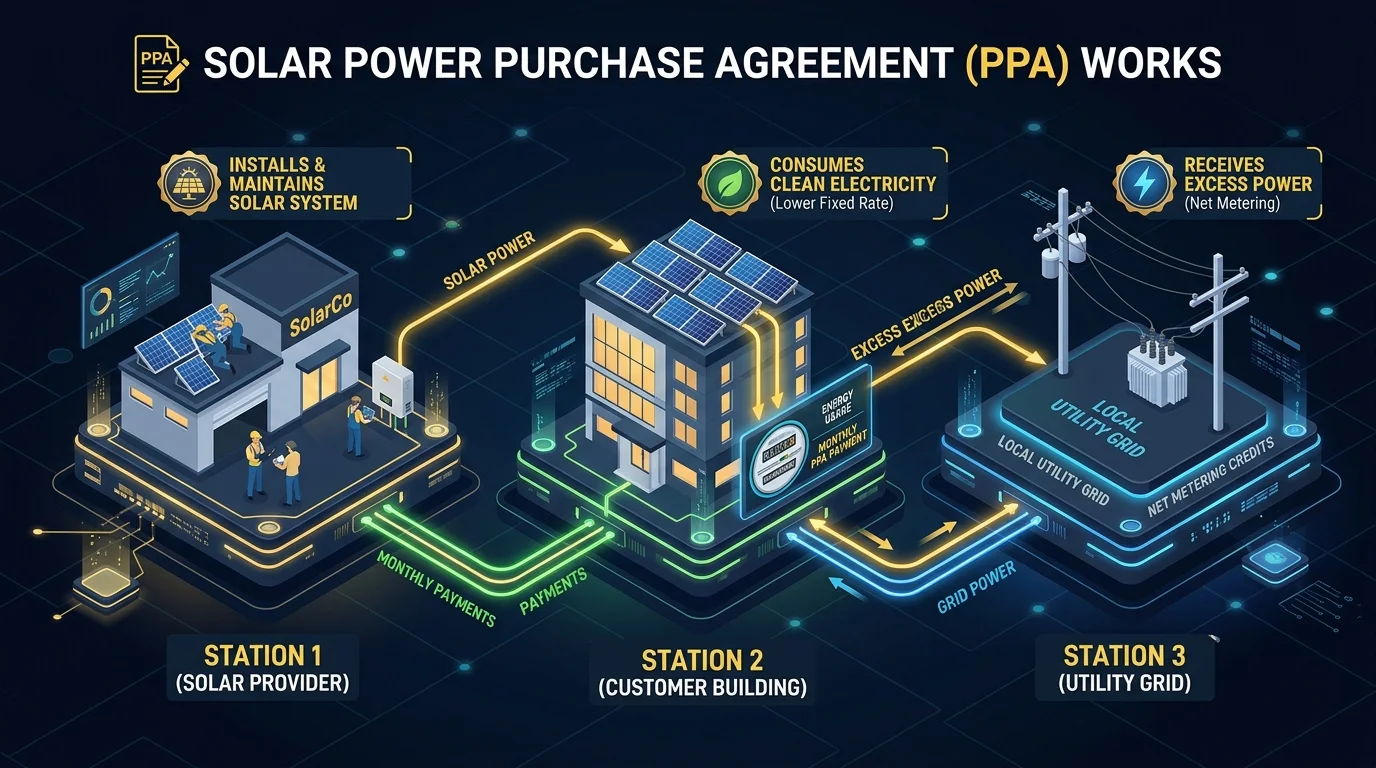
Here is how each participant functions within the agreement:
- The Solar Developer (Provider): The developer finances, installs, monitors, and repairs the solar system. Because the developer owns the equipment, they claim the federal clean energy investment tax credits and commercial depreciation benefits.
- The Host Customer (You): You provide the roof or ground space. You do not purchase the panels, inverters, or wiring. You agree to purchase all the power generated by the system at a set price per kilowatt-hour (kWh) over a period of 15 to 25 years.
- The Local Electric Utility: Your property remains connected to the main electrical grid. When your solar panels produce more electricity than your building needs during sunny midday hours, the surplus power flows into the grid, earning net metering credits. When you need extra power at night, you draw electricity from the grid as usual.
At the end of each billing cycle, you receive your regular electric utility bill for any supplemental grid power you consumed, plus a separate PPA bill for the solar kilowatt-hours generated on your roof. Because the combined cost is designed to be lower than traditional utility rates, you start saving money from day one.
Solar Lease vs. PPA vs. Direct Ownership
Many consumers confuse a solar lease with a solar PPA because both options offer zero-down installation. While they look similar on the surface, they handle billing and performance in very different ways.
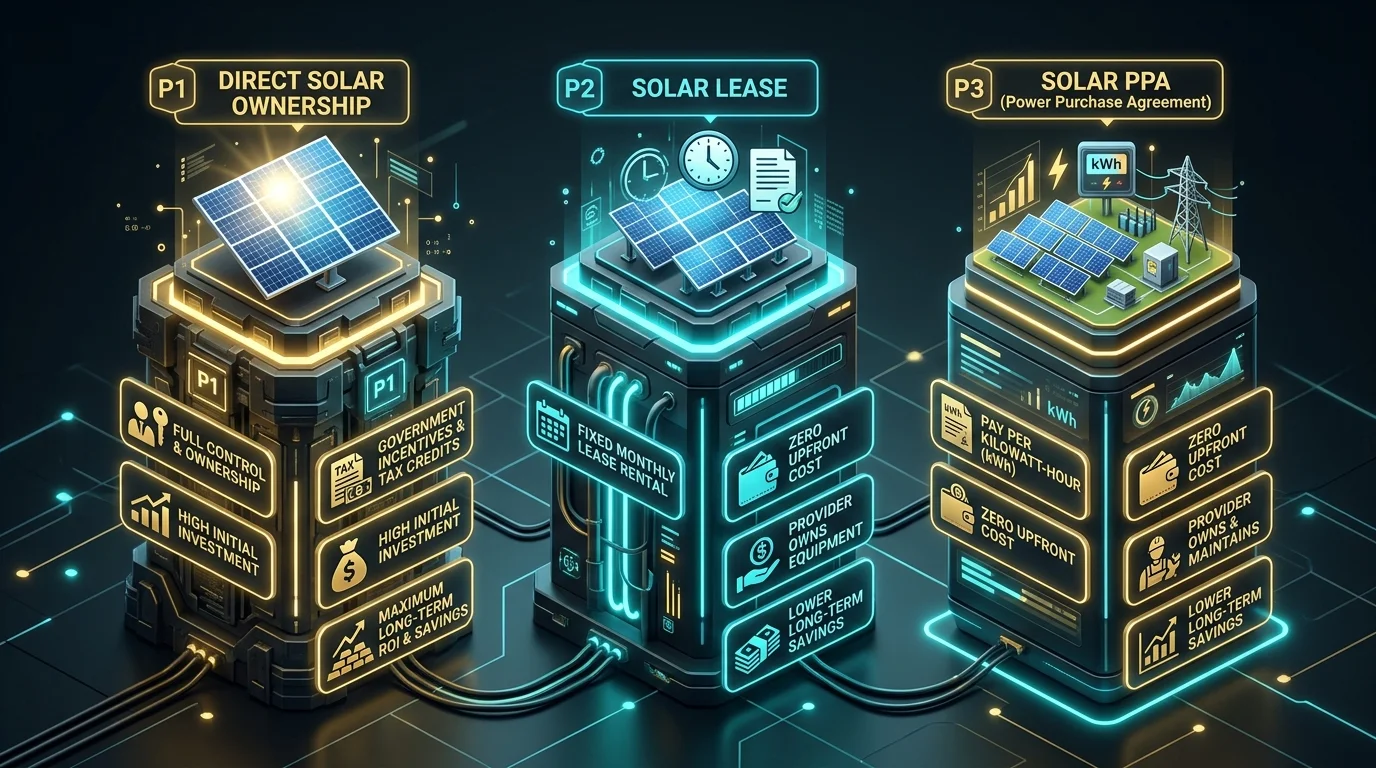
Direct Solar Purchase
- You own all equipment and reap 100 percent of energy bill savings
- You directly claim the 30 percent federal clean energy tax credit
- Increases property equity without complicated contract transfers
- Requires upfront capital or monthly loan payments with interest
- You are responsible for long-term maintenance after warranties expire
Solar Power Purchase Agreement
- Zero down payment with fully covered installation and repairs
- You pay only for the exact kilowatt-hours your system generates
- Solar developer guarantees production and repairs broken parts
- Developer claims federal tax credits and accelerated depreciation
- Flexible end-of-term buyout, extension, or equipment removal options
Solar Lease
- Zero down payment with monthly rent for the solar equipment
- Monthly payment stays the same whether the system produces power or not
- Provider manages system maintenance and component replacements
- Provider retains all federal, state, and local tax incentives
- May require contract transfer or buyout when selling the home
In a solar lease, your payment is like renting an apartment: you pay the same dollar amount every month regardless of how much electricity the system produces. In a solar PPA, your payment fluctuates with seasonal sunlight: you pay strictly for the actual kilowatt-hours the panels produce. If winter snow or cloud cover reduces power output, your PPA payment automatically drops.
Fixed Rates vs. Escalating Rates: Understanding the Escalator Clause
When reviewing a solar PPA proposal, the pricing structure is the single most important detail to check. PPA contracts generally offer two rate structures:
1. Fixed Rate Solar PPAs
Under a fixed rate PPA, your price per kilowatt-hour remains constant for the entire length of the contract. For example, if your initial agreement specifies 14 cents per kilowatt-hour, you will still pay 14 cents per kilowatt-hour in year 10 and year 20.
A fixed rate PPA provides total budget certainty. As commercial and residential utility rates rise over time, your monthly energy savings grow larger each year.
2. Escalating Rate Solar PPAs
An escalating rate PPA starts with a lower introductory rate per kilowatt-hour, but includes an annual price increase called an escalator clause. Typical annual escalators range between 1.5 percent and 2.9 percent per year.
For example, a contract starting at 12 cents per kilowatt-hour with a 2.5 percent annual escalator will reach approximately 15.3 cents per kilowatt-hour by year 10, and over 19.5 cents per kilowatt-hour by year 20.
An escalating PPA can still save you money if your local utility rates increase faster than the contract escalator. However, if utility electric prices remain flat or drop, an escalating rate can reduce your savings over time. Always ask for a contract comparison between a flat rate and an escalating rate before committing.
The Five Stages of a Solar PPA Lifecycle
Entering a solar power purchase agreement follows a structured process from your initial solar proposal to the end of the contract term.
Site Audit and Custom System Design
A solar engineer evaluates your roof condition, shading from surrounding trees, historical electricity bills, and electrical panel capacity. The developer designs a customized solar array engineered to match your annual energy consumption.
Zero-Down Permitting and Installation
The solar developer handles all building permits, utility interconnection filings, and engineering stamps. Experienced technicians install the solar panels, inverters, and metering hardware with zero out-of-pocket costs to the property owner.
Utility Interconnection and Activation
Your local utility company inspects the installation, replaces the existing meter with a bi-directional smart meter, and grants Permission to Operate (PTO). The developer turns the system on to begin generating clean electricity.
Guaranteed Generation and Ongoing Maintenance
The developer monitors system performance 24 hours a day. If an inverter fails or a solar panel malfunctions, the developer repairs or replaces the component at their own expense. Most agreements include a minimum annual production guarantee.
End-of-Term Contract Resolution
When the 15 to 25-year contract term concludes, you choose among three paths: extend the agreement at a renegotiated rate, purchase the mature system at fair market value, or have the developer remove the equipment from your roof for free.
Solar PPA Pros and Cons: A Realistic Assessment
Before choosing a solar power purchase agreement, property owners must weigh immediate cash flow benefits against long-term financial trade-offs.
The Advantages of a Solar PPA
- Zero Upfront Investment: You do not need thousands of dollars in personal savings or a high-interest home improvement loan to start using solar power.
- Immediate Utility Bill Reductions: The initial PPA price per kilowatt-hour is generally set 10 to 30 percent below standard utility electric rates, creating savings from the first month.
- Zero Maintenance Responsibility: Because the provider owns the system, they carry insurance, monitor production, and pay for all inverter replacements, wiring repairs, and warranty claims.
- Guaranteed Electricity Output: If the system underperforms due to equipment failure, the provider must compensate you for the lost generation based on contract benchmarks.
- Predictable Energy Costs: A fixed or capped PPA shields your household or business from unpredictable fossil fuel utility rate spikes.
The Disadvantages of a Solar PPA
- No Direct Tax Credits: The 30 percent federal clean energy investment tax credit and state solar rebates belong entirely to the system owner (the solar company), not you.
- Lower Lifetime Savings: Over a 25-year period, homeowners who buy solar panels directly save significantly more money than those who enter a PPA.
- Long-Term Contract Commitment: Standard contracts run for 20 to 25 years. If your circumstances change, exiting the agreement early requires a contract buyout.
- Real Estate Transaction Steps: When selling your property, the buyer must qualify and agree to take over the PPA contract, or you must purchase the system prior to closing.
What Happens When You Sell Your Property?
One of the most common concerns regarding solar PPAs is how they impact home sales. If you decide to sell your home before the PPA contract finishes, you have three primary options:
- Transfer the PPA to the Homebuyer: The buyer assumes the existing contract, taking over the monthly payments for clean, discounted electricity. The solar provider conducts a standard credit check on the buyer, and the transfer process generally takes two to four weeks.
- Buy Out the System Prior to Closing: Most PPA contracts allow the homeowner to purchase the system after the fifth or seventh year at fair market value, determined by an independent appraiser. Once purchased, the panels become personal property and transfer to the buyer as a fully owned asset, increasing overall home value.
- Pay Off the Remaining Contract Balance: The seller can pay off the anticipated value of future power generation through escrow at the time of closing, allowing the new buyer to enjoy free solar power without taking on any contract obligations.
To ensure a smooth real estate transaction, always notify your real estate agent about your PPA agreement early so they can highlight the lower energy bills to prospective buyers.
Who Benefits Most from a Solar PPA?
A solar power purchase agreement is not the right choice for every property, but it is an ideal financing mechanism for specific situations:
- Homeowners Without Significant Tax Liability: Retired individuals on fixed incomes, homeowners with extensive tax deductions, or low-to-moderate-income families who cannot monetize the 30 percent federal tax credit can benefit immediately from a PPA.
- Non-Profit Organizations and Schools: Non-profits, churches, and municipal institutions are tax-exempt and historically could not utilize federal tax credits directly. A PPA allows a commercial developer to claim the tax credits and pass savings down through lower electricity rates.
- Commercial Facilities Preserving Working Capital: Businesses that prefer to allocate cash toward inventory, payroll, and expansion can lower operating expenses without taking on commercial debt.
- Homeowners Seeking a Hands-Off Experience: If you want green energy savings without worrying about roof monitoring, inverter lifespans, or technical maintenance, a PPA offers complete peace of mind.
Conversely, if you have sufficient savings, qualify for attractive loan terms, and owe enough federal income tax to claim the full 30 percent credit, buying solar panels directly will maximize your return on investment.
Frequently Asked Questions
In a solar lease, you pay a fixed monthly rental fee for the hardware regardless of how much electricity the panels generate. In a solar PPA, you pay strictly for the actual kilowatt-hours the system produces at a predetermined rate.
No. Because the solar developer owns and finances the solar equipment, the developer claims the 30 percent federal investment tax credit and accelerated depreciation benefits. The developer uses these tax savings to offer you lower electricity rates.
Because you only pay for the kilowatt-hours produced, your PPA payments stop or drop if the system goes offline. Furthermore, most solar PPA contracts include a performance guarantee that requires the provider to repair the system quickly and reimburse you for lost generation.
Yes. Most PPA agreements include an early purchase option starting after year five or seven. The buyout price is determined by an independent fair market value appraisal of the panels and inverters at that time.
When your contract expires, you have three choices: extend the agreement on updated terms, purchase the mature system at fair market value to keep generating power, or request that the provider remove all equipment and restore your roof at zero cost.