Solar Power for Electric Vehicles: Costs and Savings
Discover the costs and savings of charging your electric vehicle with home solar panels. We break down the math, panels needed, and payback periods.
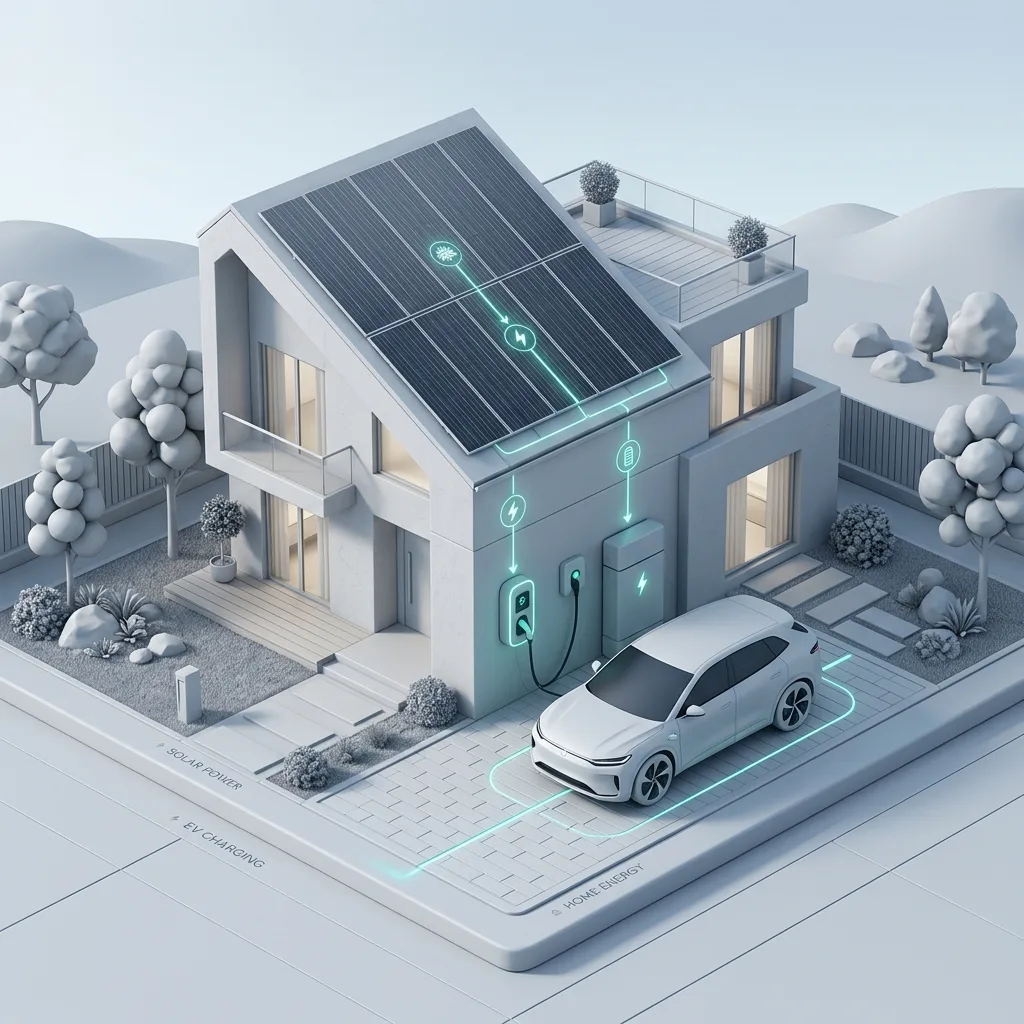
Electric vehicles and solar panels are a perfect match. When you power a clean car with clean energy, you save a lot of money. You also stop relying on fossil fuels.
If you charge an electric vehicle at home, your electricity bills will go up. But if you use solar panels, you can charge your car for almost nothing. This guide covers how it works, how much it costs, and how much you can save.
The Flow of Solar EV Power
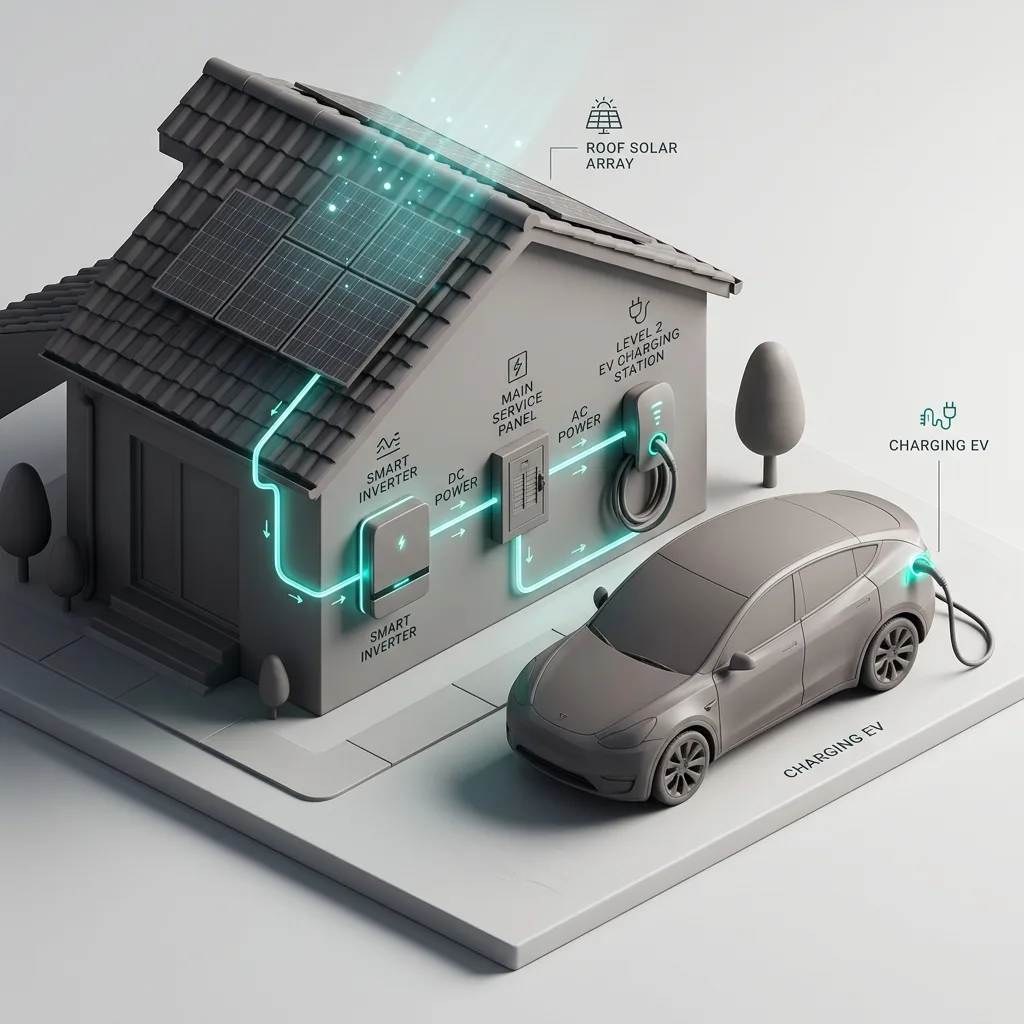
Rooftop solar panels catch sunlight and turn it into direct current electricity. A smart inverter converts this into alternating current electricity. This power goes through your home electrical panel directly into your electric vehicle.
The Cost of Powering Your Car
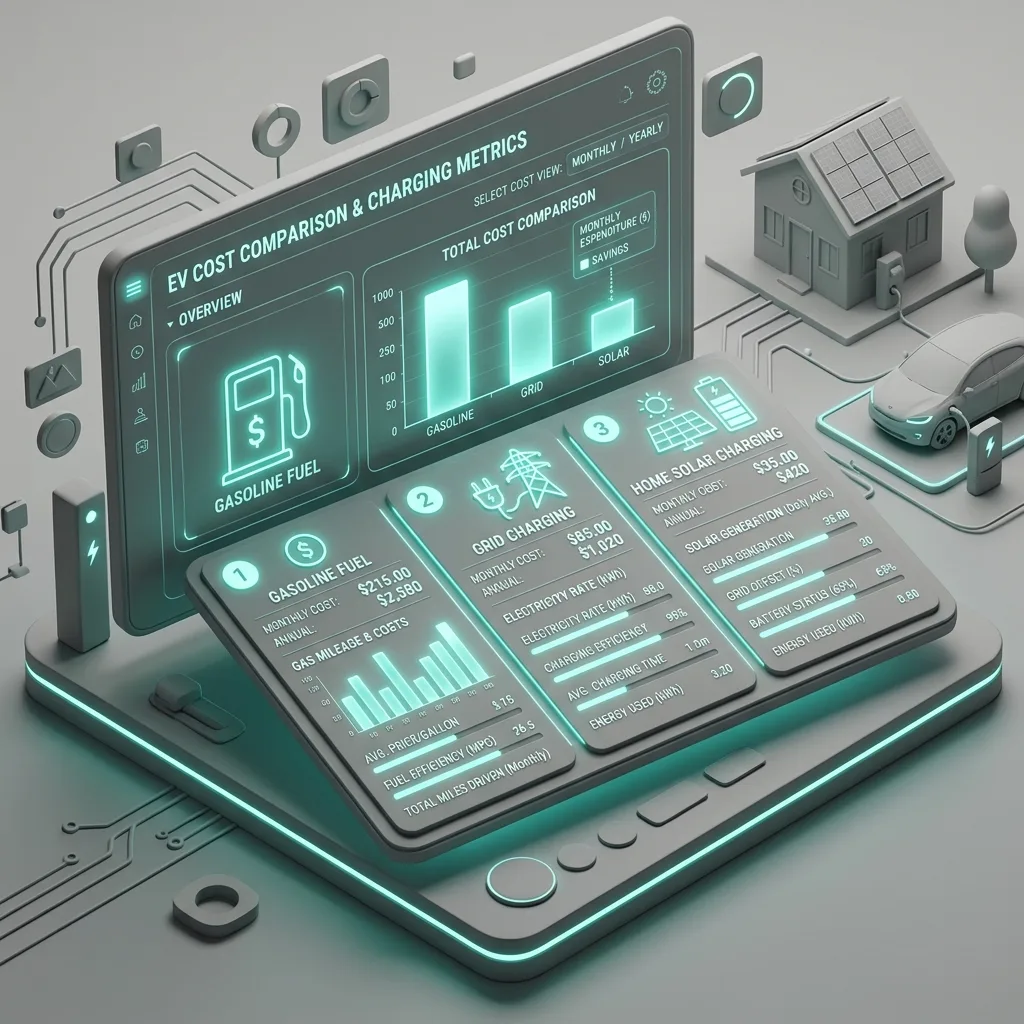
Fueling a car is one of the biggest costs for drivers. When you compare gasoline, grid electricity, and home solar, the savings are clear.
On average, charging an electric car with solar panels is six times cheaper than buying gasoline. It is also almost three times cheaper than charging from the standard electrical grid.
Gasoline Car
Standard cars burn gasoline. This is the most expensive way to drive. It also exposes you to changing oil prices.
EV Grid Charging
Electric cars charged from the grid cost less. But you are still dependent on your utility company and rising rates.
EV Solar Charging
Charging with home solar panels is the cheapest option. Your effective rate drops to about three to five cents per kilowatt-hour.
How Many Solar Panels Do You Need?
To find out how many panels you need to charge your car, you can use a simple three-step calculation.
Step 1: Check Your Mileage
Find out how many miles you drive each month. The average driver travels about 1,200 miles monthly. At 0.3 kilowatt-hours per mile, the average car needs about 360 kilowatt-hours of energy per month.
Step 2: Measure Your Sunlight
Look at the average sun hours in your area. Many sunny states get about 5 peak sun hours per day. This equals roughly 150 hours of sunlight every month.
Step 3: Calculate System Size
Divide your monthly energy needs by your monthly sun hours. This gives you the system size in kilowatts. For 360 kilowatt-hours, you need a 2.4 kilowatt system.
If you use standard 400-watt solar panels, you can divide the system size by panel output. In this case, 2.4 kilowatts divided by 0.4 kilowatts equals exactly 6 solar panels. Most homeowners need between 5 and 8 additional panels to cover their driving habits.
The Payback Period and ROI
Installing solar panels requires an upfront investment. A small system of six to eight panels costs about $7,200 on average.
However, you do not have to pay the whole amount. The federal government offers a 30 percent tax credit for solar installations. This credit reduces the cost of your system by thousands of dollars.
When you combine household electricity savings with gasoline savings, the system pays for itself quickly. Most homeowners see a full return on their investment in six to nine years. After that point, the electricity generated to fuel your car is completely free.
Advanced Cost and Charging Metrics
Modern smart dashboards show real-time metrics. You can track your daily solar generation, battery storage status, and the exact amount of energy used by your electric vehicle.
Do You Need a Solar Battery?
Many drivers wonder if they need a battery storage system like a Tesla Powerwall to charge their vehicle at night.
The short answer is no. You do not need a home battery to benefit from solar EV charging. If your utility company offers net metering, you can send your solar power to the grid during the day. Then, you can pull power back from the grid at night to charge your car. The grid acts like a free battery.
However, if your utility has high night-time rates or does not offer net metering, a home battery is very useful. It allows you to store your own clean solar energy and use it whenever you want. This provides energy independence and protects you from power outages.
Frequently Asked Questions
No. You cannot plug solar panels directly into your vehicle. You need a complete system. This system includes solar panels, a smart inverter to change the power type, electrical safety switches, and a level 2 charging station.
If you already have solar, you can add a level 2 charger to your home. You will need a professional electrician to install a 50-amp breaker in your main electrical panel. If you need more power, you can also add more panels to your existing system.
Yes, but it is very slow. Portable panels can charge a hybrid solar generator. Some of these generators have car charging adapters. This setup is useful in an emergency, but it is not fast enough for daily driving.