Understanding the Solar Panel Payback Period
Learn how to calculate your solar panel payback period. Discover the formula, key financial factors, and how fast solar panels pay for themselves.
When considering a transition to renewable energy, one of the most critical metrics for homeowners is the solar panel payback period. This metric represents the time it takes for your cumulative energy savings to exceed the initial net cost of installing the system.
Once you reach this break-even point, every kilowatt-hour of electricity your panels generate is pure profit. With utility rates rising and equipment costs falling, solar energy has become a highly secure and lucrative investment.
Here is a comprehensive breakdown of the solar panel payback period, including how to calculate it, the key factors that influence it, and ways to shorten your break-even timeline.
The Core Payback Formula
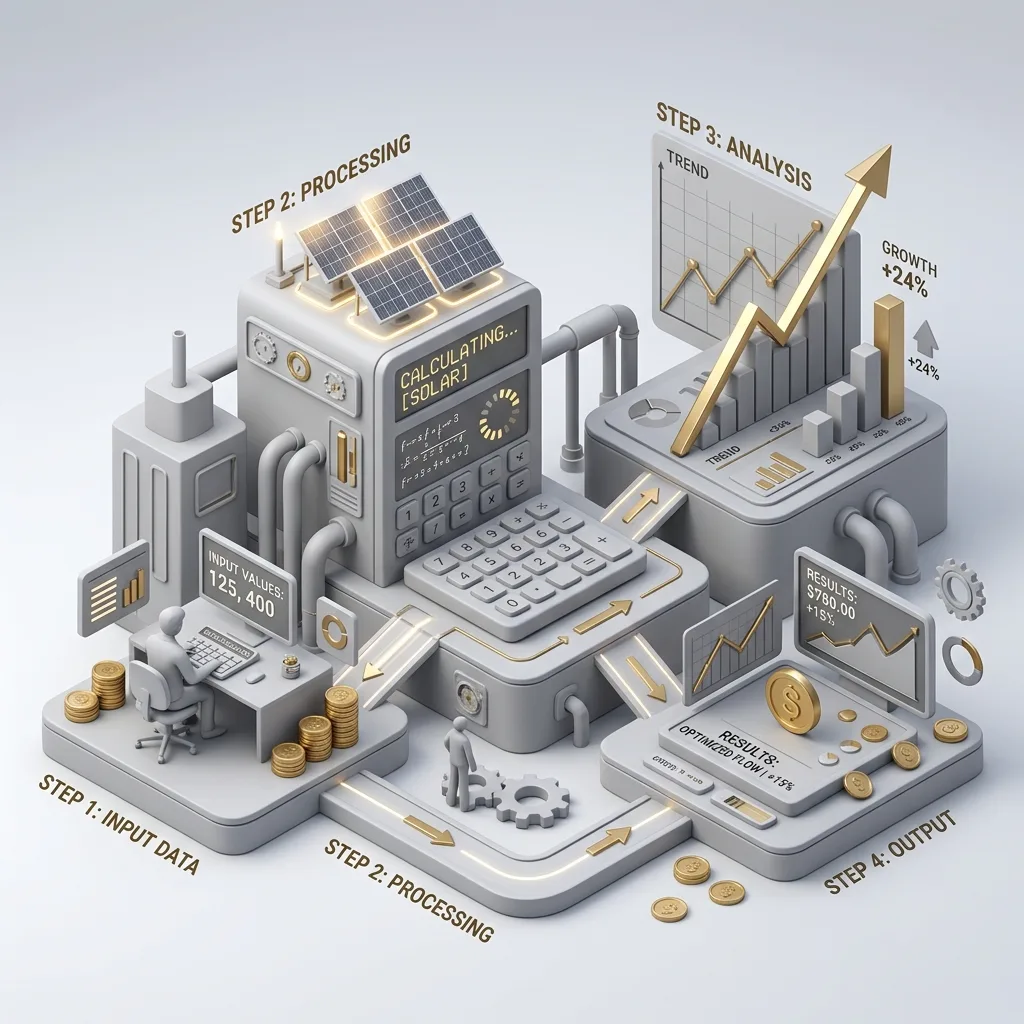
Calculating your solar break-even point is relatively straightforward. While professional installers use advanced software to account for weather patterns and rate structures, you can estimate your payback period using a simple four-step process.
Determine Gross System Cost
Calculate the total cost of your solar installation, including hardware (panels, inverter, racking), permitting, engineering, and labor before any incentives are applied.
Subtract Financial Incentives
Deduct the federal tax credit (30% of the gross cost) and any state, local, or utility rebates. This leaves you with the net system cost.
Estimate Annual Savings
Multiply your annual electricity production by your current utility rate to determine how much money you save on electricity each year.
Divide Net Cost by Savings
Divide the net system cost by your annual electricity savings to find the exact number of years it will take to break even.
For example, if a home solar system has a gross cost of $24,000, the 30% federal tax credit reduces the cost by $7,200, bringing the net system cost to $16,800. If the system saves the homeowner $2,000 per year on utility bills, the payback period is 8.4 years ($16,800 divided by $2,000).
Financial Factors Influencing Your Payback Period
Several variables determine how quickly you can expect to reach your break-even point. Understanding these elements can help you optimize your system design and financing strategy.

1. Local Electricity Rates
The higher your local utility company charges for electricity, the more money you save by generating your own power. Homeowners in states with expensive electricity (such as California, New York, and Massachusetts) break even much faster than those in states with lower utility rates, even if their upfront installation costs are slightly higher.
2. Available Incentives and Rebates
Government incentives drastically lower the barrier to entry. The federal Clean Energy Credit is the most significant incentive, saving you 30% on the entire installation cost. Many states also offer Solar Renewable Energy Certificates (SRECs), which allow you to sell credits back to the utility company for additional cash flow.
3. Solar Radiation and Irradiance
The amount of direct sunlight your roof receives directly impacts energy production. A system installed on a south-facing, unshaded roof in a sunny region will generate more kilowatt-hours per year than an identical system in a cloudy, heavily shaded area. Higher production translates to larger utility savings and a shorter payback period.
High-Yield Region
States with high solar irradiance and high utility rates, like California and Arizona, offer the fastest return on investment.
Moderate-Yield Region
States with average sun hours and standard utility rates, like Ohio and Pennsylvania, see a steady, reliable return.
Low-Yield Region
States with lower irradiance or cheap fossil-fuel power, like Washington or Louisiana, have slightly longer payback periods.
How Financing Affects Payback
The method you use to pay for your solar energy system will play a massive role in your payback timeline.
- Cash Purchases: Buying your system outright results in the shortest payback period because you avoid interest charges. It also maximizes your long-term return on investment, as you own the asset from day one.
- Solar Loans: Financing your system allows you to go solar with zero money down. While the interest payments will extend your break-even point by a few years, your monthly loan payments are often lower than your old electric bill, resulting in immediate positive cash flow.
- Leases and PPAs: Under a lease or Power Purchase Agreement, a third party owns the solar panels. You simply pay a fixed monthly fee to lease the equipment or buy the power it produces. While this option offers immediate savings, you do not own the system, and you cannot claim the 30% federal tax credit.
Frequently Asked Questions
Most modern solar panels are built to last 25 to 30 years. They are backed by performance warranties that guarantee they will still produce at least 80% to 85% of their original output at the end of the warranty period. This means you will enjoy 15 to 20 years of free electricity after your system pays for itself.
Yes. Adding a battery backup system increases your upfront installation cost by $8,000 to $15,000. This will lengthen your payback period. However, in states without favorable net metering policies, batteries allow you to store excess solar energy and avoid purchasing expensive peak power from the utility, which can increase long-term savings.
Studies show that homes with solar panels sell for an average of 4% more than comparable homes without solar. Because these panels generate tax-exempt utility savings, homebuyers view them as a premium upgrade. This increase in equity is a direct addition to your return on investment.