Solar Farm Land Lease Rates: Complete Landowner Guide
Discover how much landowners can earn leasing land for solar farms, average rates per acre, contract stages, and key factors that maximize value.
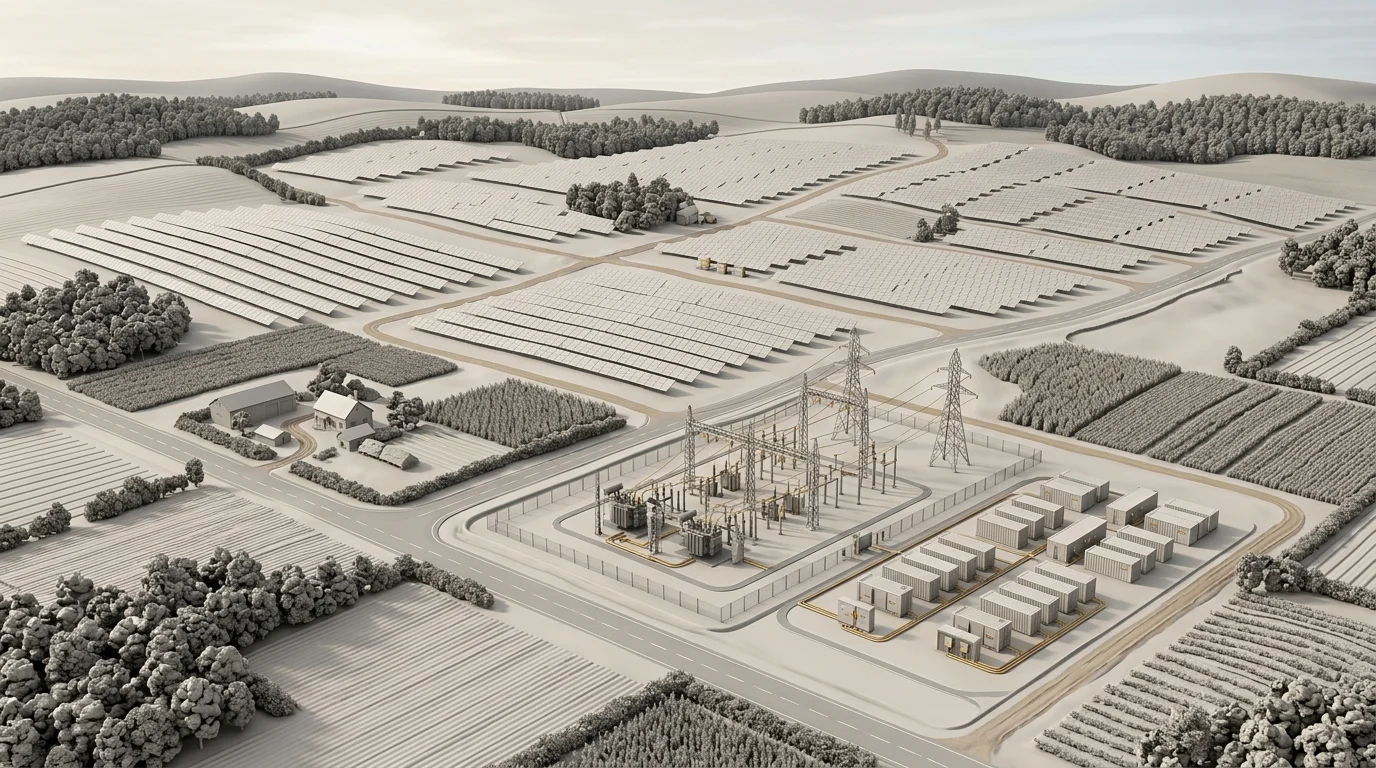
Leasing open land for utility-scale solar farms is one of the most reliable ways for property owners to earn steady income. Solar developers need thousands of acres across the country to build new clean power plants. Because demand is high, rural property owners, farmers, and commercial landholders hold a valuable asset.
A solar land lease gives you guaranteed, predictable income every year. These payments do not depend on rainfall, changing crop prices, or livestock market trends. Depending on location, power grid access, and terrain, landowners can earn between $800 and $3,000 or more per acre each year under contracts that last 25 to 40 years.
This guide explains average solar farm land lease rates, the main factors that drive land value, the four stages of a solar lease agreement, and how to negotiate favorable terms.
How Much Can Landowners Earn from a Solar Farm Lease?
Solar lease rates vary by state and region. Rates depend on local electricity prices, state clean energy goals, and power grid capacity. On average, utility-scale solar projects pay between $1,000 and $2,500 per acre every year. Prime land located near major substations can earn $3,000 or more per acre.
In comparison, agricultural cash rent for crop fields in the United States typically averages $150 to $300 per acre per year. Solar leases often deliver 5 to 10 times more annual income for the exact same acreage.
Annual Land Revenue Comparison
Compare annual revenue per acre across different land use options.
Traditional Agricultural Cash Rent
- Subject to seasonal weather, rainfall, and drought risks
- Tied to shifting crop commodity prices
- Requires continuous soil care and recurring field labor
- Short 1 to 3 year lease commitments
Average Utility Solar Land Lease
- Guaranteed passive income with zero farm labor required
- Annual rent bumps increasing income by 1.5% to 3% each year
- Developer covers all property tax increases and maintenance
- Long-term contract security for 25 to 35 years
Prime Grid-Adjacent Solar Acreage
- Located within 1 mile of high-capacity electrical substations
- Direct access to high-voltage power transmission lines
- Flat land with minimal grading and clearing costs
- High local wholesale power market demand
For a typical 100-acre solar project producing 20 Megawatts (MW) of clean electricity, a landowner earning $1,500 per acre receives $150,000 in net passive income every year. Over a 30-year lease term, that totals $4.5 million before adding annual rent increases.
Key Factors That Determine Solar Land Value
Solar energy developers look at several technical and geographic details before making an offer on a parcel. Understanding these factors helps you evaluate the earning power of your property.
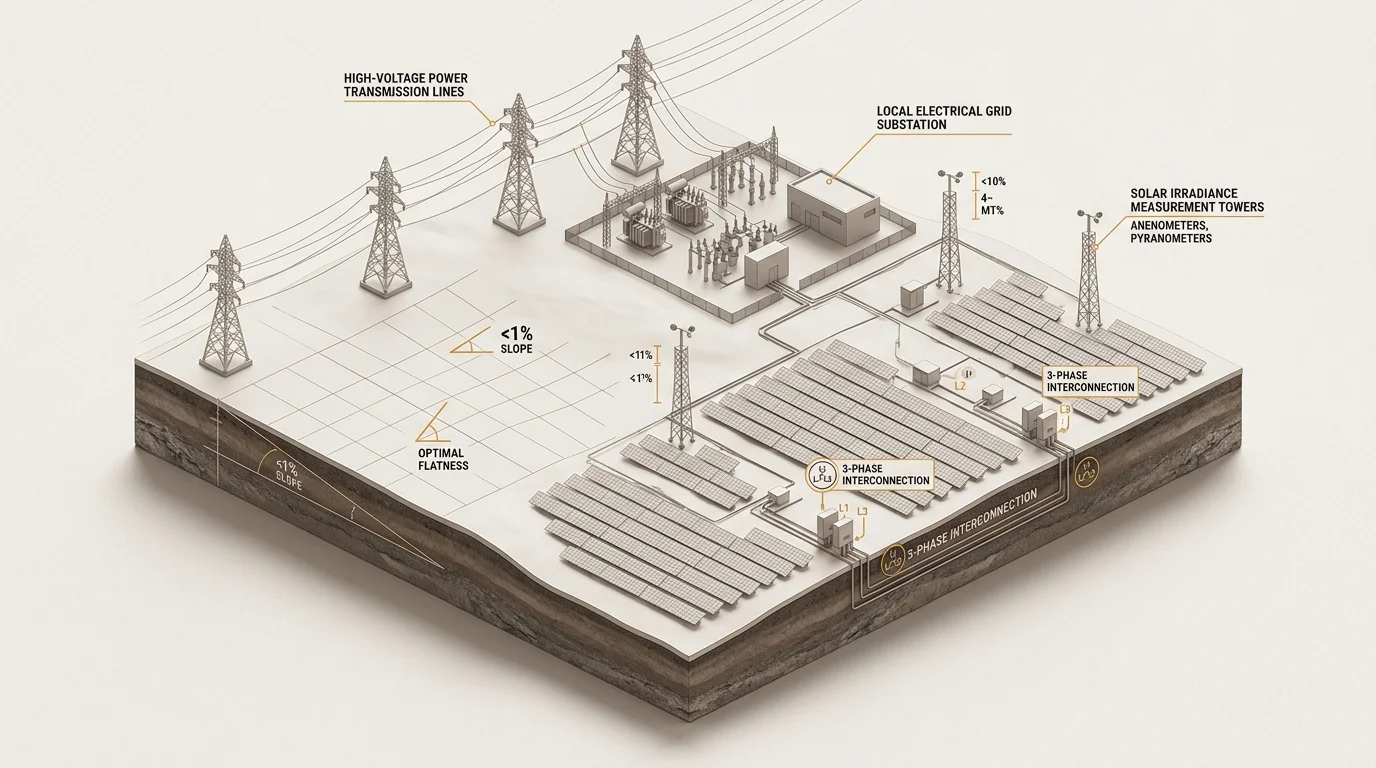
Here are the primary factors that set solar lease rates:
- Distance to Substations and Power Lines: Grid interconnection is the single largest cost for solar developers. Land located within 1 to 2 miles of a 3-phase high-voltage power line or substation earns the highest lease rates. This is because developers avoid paying millions of dollars to build long power lines.
- Available Grid Capacity: The nearby substation must have enough open capacity to accept new power without requiring costly transformer upgrades.
- Parcel Size and Shape: Utility solar projects need about 5 to 7 acres per Megawatt (MW) of solar capacity. Developers generally prefer contiguous parcels of at least 30 to 100 or more acres to keep build costs low.
- Topography and Slope: Flat ground or gentle south-facing slopes under a 5 percent grade are best. Steep hills, rocky ground, and heavy tree cover increase site preparation costs and reduce lease offers.
- Flood Zones and Wetlands: Developers avoid 100-year flood zones, protected wetlands, and conservation areas to protect equipment and comply with environmental rules.
- Zoning and Local Permitting: Counties with clear, solar-friendly zoning rules allow developers to secure permits quickly, reducing project risk and raising lease values.
The Four Stages of a Solar Land Lease
A solar farm lease agreement is not an instant deal. It moves through four clear stages that span several decades.
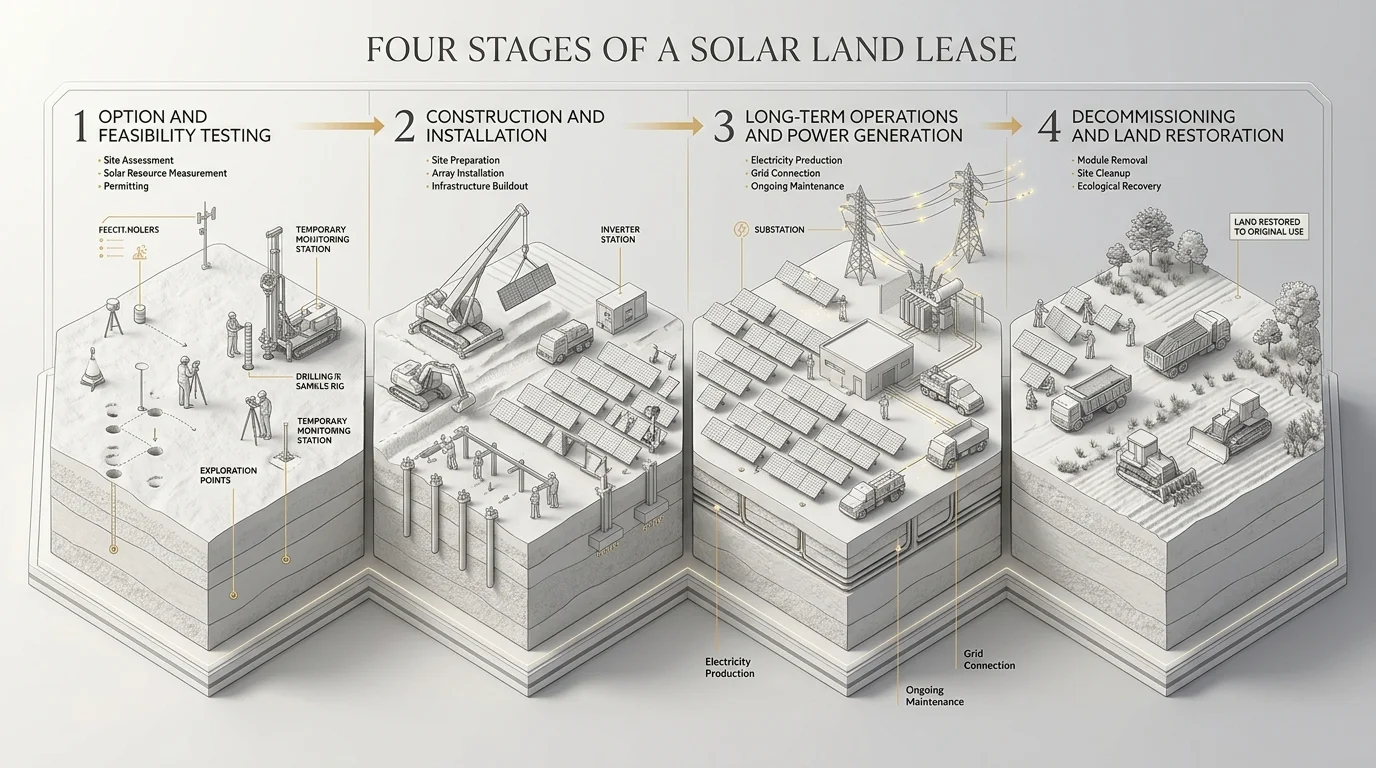
Stage 1: Development Option Period (1 to 5 Years)
The developer pays an annual option fee (typically $15 to $50 per acre) to secure the exclusive right to study your land. During this period, the developer runs environmental reviews, soil tests, grid studies, and local zoning filings. You can continue farming your land during the option phase.
Stage 2: Construction Phase (6 to 24 Months)
Once permits and grid approvals are finalized, the developer exercises the lease option and starts building. Payments switch to construction rent (typically 50% to 100% of the full operating rate). Crews install steel piles, solar panels, inverters, and perimeter security fencing.
Stage 3: Commercial Operation (25 to 40 Years)
The solar farm connects to the grid and starts generating electricity. You receive full annual lease payments with compounding annual escalators (usually 1.5% to 3% each year). The developer handles all site maintenance, weed control, panel repairs, and insurance during the life of the project.
Stage 4: Decommissioning and Site Restoration
When the lease ends, the developer removes all above-ground equipment, steel piles, and underground wiring down to a depth of 3 to 4 feet. A legally binding decommissioning bond, set up before construction, guarantees funds exist to restore the soil and return the land to farming.
Essential Clauses to Negotiate in a Solar Lease Contract
Signing a long-term solar lease requires careful legal review to protect your property rights and maximize earnings. Here are the most critical contract clauses to negotiate:
1. Annual Rent Escalation (Inflation Protection)
Over a 30-year lease, inflation can lower the purchasing power of flat rent payments. Always insist on an annual escalation clause of at least 2.0% to 3.0% compounded annually, or an adjustment tied to the Consumer Price Index (CPI). For example, a $1,500 per acre lease with a 2.5% annual escalator grows to over $3,000 per acre by year 28.
2. Property Tax Protection
Converting agricultural land to solar use can raise property taxes or remove farm tax discounts. The lease must state clearly that the solar developer is 100 percent responsible for all increased property taxes, roll-back taxes, and special assessments caused by the solar project.
3. Decommissioning Bond and Security
Make sure the contract requires the developer to post a surety bond, escrow fund, or letter of credit with the local municipality or landholder prior to construction. This ensures you are never left with outdated equipment if the developer faces financial trouble.
4. Crop Damage Reimbursement
During the option and construction phases, developer testing and heavy equipment may damage standing crops. Your agreement should include standard terms to reimburse you for lost crop yield at current fair market commodity prices.
Frequently Asked Questions
Utility-scale solar developers typically need between 5 and 7 acres of land per Megawatt (MW) of solar capacity. Most commercial developers look for contiguous parcels of 30 to 100 or more acres to build efficient projects.
During the option period, you can continue standard farming. Once construction begins, the fenced solar array is dedicated to power generation. However, many developers support dual-use practices, such as grazing sheep or planting pollinator-friendly clover beneath the panels.
The developer is legally required to dismantle the solar array, remove foundation piles and wiring, and re-grade the soil. This decommissioning process is secured by a financial bond to return the property to full agricultural use.
Under a standard commercial solar lease agreement, the developer pays all additional property taxes and rollback penalties caused by the solar installation. The landowner only pays the original agricultural property tax rate.