Solar Battery Storage Costs: A Complete Pricing Guide
Compare solar battery storage costs by brand, capacity, and chemistry. Learn how much a home backup battery system costs after the 30% tax credit.
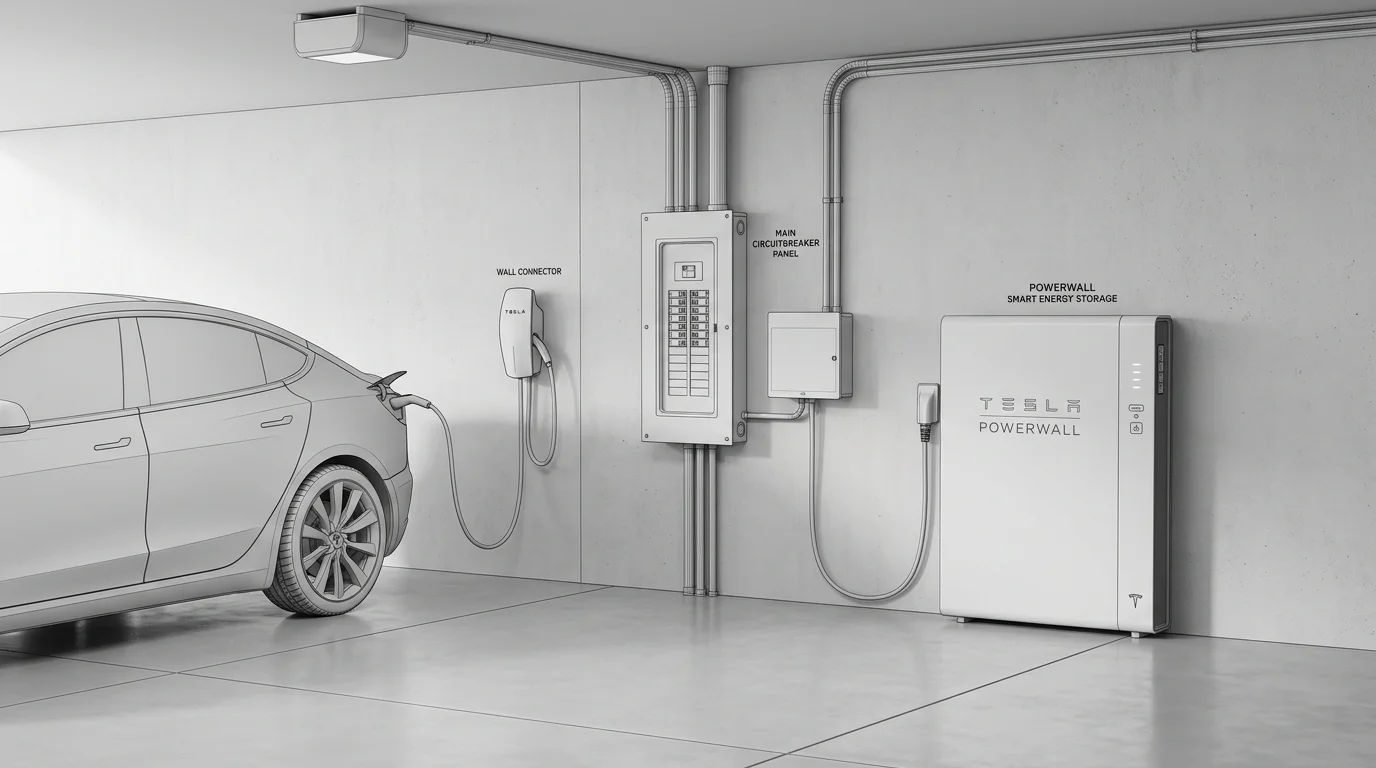
Adding a battery backup to a home solar system is a great way to secure power. It keeps lights on during blackouts and saves money when utility rates are high. Home battery storage is now one of the fastest growing upgrades in home energy.
The typical cost for a home battery system ranges between $10,000 and $18,000 installed. With the federal tax credit, the price drops to a range of $7,000 to $12,600. The cost varies based on system size, battery brand, and installation complexity.
Inside Home Battery Storage
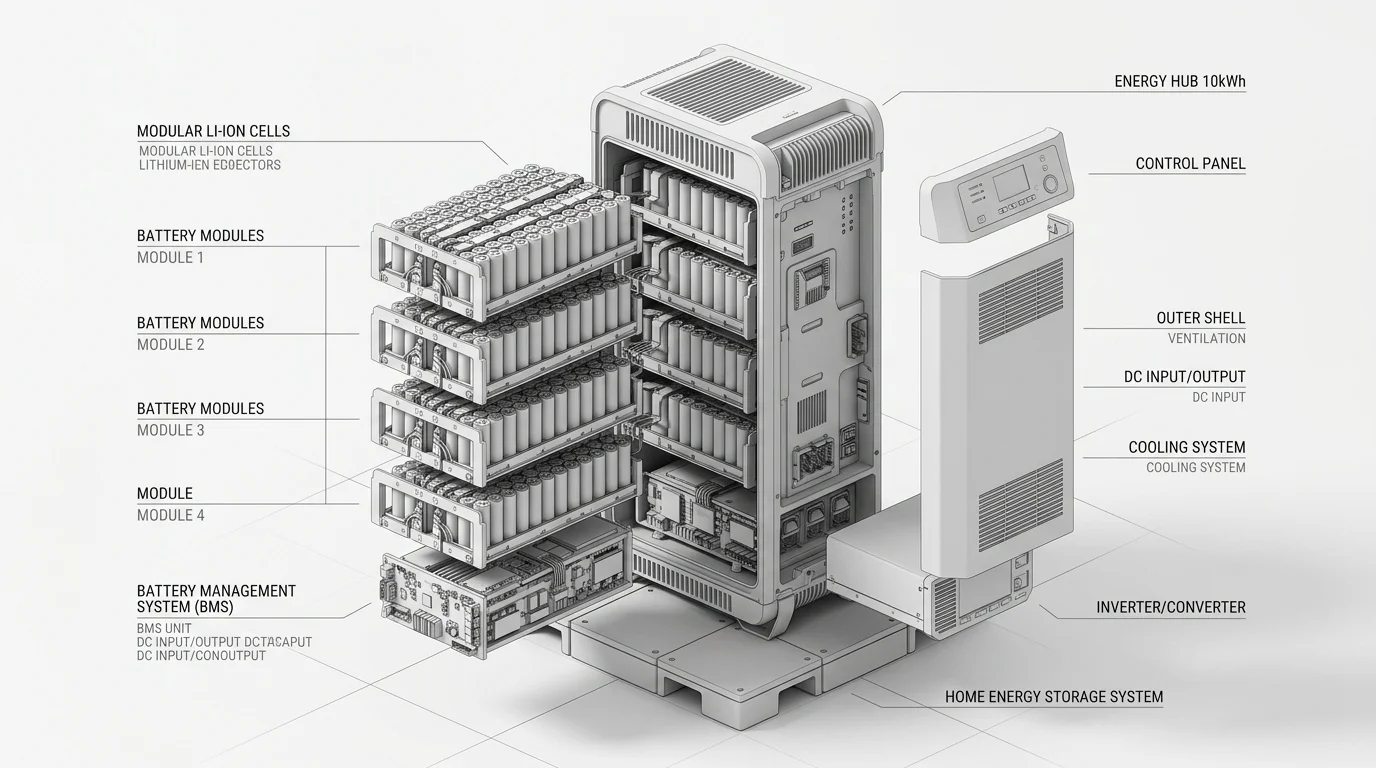
Modern solar batteries use smart controllers and modular cells to store power. This design makes it easy to add more storage capacity when needed.
Cost Breakdown by Brand
Home battery systems are compared by their usable storage capacity. This is measured in kilowatt-hours. Homeowners can expect to pay between $800 and $1,650 per kilowatt-hour installed.
Below is a comparison of popular home battery models on the market today:
Tesla Powerwall 3
Features a built-in solar inverter and excellent value per kilowatt-hour.
FranklinWH aPower
Enphase IQ 5P
SonnenCore
Generac PWRcell
Key Factors That Influence Cost
Several factors determine the final price of a battery installation:
Storage Capacity
The amount of energy the battery holds is the main cost factor. Large homes or systems backing up air conditioners need more capacity.
Battery Chemistry
Lithium Iron Phosphate is the standard chemistry. It costs slightly more than older chemistries but lasts much longer and is safer.
Electrical Upgrades
Some homes require a new electrical panel or a subpanel to separate critical backup loads. This can add $1,500 to $4,000 to the job.
Standard Setup vs. Hybrid Battery Backup
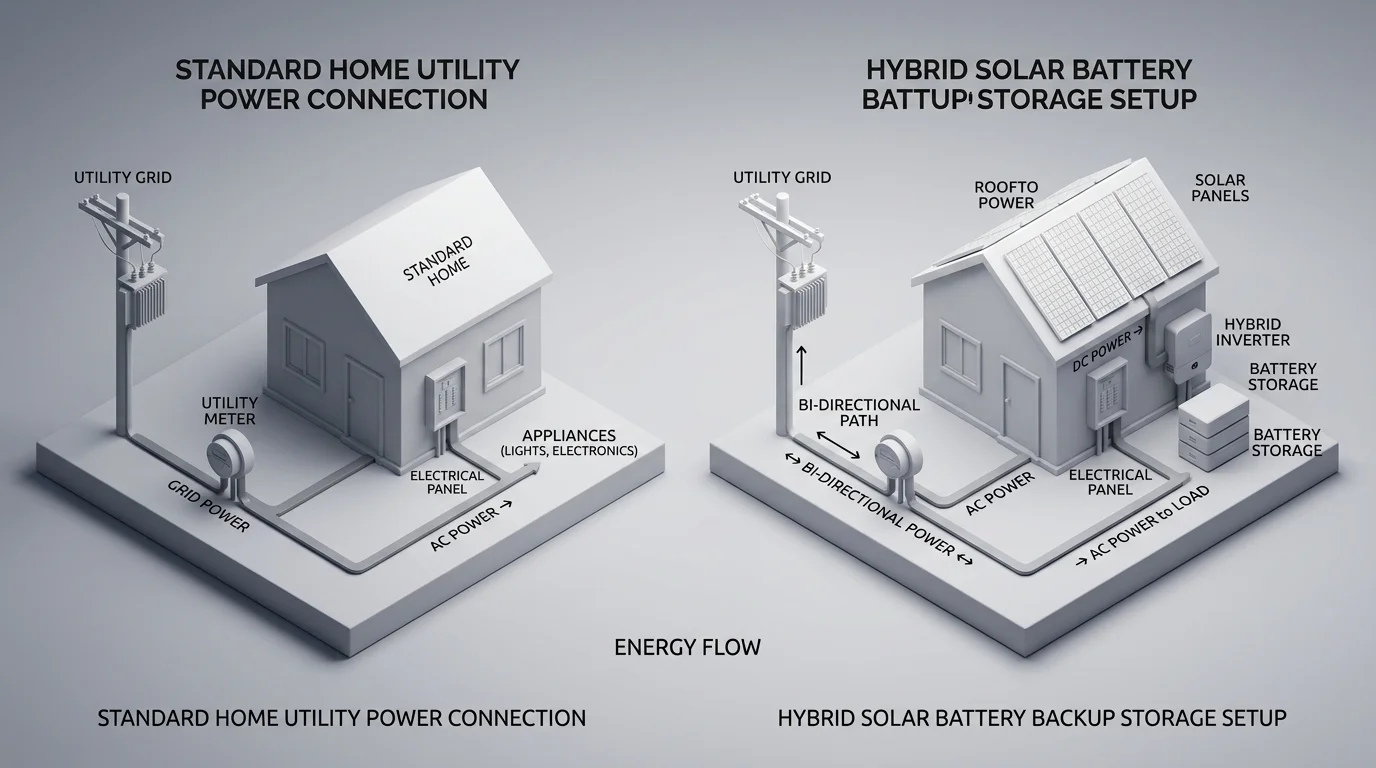
A typical utility grid connection relies entirely on the local power company. If the grid goes down, power is lost. A hybrid solar battery setup changes this. It allows electricity to flow back and forth, charging the battery with clean solar energy and supplying the home.
Incentives and Tax Credits
Homeowners can use incentives to lower the cost of battery storage:
- Federal Solar Tax Credit: The federal credit offers a 30% discount on battery storage. The credit applies to standalone batteries even if solar panels are not installed.
- State Rebates: States like California offer extra rebates for battery storage. These are targeted at homes in high-risk wildfire zones.
- Utility Programs: Some utilities pay homeowners to share stored battery power during high demand. This program is called a Virtual Power Plant.
Financial Payback and ROI
A home battery provides financial payback in areas with Time-of-Use rates or net billing systems. In these markets, homeowners charge their batteries when power is cheap. They use stored energy when utility rates spike.
In high-cost areas, a battery system pays for itself in 5 to 8 years. In flat-rate markets with standard net metering, the payback period is 10 to 14 years. A battery also provides peace of mind during outages, which is hard to measure in dollars.
Frequently Asked Questions
Yes. The 30% federal tax credit covers battery storage systems with a capacity of 3 kilowatt-hours or more. It does not require solar panels to qualify.
Most quality batteries are under warranty for 10 years. They usually keep 70% to 80% of their storage capacity after that time. Quality batteries can last 12 to 15 years with normal use.
Yes, but air conditioners draw a lot of power. You will need a large battery system or multiple battery units to run central AC.