Selling a House with Solar Panels: Leased vs. Owned Transfer Guide
Learn how to sell a home with solar panels. Discover how to transfer leases, handle UCC-1 filings, satisfy mortgage lenders, and maximize resale equity.
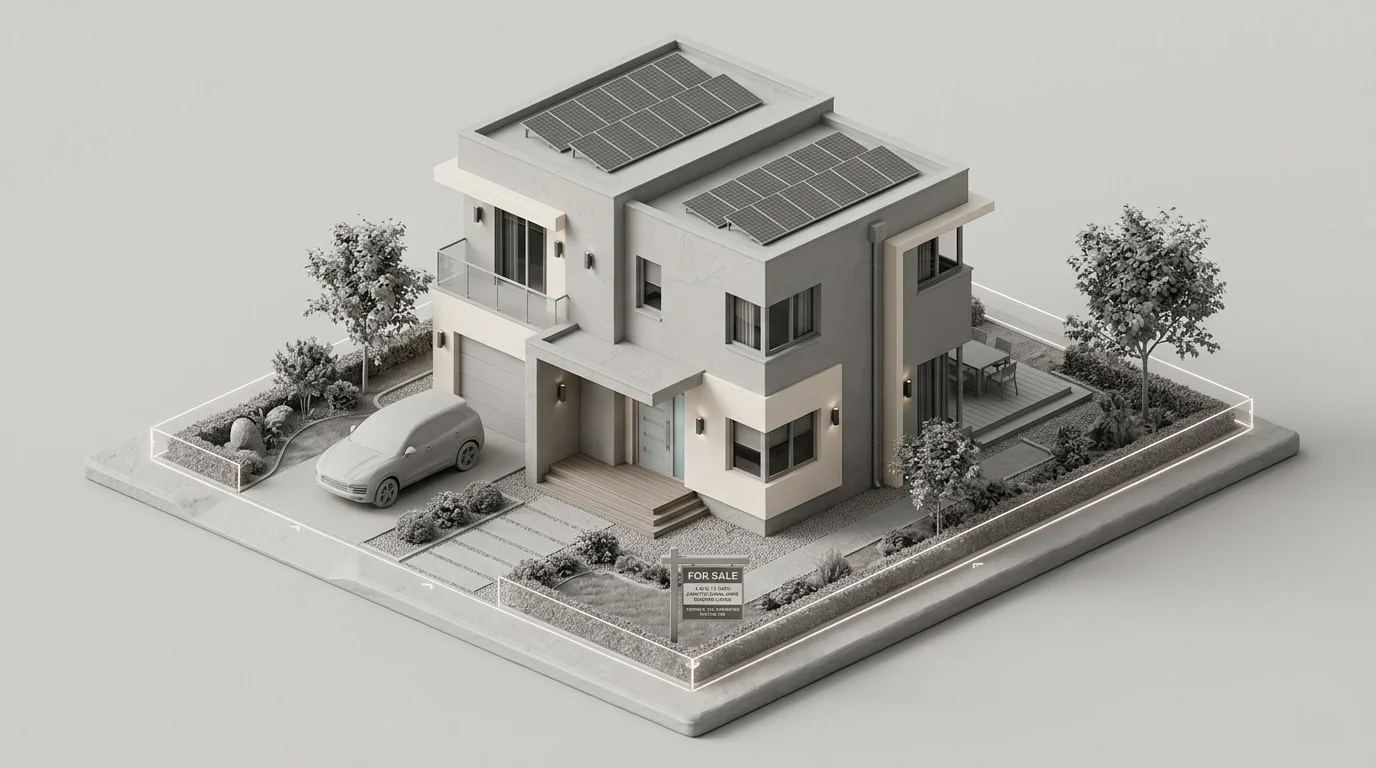
When you put a home on the market, rooftop solar panels can be a major selling point. Clean energy, lower utility bills, and backup power appeal to many prospective buyers. However, selling a house with solar panels involves far more than pointing out the shiny panels on the roof.
The success of your sale depends entirely on how the solar equipment is financed. An owned system can add thousands of dollars to your equity. In contrast, a leased system or power purchase agreement introduces legal paperwork, credit checks, and mortgage lender rules that can slow down your closing date.
Understanding the transfer rules early protects your home sale. By preparing the right documents before your first open house, you can avoid closing delays and negotiate with confidence.
Managing Solar Liens and Title Commitments at Closing
During a real estate closing, title companies review public records for recorded liens. Solar financing companies often record a fixture filing against the equipment. Lenders require clear paperwork to ensure your buyer can secure their mortgage without unexpected closing delays.
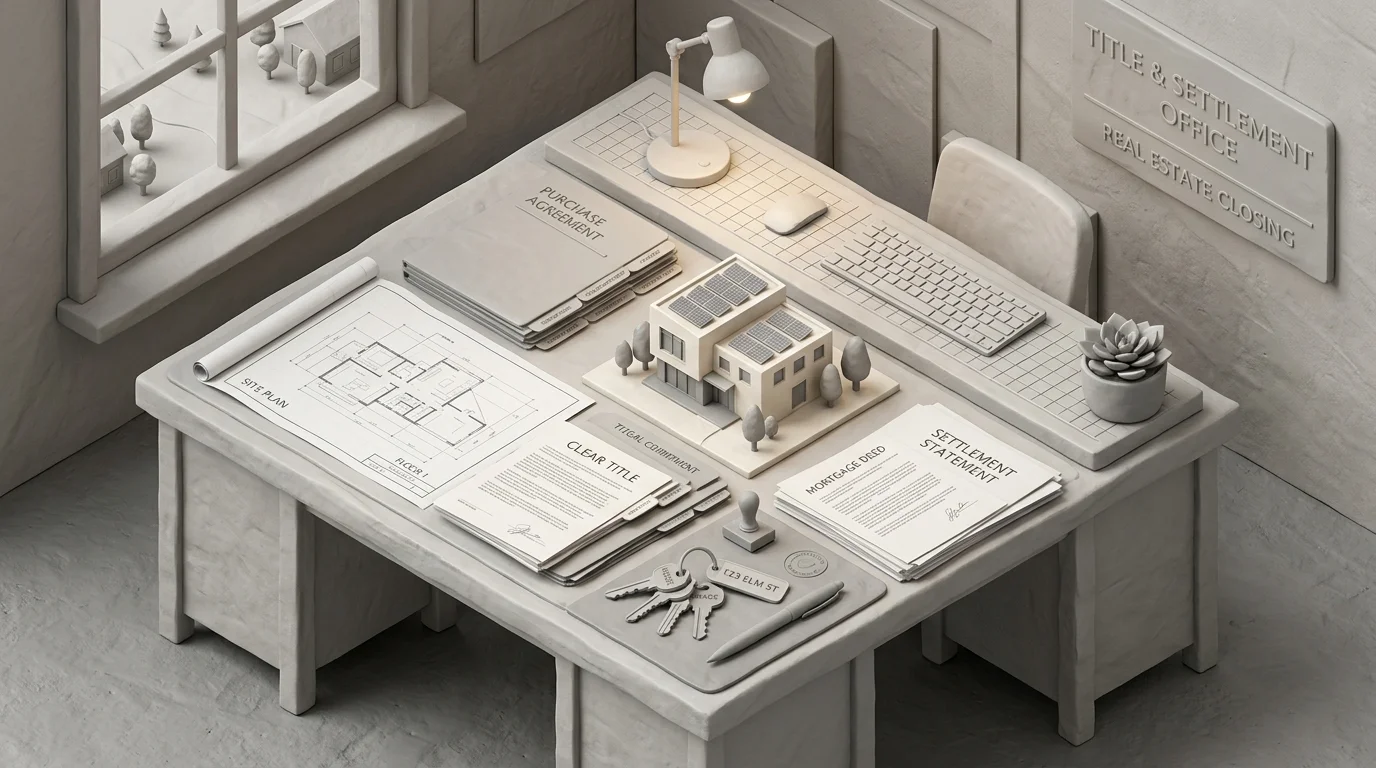
The 4 Types of Solar Ownership in Real Estate
Before listing your property, you must identify your exact solar ownership structure. Real estate contracts treat solar systems under four distinct categories:
Owned Outright
You paid cash or completely paid off your installation loan. The panels convey directly with the real estate deed as permanent fixtures. Buyers love this setup because they get free clean electricity with no monthly payments or credit checks.
Financed Solar Loan
You bought the system through a monthly loan. A lender holds a financial interest in the hardware. At closing, sellers usually pay off the balance using sale proceeds, or the buyer applies to assume the remaining balance.
Solar Lease
A third-party solar provider owns the rooftop hardware. You pay a set monthly fee to use the electricity. When selling, the buyer must qualify financially and agree to take over the remaining 10 to 20 years of the contract.
Power Purchase (PPA)
Similar to a lease, an outside provider owns the equipment. Instead of a flat rental fee, you purchase generated electricity at a fixed per-kilowatt-hour rate. Contracts often include annual payment escalators that buyers must evaluate carefully.
Why Mortgage Lenders Care: The UCC-1 Fixture Filing
Many home sales run into unexpected hurdles because of an obscure legal document called a UCC-1 financing statement.
When you finance or lease solar panels, the installer or solar finance company files a UCC-1 statement in the county land records. This filing acts as a public notice that the solar hardware serves as collateral. While it is not a direct mortgage on your land, it is recorded as a fixture filing attached to your property address.
Mortgage lenders require first lien position on any home they finance. If a bank sees a solar company filing listed ahead of their mortgage on a preliminary title report, the loan officer will pause the file.
To resolve this issue, the seller must contact the solar provider and request one of three formal actions:
- A Subordination Agreement: The solar company agrees in writing to subordinate its claim, placing its fixture interest behind the buyer’s new mortgage.
- A Temporary Lien Release: The solar company temporarily releases the filing during escrow and re-files after the new mortgage deed records.
- A UCC-3 Termination: If the seller pays off the loan balance from closing proceeds, the lender files a UCC-3 termination form to erase the filing completely.
Securing these documents from a solar finance department often takes two to four weeks. Starting this process before finding a buyer prevents stressful delays at the closing table.
How Leased Solar Panels Affect Buyer Purchasing Power
A major difference between owned and leased systems is how bank appraisers and underwriters treat them during loan processing.
Under official mortgage underwriting guidelines from Fannie Mae (Section B2-3-04), Freddie Mac, the Federal Housing Administration (FHA), and the Department of Veterans Affairs (VA), leased solar panels and PPAs are classified as personal property. They cannot contribute any appraised dollar value to the home.
Even if an installer tells you a leased system is worth $25,000, an appraiser must assign it zero value in the official appraisal report.
Furthermore, the monthly solar lease payment counts directly against your buyer’s debt-to-income (DTI) ratio. If a buyer is stretching their budget to purchase your home, an additional $150 or $200 monthly solar lease fee could push their debt ratio over the limit, causing their loan application to fall through.
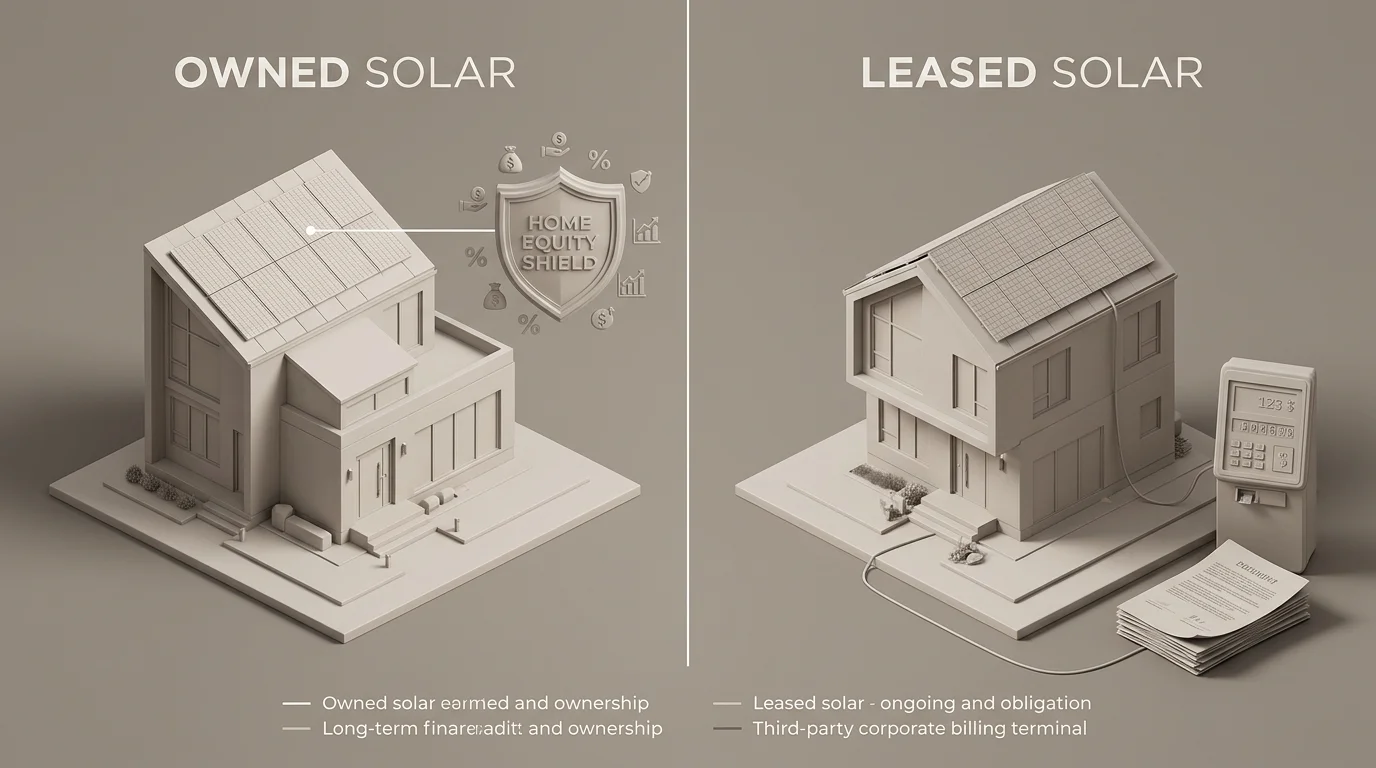
Owned vs. Leased Solar: Equity vs. Contract Liabilities
Owned solar panels act as clear financial equity, conveying directly to the new buyer on the title deed. Leased systems involve third-party billing terminals, ongoing contracts, and lender credit checks that require proactive management during home sales.
5 Options for Selling a Home with Leased Solar Panels
If your home has a leased solar system or a power purchase agreement, you have five clear strategies to structure the deal:
Option 1: Transfer the Lease to the Buyer
This is the most common path. The buyer agrees to take over your remaining monthly payments. The solar provider runs a soft or hard credit check on the buyer (usually requiring a minimum credit score of 650). Once approved, the buyer signs a transfer agreement, releasing you from future liability.
Option 2: Buy Out the Lease with Sale Proceeds
If a buyer loves the house but refuses to take on a monthly solar payment, you can negotiate an early lease buyout. You contact your solar provider for an official buyout quote. At closing, the settlement agent pays the buyout balance directly from your net home equity proceeds, and the buyer takes full ownership of the panels.
Option 3: Prepay the Remaining Lease Payments
Some solar companies allow sellers to prepay all remaining monthly payments in one lump sum without purchasing the hardware. The solar company continues to monitor and maintain the panels, while the new buyer enjoys the electricity for free for the remainder of the 20-year term.
Option 4: Offer a Buyer Closing Credit
If the buyer hesitates due to the remaining lease payments, you can offer a seller concession at closing. Providing a $3,000 to $5,000 credit toward the buyer’s closing costs helps offset their initial lease payments and keeps the sale moving forward.
Option 5: Remove the System (Why This is Rarely Recommended)
Sellers sometimes ask if they can remove the panels and reinstall them on their next home. In practice, removing an active solar system is costly and risky. You must pay thousands of dollars in uninstallation fees, repair all roof penetrations to maintain waterproofing, and void existing roof warranties. In almost all scenarios, transferring or buying out the contract makes much better financial sense.
5 Steps to Prepare Your Solar Home for Market
Taking these five steps before listing your property ensures a smooth transaction from listing day to final closing:
Collect Solar Contracts & Specs
Gather your original installation contract, warranty certificates, panel model numbers, inverter brand, and past twelve months of electric utility bills. Buyers want to see concrete proof of monthly kilowatt-hour savings.
Identify Your UCC-1 Status
Check your county clerk records or ask your real estate agent to pull a preliminary title search. Confirm whether an active UCC-1 fixture filing exists so your team can request subordination or payoff letters early.
Contact the Transfer Department
Reach out to your solar company transfer department 30 to 60 days before listing. Ask for their official transfer packet, buyer qualification guidelines, processing fees, and standard processing timeline.
Disclose Clearly in the MLS
Ensure your listing agent clearly states in the Multiple Listing Service (MLS) whether the solar system is owned, financed, or leased. Transparency prevents surprises after an offer is accepted.
Coordinate with the Title Officer
Provide your escrow officer with the solar company contact information, account number, and payoff or transfer instructions as soon as you enter contract. Fast communication guarantees an on-time closing.
Frequently Asked Questions
Yes. A home buyer has the legal right to decline assuming a solar lease or power purchase agreement during contract negotiations. If the purchase contract requires the buyer to take over the lease, they can negotiate for the seller to buy out the system, request closing cost credits, or walk away during their standard inspection period.
Yes. Owned solar systems that convey with the property deed can contribute positive value to an appraisal. Under standard valuation guidelines, appraisers compare sales of nearby homes with similar solar installations. In many housing markets, owned solar panels add between $10,000 and $20,000 in equity, depending on system size, local utility electric rates, and array age.
Solar transfer departments often take two to four weeks to process applications. If delays threaten your closing date, real estate attorneys usually draft an escrow amendment extending the closing window or establishing a post-closing escrow holdback until the solar provider completes the paperwork. Starting the transfer process well in advance prevents this risk.
In most transactions, paying off the remaining solar loan from your sale proceeds yields the fastest closing and highest net offers. Buyers prefer moving into a home without inheriting an extra monthly payment, and title companies can quickly clear the UCC-1 fixture filing once the payoff check clears escrow.