Off-Grid Solar System Cost: Sizing, Batteries, and Economics
How much does a complete off-grid solar system cost? We break down equipment costs, battery tech, sizing formulas, and the latest regulatory updates.
The idea of off-grid solar is exciting. You get complete energy independence, no utility bills, and safety from power outages. However, going fully off-grid is a major investment. It is much more complex and expensive than a standard grid-connected solar setup.
Before making the switch, it is important to understand what a system costs, how to size it, and when the investment makes financial sense.
The Price of Independence: Off-Grid vs. Grid-Tied
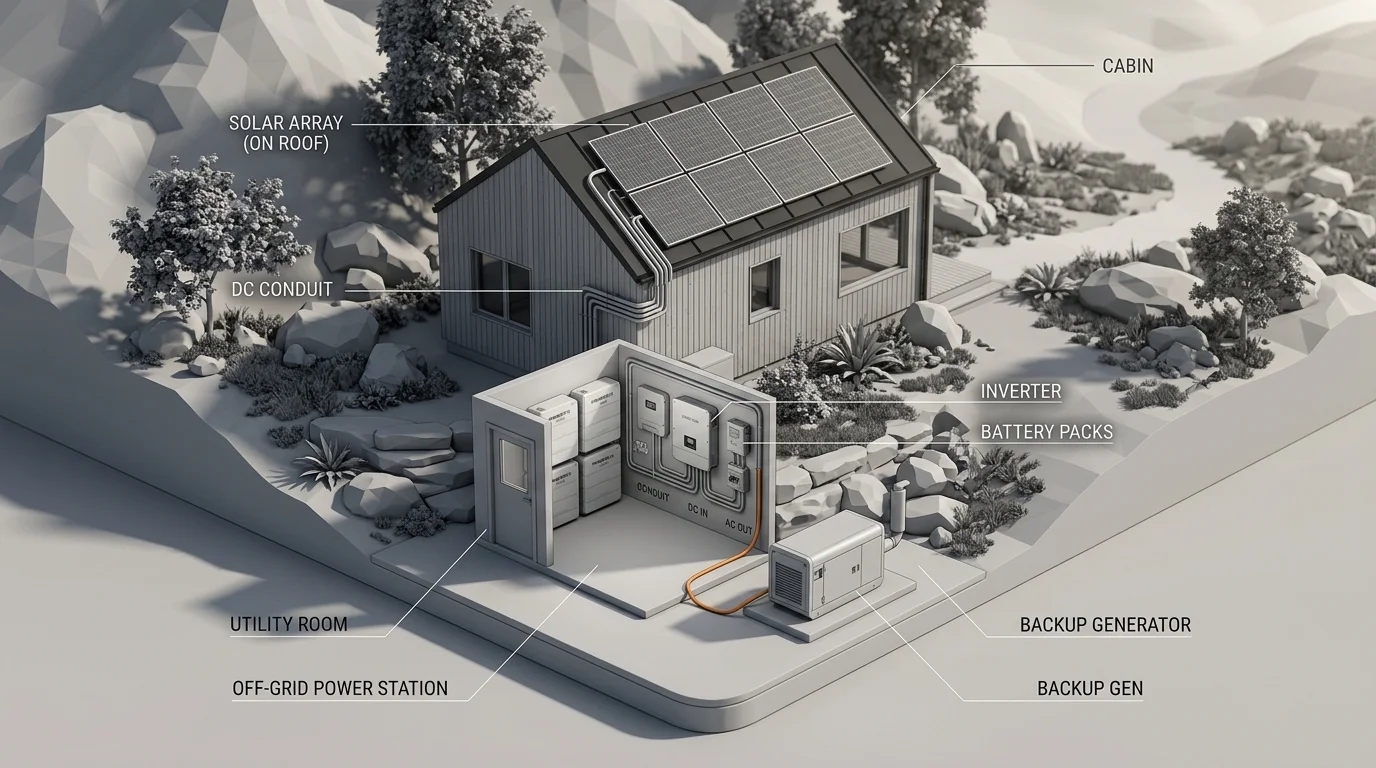
An off-grid solar system must generate and store all of your electricity. A standard grid-tied system is simple. It uses the utility grid as a backup and does not need a battery. An off-grid system needs a massive battery bank, a special inverter, and a backup generator.
Because of these extra components, off-grid systems cost twice as much as grid-tied ones. A typical residential system averages $32,500 to $69,500 fully installed, with an average price of around $51,000.
Let us compare the costs of a typical ten kilowatt residential installation:
Grid-Tied Solar
A simple setup that connects directly to the utility grid. It has no batteries and shuts off during blackouts.
Off-Grid Solar
A complete power plant for your home. It includes a massive battery bank, off-grid inverter, and backup generator.
Going off-grid is a clear financial win if you are building a home on a remote property. Connecting to the utility grid can cost anywhere from fifteen thousand dollars to over eighty thousand dollars if you are far from existing power lines. In this case, off-grid solar pays for itself immediately.
However, if your property already has power lines, a grid-tied or hybrid system will provide a much better return on your investment.
Sizing Your Off-Grid System
Sizing an off-grid system requires careful planning. If your system is too small, you will run out of power on cloudy days. If it is too large, you will waste money on equipment you do not need.
Most off-grid homes use ten to twenty kilowatt-hours of power per day. This is about half of what a typical grid-connected home uses. To go off-grid, you must learn to manage your energy and use efficient appliances.
Here is the four-step process to size your system:
Calculate Daily Usage
List every appliance you plan to run. Multiply the wattage of each appliance by the hours it runs daily. Sum the totals to find your daily kilowatt-hour usage.
Size the Solar Array
Divide your daily usage by the peak sun hours in your area during the cloudiest winter month. Multiply by 1.2 to account for system power losses.
Size the Battery Bank
Multiply your daily usage by two days of autonomy. Divide by the usable depth of discharge of your batteries (eighty-five percent for lithium).
Size the Inverter
Find the maximum wattage of all appliances you might run at the same time. Add a twenty-five percent safety margin so the inverter can handle startup surges.
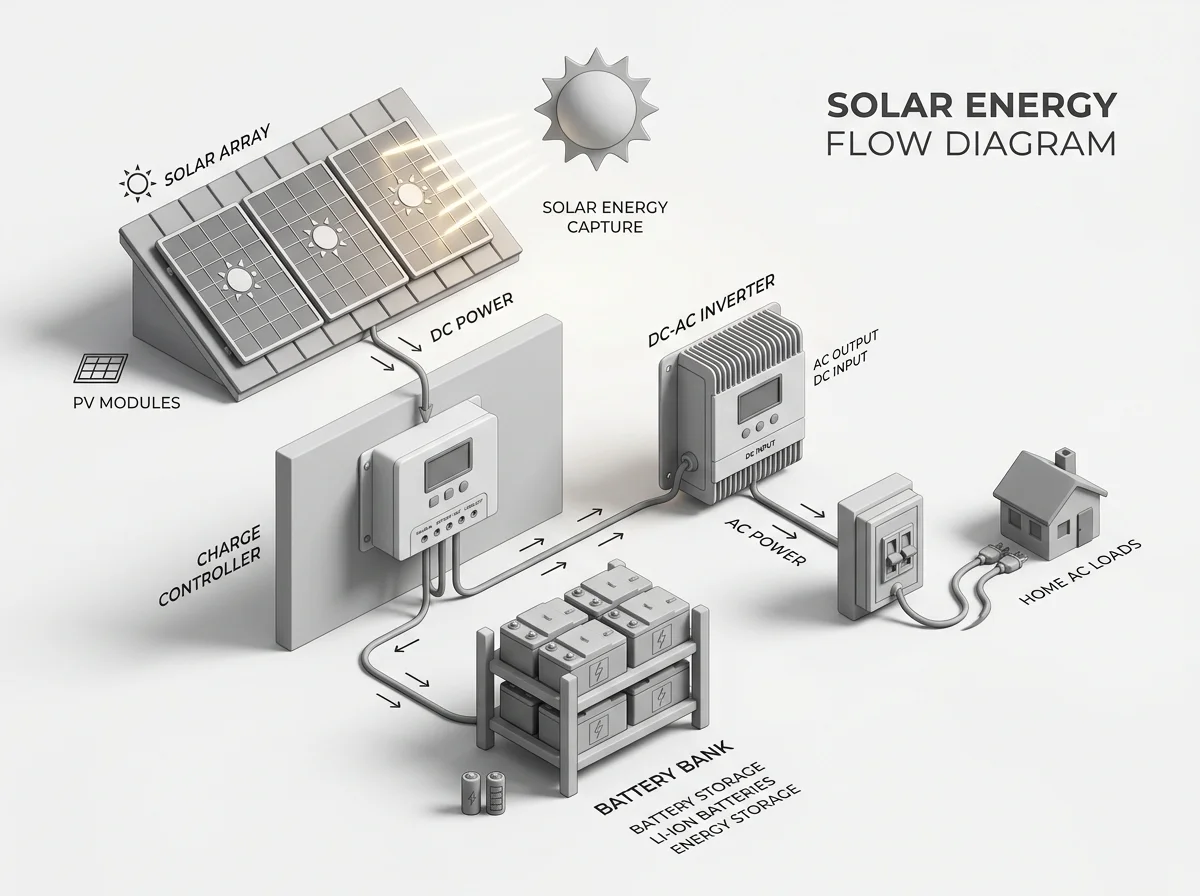
For example, a home using eighteen kilowatt-hours of electricity per day in an area with four peak winter sun hours would need a 5.4 kilowatt solar array. This is about fourteen modules of four hundred watts each. To have two days of backup power, the home would need a forty-two kilowatt-hour lithium battery bank.
Battery Comparison: Lithium vs. Lead-Acid
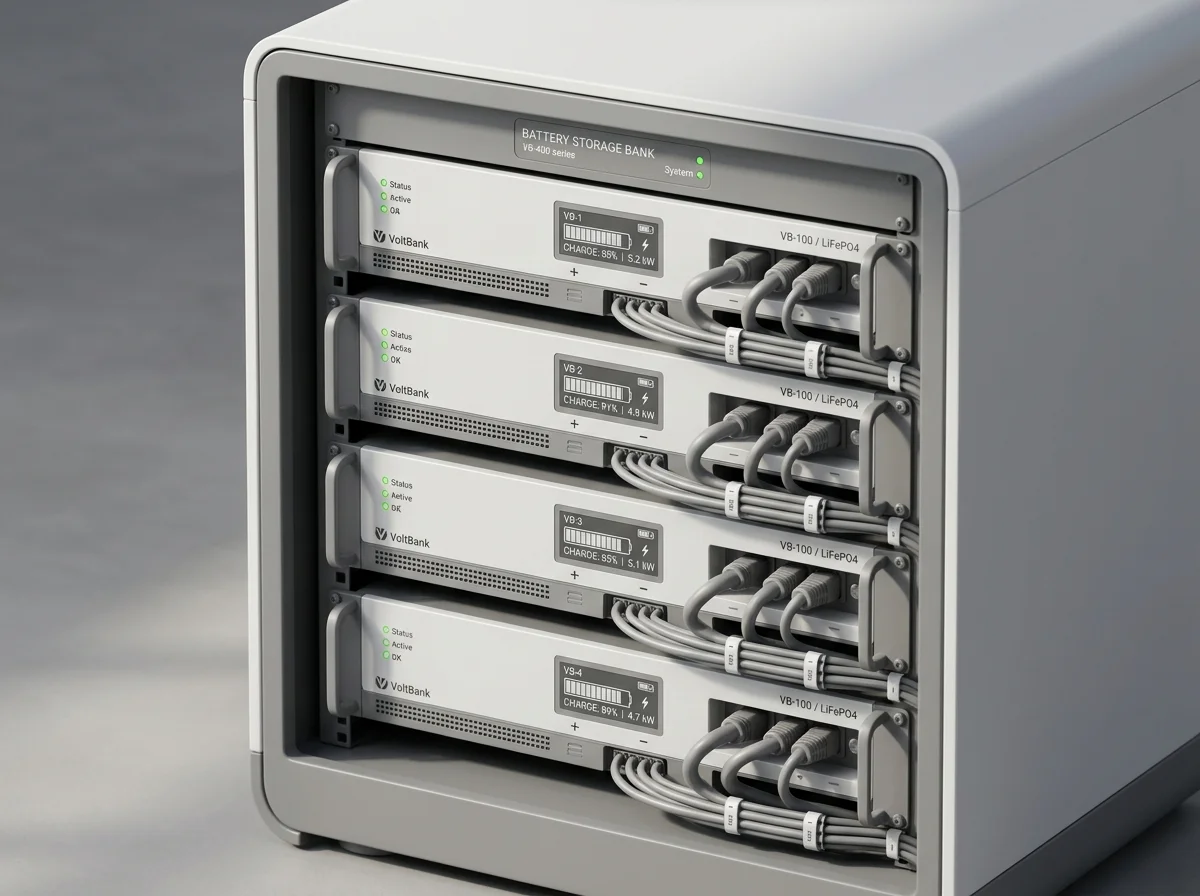
The battery bank is the most expensive part of your system. It accounts for thirty to forty-five percent of the total cost. Homeowners must choose between lithium iron phosphate (LiFePO4) and traditional lead-acid batteries.
While lead-acid batteries cost less upfront, they do not last long and require regular maintenance. Lithium batteries are much more efficient, maintenance-free, and last up to three times longer.
| Specification | Lithium (LiFePO4) | Flooded Lead-Acid |
|---|---|---|
| Upfront Cost per kWh | $300 to $600 | $100 to $200 |
| Usable Depth of Discharge | 80% to 95% | 50% |
| Lifespan in Cycles | 3,000 to 6,000+ | 300 to 500 |
| Calendar Lifespan | 10 to 15 Years | 3 to 5 Years |
| Maintenance Needed | None | Monthly Water Checks |
| Round-Trip Efficiency | 92% to 98% | 75% to 80% |
The usable depth of discharge is the key detail. A lead-acid battery should only be discharged to fifty percent of its capacity to avoid damage. A lithium battery can safely discharge to ninety percent. This means you need twice as many lead-acid batteries to get the same amount of usable power. Over ten years, lithium is actually sixty to seventy-five percent cheaper.
Important Changes to Federal Tax Credits
A major update for off-grid planning is the termination of the federal residential clean energy tax credit. The federal tax changes signed under Public Law 119-21 accelerated the phase-out of the thirty percent tax credit (Section 25D).
For systems installed now, there is no longer a federal tax credit for residential solar panels or battery storage.
This change increases the out-of-pocket cost of a standard fifty-one thousand dollar off-grid system by over fifteen thousand dollars. This delay extends the payback period and makes sizing your system accurately even more critical. State incentives and local utility rebates may still be available in some regions, so check with a local solar expert.
Frequently Asked Questions
A typical family home off-grid system costs between $32,500 and $69,500 installed, with an average of around $51,000. Small cabins can often be powered for $18,000 to $35,000.
Yes. Almost all off-grid homes need a propane or diesel generator. It handles extended cloudy weeks in the winter. A typical eight to twelve kilowatt generator costs $3,000 to $12,000 installed.
Lithium iron phosphate (LiFePO4) is the industry standard. It is safer, maintenance-free, has a ninety percent usable capacity, and lasts ten to fifteen years. Lead-acid is only recommended for cabins with seasonal use.
Solar panels last twenty-five to thirty years. The inverter and battery bank will typically need replacement after ten to fifteen years.