Hidden Costs of Solar Panels Homeowners Often Overlook
Uncover the hidden costs of solar panels before you buy. Explore electrical upgrades, permitting, dealer fees, and long-term maintenance expenses.
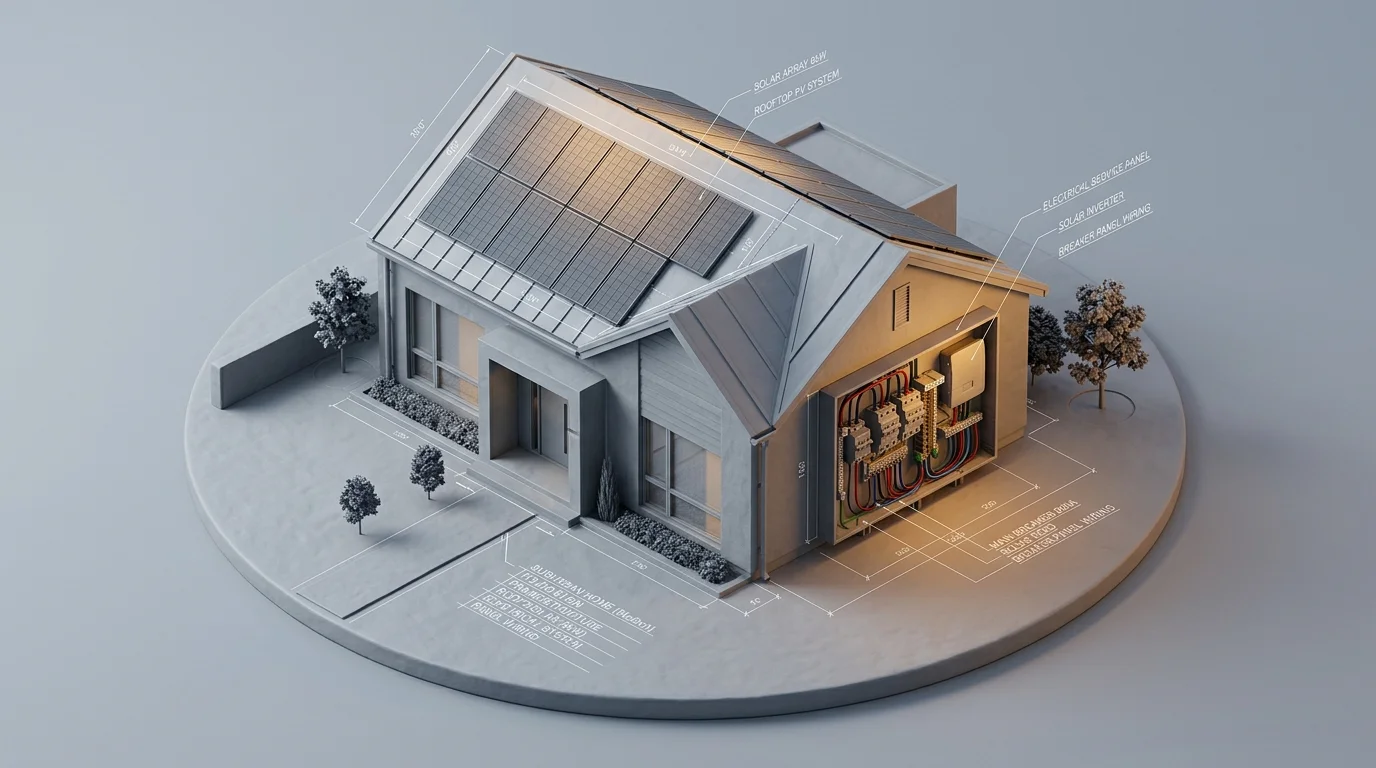
Solar energy is one of the best ways to lower electric bills and produce clean power. Modern solar panels are more efficient than ever, and overall equipment prices continue to drop. Yet many homeowners receive an initial estimate, sign a contract, and soon discover thousands of dollars in surprise expenses.
These unexpected charges are known as hidden costs. They rarely appear in bright print on solar marketing flyers. Instead, they come from necessary electrical work, local government permit offices, finance charges, and future home maintenance.
Understanding these expenses before you sign a solar agreement protects your budget. Here is an honest guide to the hidden costs of solar panels and how to avoid overpaying.
1. Main Electrical Service Panel Upgrades
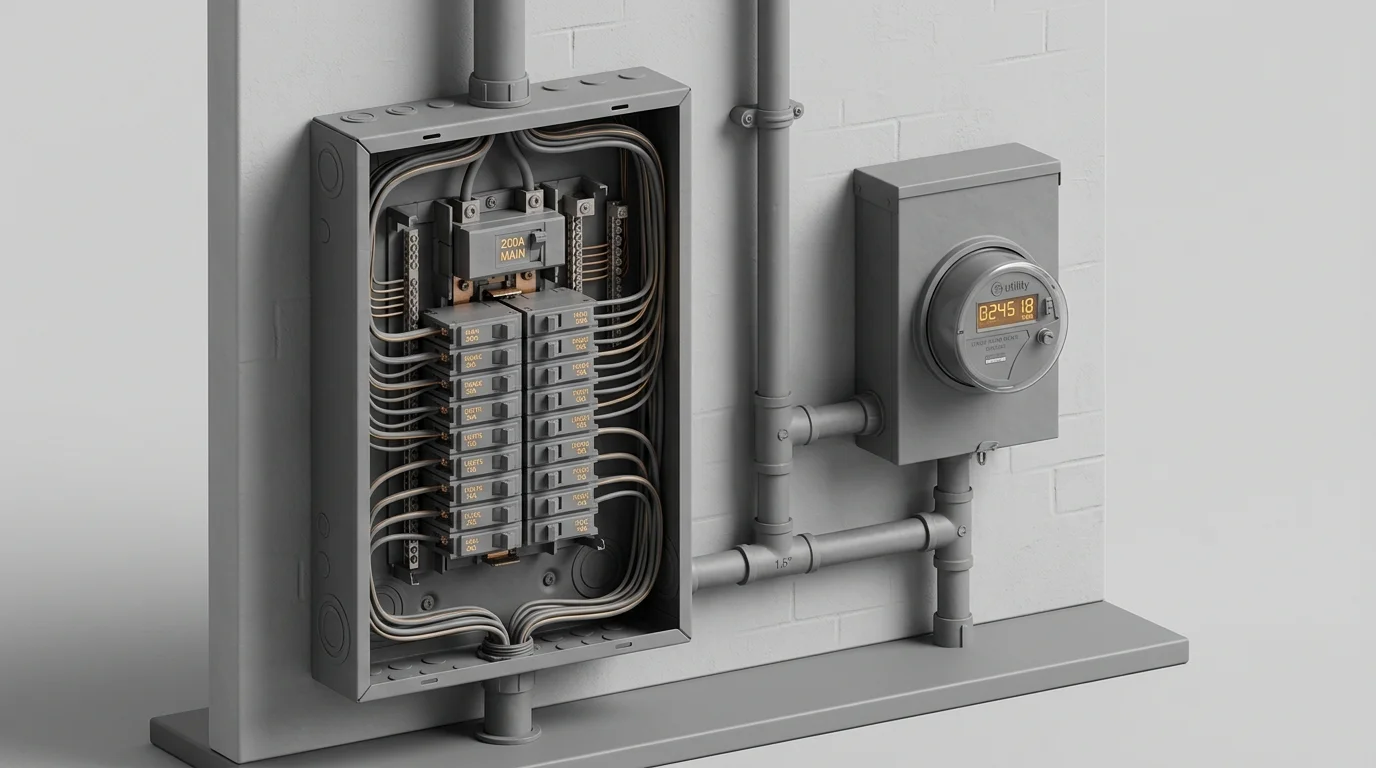
One of the most frequent surprise charges is a main electrical service panel upgrade. Solar panels do not just feed power to your lights. They push electricity backward into your home breaker box and out onto the utility grid.
Many homes built before 2000 have an electrical panel rated for 100 amps or 150 amps. Under the National Electrical Code, specifically the 120 percent rule, your electrical busbar can only accept a safe maximum amount of continuous current. When you add a modern solar inverter and solar array, older breaker boxes often lack the physical breaker space and electrical capacity to handle the load.
If your installer discovers that your existing box cannot support solar, you must upgrade to a modern 200-amp service panel. This upgrade requires:
- A new 200-amp breaker box and busbar
- Heavy-duty utility service entrance cables
- New grounding rods and bonding connections
- A scheduled utility power shutoff and municipal inspection
A standard main panel upgrade typically costs between $1,500 and $4,000. If your utility company requires trenching new underground supply lines from the street, costs can rise even higher.
2. Roof Condition and Structural Work
Solar panels are built to generate clean electricity for 25 to 30 years. However, asphalt shingle roofs usually last only 20 to 25 years. If your roof is already 12 to 15 years old, installing solar panels on top of it creates a costly timing trap.
When an aging roof finally begins to leak, a roofing contractor cannot easily work around solar modules. A solar technician must come out to detach every panel, unbolt the aluminum racking, store the equipment safely, and remount everything after new shingles are installed.
This process is called removal and reinstallation, often abbreviated as R&R. Industry data shows that solar R&R costs between $150 and $300 per panel. For an average residential system with 20 panels, removing and reinstalling the array adds $3,000 to $6,000 to your future roof replacement bill.
Always hire an independent roofer to inspect your shingles before going solar. If your roof has less than 10 years of useful life remaining, replacing the roof first prevents thousands of dollars in redundant labor.
3. The Financing Trap: Solar Loan Dealer Fees
Zero-down financing has helped millions of families adopt clean energy. However, third-party solar loans often contain the largest hidden expense in the entire industry: lender dealer fees.
Solar sales representatives frequently promote loans with low interest rates, such as 1.99 percent or 3.99 percent annual percentage rates (APR). In a high-interest financial market, these low rates look like an incredible bargain. In reality, lenders charge the solar contractor a massive upfront origination fee to buy down the rate. This charge is called a dealer fee.
Instead of paying the fee out of their own pocket, solar companies add this expense directly into your total contract price. Dealer fees routinely range between 15 percent and 35 percent of the system price.
Cash or Direct Bank Loan
You pay the real market price of the equipment and labor. There are zero hidden dealer markups added to your principal balance.
Low-APR Solar Loan (30% Dealer Fee)
The lender adds over $10,000 in hidden dealer fees into your balance to advertise an artificial low interest rate.
To expose this markup, always ask the installer for their direct cash price. If the cash price is $24,000 but the financed balance is $34,000, you are paying a $10,000 hidden surcharge just for the financing structure.

4. Local Building Permits and Utility Interconnection
Before solar panels can be installed, your system must receive official clearance from two separate organizations: your local city or county government, and your electric utility company.
Both entities charge fees to review your blueprints and approve the electrical work:
- Authority Having Jurisdiction (AHJ) Permits: City building and safety departments review engineering stamps, structural wind loads, and electrical schematics. Permitting fees vary from a flat $100 in rural counties to over $1,000 in strict metropolitan areas.
- Utility Interconnection Fees: Your electric company must review how your solar inverter interacts with local grid transformers. Application fees and bi-directional meter programming generally run between $50 and $350.
Reputable solar installers bundle these administrative fees into their initial quote. Less transparent contractors list them as separate line items or leave them for the homeowner to pay directly. Always verify that all permitting, engineering stamps, and utility interconnection charges are included in your written contract.
5. Tree Trimming and Shading Management
Solar panels require unobstructed sunlight to deliver their promised financial return. Even partial shading on a single solar panel can reduce energy production across an entire string of modules.
During your initial site survey, an installer may determine that nearby oak, pine, or maple trees block direct sunlight between 10:00 AM and 3:00 PM. Trimming mature trees to clear the solar window requires professional tree service companies.
- Initial Tree Pruning: Expect to pay between $500 and $2,000 to prune heavy branches shading south-facing roof planes.
- Complete Tree Removal: Removing large or hazardous trees near rooflines costs between $1,200 and $3,500 per tree.
- Ongoing Growth Management: Trees grow every year. Budgeting $300 to $600 every few years for ongoing canopy trimming ensures your panels continue generating full power.
6. Pest Protection: Critter Guards
The space between your roof shingles and the underside of solar panels creates a sheltered, warm microclimate. Pigeons, squirrels, raccoons, and rodents love this space.
Squirrels are notorious for chewing through the plastic insulation on solar wiring, which causes ground faults and shuts down your inverter. Pigeons nest underneath the glass, accumulating droppings that corrode mounting hardware and stain roof surfaces.
Preventing pest infestation requires installing critter guards. A critter guard is a heavy-duty, PVC-coated galvanized steel wire mesh fastened securely around the perimeter of the array without penetrating panel frames.
Most basic solar quotes do not include critter guards. Adding pest protection typically costs between $8 and $15 per linear foot, resulting in a total cost of $500 to $1,500 for an average home array. Adding them during the initial installation is far cheaper than paying for animal cleanup and repaired wiring later.
7. Inverter Replacement at Year Ten to Fifteen
Solar modules come with 25-year performance warranties. However, the solar inverter, which converts direct current (DC) solar electricity into household alternating current (AC) electricity, does not last as long as the panels.
- Central String Inverters: String inverters work continuously under high electrical loads and heat. They generally carry a 10 to 12 year warranty. Replacing a central string inverter mid-way through your system lifetime costs between $1,500 and $3,000 including labor.
- Microinverters: Systems using microinverters installed under each panel often feature 25-year warranties matching the panels. While microinverters have higher upfront costs, they help avoid a major replacement bill down the road.
When calculating your long-term return on investment, always set aside a modest reserve fund for inverter maintenance after year ten.
8. Homeowners Insurance Premium Adjustments
Solar panels add substantial value to your property. A typical residential system represents $20,000 to $35,000 in physical building assets attached to your roof.
To ensure your panels are covered against hailstorms, windstorms, falling tree limbs, and house fires, you must notify your home insurance provider and increase your dwelling coverage limit.
- Annual Premium Increase: Increasing dwelling coverage limits usually adds $50 to $150 per year to your annual homeowners insurance premium.
- Separate Wind and Hail Deductibles: Some insurance carriers in hurricane or hail-prone states require a separate deductible for roof-mounted equipment. Check your policy terms before installation so there are no surprises after a severe storm.
Step-by-Step Checklist to Avoid Hidden Solar Costs
Follow this simple checklist when evaluating solar quotes to keep hidden expenses out of your final invoice:
Demand the All-Cash Price
Ask every installer for their complete cash price before discussing financing. This exposes hidden loan dealer fees and lets you compare real equipment costs accurately.
Inspect Electrical Panel and Roof Early
Have an electrician verify your main service panel capacity and an independent roofer inspect your shingles before signing any binding agreements.
Verify Included Soft Costs
Check that the written contract explicitly covers all city building permits, engineering wet stamps, utility interconnection applications, and inspection fees.
Include Critter Guards and Racking
Request pest netting critter guards in your initial scope of work and confirm whether your inverters come with extended 25-year manufacturer warranties.
Frequently Asked Questions
The most common hidden cost is an electrical service panel upgrade. Many homes have 100-amp or 150-amp breaker boxes that cannot safely support the additional electrical current from a modern solar system. Upgrading to a 200-amp panel typically costs between $1,500 and $4,000.
Lenders charge solar installers a hidden dealer fee ranging from 15 percent to 35 percent to offer low promotional interest rates like 1.99 percent. Installers add this fee directly to your purchase price, meaning you finance thousands of dollars in hidden markups on day one.
Removing and reinstalling an existing solar array for roof repairs usually costs between $150 and $300 per panel. For a standard 20-panel residential installation, the total bill ranges from $3,000 to $6,000. Replacing an aging roof before going solar avoids this double expense.
Yes, but the increase is usually modest. Adding $20,000 to $35,000 of solar equipment to your home dwelling coverage typically raises annual insurance premiums by $50 to $150 per year. Always confirm policy coverage with your insurance agent before installation.