DIY Solar Panel Kits: Are They Worth the Cost?
Is installing your own solar panels worth it? We break down the hardware costs of DIY kits, professional installations, hidden fees, and long-term returns.
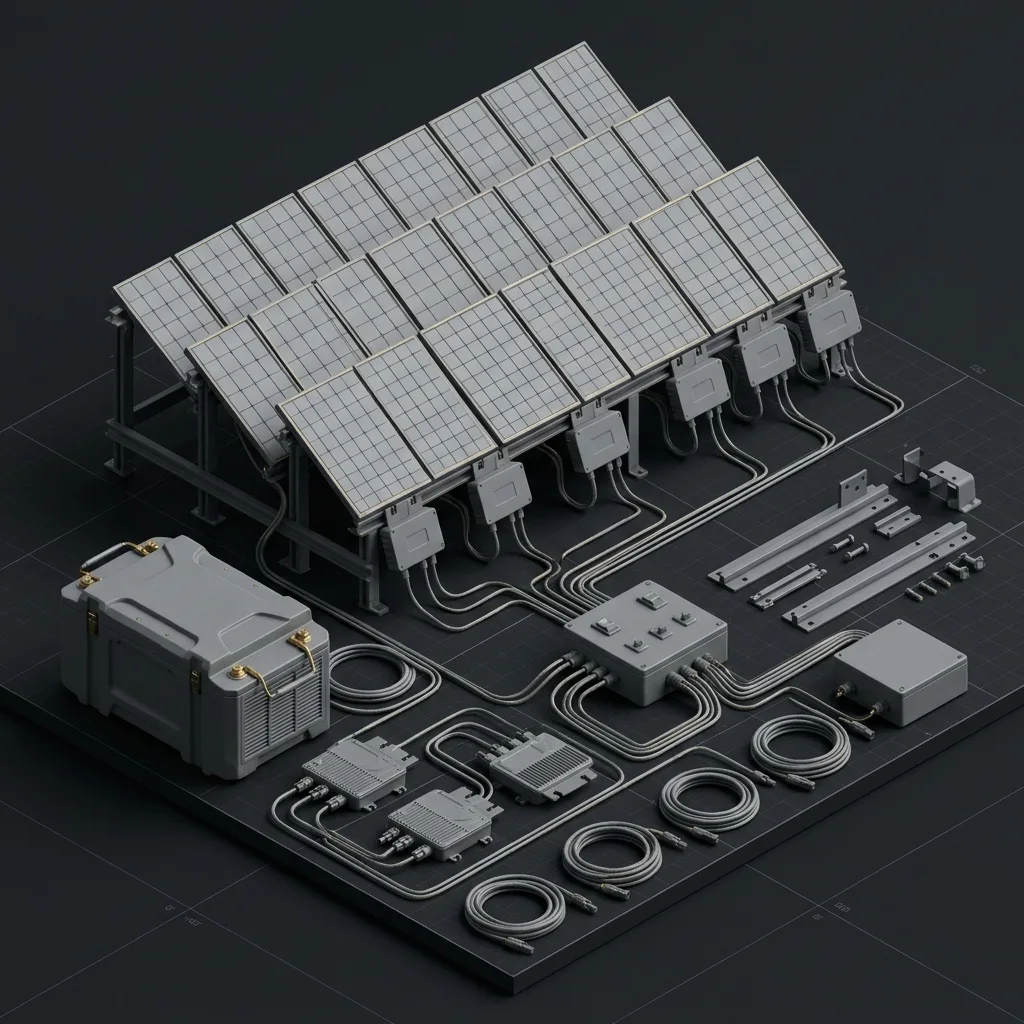
When you look at a solar estimate, a massive chunk of the price tag goes to labor, engineering, and sales commissions. Because of this, many handy homeowners ask a simple question: Can I buy a DIY solar kit and install it myself?
Choosing a DIY path can slice your upfront system cost in half. However, it also shifts all the work, safety risks, and permitting onto your shoulders. Additionally, recent changes to federal clean energy tax programs mean that homeowner-owned systems no longer receive the same broad subsidies. This makes calculating your exact return on investment more important than ever.
In this guide, we break down the hardware costs of DIY solar kits, compare them to hiring a professional, and outline the hidden steps you must prepare for.
DIY Solar Kits vs. Professional Installation
The primary reason to choose a DIY solar project is the raw cost savings on equipment. When you buy a complete kit, you are paying wholesale prices for the solar panels, rack mounts, and inverters.
A DIY solar panel kit typically costs between $1.25 and $1.50 per watt. On the other hand, hiring a professional contractor to handle everything averages $2.50 to $3.50 per watt.
Let us look at how a typical ten kilowatt system compares between the two paths:
DIY Solar Kit
You buy the equipment directly and install it. This eliminates all contractor markups and labor fees.
Professional Install
A professional company handles the design, permitting, electrical work, and local inspections.
While the DIY route saves you over fourteen thousand dollars upfront, you must handle all of the physical labor, electrical wiring, and government paperwork yourself.
The Hidden Costs of Doing It Yourself
Many homeowners purchase a solar kit thinking that the shipping box contains everything they need. Unfortunately, there are several hidden expenses that are not included in standard online bundles.
When planning a self-installed solar array, you must account for these additional items:
- Permits and Engineering Fees: Your local building department will require detailed structural plans and electrical schematics. You may need to pay an engineer to stamp your plans.
- Balance of System (BOS) Components: You must buy electrical conduit, outdoor-rated copper wiring, safety disconnect switches, and circuit breakers.
- Professional Electrician Sign-off: Most local power companies will not let you connect to the grid unless a licensed electrician signs off on the final connection.
- Specialized Tools: Working on a roof requires safety harnesses, ladders, heavy-duty drills, wire crimpers, and conduit benders.
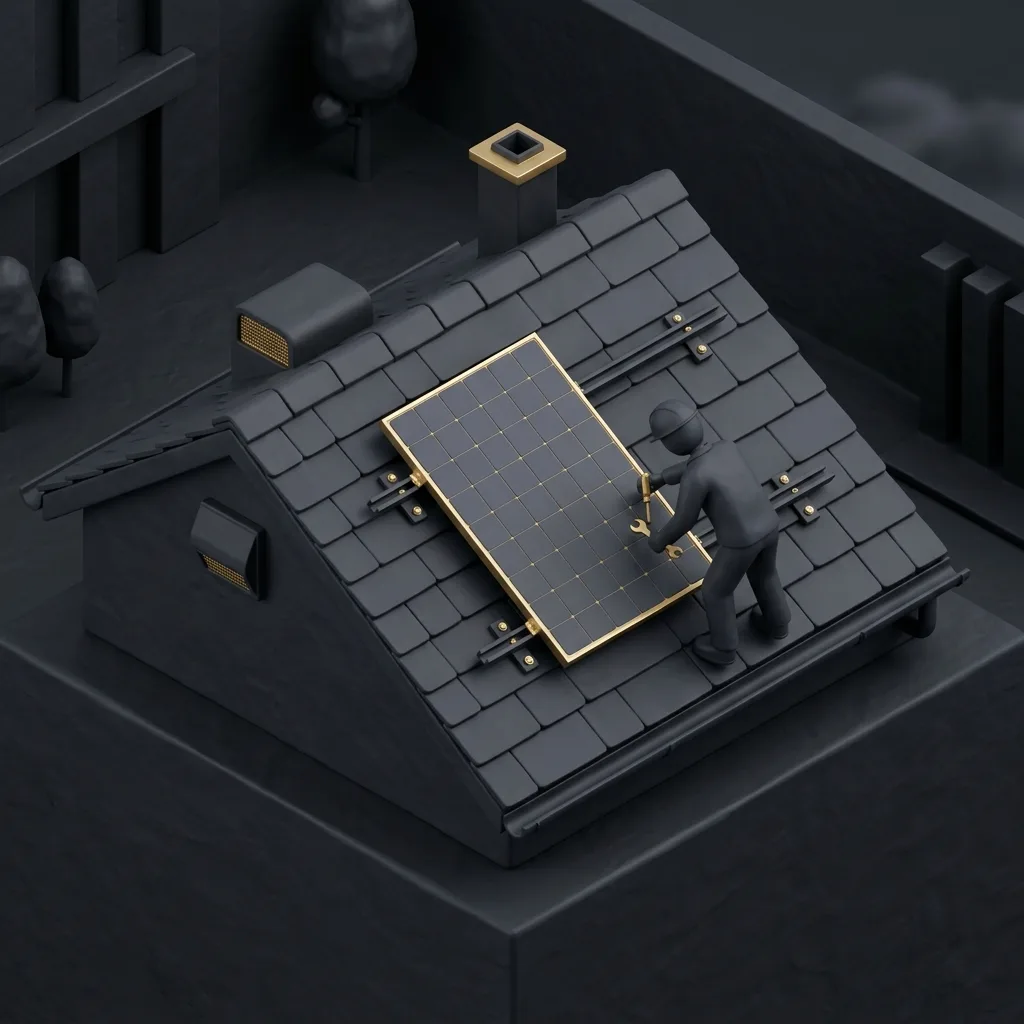
Step-by-Step DIY Solar Journey
If you decide that the savings are worth the effort, your project will follow four major phases. Skipping any of these steps can result in heavy fines or a system that is not allowed to turn on.
Engineering & Permits
Submit structural drawings and electrical plans to your city or county. You must receive building permits before mounting any racks.
Roof & Rack Mounting
Install heavy-duty mounting brackets into your roof rafters. Make sure to use premium water sealants to prevent leaks before mounting the rails.
Wiring & Connection
Connect the panels in series or parallel. Route the heavy DC wires through metal conduit down to the inverter and home battery system.
Utility Interconnection
Pass the municipal building inspection. Finally, submit a request to your utility company for a bi-directional net meter to begin grid-tied operation.
The Big Decision: Which Path is Best?
Deciding between a DIY kit and a professional installation comes down to your personal skillset, available time, and budget.
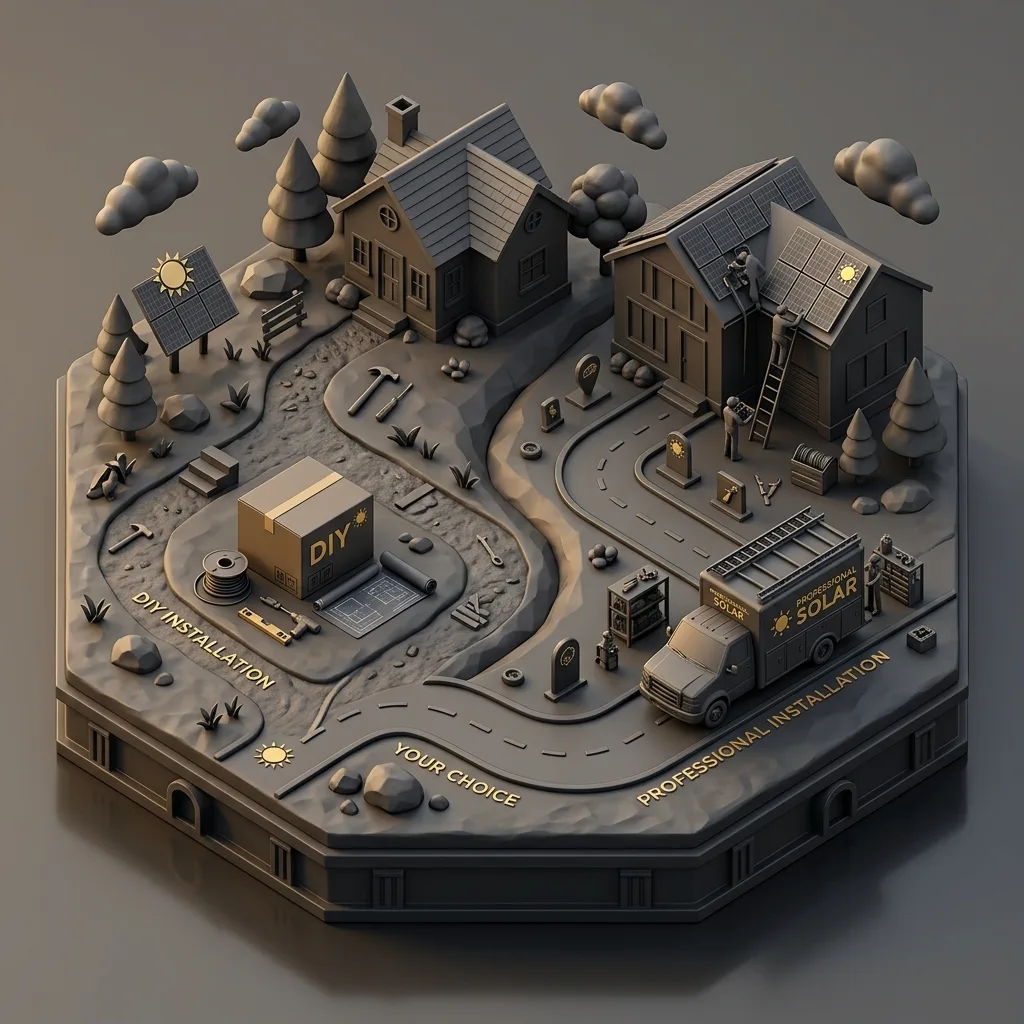
If you are comfortable working on a high roof, have strong basic carpentry skills, and understand how to safely work with high-voltage electricity, a DIY solar kit represents an unbeatable way to wipe out your electric bill for the lowest possible price.
However, if you want long-term peace of mind, expert warranties, and a hassle-free transition, hiring a professional team is the safest and most efficient path.
Frequently Asked Questions
Federal clean energy policies have changed recently. For homeowner-owned systems, standard residential tax credits have expired. However, there are third-party ownership models and local state-level clean energy rebates that can still help offset your installation costs. Check with a tax expert before buying.
Yes. Off-grid DIY systems are actually much simpler to install because they do not require utility interconnection approval. You only need solar panels, a charge controller, a battery bank, and an off-grid inverter.
When you hire a professional contractor, they usually provide a ten to twenty-five year roof penetration warranty. If you do it yourself, you are fully responsible for any structural leaks or roof damage that occurs.