Solar Thermal vs Photovoltaic: Key Differences, Efficiency, and Costs
Compare solar thermal vs photovoltaic systems. Learn how solar water heating compares to solar electric panels in efficiency, installation costs, and ROI.
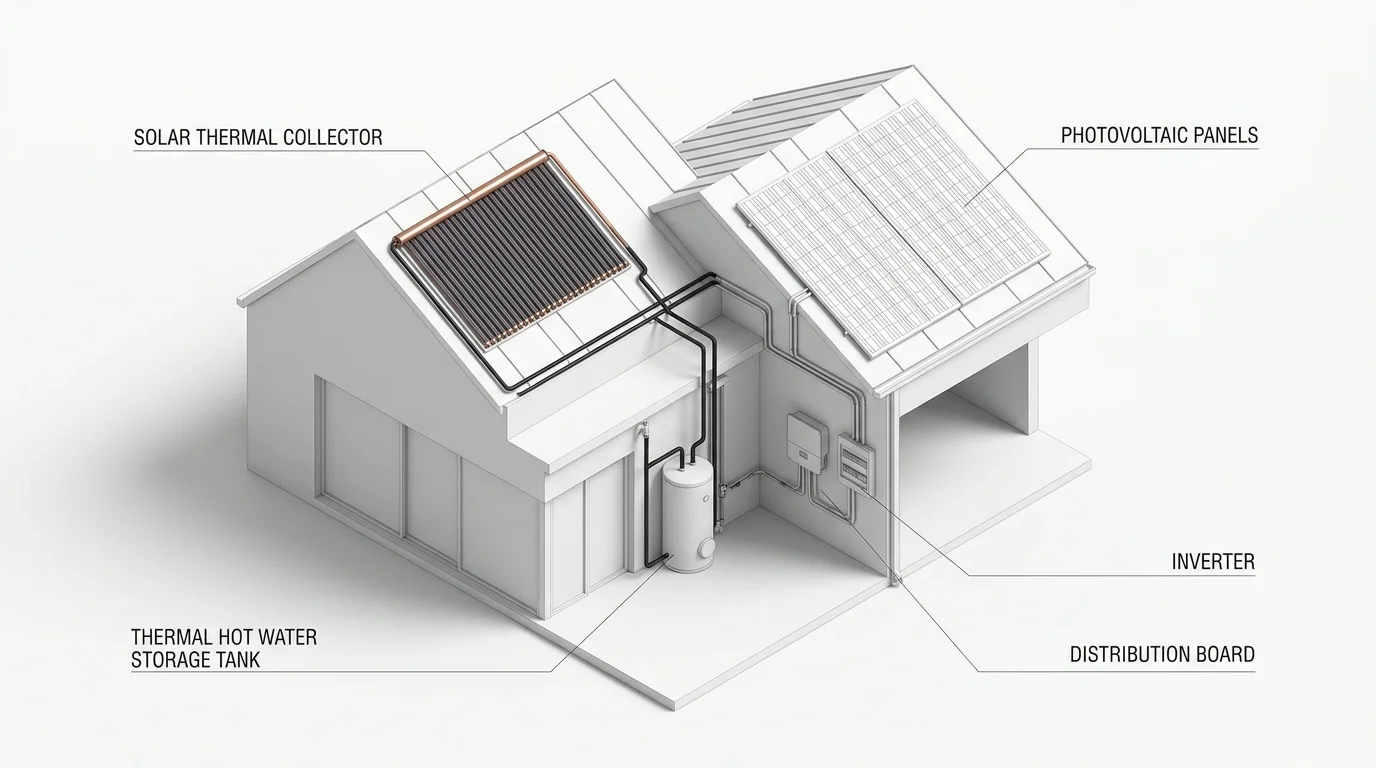
When homeowners look up at sunny rooftops, they often spot dark panels soaking up daylight. However, not all solar panels do the same job. Two main technologies capture sunshine for buildings: solar thermal systems and photovoltaic (PV) solar systems.
While both sit on roofs and lower utility bills, they produce completely different outputs. Solar thermal collects sunlight as direct heat, while photovoltaic panels convert sunlight into usable electricity. Understanding the difference between solar thermal and photovoltaic helps you decide which technology delivers the best return on investment for your home.
Solar Thermal Evacuated Tube System
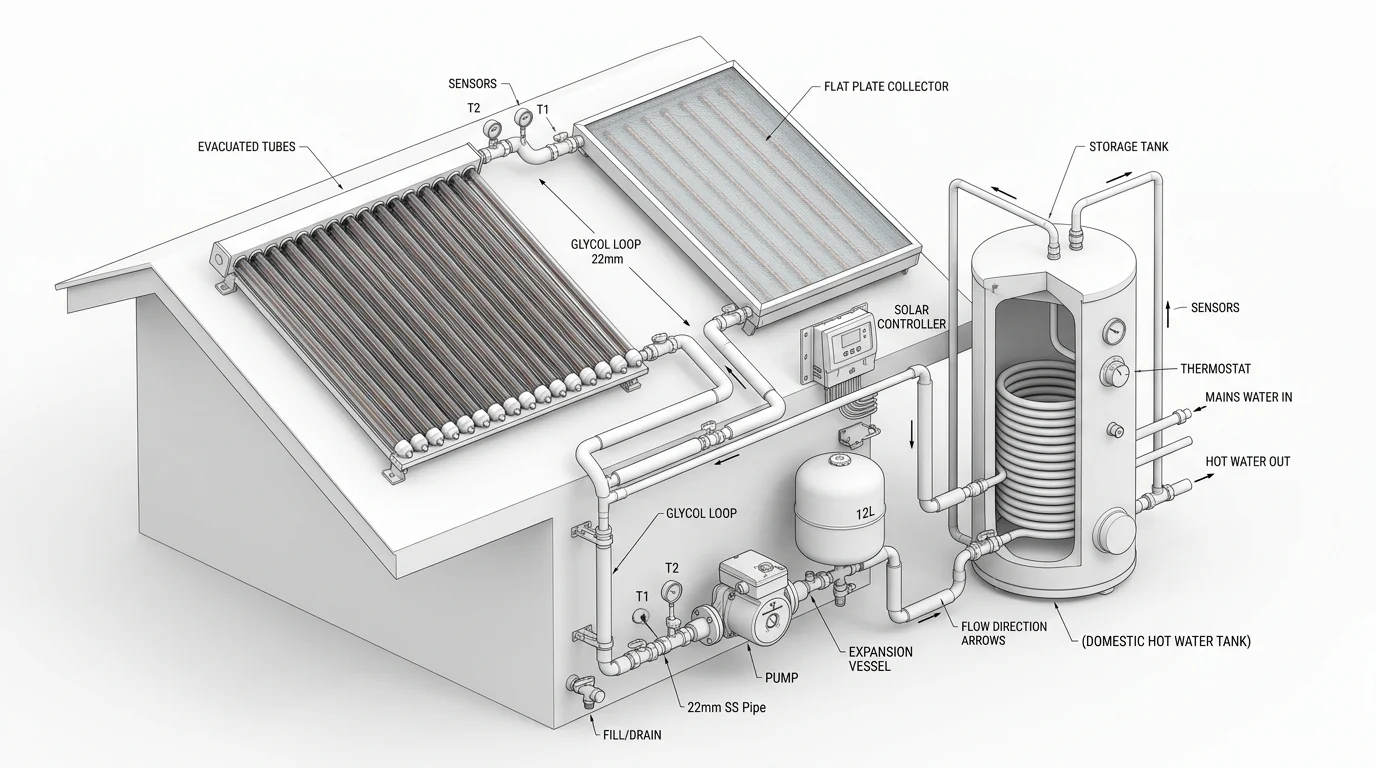
Solar thermal collectors absorb sunlight to warm a specialized heat transfer fluid, which circulates through insulated pipes into a domestic hot water storage cylinder.
How Each System Works: Heat vs Electricity
The most basic difference between solar thermal and photovoltaic is the type of energy they deliver.
Solar Thermal: Direct Solar Heating
Solar thermal systems collect sunlight to warm liquids. A solar thermal collector consists of dark metal plates or vacuum-sealed glass tubes (evacuated tubes) mounted on your roof.
Inside the collector, a heat transfer fluid (usually a non-toxic water and propylene glycol mixture) absorbs the heat of the sun. An electric pump circulates this warmed liquid down into your house through insulated pipes. The liquid passes through a heat exchanger coil inside your hot water tank, transferring its heat to your domestic water supply. The cooled liquid then flows back up to the roof to heat up again.
Because solar thermal systems only move heat, they can only power heating tasks. They supply hot water for showers, washing machines, radiant floor heating, or outdoor swimming pools.
Photovoltaic (PV): Direct Solar Electricity
Photovoltaic solar panels generate electric current. Each PV panel consists of silicon semiconductor solar cells connected in a grid.
When sunlight hits silicon cells, light particles called photons knock electrons free from silicon atoms. This flow of free electrons creates direct current (DC) electricity. Wiring routes this DC electricity to a solar inverter, which converts it into alternating current (AC) electricity. AC electricity is the standard power format used by household lights, refrigerators, heat pumps, computers, and electric vehicles.
Any electricity your home does not use right away can be stored in a home battery or exported to the electric grid through net metering programs.
Efficiency Comparison: Raw Heat vs Usable Energy
When comparing efficiency ratings, solar thermal numbers can seem surprisingly high at first glance.
- Solar thermal efficiency: Modern solar thermal collectors convert roughly 60 to 70 percent of incoming sunlight into usable heat.
- Photovoltaic efficiency: Modern residential PV panels convert roughly 20 to 24 percent of incoming sunlight into electricity.
Solar thermal collectors capture far more raw energy per square foot than PV panels. Because of this high efficiency, a typical single-family home only needs one or two solar thermal collectors (about 40 to 60 square feet of roof space) to cover most of its domestic hot water needs.
However, efficiency is not the same as economic value. High thermal efficiency only helps if your household can actually use that heat. In warm summer months, your water tank heats up quickly. Once the water tank reaches its target temperature, any extra heat collected on your roof goes unused.
In contrast, electricity from PV panels can power every appliance in your home. When your home uses less power during sunny afternoons, excess electricity charges home batteries or feeds back into the power grid for electric bill credits.
Solar Thermal
Captures solar energy as fluid heat. Ideal for dedicated hot water and swimming pool heating with small roof footprints, but cannot generate electricity or export energy to the grid.
Photovoltaic (PV)
Converts sunlight into versatile electricity. Powers all home appliances, heat pumps, and electric cars. Pairs with battery storage and earns bill credits through net metering.
Cost and Return on Investment Breakdown
System pricing and market economics have changed dramatically over the past decade.
Upfront Purchase Costs
A dedicated solar thermal domestic hot water system typically costs between $4,000 and $9,000 fully installed. Because it only requires a collector or two and a specialized tank, the entry cost is lower than a whole-home electric array.
A standard whole-home residential photovoltaic array typically costs between $18,000 and $28,000 before local incentives, averaging $2.70 to $3.10 per installed watt. While the total price is higher, a PV array addresses your entire electric bill rather than just one water heater.
The Falling Cost of Silicon
Over the past ten years, the global manufacturing cost of silicon photovoltaic cells fell by roughly 90 percent. As solar panel factories expanded, producing solar electricity became significantly cheaper every year.
Meanwhile, solar thermal collectors rely on copper piping, brass valves, insulated storage tanks, and specialized plumbing labor. These raw materials and labor costs have remained steady or increased. As a result, the financial advantage of solar thermal has narrowed.
Photovoltaic Solar with Heat Pump Water Heating
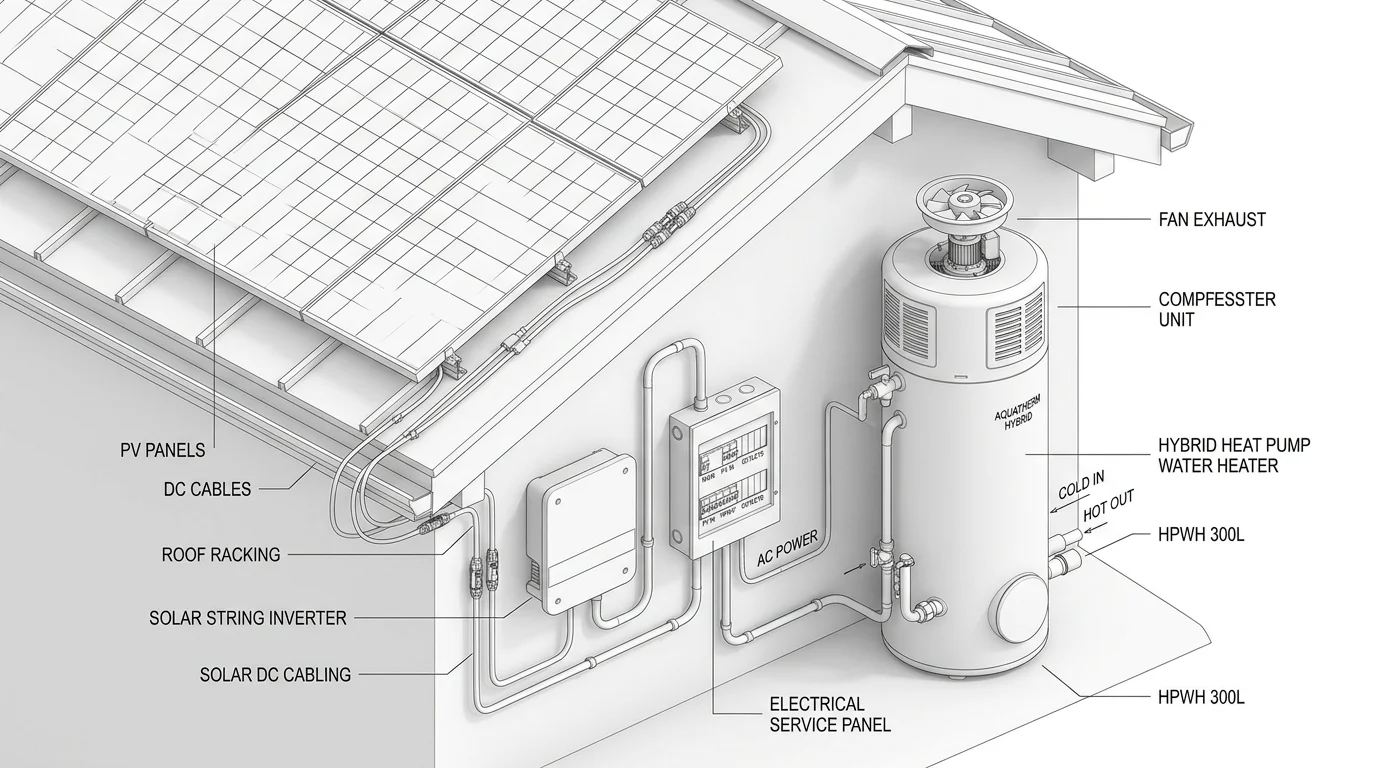
Modern homes often pair standard rooftop PV solar panels with an ultra-efficient electric heat pump water heater to produce hot water without requiring roof plumbing loops.
The Heat Pump Alternative
The biggest shift in home energy design is the combination of rooftop PV panels with electric hybrid heat pump water heaters.
A modern heat pump water heater uses electricity to pull existing heat out of the surrounding air and move it into the water tank. Because moving heat requires far less energy than creating heat, heat pumps operate at high efficiency levels (Uniform Energy Factor of 3.5 to 4.2). They use up to 70 percent less electricity than standard electric resistance water heaters.
By adding just three or four extra PV panels to a rooftop solar array (roughly 1.2 to 1.6 kilowatts of additional capacity), a homeowner can generate all the electricity needed to run a heat pump water heater. This setup delivers low-cost hot water without needing liquid pipes or pumps on the roof.
Maintenance and System Lifespan
Maintenance requirements differ significantly between mechanical fluid systems and solid-state electronics.
Solar Thermal Maintenance
Solar thermal systems contain moving parts, pressurized fluids, and plumbing seals:
- Pumps and valves: Circulator pumps and pressure relief valves can wear out over 10 to 15 years.
- Antifreeze degradation: In cold climates, the propylene glycol antifreeze mixture breaks down over time from high collector heat. It must be tested and flushed every 3 to 5 years.
- Freezing and overheating: Severe winter freezes can burst exposed piping if freeze protection fails. During hot summer days without hot water usage, collectors can reach stagnation temperatures above 300 degrees Fahrenheit, stressing pipe joints.
With regular professional maintenance, solar thermal systems last about 15 to 20 years.
Photovoltaic Maintenance
Photovoltaic systems are solid-state devices with no moving parts:
- Panels: Silicon solar cells are sealed behind tempered glass and aluminum frames. Natural rainfall rinses away surface dust. Most tier-one solar panels carry 25-year to 30-year power production warranties.
- Inverters: String inverters typically last 12 to 15 years before needing replacement, while microinverters often carry 25-year warranties.
- Minimal routine upkeep: Homeowners rarely need ongoing service visits beyond an occasional visual inspection or inverter firmware update.
How to Choose the Right Solution for Your Property
Both solar technologies offer distinct strengths depending on your property layout and daily energy consumption.
Assess Your Energy Goals
Determine whether your biggest utility expense is overall household electricity or heavy hot water demand. If you want to eliminate monthly electric bills, choose photovoltaic solar.
Examine Your Roof Space
Properties with tight roof space or heavy dormer shading can benefit from a single solar thermal collector to handle hot water, leaving smaller unshaded sections for basic energy needs.
Consider Pool Heating Needs
If your primary goal is extending your swimming season, unglazed solar thermal pool collectors deliver outstanding value and pay back faster than electric pool heat pumps.
Plan for Future Electrification
If you plan to drive an electric car, install an induction stove, or add battery storage, photovoltaic panels provide the flexible electricity required to power your entire modern home.
When Solar Thermal Makes Sense
- Swimming pool heating: Low-temperature plastic solar thermal collectors heat thousands of gallons of pool water cheaply and effectively.
- Commercial hot water demands: Laundromats, breweries, car washes, and dairy farms consume continuous hot water all day, making thermal collectors highly cost-effective.
- Homes with tiny roofs and high water heating bills: If roof space cannot fit a 15-panel PV system, a two-panel thermal system can still cut hot water bills.
When Photovoltaic (PV) Wins
- Whole-home utility savings: PV offsets lights, kitchen appliances, cooling, heating, and electric vehicle charging.
- Low maintenance preference: Homeowners who want set-and-forget equipment avoid the fluid checks and pipe joints of thermal systems.
- Combining with heat pumps: Pairing PV with a heat pump water heater delivers hot water efficiently while keeping the entire home on a single electrical system.
- Grid connection and storage: PV allows you to earn net metering bill credits and store emergency backup power in home batteries.
Frequently Asked Questions
Standard residential solar thermal collectors cannot generate electricity. They only collect and transfer heat into liquids. Utility-scale concentrated solar power (CSP) plants can make steam to turn electric turbines in deserts, but residential rooftop collectors are strictly for water and space heating.
Yes. While PV panels do not heat water directly with fluids, they create electricity that powers electric water heaters. Pairing PV panels with an electric hybrid heat pump water heater is one of the most efficient ways to heat domestic water today.
Yes, closed-loop solar thermal systems use a non-toxic propylene glycol antifreeze mixture instead of plain water in the roof loop. This prevents the liquid from freezing inside outdoor collector pipes during winter storms.
When no one is home to use hot water, the storage tank reaches maximum temperature and the system enters stagnation. The fluid inside the roof collectors boils into vapor until sun levels drop. Well-engineered systems include expansion tanks and heat dissipation loops to handle stagnation safely without damage.
Yes. Some homes install both systems side by side. There are also hybrid panels called Photovoltaic-Thermal (PVT) collectors. PVT panels generate electricity while circulating fluid behind the silicon cells to cool the panels and capture waste heat simultaneously.