Solar Pergolas: Costs, Framing Design, and Installation Guide
Discover how residential solar pergolas turn patio spaces into clean power plants. Compare bifacial panel gains, framing costs, and tax credit eligibility.
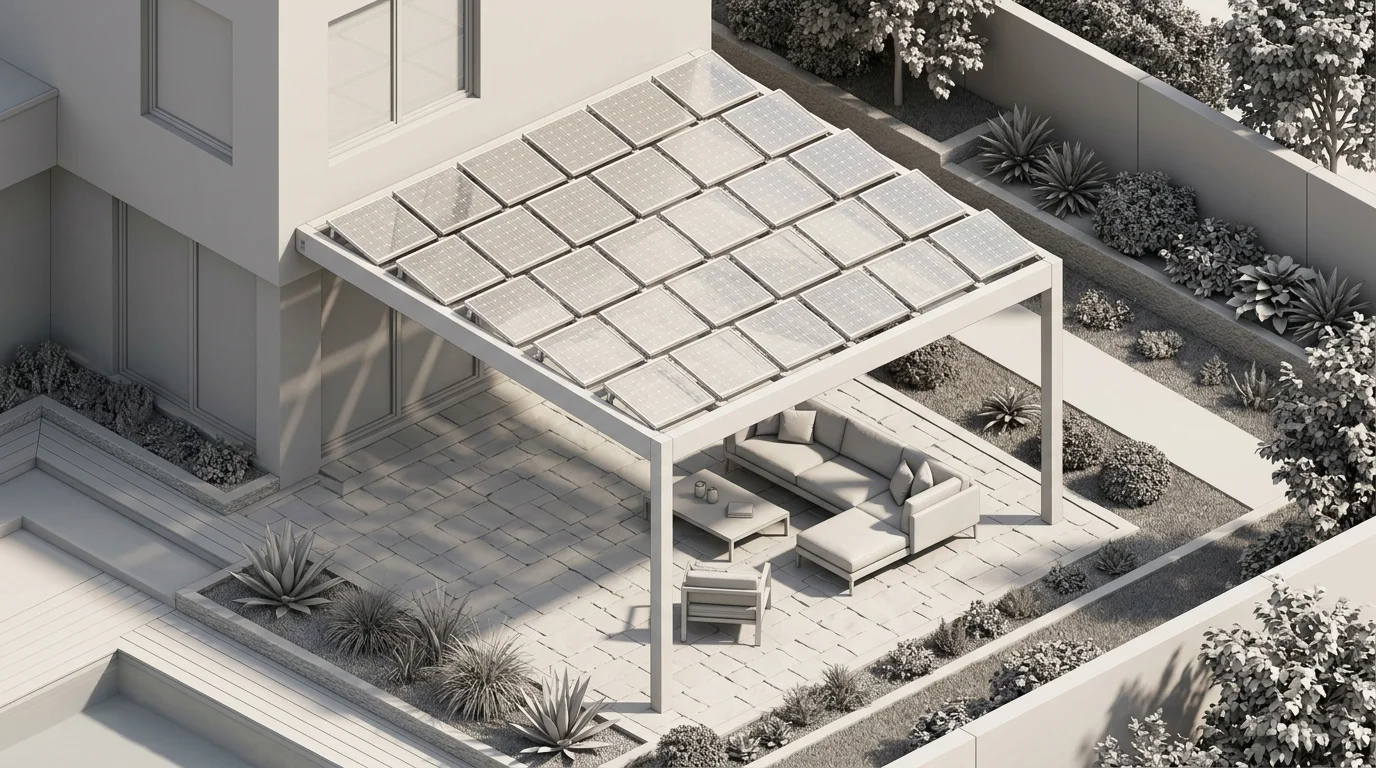
Many homeowners want clean solar energy but run into common roof problems. Your roof may face north, have heavy tree shade, or feature complex hips and dormers that leave little open room for solar panels. Some homeowners simply dislike the look of dark panels across their front shingles, or have delicate Spanish clay tiles that are difficult to drill into.
A residential solar pergola solves these challenges by taking solar off your roof and placing it over your outdoor living space.
A solar pergola is a freestanding or house-attached outdoor structure topped with solar panels instead of open wooden slats or shingles. It provides soothing shade for family gatherings, protects patio furniture from harsh weather, and generates clean electricity that slashes your electric bills every month.
In this guide, we break down how solar pergolas work, compare framing options, analyze real-world costs and tax credits, and walk through the complete installation process.
Why Choose a Solar Pergola Over Rooftop Solar?
Rooftop solar remains the most common option because the roof structure already exists. However, a custom ground-based or patio structure provides several distinct advantages that standard rooftop arrays cannot match.
Installation Options Compared
Examine how a dedicated patio solar pergola compares to conventional rooftop panels.
Conventional Rooftop Solar
Rooftop solar uses existing roof planes. However, power output depends on your fixed roof orientation and pitch angle. Roof repairs down the road require removing and reinstalling the panels.
Residential Solar Pergola
A solar pergola builds functional outdoor shade while producing renewable power. You can point the structure directly south at the perfect angle, and you never have to drill into your home roof shingles.
Key Advantages of Solar Pergolas
- Ideal Angle and Orientation: Unlike fixed roof planes that often point east or west, a backyard pergola can be engineered to face true south at an optimal tilt angle for maximum yearly kilowatt-hour production.
- Bifacial Energy Boost: Elevated pergolas let you use bifacial glass solar modules. Sunlight reflects off concrete, light pavers, or nearby swimming pools onto the underside of the panels, adding 10% to 25% extra energy output.
- Zero Roof Penetrations: Because the structure stands on dedicated concrete footings in your yard or attaches to exterior wall ledger boards, your home roof warranty remains untouched.
- Natural Air Cooling: Rooftop panels often heat up to 150 degrees Fahrenheit in summer, which reduces efficiency. A pergola is open underneath, so natural breezes keep panels cool and operating at peak output.
- Protected Outdoor Living: High quality solar pergolas feature sealed joints and hidden gutter systems, keeping your patio dry during sudden rain showers while blocking 99% of harmful ultraviolet rays.
Bifacial Panels & Waterproof Framing
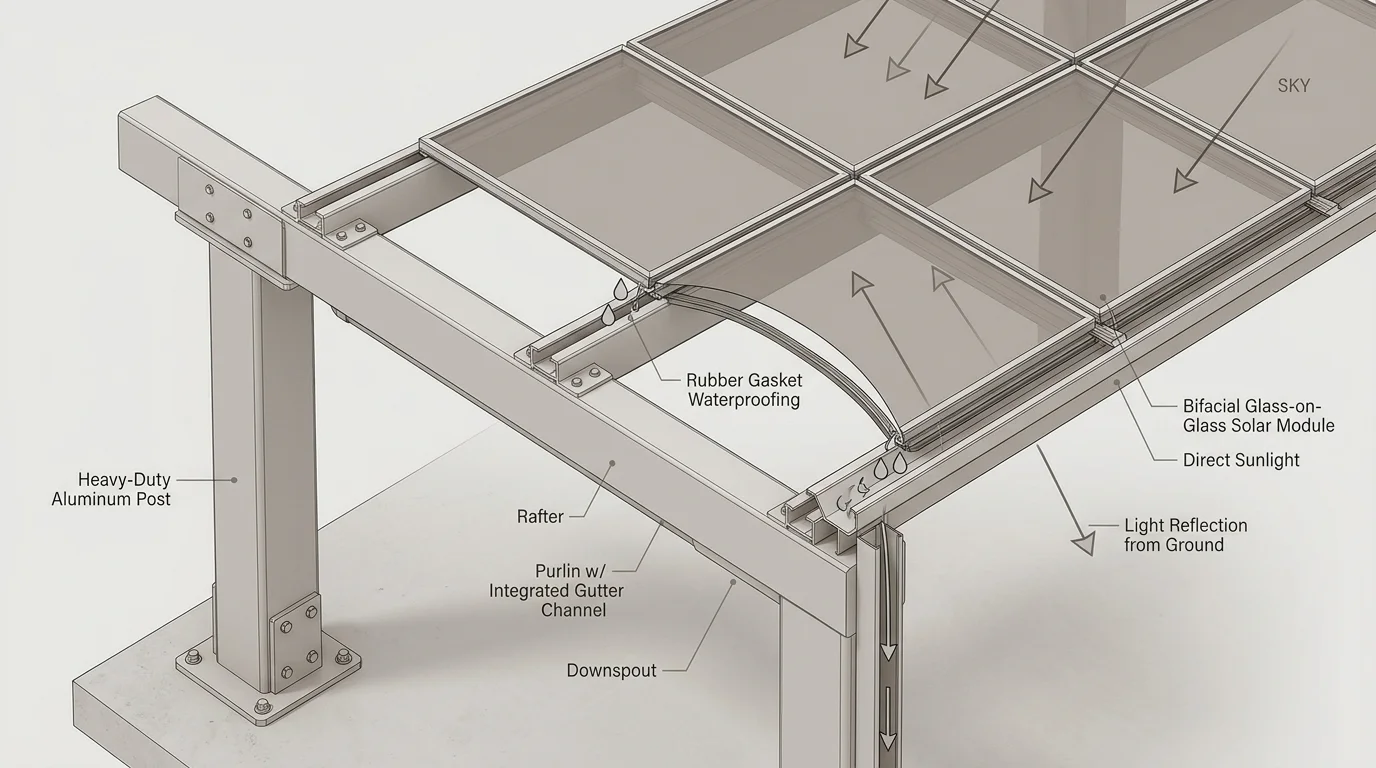
Solar pergolas combine heavy structural aluminum posts with dual-sided glass solar modules. Integrated rubber gaskets and hidden gutter channels keep the space underneath completely dry while capturing light from both above and below.
Structural Framing Options and Waterproofing
Unlike standard wooden garden pergolas that allow rain and sun to filter through open beams, a solar pergola must be engineered as an electrical power station and a structural shelter.
1. Structural Materials: Aluminum vs Steel vs Timber
- Extruded Structural Aluminum: The industry gold standard for solar pergolas. Heavy-duty aluminum is lightweight, naturally resistant to rust and corrosion, and allows internal wire routing inside hollow posts. Factory powder-coated finishes match modern home architecture.
- Galvanized Structural Steel: Often used for large spans, multi-car patio canopies, or commercial installations. Steel supports heavy snow loads and high wind gusts, but requires deep concrete foundations and crane equipment during assembly.
- Treated Timber and Cedar: Offers a classic rustic look. However, wood expands, shrinks, and twists with humidity changes, which can stress rigid glass solar panels and break waterproof seals over time. Most solar contractors recommend metal frames.
2. The Waterproofing Channel System
Standard solar panels have small gaps between them when mounted on roof rails. On a patio cover, rainwater would drip directly through those gaps onto your patio chairs.
Modern solar pergolas solve this by using specialized waterproof channel purlins. Rubber compression gaskets lock against the panel frames, and internal drainage channels catch any water droplets. The water flows into a hidden perimeter gutter and drains cleanly down downspouts concealed inside the hollow corner posts.
3. Bifacial Glass-on-Glass Modules
The best solar pergolas use bifacial solar panels with clear tempered glass on both sides. From below, you can see filtered daylight passing through the gaps between dark silicon solar cells. This design avoids the dark, boxed-in feeling of metal awnings and provides an elegant, open-air ambiance.
Seamless Home & EV Integration
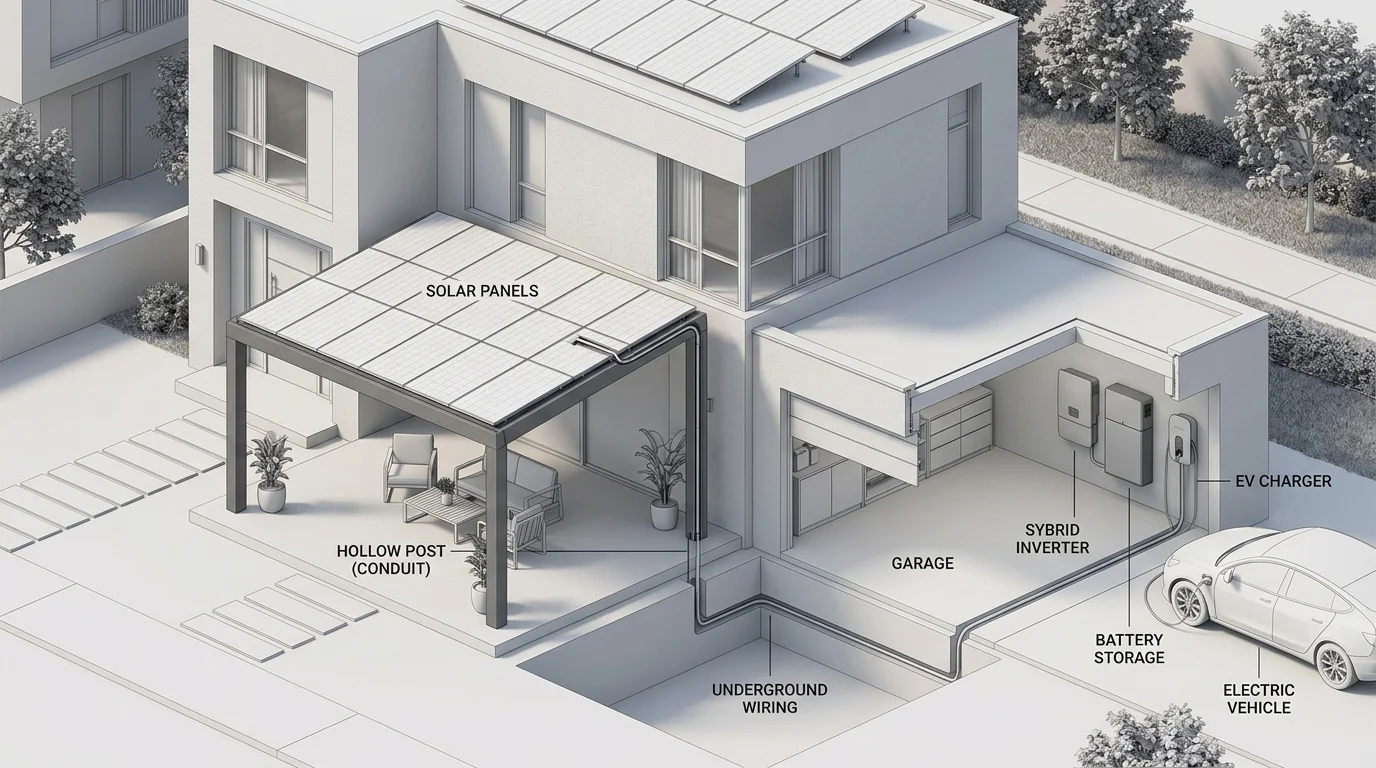
Cables route through hollow framing posts into underground conduit trenches. Electricity travels directly to your garage inverter, home battery storage, and Level 2 electric vehicle charging station.
How Much Does a Solar Pergola Cost?
Because a solar pergola includes both a custom outdoor structure and an electrical power system, the upfront price is higher than standard rooftop solar panels.
Cost Breakdown
A typical residential solar pergola ranges in size from 4 kilowatts (covering a small 200 square foot seating nook) to 10 kilowatts (covering a large 500 square foot patio or outdoor kitchen).
- Average Cost per Watt: $3.50 to $5.50 per installed watt.
- 4 kW System (Approx. 10 panels): $14,000 to $20,000 before incentives.
- 6 kW System (Approx. 15 panels): $21,000 to $28,000 before incentives.
- 10 kW System (Approx. 25 panels): $35,000 to $48,000 before incentives.
By comparison, adding a non-solar luxury custom aluminum patio cover alone often costs $12,000 to $25,000. When you combine the patio build with solar power, the electricity savings help pay back the structure over time.
The 30% Federal Clean Energy Tax Credit
The federal government offers a 30% tax credit for residential clean energy under Section 25D of the Internal Revenue Code.
When building a solar pergola, the entire cost of the solar panels, microinverters, electrical wiring, and the structural framing directly required to mount the panels qualifies for the 30% credit.
Financial Example: If your turnkey 8 kW solar pergola costs $32,000, the 30% federal tax credit reduces your federal tax bill by $9,600. That brings your net cost down to $22,400.
Step-by-Step Installation Process
Building a residential solar pergola requires coordination between structural engineering, concrete foundation work, and electrical permitting.
Site Survey & Solar Orientation
Engineers assess your yard, measure patio dimensions, and analyze sun exposure. They determine whether a freestanding pergola or an attached ledger design works best.
Permits & Structural Calculations
A licensed structural engineer stamps plans showing wind and snow load capacity. Your installer files for local building permits and utility interconnection approval.
Foundations & Frame Assembly
Workers dig deep post holes, pour concrete piers, and bolt heavy base plates into place. Structural columns and crossbeams are erected and leveled.
Bifacial Panel Mounting
Installers lay bifacial solar modules into waterproof channel purlins. Rubber compression gaskets are tightened down to ensure a weather-tight roof seal.
Electrical Wiring & Trenching
Direct current wires route through hollow posts into underground conduits. Conduits connect to your inverter, main breaker panel, and optional battery storage.
Inspection & Utility Permission
The local city building inspector verifies the structure and electrical safety. The electric utility grants Permission to Operate, turning on your clean power.
Frequently Asked Questions
A residential solar pergola typically costs between $3.50 and $5.50 per watt installed, or approximately $14,000 to $35,000 before tax credits. The total depends on system capacity, structural materials (aluminum vs steel or timber), and site engineering requirements.
Yes. Solar panels, inverters, wiring, and structural support members that are engineered specifically to mount the solar energy system qualify for the 30% Residential Clean Energy Credit under Section 25D of the Internal Revenue Code.
Modern solar pergolas can be 100% waterproof when built with specialized interlocking channel purlins, rubber compression gaskets, and integrated perimeter gutters that divert rainwater down hollow support posts.
Bifacial glass-on-glass solar panels produce electricity from both sides. They capture overhead sunlight from the top and harvest ambient light reflected off light-colored patio pavers below, boosting energy yield by 10% to 25% while creating attractive filtered daylight underneath.
In many states with Solar Access Laws (such as California, Florida, Texas, and Colorado), homeowner associations cannot completely prohibit solar installations. However, HOAs can still require standard aesthetic reviews, setback compliance, and building height limits for freestanding backyard structures.