Solar Panel Critter Guards: Costs, Mesh Types, and Installation Guide
Protect your solar array from birds and squirrels. Learn about critter guard types, installation costs per linear foot, and warranty protection.
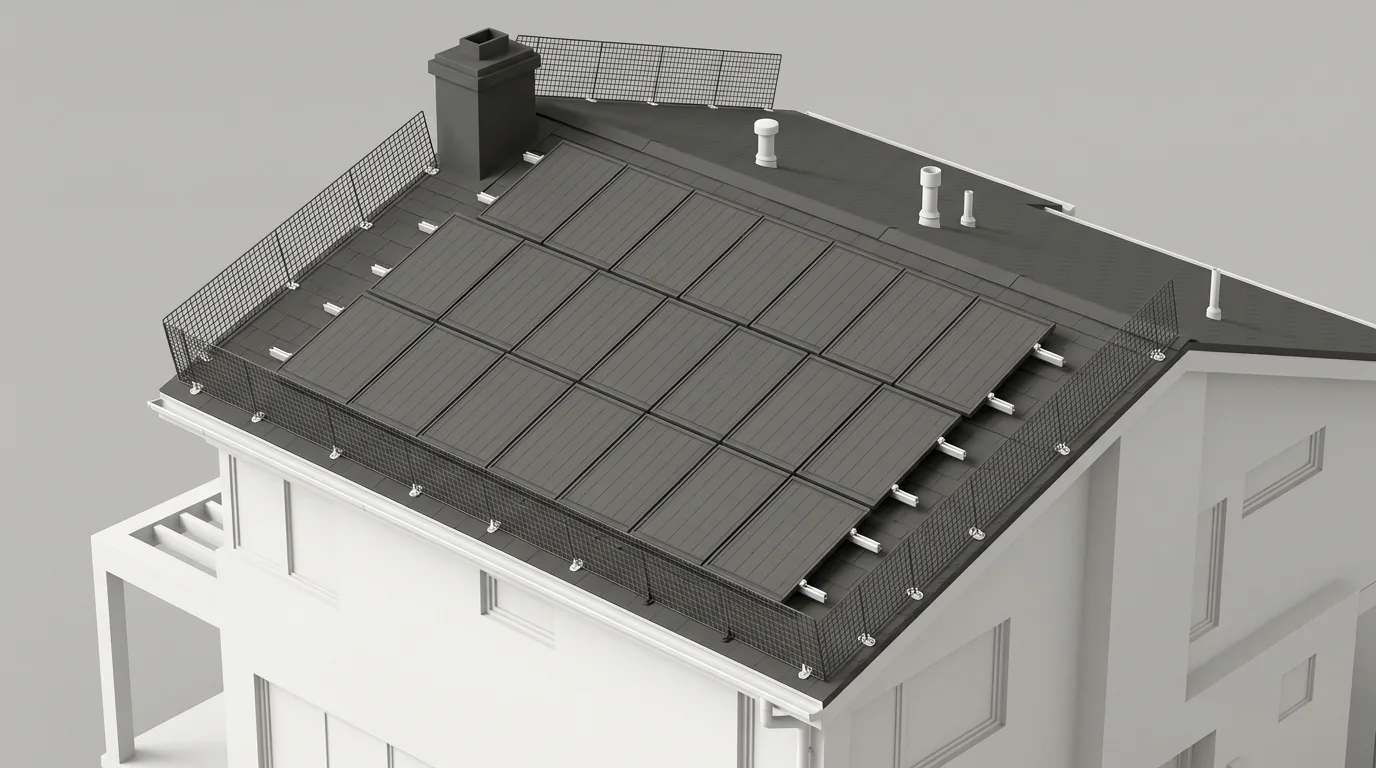
Solar panels are built to endure decades of sun, wind, and rain. However, many homeowners discover an unexpected threat living right in their backyard: birds, squirrels, and rodents.
Rooftop solar arrays sit between three and seven inches above roof shingles. This gap creates a shaded, sheltered cavity that stays 15 to 25 degrees warmer than the surrounding air. For pigeons looking for a nesting spot or squirrels searching for winter shelter, that warm gap under your panels looks like the perfect home.
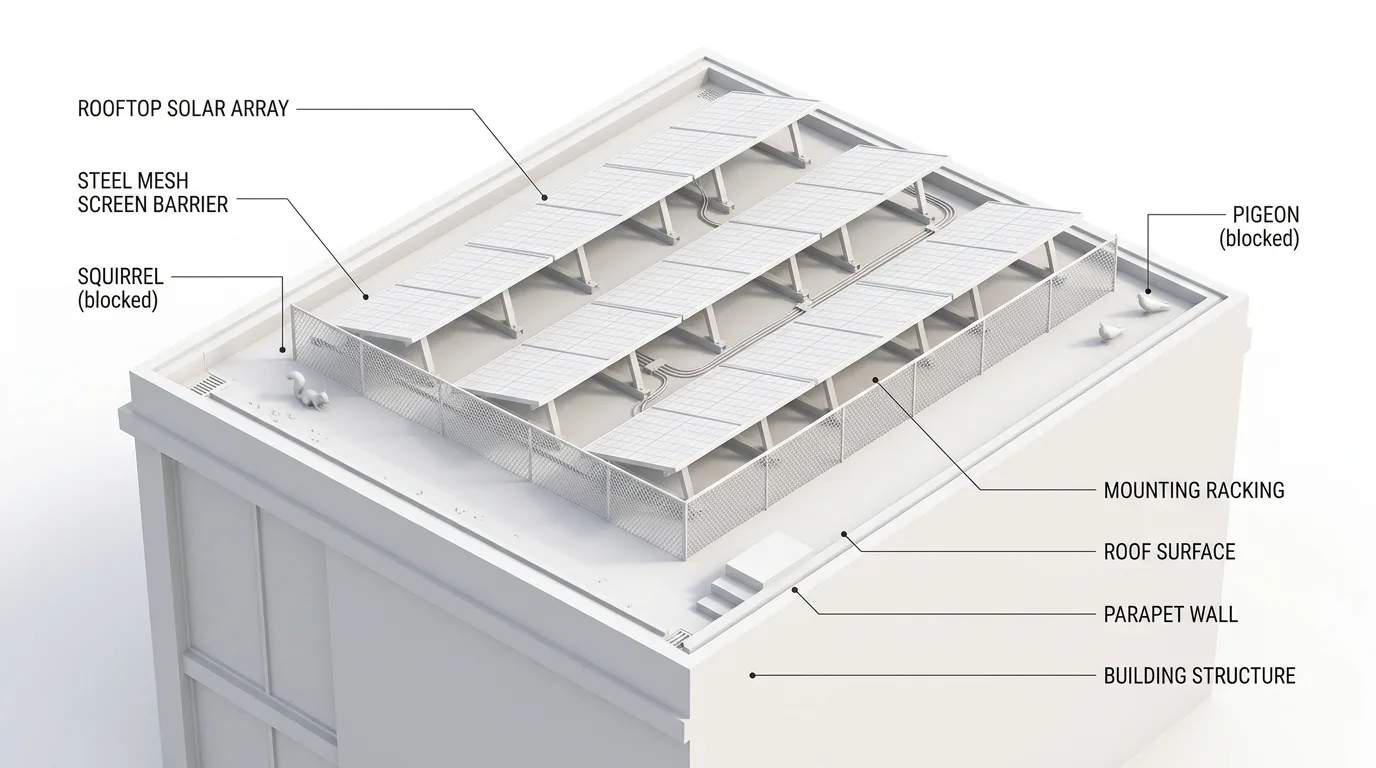
Unfortunately, nesting animals can cause thousands of dollars in electrical and structural damage. A solar panel critter guard is a protective barrier that seals this perimeter gap while keeping natural airflow moving freely.
This guide explains how critter guards work, how much they cost, and how you can protect your clean energy investment.
The Hidden Costs of Animal Damage
Skipping a critter guard might seem like an easy way to save money during solar installation. But animal damage can quickly exceed the cost of early prevention.
Here are the four primary problems caused by wildlife under solar arrays:
- Chewed DC Cables: Squirrels and rats have constantly growing teeth and must chew tough materials to keep them trimmed. They frequently gnaw through solar cable sheathing and copper conductors. Repairing chewed wiring harnesses typically costs between $400 and $1,500.
- Electrical Faults and Fire Risks: Chewed wires or wet nesting debris can cause ground faults and high-temperature arc faults. Modern solar inverters will shut down the affected string when an arc is detected, halting your electricity savings until repairs are finished.
- Reduced Cooling and Energy Output: Solar panels need airflow underneath to dissipate heat. When pigeon nests, feathers, and dry twigs pack into the cavity, panel temperatures rise. This heat buildup cuts solar efficiency by 5 to 15 percent and can speed up cell degradation.
- Acidic Droppings and Roof Rot: Bird droppings contain concentrated uric acid with a pH of 3 to 4. Over time, droppings can corrode aluminum racking, dissolve cable seals, and rot roof shingles.
Key Takeaway: Installing a critter guard during your initial solar setup typically costs $300 to $600. Waiting until pigeons colonize your roof can push total repair and cleanup costs above $1,800.
Types of Solar Panel Critter Guards
Several types of barriers are available to protect your solar system. Choosing the right material ensures long-lasting defense without voiding your solar panel manufacturer warranty.
Critter Guard Options Compared
Compare durability, airflow, and average material costs across popular guard types.
PVC-Coated Steel Mesh
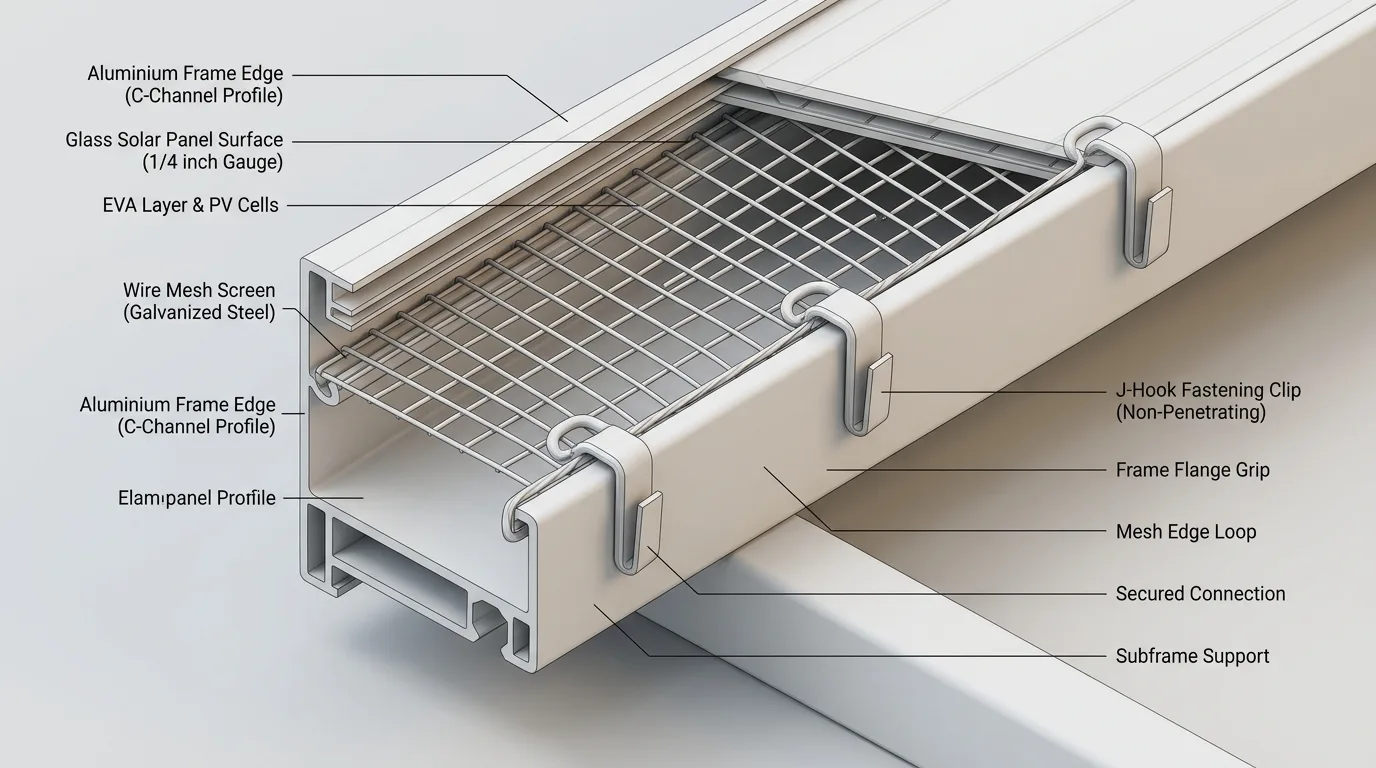
Galvanized steel wire mesh with a thick black PVC coating offers the best balance of strength, weather resistance, and airflow. The half-inch mesh keeps out both small birds and rodents. When installed with non-penetrating J-hook clips, it protects panel warranties completely.
Solid Aluminum Screens
Rigid aluminum screens attach to the outer panel frame with specialized adhesive or clips. They provide a smooth, low-profile architectural finish. While highly durable, they cost more and offer slightly less passive ventilation than open wire mesh.
Professional vs. DIY Installation Costs
The total price of critter guard installation depends on your system size, roof height, and whether animals have already moved in.
Professional contractors charge between $8 and $15 per linear foot for labor, materials, and safety rigging. For a standard residential array, total installed prices fall into these ranges:
- Small System (10 to 15 panels): $500 to $1,000 total installed cost.
- Medium System (16 to 25 panels): $1,000 to $1,800 total installed cost.
- Large System (26 to 40 panels): $1,500 to $2,500 total installed cost.
- Nest Remediation and Deep Cleaning: If birds have already nested, professional technicians must clean droppings and sanitize the roof before mounting the mesh, adding $200 to $500 to the total bill.
Homeowners with DIY experience can purchase a 100-foot roll of black PVC-coated wire mesh and 70 to 100 fastening clips for $120 to $250. However, DIY work requires climbing ladders, working on sloped shingles, and handling high-voltage DC circuits safely.
Step-by-Step Critter Guard Installation Guide
If you plan to install critter guards yourself on a low-pitch single-story roof, follow these four clear steps to ensure a neat, secure, and warranty-compliant installation:
Inspect and Clear Debris
Safely access the roof array and clear all leaves, twigs, and dirt from beneath the panels using a soft plastic rake or compressed air. Never use metal tools that could scratch cable insulation.
Measure and Cut the Mesh
Measure the vertical gap between the roof deck and the top outer lip of the solar frame. Cut the wire mesh with wire snips, leaving one extra inch of height so you can bend a stabilizing outward flare along the roof surface.
Fasten Non-Penetrating Clips
Attach UV-rated nylon or stainless steel J-hook clips directly to the inside return lip of the aluminum panel frame. Slide the mesh onto the clip posts and tighten the locking washers snugly against the wire.
Overlap and Seal Corners
Overlap mesh seams by at least three inches and bind them together with UV-resistant black cable ties. Check every corner to confirm there are no openings wider than half an inch.
Crucial Warranty Warning: Never drill holes into the aluminum frames of your solar panels to attach mesh or screws. Drilling into solar panel frames can void your 25-year equipment warranty and allow moisture into the laminate layers. Always use non-penetrating solar fastening clips.
Signs Your Solar Panels Need Critter Guards
If your solar array is already up and running without protection, look for these common warning signs:
- Pigeon Activity on Roof Ridges: Birds gathering along your roofline or perching on gutters often indicate nesting under nearby panels.
- Scratching Sounds at Sunrise: If you hear light scampering or scratching sounds in your attic or ceiling early in the morning, squirrels or rats may have moved in.
- Droppings Streaking Roof Valleys: White streaks of droppings running down roof valleys or collecting in gutters point to birds living under the array.
- Unexplained Production Drops: If your solar monitoring app shows a sudden drop in generation on a clear sunny day, an animal may have disconnected or chewed through a string wire.
Frequently Asked Questions
No, as long as you use non-penetrating fastening clips. Fasteners such as J-hooks and speed clips hook under the interior frame lip without drilling, gluing, or altering the panel structure. This preserves your full 25-year manufacturer warranty.
No. The core of the mesh is made of galvanized steel or stainless steel wire. Squirrels and rodents cannot chew through steel wire. The outer PVC coating shields the metal against rust and weather exposure.
No. Quality critter guards use open wire mesh with half-inch spacing. This spacing allows ample natural breeze to flow under the panels for convective cooling while blocking birds, squirrels, and large leaves.
Yes. Retrofitting critter guards onto older arrays is very common. An installer will first inspect the wiring for any existing pest damage, clean out gathered debris, and then secure the mesh around the array perimeter.