Solar Inverter Clipping Explained: Understanding DC-to-AC Ratio and Power Loss
Discover what solar inverter clipping is, why installers oversize DC solar panels, how the DC-to-AC ratio works, and why clipping increases annual energy.
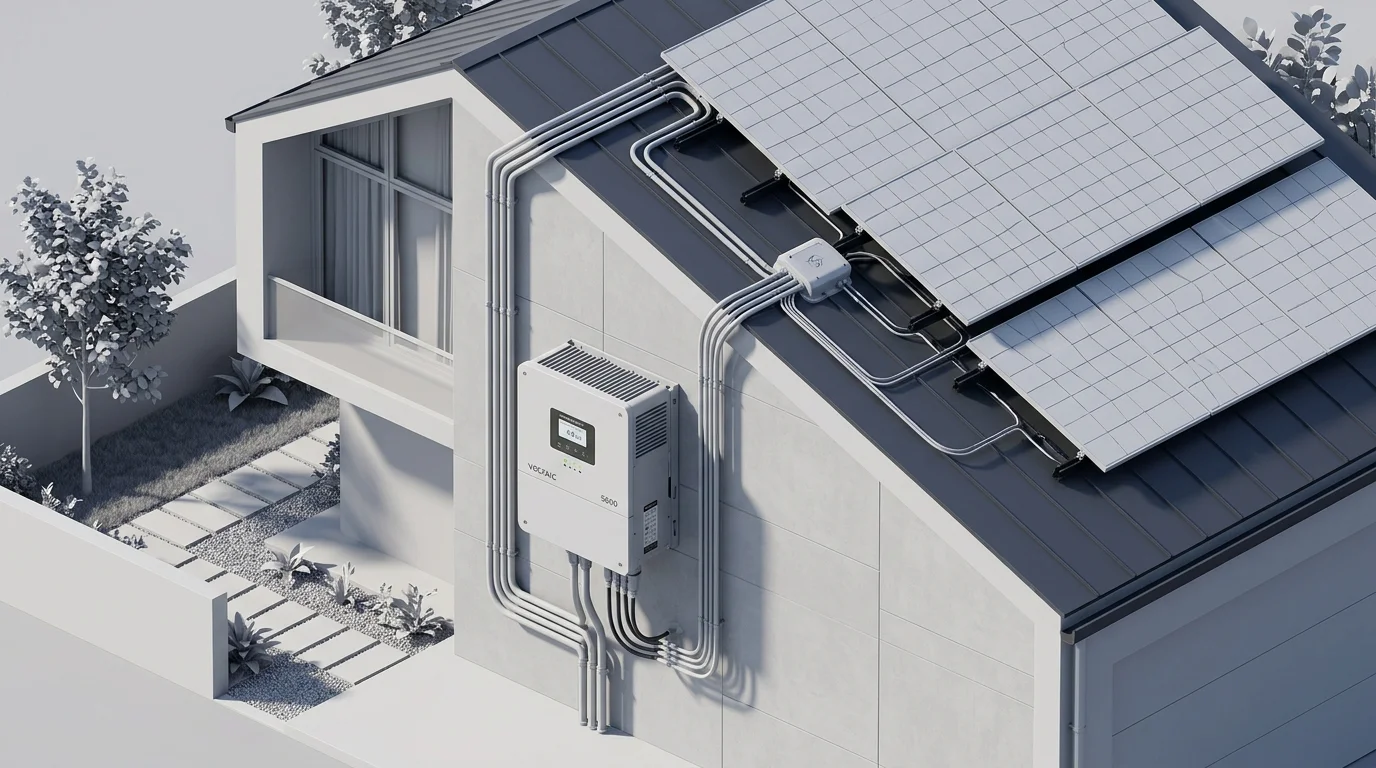
When homeowners check their solar monitoring app on a bright summer afternoon, they sometimes notice something unusual. Instead of a smooth curve that peaks at noon, the power graph flattens out across the top like a tabletop.
Many people worry that their equipment is broken or that their installer gave them the wrong parts. What they are actually seeing is a normal event called solar inverter clipping.
Clipping is not an accident or an installation defect. Professional solar designers intentionally size systems so that the solar panels produce more raw power than the inverter can convert at peak midday sun. While throwing away a small slice of peak power sounds counterproductive, it actually increases the total electricity your home generates across the entire year.
This guide explains how inverter clipping works, what the DC-to-AC ratio means, and why modern solar systems are engineered this way to save you money.
Understanding Power Flow from Panels to Inverter
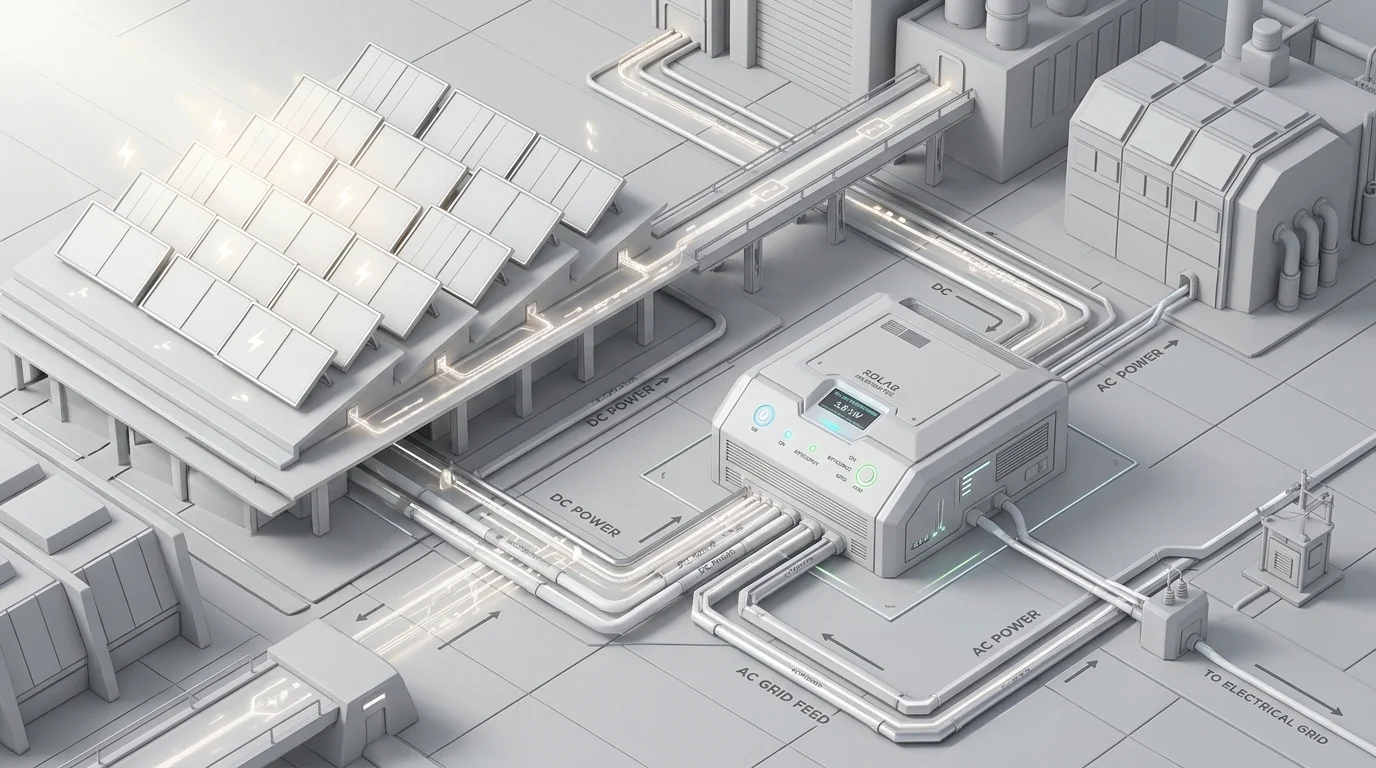
Solar panels create direct current (DC) electricity from sunlight. Your home appliances and the utility grid run on alternating current (AC) electricity. The solar inverter converts that DC power into AC power. When the panels generate more DC power than the inverter AC rating, the inverter safely caps the flow.
What Is Solar Inverter Clipping?
Inverter clipping happens when your solar panel array produces more DC electricity than your inverter is rated to handle as AC power.
Think of a kitchen funnel. If you pour water into a funnel slowly, every drop drains out the bottom without stopping. If you pour a large cup of water in all at once, water fills up the funnel and the spout drains at its maximum speed. The extra water waits at the top of the funnel.
In this analogy:
- The water poured in is the DC power coming from your rooftop panels.
- The spout at the bottom is the inverter AC power limit.
- The water waiting at the rim is clipped solar energy.
When the sun is at its highest point in the sky, your panels may reach their highest electrical output. If your solar panels produce 7,000 watts of DC power, but your inverter has a continuous rating of 6,000 watts of AC power, the inverter caps the output at 6,000 watts.
The inverter does not overheat or blow a fuse. Instead, intelligent software inside the inverter shifts its operating voltage away from the maximum power point. This safely slows down electron flow through the panels. The unused energy simply dissipates as harmless ambient heat on the roof.
What Is the DC-to-AC Ratio?
To understand clipping, you need to know about the DC-to-AC ratio. In the solar industry, engineers also call this the Inverter Loading Ratio (ILR).
The DC-to-AC ratio is calculated by dividing your total solar panel wattage by the AC rating of your inverter:
DC-to-AC Ratio (ILR) = Solar Panel DC Rating (kW) / Inverter AC Rating (kW)For example, suppose an installer places twenty 400-watt solar panels on your roof. That gives you an 8.0 kW DC solar array:
- Total DC Panel Capacity: 8.0 kW (8,000 watts)
- Inverter AC Capacity: 6.4 kW (6,400 watts)
- Calculation: 8.0 kW / 6.4 kW = 1.25 DC-to-AC Ratio
A ratio of 1.25 is standard in modern residential solar design. It means the panel capacity is 25 percent larger than the inverter output capacity.
DC-to-AC Ratio Comparison
Comparing a 1.0 ratio against an oversized 1.25 ratio on a typical home.
1.0 Ratio (Equal Sizing)
The inverter matches panel size. While no energy is clipped at noon, the inverter operates below its sweet spot during mornings, late afternoons, cloudy days, and winter.
1.25 Ratio (Oversized Panels)
The panels exceed inverter capacity. Even with 0.8% peak clipping on sunny summer noons, the system produces significantly more total kilowatt-hours every other hour of the year.
The Real-World Energy Yield Curve
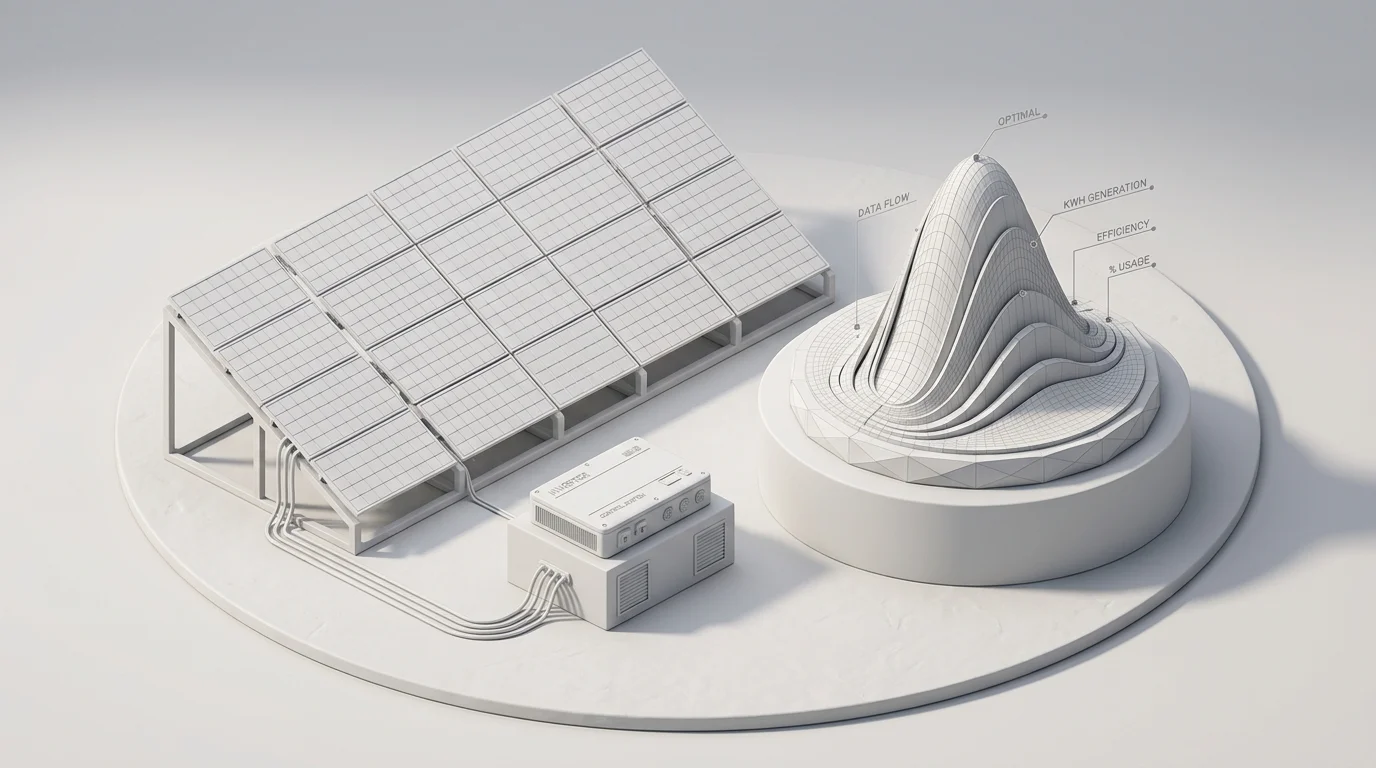
Total energy is the area under the generation curve across all daylight hours. Oversizing your DC panels broadens the shoulders of the curve in the morning and afternoon. That extra morning and evening generation far outweighs the tiny slice clipped off the top at solar noon.
Why Installers Intentionally Oversize the Solar Array
At first glance, leaving any potential power on the table seems wasteful. However, designing for the real world is very different from designing for a laboratory.
Here are the four primary reasons why smart solar installers oversize DC panels:
Real World Weather Is Not a Laboratory
Solar panels carry a factory label called Standard Test Conditions (STC). This test assumes perfect laboratory light at 1,000 watts per square meter and a cool cell temperature of 25 degrees Celsius (77 degrees Fahrenheit). On an actual roof, dark panels heat up to 55 degrees Celsius under the sun. That heat naturally reduces panel efficiency by 10 to 15 percent. Because panels rarely hit their factory rating, an oversized array ensures the inverter gets enough DC power to run near its full rating.
Fatter Morning and Evening Shoulders
Sunlight is only at full peak strength for two or three hours in the middle of the day. For the other six to eight hours of daylight, the sun hits the roof at an angle. An oversized array wakes up your inverter earlier in the morning and keeps it running higher into the evening. You capture valuable energy during breakfast and dinner when family electricity usage peaks.
Superior Cloud and Winter Performance
On cloudy or overcast days, solar irradiance drops to a fraction of clear-sky levels. An 8 kW array with a 6.4 kW inverter might only generate 2 kW on a grey day. If you had installed smaller panels to match a tiny inverter, you would produce even less usable electricity. Oversized panels collect more diffuse light when you need it most.
Lower Equipment and Electrical Upgrade Costs
Buying a larger inverter adds substantial cost. A bigger inverter costs $600 to $1,200 more. Even worse, larger inverters require thicker copper wiring and often trigger expensive main electrical service panel upgrades to comply with electrical codes. Spending thousands of dollars more to save $20 worth of clipped summer energy makes no financial sense.
How Much Energy Do You Actually Lose to Clipping?
Extensive real-world testing by national research laboratories shows that clipping losses are far smaller than most homeowners imagine.
The National Renewable Energy Laboratory (NREL) measured minute-by-minute solar production across thousands of systems. Their research proves that annual clipping losses remain tiny across standard sizing ranges:
| DC-to-AC Ratio (ILR) | Typical Annual Clipping Loss | System Performance Impact |
|---|---|---|
| 1.00 (1:1) | 0.0% | Inverter runs below capacity most of the day |
| 1.10 | Under 0.3% | Barely perceptible clipping on clear days |
| 1.20 | ~0.5% | Exceptional balance of cost and output |
| 1.25 | ~0.8% | Industry standard sweet spot for residential solar |
| 1.30 | ~1.2% | Excellent choice for east-west roof orientations |
| 1.40 | ~2.5% | Common in hot climates with steep roof pitches |
| 1.50 | ~5.0% | Diminishing returns without battery storage integration |
As the table shows, a standard 1.25 ratio loses less than 1 percent of its potential annual energy to clipping.
In exchange for that tiny 0.8 percent loss at noon, the oversized array delivers 15 to 20 percent more electricity over the full year. You gain hundreds of kilowatt-hours in the mornings, afternoons, and winter months.
Microinverters vs. String Inverters: How Clipping Differs
Both microinverters and central string inverters experience clipping, but the hardware works differently:
Microinverters
Microinverters are small units attached to the racking beneath each individual solar panel. Each panel has its own dedicated microinverter.
- Common Pairings: Installers frequently pair a 400-watt or 410-watt solar panel with an Enphase IQ8+ microinverter (rated at 290 watts continuous AC) or an Enphase IQ8M (rated at 325 watts continuous AC).
- The Math: A 400-watt panel on a 290-watt inverter gives a DC-to-AC ratio of 1.38.
- The Result: The system clips for a couple of hours on clear spring days when temperatures are cool and sun is bright. However, it delivers consistent, reliable energy during mornings and cloudy spells, while avoiding the higher cost of premium microinverter models.
Central String Inverters
Central string inverters (such as SolarEdge or SMA) connect a dozen or more panels together on a single high-voltage circuit.
- Flexibility: A central inverter allows multiple roof planes to share the same unit. For instance, if you have eight panels facing east and eight panels facing west, they peak at different times of day.
- No Simultaneous Peak: The east panels peak before noon, while the west panels peak after noon. A single 6 kW inverter can easily support 8.5 kW of total panels without clipping because both sides never reach full power at the same moment.
How to Check Your Monitoring App
If you want to check how your system is performing, open your monitoring application on a cloudless day in late spring or early summer:
- Look at the Daily Curve: If the graph forms a smooth bell curve, the panels have not exceeded inverter capacity.
- Spotting the Flat Top: If the top of the curve levels off between 11:30 AM and 1:30 PM, the system is clipping. The level line represents your inverter exact continuous AC output rating.
- Check Total Daily Production: Look at the total kilowatt-hours produced for the day. You will find that days with midday clipping often produce the highest overall kilowatt-hour numbers of the entire year.
- Compare Spring vs. Summer: Solar panels produce more peak voltage when they are cool. Because of this temperature effect, clipping often peaks on crisp, clear days in April and May rather than blistering hot days in July.
Frequently Asked Questions
No. Inverter clipping is completely safe. Modern solar inverters are designed and tested to operate at their maximum continuous rating for hours at a time. The inverter internal software simply shifts electrical resistance to prevent extra current from entering the circuits.
Installers choose inverter sizes that maximize your return on investment. Upgrading to a larger inverter can cost an extra $800 to $1,500 for the hardware. It may also require upgrading your home electrical service panel from 100 amps or 150 amps up to 200 amps. That extra expense would take decades to pay off with the tiny fraction of clipped energy.
Yes, if you install a DC-coupled battery system. In a DC-coupled setup, the solar panels connect directly to the battery charge controller before reaching the AC inverter. Any excess DC energy that exceeds the AC inverter capacity can flow straight into the battery pack for storage instead of being clipped.
No. Inverter clipping happens automatically inside your equipment when DC production exceeds AC capacity. Utility curtailment happens when the electric utility company remotely tells your inverter to shut down or reduce output because the regional electrical grid is overloaded.