Peak Sun Hours Explained: How to Calculate Solar Irradiance for Your Home
Understand peak sun hours and solar irradiance. Learn how to calculate daily kilowatt-hours, compare regional sunlight, and size your home solar panels.
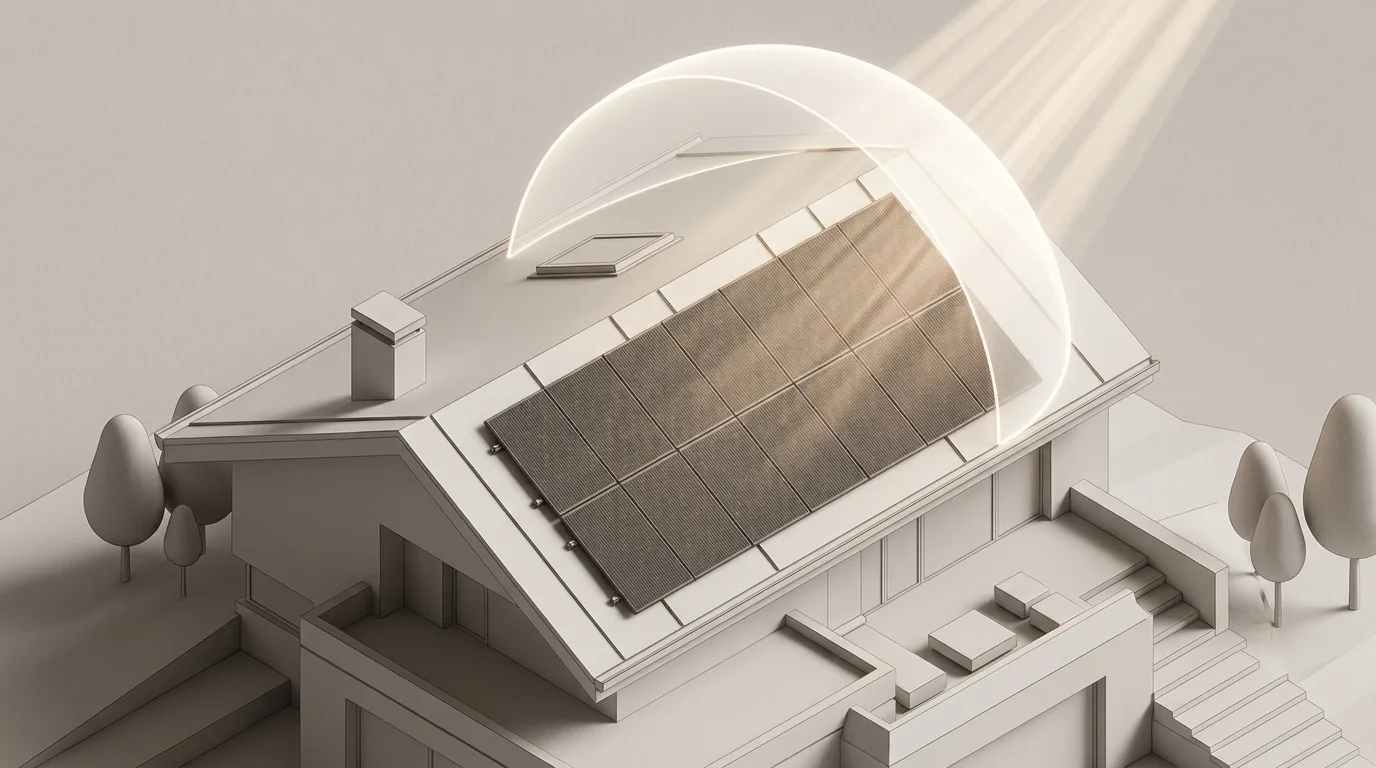
When planning a rooftop solar setup, many homeowners look out the window on a sunny afternoon and assume every hour of daylight produces the same amount of electricity. In reality, solar panels do not operate at full power from dawn until dusk. Early morning light and late afternoon shadows deliver far less energy than direct midday sunshine.
To accurately predict how much electricity your panels will generate, solar engineers and installers use a specific measurement called peak sun hours. Understanding this number allows you to calculate your daily energy output, avoid purchasing too many or too few panels, and evaluate your long-term energy savings.
What Is a Peak Sun Hour?
A peak sun hour is not simply an hour when the sun is up. Instead, it is a technical measurement of solar irradiance, which describes the strength of sunlight reaching a surface.
Specifically, one peak sun hour occurs when solar radiation averages 1,000 watts per square meter (1,000 W/m²) across one hour of time. In metric energy units, one peak sun hour equals exactly one kilowatt-hour of solar energy per square meter (1 kWh/m²).
This reference intensity of 1,000 W/m² is the exact standard used in laboratories to rate solar equipment under Standard Test Conditions (STC). When a manufacturer labels a panel as a 400-watt model, that panel produces 400 watts when exposed to 1,000 W/m² of light at standard cell temperature.
Key Difference: Daylight hours describe the total time between sunrise and sunset. Peak sun hours describe the total accumulated energy of that daylight compressed into standard units of maximum sunlight intensity.
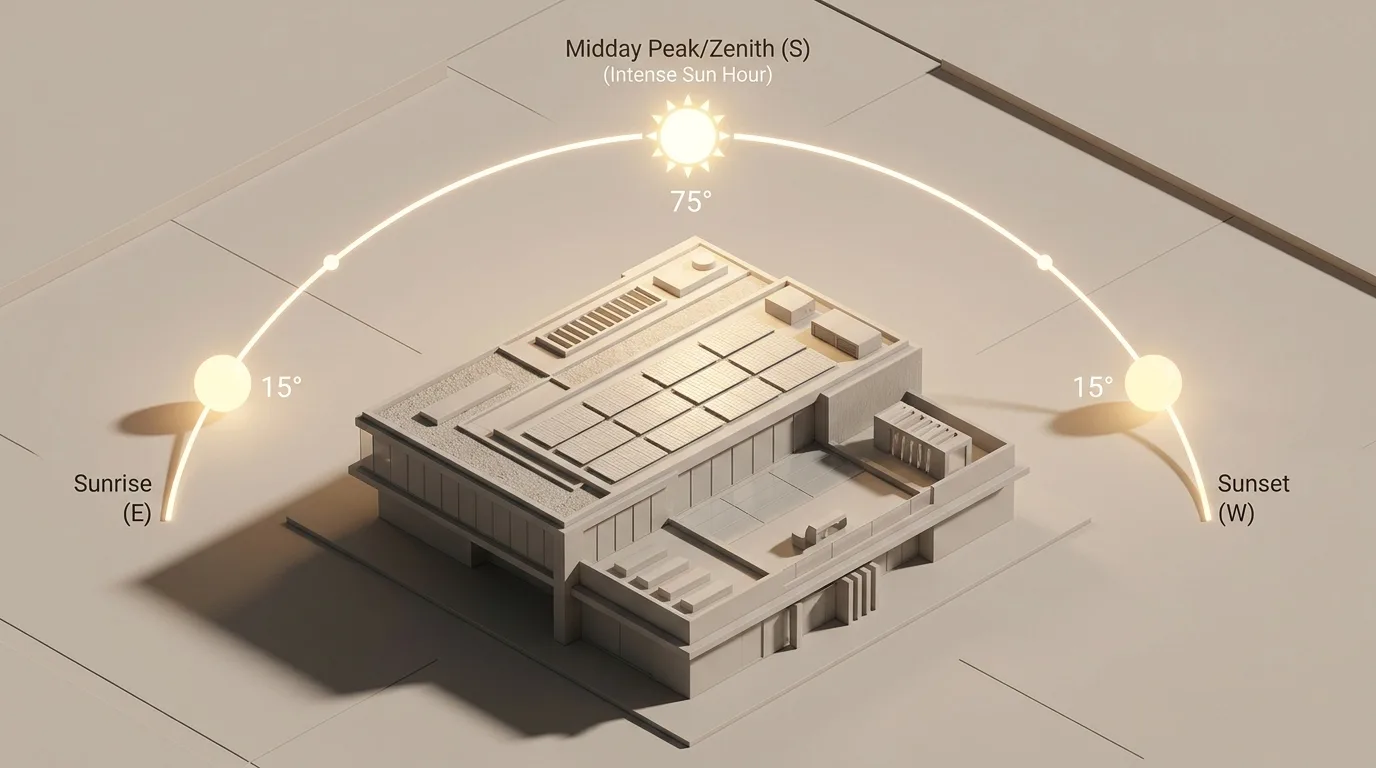
For example, a sunny city might experience 14 hours of daylight during a clear summer day. However, during the early morning and late evening, the sun sits low in the sky, delivering only 200 to 400 watts per square meter. When you add up all the sunshine received throughout the entire day, it might equal roughly 6 peak sun hours of full 1,000 W/m² sunlight.
The Daily Solar Production Formula
Once you know the peak sun hours for your location, you can estimate your system’s daily energy output using a straightforward calculation:
Daily Energy (kWh) = System Size (kW) * Peak Sun Hours * Derate Factor
Here is what each component in this formula means:
- System Size (kW): The total rated capacity of your solar panel array. A home with twenty 400-watt panels has an 8.0 kW system.
- Peak Sun Hours: The daily average number of peak sun hours your roof receives.
- Derate Factor (0.83 to 0.85): A standard multiplier used by the National Renewable Energy Laboratory (NREL) in PVWatts models. It accounts for real-world equipment losses such as inverter power conversion, panel temperature rise, wiring resistance, and slight surface dust.
Example Calculation
Suppose you install an 8.0 kW solar panel system in a location that receives 5.0 peak sun hours per day:
- Multiply 8.0 kW by 5.0 peak sun hours to get 40 gross kilowatt-hours.
- Multiply 40 kWh by a standard derate factor of 0.83.
- Your expected net daily production is approximately 33.2 kWh.
- Over a full year of 365 days, this system produces roughly 12,118 kWh of clean electricity.
Recent national data shows that modern residential installations cost between $2.50 and $3.00 per watt before federal incentives. With the federal clean energy credit covering 30 percent of system costs, matching your system size to your local sun hours helps ensure your solar investment pays for itself quickly.
Peak Sun Hours Across the United States
The United States receives a national average of roughly 4.98 peak sun hours per day. However, local climate, latitude, and cloud cover cause significant variation from region to region.
Southwest Region
- Top States: Arizona (6.54), New Mexico (6.42), Nevada (6.41)
- Annual Production per kW: 1,600 to 1,900 kWh
- Climate Advantage: High elevation, clear desert skies, and minimal cloud cover
Sun Belt & Southeast
- Top States: Florida (5.48), Texas (5.22), Georgia (5.17), North Carolina (5.25)
- Annual Production per kW: 1,350 to 1,550 kWh
- Climate Factors: Abundant sunshine with occasional summer afternoon thunderstorms
Midwest & Mid-Atlantic
- Top States: Ohio (4.31), Pennsylvania (4.28), Illinois (4.55), New York (4.22)
- Annual Production per kW: 1,150 to 1,300 kWh
- Climate Factors: Moderate summer output balanced by cloudy winter spells
Pacific Northwest & Far North
- States: Washington (3.95), Oregon (4.12), Alaska (3.17)
- Annual Production per kW: 900 to 1,100 kWh
- Climate Factors: Heavy overcast winter seasons offset by long, clear summer daylight
Because a solar array in Arizona receives more than twice as much peak sunlight as the same array in Alaska, local solar insolation is the single largest variable determining how many panels you must mount on your roof.
Four Steps to Find and Use Your Sun Hours
You can easily look up your local sunlight data and size your solar array by following four simple steps:
Look Up Your Geographic Insolation
Check the National Renewable Energy Laboratory (NREL) solar database or enter your address into an online solar calculator to find your annual average daily peak sun hours.
Review Your Past Electric Bills
Add up your kilowatt-hour usage over the past twelve months. The typical American home consumes about 10,500 kWh of electricity each year.
Calculate Required Array Capacity
Divide your annual electricity needs by your local daily peak sun hours multiplied by 365 and the 0.83 derate factor to determine your target system kilowatt size.
Adjust for Roof Tilt and Azimuth
Fine-tune your layout by angling panels toward true south. Roofs facing east or west produce about ten to fifteen percent less electricity, requiring one or two extra panels.
Factors That Influence Peak Sun Hours on Your Roof
Even within the same zip code, two neighboring homes can experience different peak sun hours due to physical roof conditions.
1. Compass Orientation (Azimuth Angle)
In North America, solar panels achieve maximum production when facing true south. South-facing panels capture the sun at its highest intensity during midday hours. If your roof faces east or west, your panels will produce strong power during half the day but miss midday peak intensity. Installers can easily compensate for east or west orientations by adding a few additional panels.
2. Roof Pitch and Angle
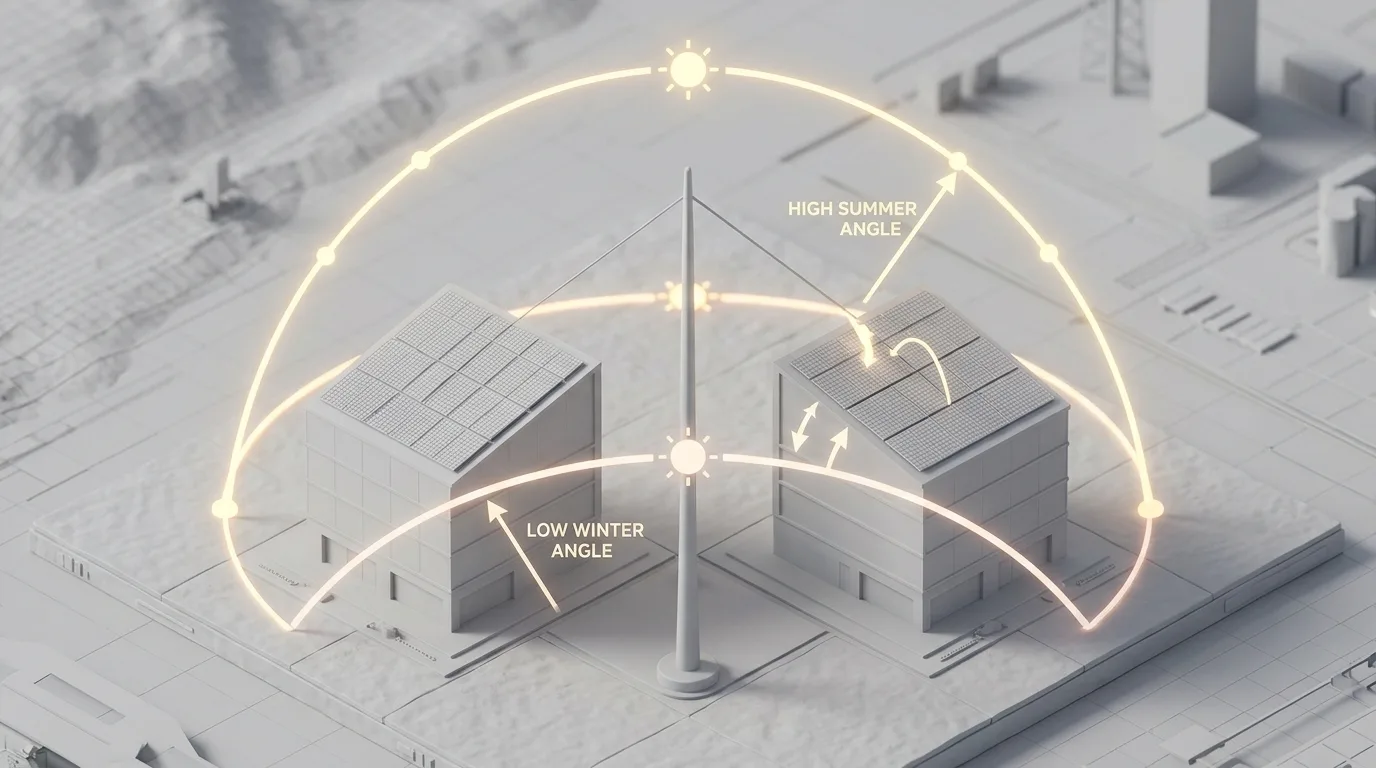
The tilt of your roof determines how directly incoming sunlight strikes the surface of the photovoltaic cells. In general, setting your panel angle equal to your local latitude delivers optimal performance throughout the entire year. Steeper angles improve winter production when the sun travels low in the sky, while flatter angles maximize summer output.
3. Tree Shading and Architectural Obstructions
Trees, dormers, chimneys, and adjacent buildings cast shadows that directly block solar irradiance. Because solar panels in a traditional string setup share electrical current, partial shade on one panel can reduce output across several connected panels. Installing power optimizers or microinverters helps ensure shaded panels do not drag down unshaded portions of your array.
4. Seasonal Weather Patterns
The sun follows a much higher arc across the sky in summer than in winter. A home that receives 6.5 peak sun hours in June might only receive 3.0 peak sun hours in December. Grid-tied systems balance out these seasonal differences through utility net metering credits earned during sunny spring and summer months.
Frequently Asked Questions
No. Daylight hours measure the entire time from sunrise to sunset, regardless of light intensity. Peak sun hours only measure the equivalent time when sunlight reaches full laboratory intensity of 1,000 watts per square meter. An area with fourteen hours of summer daylight typically averages five to seven peak sun hours.
Yes. Solar panels continue to produce power under overcast skies using diffused sunlight. However, heavy cloud cover reduces solar irradiance from 1,000 watts per square meter down to 100 to 300 watts per square meter, lowering instantaneous power output by seventy to ninety percent.
Homes located in regions with higher peak sun hours generate more kilowatt-hours per installed panel each year. This higher output offsets more utility electricity, resulting in faster payback periods, often between five and seven years in sunny southern states compared to eight to ten years in cloudier northern regions.
Most homeowners leave their panels permanently fixed at their existing roof pitch. While adjusting panel tilt two to four times per year can increase total annual energy production by three to five percent, the extra mechanical equipment and labor are rarely worth the cost for residential rooftop installations.