Monocrystalline vs. Polycrystalline Solar Panels: Complete Comparison Guide
Compare monocrystalline vs. polycrystalline solar panels on efficiency, cost, lifespan, and aesthetics to choose the best option for your home.
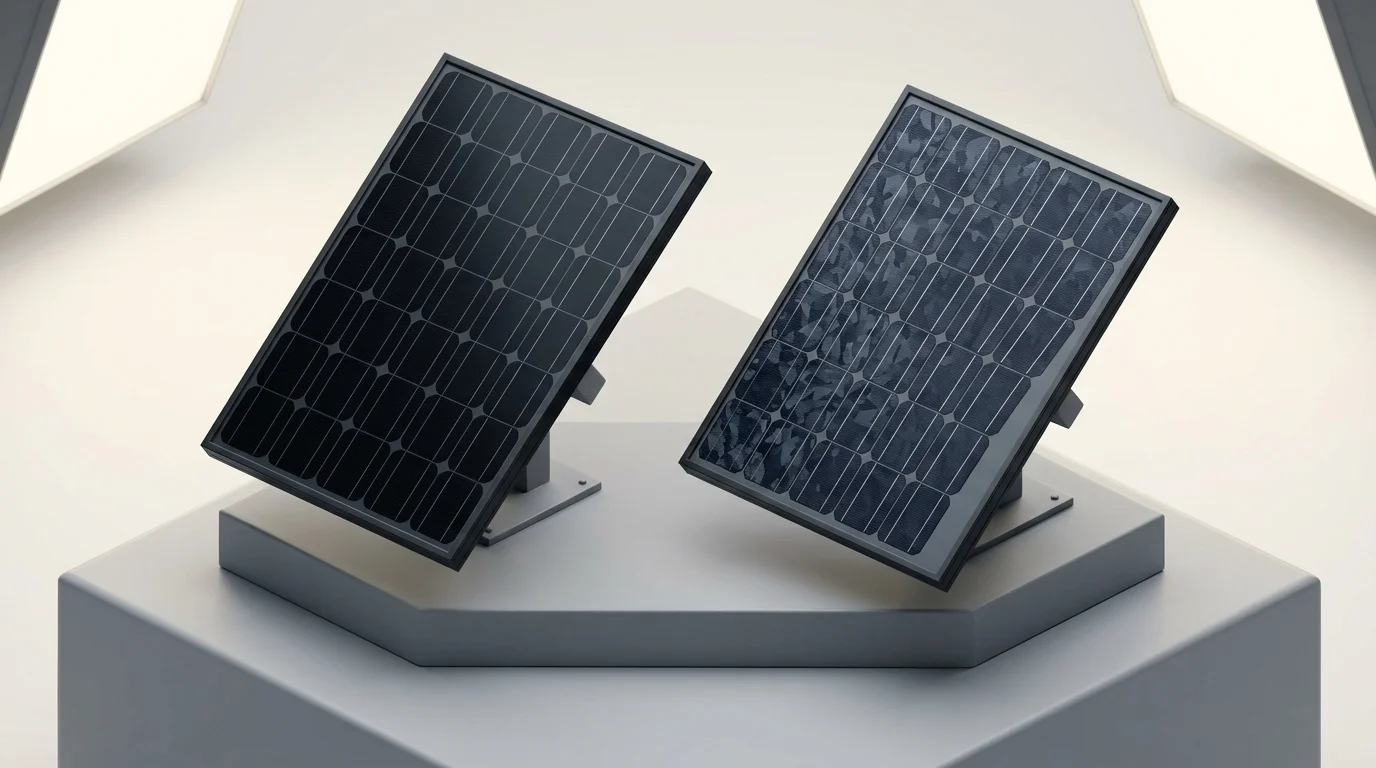
When shopping for home solar, you will quickly encounter two primary silicon panel technologies: monocrystalline and polycrystalline. Both convert natural sunlight into clean electricity, but they are built differently, look distinct, and perform with different levels of efficiency.
Historically, homeowners had to make a tough choice. Monocrystalline panels offered top performance at a steep price, while polycrystalline panels served as the affordable family budget option. Today, technological improvements have lowered manufacturing costs across the industry, shifting the balance of power.
This detailed guide breaks down how both technologies work, compares their real-world numbers, and helps you determine which panel fits your home.
Quick Comparison Overview
Key technical and practical differences at a glance
Monocrystalline Panels
Crafted from single-crystal silicon ingots. Premium uniform black look, high power density, superior heat tolerance, and slowest annual degradation.
- Cell Structure: Single pure silicon crystal
- Color: Deep uniform black
- Wholesale Cost: $0.40 to $0.65 per watt
- Space Needed: Lowest roof footprint
- Annual Degradation: 0.3% to 0.5% per year
Polycrystalline Panels
Formed by melting multiple silicon fragments together. Blue speckled texture with square cells. Lower upfront cost but requires significantly more space.
- Cell Structure: Multiple melted silicon crystals
- Color: Speckled marble blue
- Wholesale Cost: $0.25 to $0.40 per watt
- Space Needed: 20% to 30% more surface area
- Annual Degradation: 0.6% to 0.75% per year
How the Two Solar Technologies Are Made
The core difference between these two panels begins in the factory. Silicon is the second most abundant element in Earth’s crust, but raw silicon must be refined into high-purity crystals before it can conduct electrical current.
Monocrystalline: The Czochralski Method
Monocrystalline cells use silicon from a single continuous crystal structure. Manufacturers melt pure silicon in a high-temperature crucible and slowly withdraw a single seed crystal while rotating it. This process, known as the Czochralski method, creates a cylindrical silicon ingot called a boule.
Because the ingot is cylindrical, manufacturers slice thin wafers and trim the outer edges to create octagonal or rounded squares. This minimizes wasted material while allowing tight packaging on the panel face. Because electrons have a continuous, uninterrupted crystal lattice to move through, energy moves freely with minimal resistance.
Polycrystalline: Melted Silicon Castings
Polycrystalline solar cells skip the slow ingot-pulling process. Instead, technicians melt multiple raw silicon fragments together in a large ceramic mold and allow the batch to cool slowly into a solid square block.
As the liquid silicon cools, many small crystal structures form simultaneously within the same block. Once solid, wire saws slice the block into perfectly square wafers. Because multiple crystals grew together, the internal structure contains numerous grain boundaries. When sunlight knocks electrons loose, these boundary lines act like tiny speed bumps, slightly hindering electron flow and reducing overall energy efficiency.

Head-to-Head Performance Comparison
To understand how each panel operates on an actual roof, let us look at the five critical performance factors that determine energy generation and long-term value.
1. Energy Conversion Efficiency
Efficiency measures the percentage of solar energy hitting the panel that gets converted into usable household electricity:
- Monocrystalline: Modern residential monocrystalline modules operate between 19% and 23% efficiency. Next-generation designs like TOPCon and heterojunction (HJT) cells can reach beyond 24%.
- Polycrystalline: Standard polycrystalline modules convert between 15% and 17% of available sunlight. They hit a physical efficiency ceiling near 18%.
Because monocrystalline cells convert a higher percentage of light, a single 400-watt monocrystalline panel delivers the same electricity that would require an older 320-watt polycrystalline panel of the exact same physical size.
2. Roof Space and Power Density
Roof space is a finite asset for most homeowners. Chimneys, vents, dormers, and shading from nearby trees limit the usable square footage available for solar panels.
Because monocrystalline panels offer higher power density, they produce more kilowatt-hours per square foot:
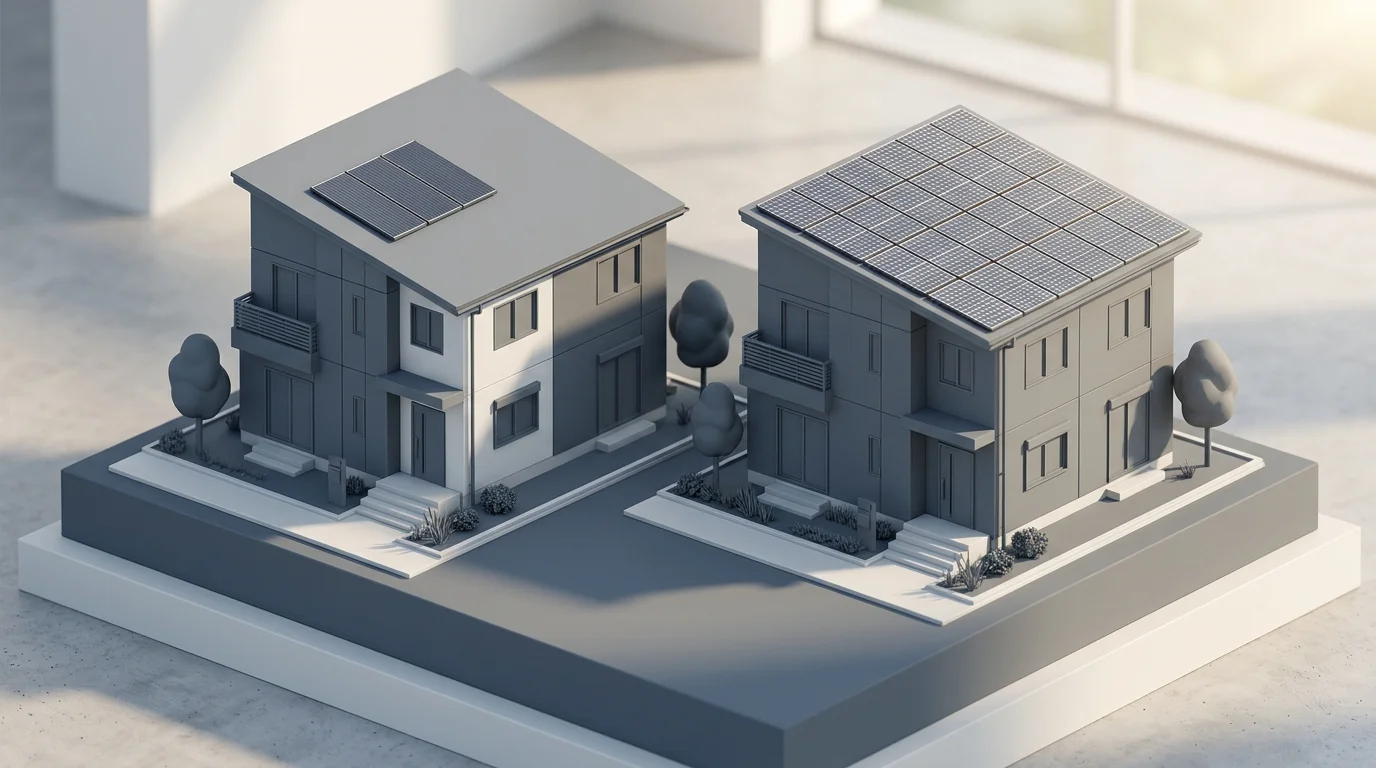
- An eight-kilowatt (8 kW) home solar system built with 400-watt monocrystalline panels requires only 20 panels, occupying approximately 390 square feet of roof space.
- That exact same 8 kW system using 320-watt polycrystalline panels requires 25 panels, demanding nearly 490 square feet of clear roof area.
If your home has a small roof or complex roof angles, monocrystalline panels allow you to achieve full utility bill offset within your available footprint.
3. Temperature Coefficient and Heat Tolerance
Solar panels love bright sunshine, but they dislike intense heat. When a solar panel warms above 25 degrees Celsius (77 degrees Fahrenheit), its electrical resistance increases, causing power output to drop slightly.
This reduction is measured by the panel’s temperature coefficient:
- Monocrystalline: Standard monocrystalline panels have a temperature coefficient between -0.28% and -0.38% per degree Celsius. For every degree the panel warms above 25°C, it loses about a third of one percent of output.
- Polycrystalline: Polycrystalline panels have a steeper temperature coefficient between -0.38% and -0.48% per degree Celsius.
In hot southern regions like Arizona, Nevada, or Texas, roof surfaces routinely hit 65 degrees Celsius (149 degrees Fahrenheit) on sunny summer afternoons. Under these blazing conditions, monocrystalline panels generate noticeably more electricity because they handle thermal stress better.
4. Degradation Rates and Long-Term Lifespan
All solar panels experience a slow, gradual decrease in power production over decades. This natural aging process is called degradation.
- Monocrystalline: High-purity single-crystal panels degrade at a rate of 0.3% to 0.5% per year. Most manufacturers guarantee that after 25 years in service, the panel will still produce at least 85% to 92% of its original rated capacity.
- Polycrystalline: Due to crystal grain boundaries and impurities, polycrystalline panels typically degrade at 0.6% to 0.75% per year. After 25 years, output commonly drops to around 80% to 82%.
Over a 25-year operational lifespan, that small annual difference compounds, resulting in thousands of additional kilowatt-hours generated by the monocrystalline system.
5. Aesthetics and Curb Appeal
Visual appearance matters to homeowners, neighbors, and Homeowners Associations (HOAs):
- Monocrystalline: Feature a uniform, sleek black surface. When paired with black backsheets and black anodized aluminum frames (often called “all-black modules”), they blend seamlessly into modern shingle, metal, or tile roofs.
- Polycrystalline: Feature a mottled, speckled blue surface with visible silvery grain lines and bright white backsheet grids. The blue shimmer stands out prominently against dark roofs.
Survey data consistently shows that homeowners strongly favor all-black monocrystalline systems for residential curb appeal and resale home value.
Complete Cost Breakdown: Wholesale vs. Installed Price
Cost is where many buyers get confused. Looking only at raw equipment pricing gives an incomplete picture of total investment value.
Equipment Costs
At the wholesale component level, polycrystalline remains cheaper to manufacture:
- Polycrystalline Panels: $0.25 to $0.40 per watt ($80 to $125 per panel)
- Monocrystalline Panels: $0.40 to $0.65 per watt ($130 to $200 per panel)
On a raw equipment order, polycrystalline panels appear 25% to 35% less expensive. However, solar panels represent only a modest fraction of your total turnkey installation cost.
Turnkey Installed Costs
A complete residential solar system includes mounting rails, electrical conduit, inverters, safety disconnects, engineering permits, utility interconnection, and certified installation labor. These soft costs and electrical components make up 65% to 75% of your final invoice:
- Average Installed Residential Cost: $2.50 to $3.30 per watt
- Typical 8 kW Monocrystalline Installation: $21,000 to $26,000 before local incentives
- Typical 8 kW Polycrystalline Installation: $19,500 to $24,500 before local incentives
Notice that the installed price difference is only 5% to 10%. Furthermore, because a polycrystalline system requires more panels, it needs extra mounting brackets, more roof penetrations, additional wiring, and longer installation labor. That extra installation labor often eats away most of the savings from cheaper panels.
Step-by-Step Decision Framework
Follow this simple evaluation process to choose the ideal panel technology for your specific home project:
Measure Usable Roof Space
Calculate your unobstructed, south-facing or west-facing roof area. If roof space is limited or broken up by skylights and vents, choose high-efficiency monocrystalline panels to maximize output.
Assess Local Summer Climate
Check average summer temperatures in your area. If you experience intense summer heat waves above 90°F (32°C), monocrystalline panels will suffer less power loss due to their superior temperature coefficient.
Review Aesthetic Guidelines
Review your neighborhood HOA bylaws and personal architectural preferences. If you want panels that blend smoothly with your roofline, all-black monocrystalline modules are the clear choice.
Compare 25-Year Levelized ROI
Do not judge quotes solely by initial equipment price. Compare total lifetime kilowatt-hours generated over 25 years. Lower degradation and higher efficiency make monocrystalline the superior financial value over time.
Current Market Trends and Availability
If you request solar quotes from certified local contractors today, you may notice that almost every installer proposes monocrystalline equipment. In fact, monocrystalline panels now account for more than 95% of new residential installations globally.
Leading Tier 1 manufacturers including LONGi, JinkoSolar, Canadian Solar, and Trina Solar have retired older polycrystalline manufacturing lines in favor of modern N-type monocrystalline cells. By standardizing high-volume monocrystalline production, factories achieved massive economies of scale, dramatically closing the price gap that once protected polycrystalline market share.
Today, polycrystalline panels are primarily found in:
- Large Utility-Scale Ground Arrays: Solar farms where land is cheap and hundreds of acres are available.
- Budget Off-Grid and DIY Projects: Weekend hunting cabins, shed lighting kits, and small off-grid setups where saving fifty dollars upfront is the main priority.
- Discount Equipment Outlets: Liquidations of surplus inventory or secondhand panels.
For standard single-family residential rooftops, monocrystalline has become the undisputed industry standard.
Frequently Asked Questions
Monocrystalline panels are made from a single pure silicon crystal, giving them a uniform black appearance and higher efficiency between 19% and 23%. Polycrystalline panels are made from multiple silicon fragments melted together, giving them a blue speckled look and lower efficiency between 15% and 17%.
Monocrystalline cells come from a single continuous silicon crystal. When light strikes them, the pure crystal absorbs almost all light wavelengths, giving the panel a uniform dark black appearance. Polycrystalline cells contain multiple silicon crystals fused together. Light reflects off the uneven crystal grain boundaries in different angles, creating a shimmering blue tone.
For residential roofs, polycrystalline panels are rarely recommended because monocrystalline costs have dropped so much. However, polycrystalline panels can still make sense for budget ground mounts, agricultural barns, or DIY off-grid battery chargers where roof space is not limited.
At wholesale rates, monocrystalline panels cost ten to twenty cents more per watt. However, because labor, inverters, and permits make up the majority of a home installation bill, upgrading to monocrystalline adds only 5% to 10% to the total invoice while delivering 15% to 25% more electricity.