Metal Roof Solar Panels Guide: Mounting, Clamps, and Costs
A complete homeowner guide to installing solar panels on metal roofs, standing seam clamps, zero penetrations, cooling advantages, and costs.
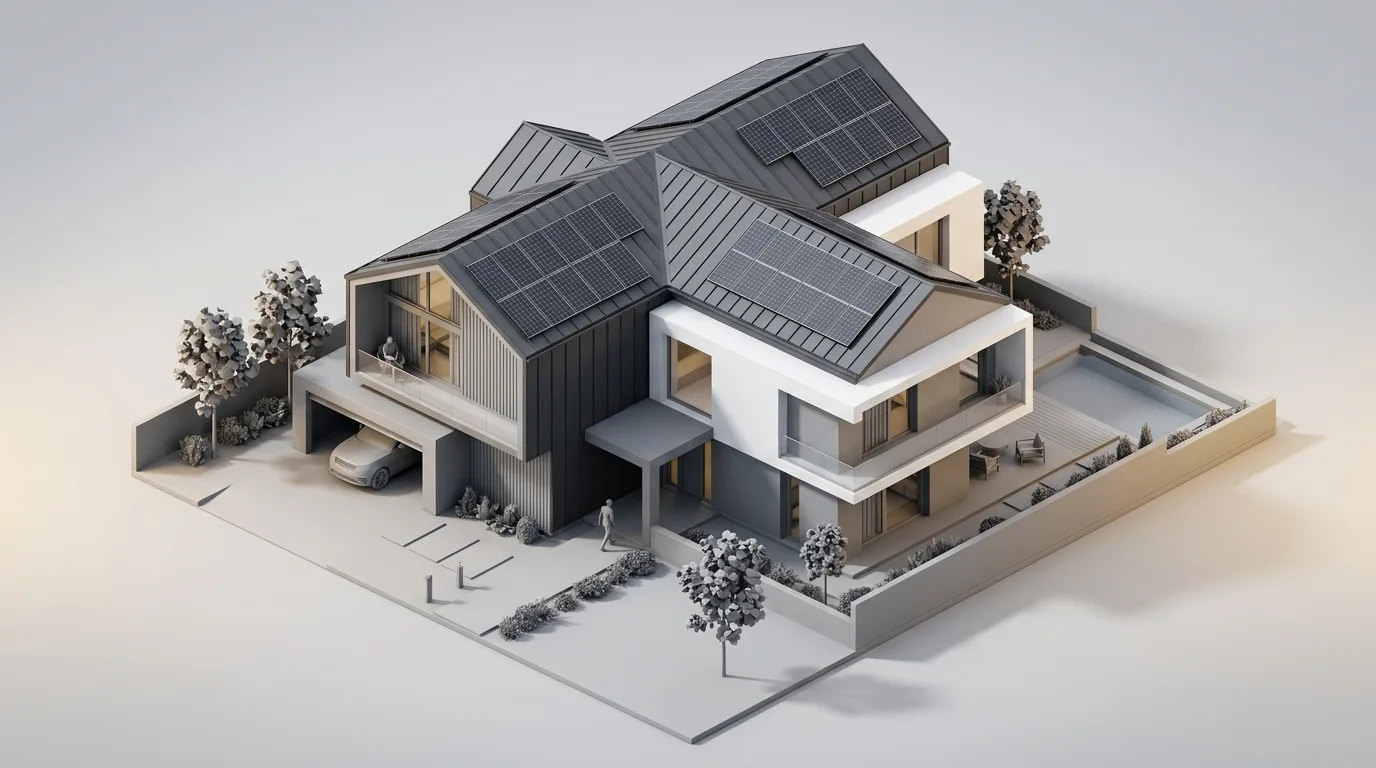
Metal roofs are one of the most durable and energy-efficient roofing choices available. They protect buildings from severe weather, reflect heat, and last for more than fifty years. When paired with solar panels, metal roofs provide one of the most reliable and cost-effective solar setups in the clean energy industry.
Many homeowners wonder if solar panels can safely mount to a metal roof without causing water leaks or voiding roofing warranties. The short answer is yes. In fact, standing seam metal roofs are considered the gold standard for solar mounting because installers can clamp panels securely without drilling a single hole into the roof surface.
This complete guide explains how metal roof solar installations work, the different clamping methods for each metal profile, cooling benefits, and average system costs.
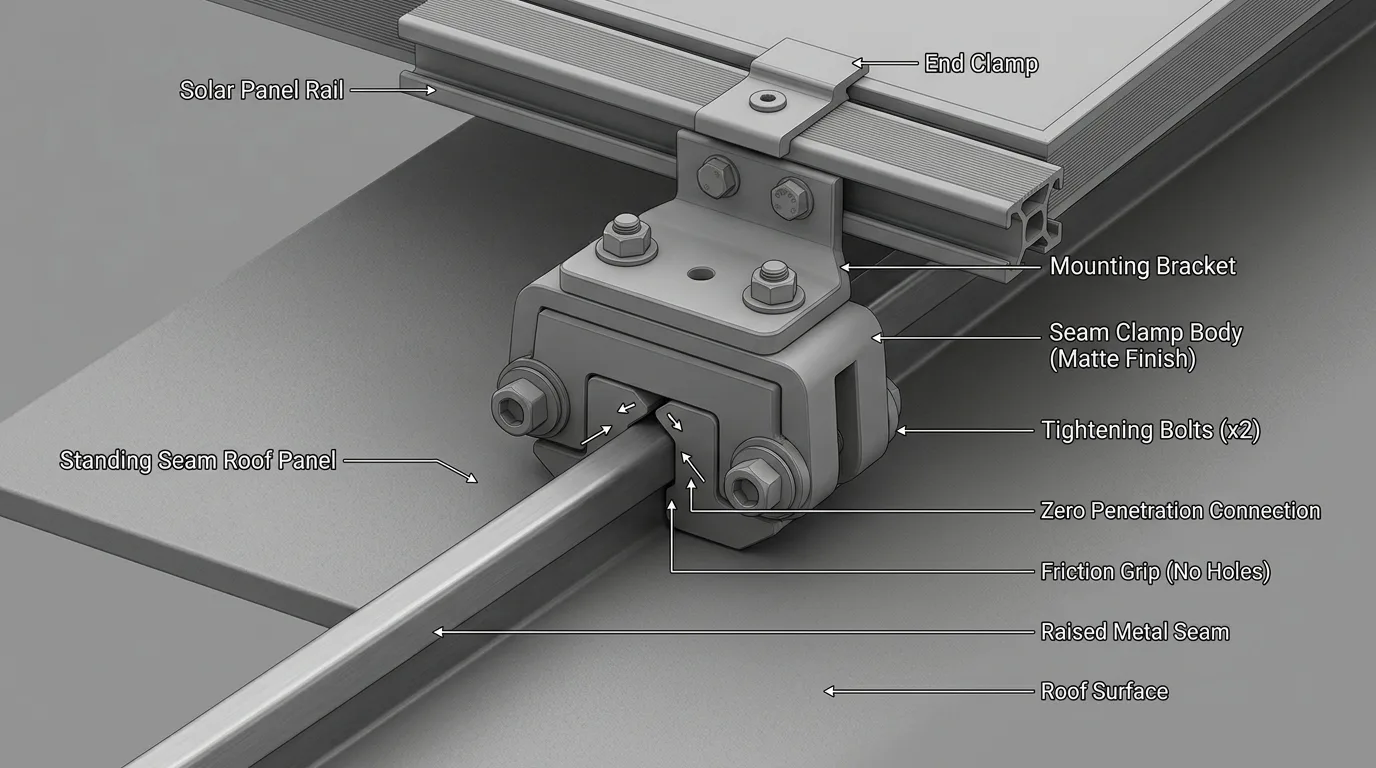
Zero-Penetration Standing Seam Clamps
Specially engineered seam clamps grip the raised ribs of a standing seam roof using high-tensile set screws. The clamps hold panels firmly in hurricane-force winds with zero drilling, keeping roof warranties 100 percent intact.
Why Metal Roofs Are Ideal for Solar Installations
Installing solar panels on traditional asphalt shingles often involves drilling lag bolts through the roof decking and sealing them with flashing. While effective, asphalt shingles typically need replacement every fifteen to twenty-five years. Because solar panels last twenty-five to thirty years, shingle homeowners often face the hassle and expense of removing panels to reroof.
Metal roofs solve this mismatch completely:
- Lifespan Match: Quality metal roofs last forty to seventy years. Your roof will easily outlast your solar panel system, avoiding costly panel detachment and reinstallation fees down the road.
- Zero Leak Risks on Standing Seam: Standing seam profiles use non-penetrating mechanical clamps. No holes means no potential paths for water leaks.
- Faster and Cheaper Labor: Because crews do not need to pry up shingles or locate structural rafters for every attachment point, mounting panels to standing seams is faster and requires fewer labor hours.
- High Structural Strength: Metal panels are lightweight yet exceptionally strong. They easily support standard solar arrays, which add only 2.5 to 3.5 pounds per square foot.
Thermal Ventilation and Heat Dissipation
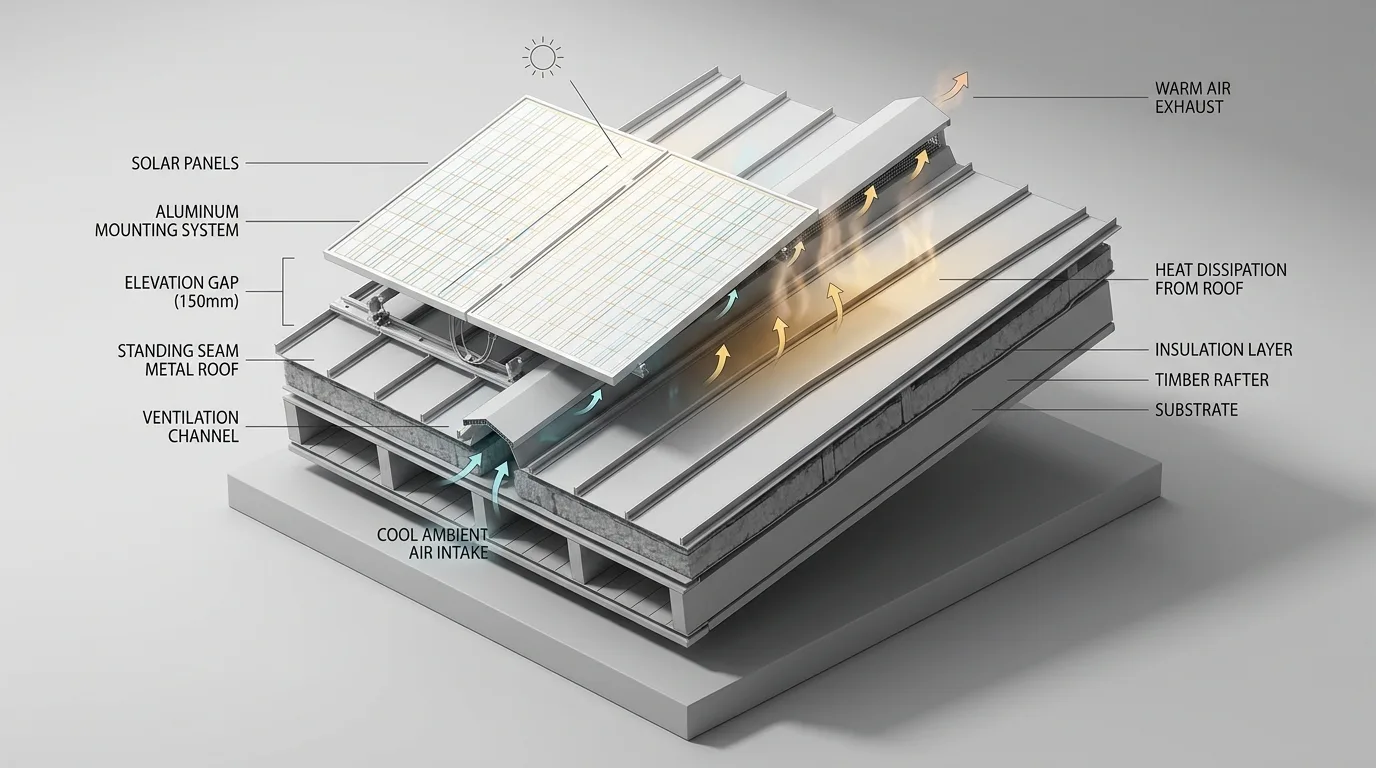
An elevated mounting gap creates a natural chimney effect beneath the panels. Cool air enters from the lower eaves and carries away excess heat, keeping solar cells cooler and producing more kilowatt-hours of clean electricity.
The Three Metal Roof Profiles and Their Mounting Methods
Not all metal roofs look the same. The mounting method your installer selects depends directly on your specific metal roof profile:
1. Standing Seam Metal Roofs (Zero Penetrations)
Standing seam roofs feature vertical metal panels with raised seams that lock together above the water line.
- How They Mount: Installers use precision-machined aluminum clamps (such as S-5! clamps) that slip over the seam. Tightening round-point set screws dimples the seam metal without piercing it.
- Roof Warranty Protection: Because no screws or nails penetrate the waterproof barrier, manufacturers keep standing seam warranties fully valid.
- Direct Rail-Free Mounting: Installers can attach solar panel grab brackets directly to the seam clamps, eliminating long horizontal rails and lowering total system weight.
2. Corrugated Metal Roofs (Wavy Profile)
Corrugated metal roofs use repeating S-curved sheets. These roofs are common on barns, modern homes, and commercial outbuildings.
- How They Mount: Installers secure curved bracket mounts directly to the peak of the corrugation, never in the valley where rainwater collects.
- Waterproofing: Fasteners use heavy-duty EPDM rubber sealing washers. High-grade polymer sealants prevent water from touching screw threads.
3. Trapezoidal (Exposed Fastener / R-Panel) Roofs
Trapezoidal roofs feature flat metal sections between raised rectangular or angled ribs.
- How They Mount: Installers use custom brackets contoured to the exact rib angle. Self-drilling screws with factory-attached EPDM gaskets fasten into the rib top.
- Inspection Best Practice: Installers inspect the torque on each screw to guarantee an airtight seal without crushing the protective gasket.
Thermal Performance: How Metal Roofs Boost Solar Efficiency
Solar panels love sunlight, but excessive heat actually reduces solar panel efficiency. Silicon solar cells lose approximately 0.35 percent to 0.40 percent of their power output for every degree Celsius they warm above standard test conditions (25 degrees Celsius).
Metal roofs help solve this thermal challenge in two key ways:
- Cool Roof Reflectivity: Metal roofs coated with cool-roof pigments reflect solar radiation away from the roof structure. This lowers the temperature of the air layer beneath the solar array by 10 to 20 degrees Fahrenheit compared to dark asphalt shingles.
- Ventilated Under-Panel Chimney Effect: Elevating the panels 3 to 6 inches above the metal ribs creates an open convective channel. As the panels heat up in direct sun, warm air rises naturally toward the ridge cap, pulling cooler air in from the bottom edge.
This improved thermal ventilation helps your panels produce 1 percent to 3 percent more total energy throughout hot summer months.
The 5-Step Metal Roof Solar Installation Process
Installing solar on a metal roof is streamlined, safe, and efficient:
Roof Profile & Seam Gauge Analysis
Engineers inspect your metal roof thickness, gauge, and seam geometry to select the exact clamp model and calculate wind uplift ratings.
Layout Mapping & Obstruction Clearance
Technicians measure seam spacing across the roof surface, planning panel rows around plumbing vents, chimneys, and ridge caps.
Clamp Installation & Torque Verification
Crews place seam clamps along the metal ribs and tighten every set screw to manufacturer specifications using calibrated torque wrenches.
Panel Placement & Grounding Integration
Solar modules clamp securely onto the seam mounts. Integrated bonding pins pierce the panel anodization to create a safe, code-compliant electrical ground.
Inverter Wiring & Utility Interconnection
Electricians route metal conduit beneath panel skirts to the inverter, coordinate final city inspection, and activate your clean energy production.
Cost Comparison: Standing Seam vs. Corrugated vs. Asphalt
While metal roofing materials cost more to install initially than asphalt shingles, solar installation labor on standing seam metal roofs is often lower because crews work faster and need fewer mounting parts.
Solar Mounting Systems by Roof Surface
Compare standing seam, corrugated metal, and asphalt shingles on installation speed, leak protection, and long-term value.
Standing Seam Metal
Requires zero roof penetrations using aluminum seam clamps. Longest lifespan of 50+ years eliminates reroofing fees. Fast installation and maximum wind uplift resistance.
Corrugated & Trapezoidal
Fastens to the crest of metal ribs with durable EPDM gaskets. Simple bracket geometry provides excellent holding power for residential and agricultural buildings.
Asphalt Shingles
Requires drilling into rafters with metal flashing plates under shingles. Good holding strength, but shorter shingle lifespans often force mid-system roof replacements.
Snow Guards, Wind Uplift, and Maintenance
Living in areas with heavy winter snow or intense coastal winds requires special attention when designing a metal roof solar array:
- Snow Shedding and Snow Guards: Metal roofs are naturally slick. Snow slides off metal panels much faster than shingles. Installers recommend placing snow guards or snow retention bars directly below the solar array to stop sudden snow avalanches from damaging gutters or walkways.
- Wind Uplift Resistance: Standing seam clamps are tested to withstand winds exceeding 140 miles per hour. Because panels sit low and parallel to the roof plane, wind flows smoothly over the array.
- Annual Visual Checkups: Check your metal roof solar system once a year. Confirm that clamps remain snug, wire ties hold cables securely off the metal surface, and rain drainage paths stay clear of leaves or twigs.
Frequently Asked Questions
No, provided you use the proper mounting hardware. Standing seam roofs use non-penetrating clamps that never puncture the metal finish, keeping manufacturer warranties fully intact. For corrugated or trapezoidal roofs, using approved brackets with EPDM gaskets preserves weather-tight coverage.
No. In fact, solar panels act as a protective umbrella over your roof. Raindrops strike the tempered glass of the solar panels rather than the bare metal surface, often reducing perceived rain noise inside your living areas.
Modern metal roofs with factory fluoropolymer (Kynar 500) coatings last forty years without repainting. If you plan to coat or paint an older metal roof, apply the protective coating before installing solar panels.
Yes. Installers use special tile hooks or replacement metal flashing tiles that slip under the metal shakes or stone-coated steel tiles, securing firmly to the wood rafters beneath.
Yes. Metal roofs are lightweight, often weighing only 1 to 1.5 pounds per square foot compared to 2.5 to 4 pounds for asphalt shingles. This gives metal roofs extra structural reserve capacity to easily handle solar panels and heavy winter snow loads.