How to Read a Solar Panel Datasheet: Key Specs Explained
Learn how to read a solar panel specification sheet. Understand STC vs NOCT, Voc, Vmp, Isc, Imp, and temperature coefficients for safe solar design.
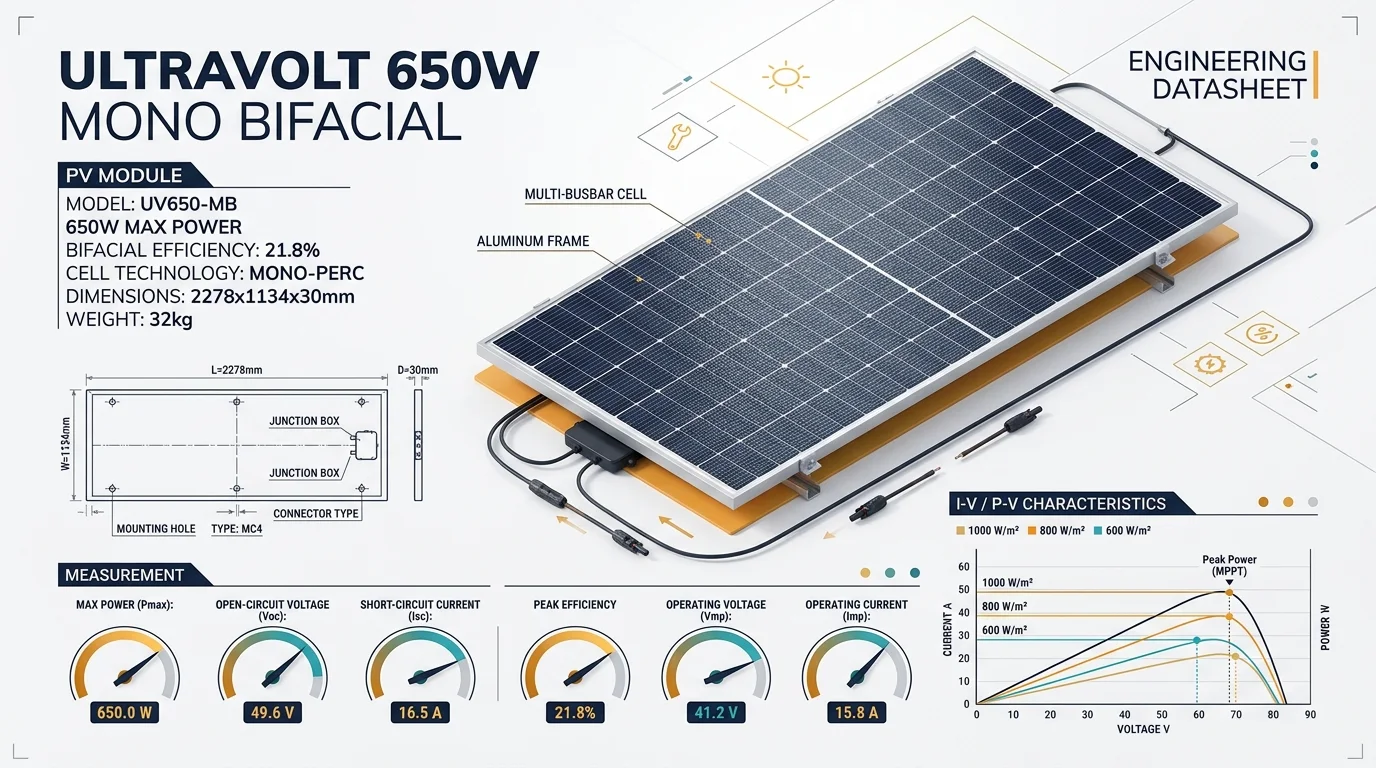
Every solar panel comes with a technical datasheet and a silver specification sticker on its back. This document looks like a wall of acronyms, numbers, and electrical symbols. However, knowing how to read a solar panel datasheet is the single most important skill for designing a safe, efficient solar energy system.
These numbers tell you how much electricity the panel makes in bright sun, how hot it gets on your roof, and how many panels you can connect together without damaging your inverter or charge controller.
Here is a clear, step-by-step breakdown of every major rating on a solar panel spec sheet and how to use it.
Lab Numbers vs Real-World Output: STC vs NOCT and NMOT
The first thing you see on any solar datasheet is the nameplate wattage, such as 400 watts or 450 watts. But right next to that wattage, you will notice two different testing standards: STC and NOCT (or NMOT).
Understanding the difference between these two ratings prevents unrealistic expectations about how much power your panels will make on normal days.
STC (Lab Test)
Standard Test Conditions measure panels in a cool lab under perfect flash lamps. It provides a level playing field to compare brands, but rarely matches outdoor rooftop conditions.
NMOT (Real World)
Nominal Module Operating Temperature tests panels in 20°C air with a light breeze. Because dark panels heat up quickly in the sun, NMOT power is typically 75% to 80% of the STC rating.
Hot Summer Afternoon
On a hot sunny day with dark shingles, solar cells can reach over 65°C (149°F). High heat reduces solar voltage, lowering total power output below the nominal rating.
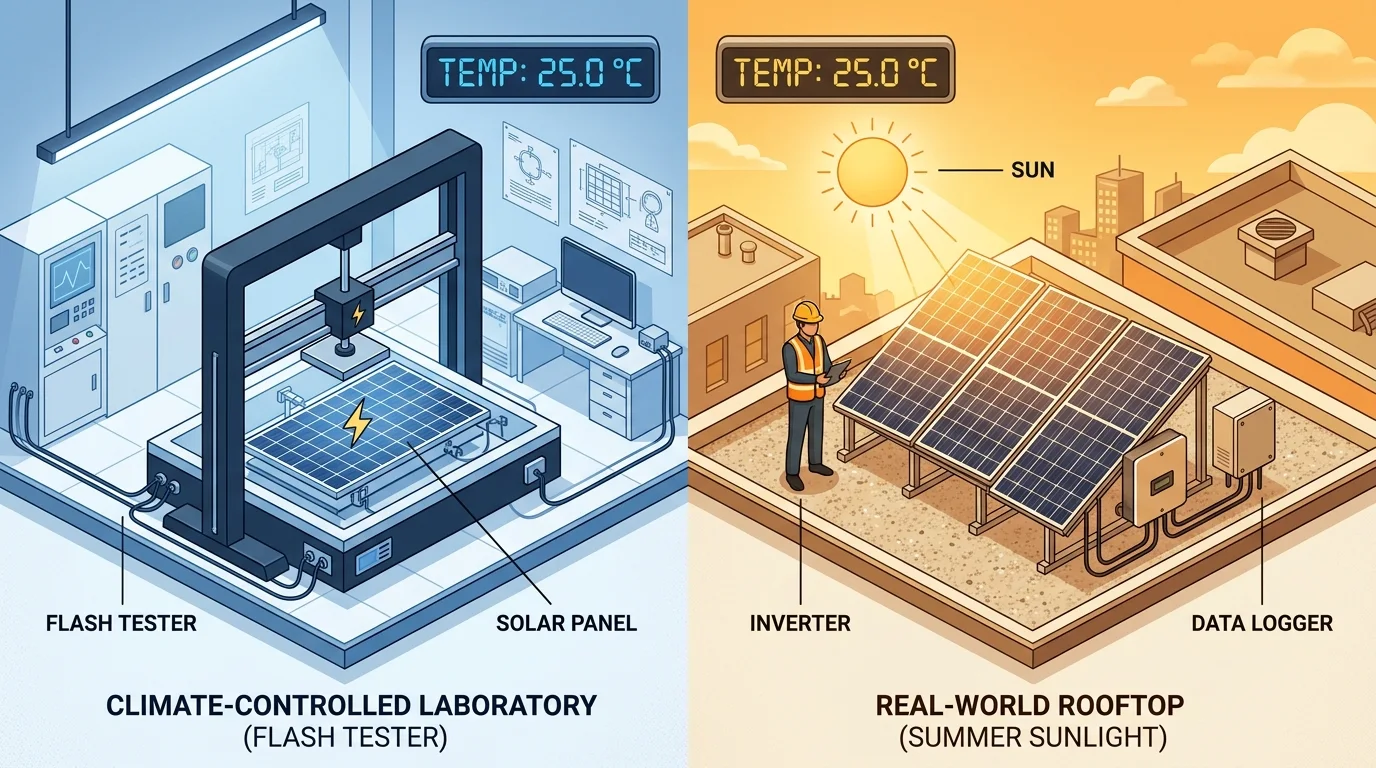
When planning your system, use STC ratings to check equipment compatibility and use NMOT ratings to estimate daily energy harvest in warm weather.
The Four Core Electrical Ratings: Voc, Vmp, Isc, and Imp
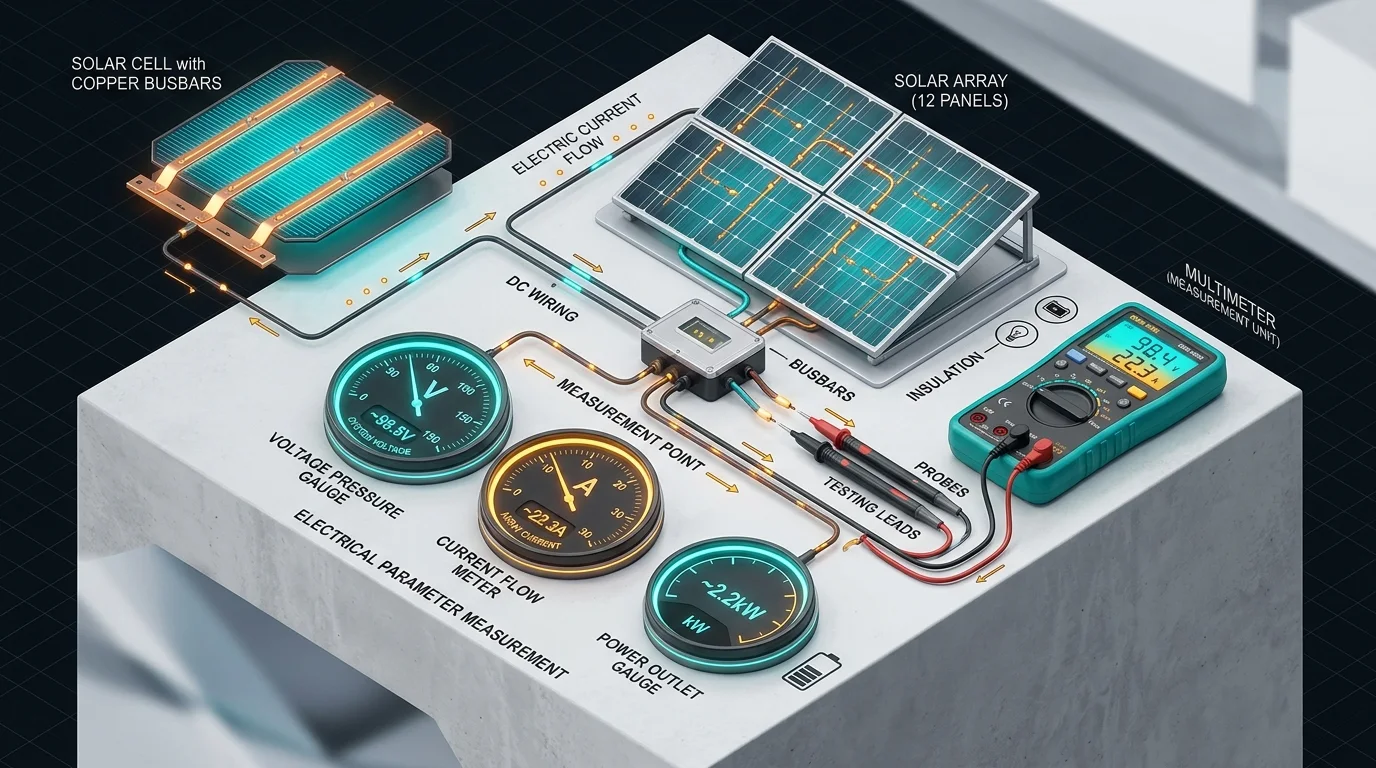
Solar panels generate direct current (DC) electricity. To describe this electricity, engineers measure two fundamental properties: voltage (electrical pressure) and current (the flow of electric charge). Multiplying voltage by current gives you power in watts:
Power (Watts) = Voltage (Volts) × Current (Amps)
Every manufacturer datasheet lists four critical numbers that define how the panel operates:
1. Open Circuit Voltage (Voc)
Open Circuit Voltage is the maximum voltage a solar panel produces when it is disconnected from any load or battery. Think of it as water pressure built up behind a closed faucet. No electric current is flowing, but the electrical pressure is at its absolute peak.
Why Voc matters: Inverters and MPPT charge controllers have a strict maximum input voltage limit (such as 150 volts or 600 volts). If the combined Voc of your panel string exceeds this limit, your equipment can burn out instantly.
2. Voltage at Maximum Power (Vmp)
Voltage at Maximum Power is the actual working voltage when the panel is connected to a system and delivering peak power. It is always roughly 15% to 20% lower than Voc. For example, a panel with a 49-volt Voc often has a Vmp of around 41 volts.
Why Vmp matters: Your inverter needs a minimum voltage to turn on in the morning. Vmp tells you if your string provides enough working pressure to keep the inverter running smoothly throughout the day.
3. Short Circuit Current (Isc)
Short Circuit Current is the maximum amperage the panel produces if you connect its positive and negative output cables directly together. At this moment, voltage drops to zero, but current flow reaches its ceiling.
Why Isc matters: Isc dictates your wire thickness and circuit fuse sizes. The National Electrical Code requires installers to multiply Isc by safety factors (often 1.56 times) to select thick copper wires and fuses that never overheat during bright solar spikes.
4. Current at Maximum Power (Imp)
Current at Maximum Power is the actual amperage flowing when the panel runs at its highest efficiency. For instance, a panel with an Isc of 14.5 amps might have an Imp of 13.8 amps.
Why Imp matters: When connecting multiple strings of panels in parallel, you add their Imp numbers together. Your charge controller or inverter must be rated to handle this total incoming current.
How to Check Inverter Compatibility in Four Steps
Before buying equipment, compare your panel datasheet against your inverter or charge controller specs. Follow this quick four-step process to ensure a safe match:
1. Check Inverter Max Voltage
Look up the maximum DC input voltage on your inverter spec sheet. Common limits are 150V for small off-grid controllers and 600V for residential string inverters.
2. Calculate Total String Voc
Multiply the panel Voc by the number of panels wired in series. Keep this total safely below the inverter limit, leaving room for winter cold spikes.
3. Verify Minimum MPPT Voltage
Multiply panel Vmp by your string length. Make sure this total operating voltage sits comfortably above the inverter minimum startup voltage on cloudy days.
4. Size Wires Using Isc
Check your panel Isc. Size your branch circuit breakers and solar cables to handle at least 156 percent of the short circuit current per electrical safety standards.
Temperature Coefficients: How Weather Changes Panel Performance
Solar panels love bright light, but they hate heat. As solar cells warm up under the midday sun, their internal electrical resistance increases, which causes their voltage to drop.
The temperature coefficient section of your datasheet explains exactly how much power you lose for every degree of temperature rise:
Temperature Coefficient of Pmax
This is usually around -0.30% to -0.38% per degree Celsius. Standard ratings assume a cell temperature of 25°C (77°F). If your roof heats up to 65°C (149°F), the cells are 40°C hotter than the lab standard:
40°C temperature rise × (-0.35%/°C) = -14% power loss
A 400-watt panel will naturally produce around 344 watts during this hot peak, even under direct overhead sunlight. Premium cell designs like Heterojunction (HJT) and TOPCon feature lower temperature coefficients (down to -0.26%/°C), keeping them more productive in hot climates.
Temperature Coefficient of Voc and Cold Weather Warning
While heat lowers voltage, freezing cold temperatures do the exact opposite: cold air increases solar panel voltage.
The temperature coefficient of Voc is a negative number (typically -0.25% to -0.28%/°C). On a crisp winter morning with sunny skies and freezing -15°C (5°F) air, panel voltage can rise 10% to 15% above the official Voc listed on the label.
If you designed your system too close to the inverter maximum voltage limit, that cold winter sunrise could spike the voltage and destroy your inverter. Professional solar designers always use historical record low temperatures to verify that cold string Voc stays within safe limits.
Mechanical Specs, Efficiency, and Warranties
Beyond electrical numbers, the bottom half of a datasheet covers physical construction and durability:
- Module Efficiency: This percentage shows how much sunlight striking the panel surface converts into usable electricity. Modern residential panels range from 20% to 23% efficiency.
- Dimensions and Weight: Standard 54-cell or 108-half-cell residential panels measure roughly 68 inches by 44 inches and weigh around 45 to 50 pounds. Commercial 72-cell or 144-half-cell panels are longer and weigh over 65 pounds.
- Mechanical Load Ratings: Measured in Pascals (Pa). Look for 5,400 Pa front load rating (for heavy snow) and 2,400 Pa rear load rating (for high hurricane winds).
- Warranties: Datasheets list two separate warranties. The product warranty covers physical defects, cracked frames, and moisture leaks (typically 12 to 25 years). The performance warranty guarantees the panels will still produce at least 80% to 88% of their original rated power after 25 to 30 years.
Frequently Asked Questions
This difference is normal. The 400-watt rating comes from lab tests at 25°C (77°F). Under real summer sun, dark panels reach 60°C or hotter. High temperatures lower voltage, and outdoor air conditions rarely provide the full 1,000 watts per square meter of light used in lab flash tests.
Yes. In cold weather, solar panel voltage increases. On sunny winter mornings with temperatures below freezing, your panels can produce 10% to 15% more voltage than the nameplate Voc. Always calculate cold temperature voltage before finalizing string length.
NMOT (Nominal Module Operating Temperature) is the updated international standard (IEC 61215) that replaced the older NOCT standard. Both measure real-world performance at 800 W/m² irradiance and 20°C ambient air, but NMOT uses stricter testing methods that reflect modern module construction.
Use Short Circuit Current (Isc). Electrical safety codes like the National Electrical Code (NEC Article 690) require multiplying Isc by 1.25 for continuous current and another 1.25 for sunlight reflections. This means sizing your wires and circuit breakers for at least 156% of the panel Isc.