Flat Roof Solar Panels Guide: Mounting, Tilting, and Costs
A complete guide to flat roof solar panels, covering ballasted mounting, tilt angles, roof membranes, structural loads, and installation costs.
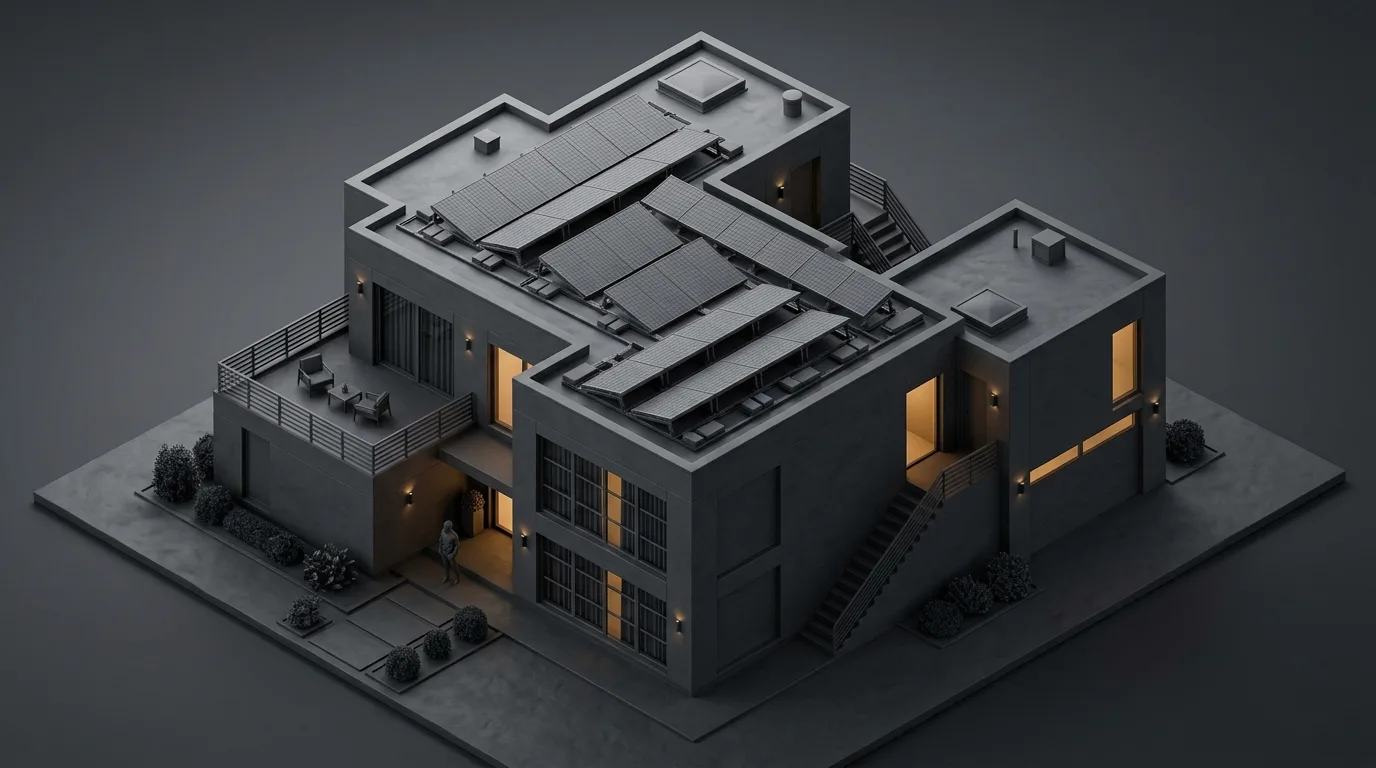
Most home solar panels sit on slanted roofs made of shingles or metal. However, many homes and buildings have flat roofs. Urban townhomes, row houses, and modern homes often feature flat roofs. These flat spaces offer great room to make clean solar energy.
Many property owners ask if solar panels can safely sit on a flat roof. They worry about roof leaks, wind storms, or heavy weight. The answer is yes. In fact, flat roofs have clear perks. Installers can easily aim panels toward the sun. Crews can also walk safely on the roof without harnesses.
This guide explains how flat roof solar works. You will learn about mounting racks, panel angles, and average costs.
Ballasted Racking and Roof Membrane Protection
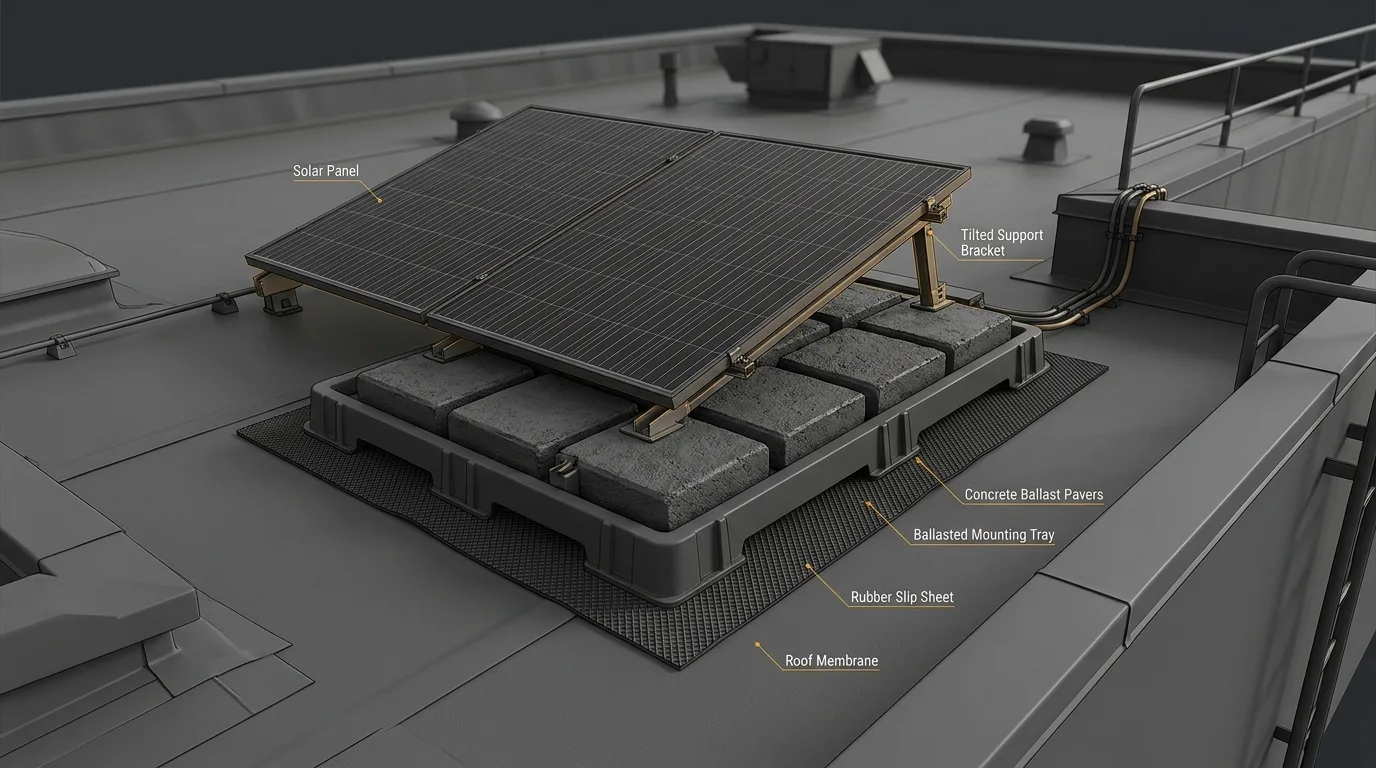
Ballasted racks rest on thick rubber pads to protect your roof. Heavy concrete blocks hold the panels down without drilling any holes into the roof surface.
How Flat Roof Solar Mounting Works
On a slanted roof, workers screw metal rails directly into roof rafters. On a flat roof, drilling holes through a waterproof roof can cause leaks.
Instead, installers use two main mounting choices based on your building and local weather:
1. Ballasted Mounting Systems (Zero Penetrations)
Ballasted racking is the top choice for flat roofs. With this system, no screws pierce the roof surface.
- Durable Trays: Installers place light plastic or metal trays across the roof surface.
- Heavy Concrete Blocks: Solid concrete blocks sit inside each tray. The heavy weight holds the panels firmly in place during high winds.
- Protective Rubber Pads: Workers put thick rubber pads under every tray. These pads stop rubbing, protect the roof layer, and protect your roof warranty.
- Rear Wind Shields: Slanted metal plates attach behind each row of panels. These plates guide wind up and over the array so wind cannot lift the panels.
2. Mechanically Attached Systems
Some areas face severe hurricane winds. In other cases, a roof cannot hold heavy concrete blocks. In these spots, installers use mechanical attachments.
Workers secure strong metal posts directly into structural roof beams. Installers seal each hole with thick flashing, liquid rubber, and heat welds. These seals match your roof type and keep water out completely.
Optimized Panel Tilt and Rainwater Runoff
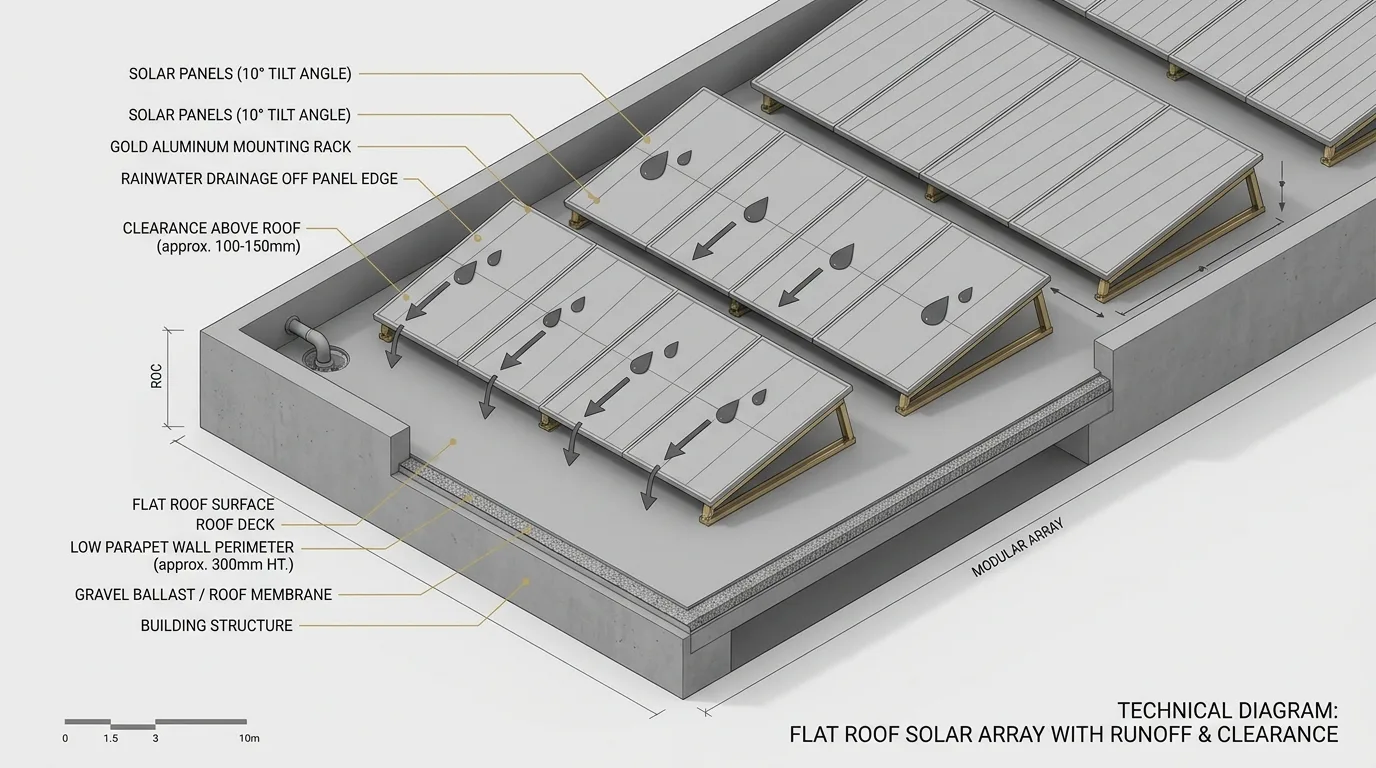
Tilting panels at 10 to 15 degrees lets rainwater wash away dust and dirt. It also leaves space underneath so water drains freely toward roof drains.
The Science of Tilt Angles on Flat Roofs
Some people think solar panels on a flat roof lie totally flat. Laying panels flat is a big mistake for three simple reasons:
- Dirt and Dust Buildup: Flat panels collect dirt, pollen, and leaves. Standing water can leave muddy stains. Over time, dirty glass cuts energy output by 15 to 25 percent.
- Rain Self-Cleaning: When panels tilt at least 10 degrees, normal rain washes away loose dust. You get free, natural panel cleaning whenever it rains.
- Better Sun Angle: Angling panels toward the sun helps cells capture more light all year long.
For most flat roofs, installers choose a tilt angle between 10 degrees and 15 degrees. A steeper 30 degree angle catches slightly more winter sun. But steep panels catch wind like a sail. A 10 to 15 degree tilt gives the best mix of self-cleaning, high power, and wind safety.
Roof Load and Weight Capacity
Before installing panels, a licensed building engineer reviews your roof plans. The engineer checks that your roof is strong enough to carry the panels, winter snow, and repair workers.
A standard ballasted solar system adds 3 to 5 pounds per square foot across the roof. Most flat roofs easily support this extra weight. If a roof has limited strength, engineers can use fewer concrete blocks and add a few roof anchors to keep things light and secure.
The 5-Step Flat Roof Installation Process
Installing a flat roof solar system follows five clear steps to protect your roof and power your building:
Structural and Shade Review
Engineers check roof beam strength and roof thickness. They map out clear areas away from vents, air conditioners, and roof walls to avoid shadows.
Permits and City Approvals
The installer files wiring plans and wind safety tests with local city inspectors and your power company.
Protective Pads and Racks
Workers clean the roof surface, lay down protective rubber pads, and link the modular mounting frames together.
Ballast Blocks and Panels
Crews place concrete blocks into each tray, clamp solar panels to the rails, and add rear wind shields.
Wiring and System Turn-On
Electricians connect the wiring to the inverter, schedule the final city inspection, and turn on the clean power.
Comparing Racking Types: Ballasted vs. Attached
Picking the right mounting style depends on your roof age, local wind codes, and budget. Here is how the two systems compare:
Flat Roof Solar Mounting Systems
Compare non-penetrating ballasted mounts to mechanically attached systems in price, roof safety, and wind hold.
Ballasted Mounting System
Needs zero holes through your roof. Protects roof warranties and sets up fast with concrete blocks. Great for roofs that support 3 to 5 pounds per square foot.
Mechanically Attached System
Bolts directly into roof beams. Best for hurricane regions or lighter roofs that cannot carry heavy concrete blocks.
Drainage, Parapet Walls, and Walkways
Flat roofs are never totally flat. Roofs have a tiny slope to direct rainwater into drains and gutters.
A smart solar layout respects this water flow:
- Drainage Clearance: Installers leave 4 to 6 inches of space under the panel edge. Water flows freely into drains without pooling around wiring.
- Wall Shade Setbacks: Walls around the roof edge cast shadows in the morning and evening. Panels stay back from walls by twice the wall height to stop shading.
- Safe Walking Paths: Building codes require 3 to 4 foot clear walking lanes around the roof edge. These paths let firefighters and repair crews move safely.
Frequently Asked Questions
Yes. Ballasted racks use thick rubber pads and drill zero holes through the roof membrane. Leading roofing makers approve these systems to keep roof warranties fully valid.
No. Ballasted racks pass tough wind tunnel tests. Concrete blocks and angled wind shields press the array down during heavy storms, keeping the panels safe.
Flat roof solar installations usually cost between $2.50 and $3.40 per watt. That is very close to standard roof systems. Fast, safe labor on flat roofs keeps installation costs low.
Because panels tilt at 10 to 15 degrees, normal rain washes away most dust and pollen. Rinsing panels with clean water once or twice a year keeps energy production high.