Solar-Powered Water Pumping Systems: Design, Sizing, and Off-Grid Efficiency
Learn how solar-powered water pumping systems work, including pump selection, MPPT controllers, daily output sizing, cost savings, and agricultural applications.
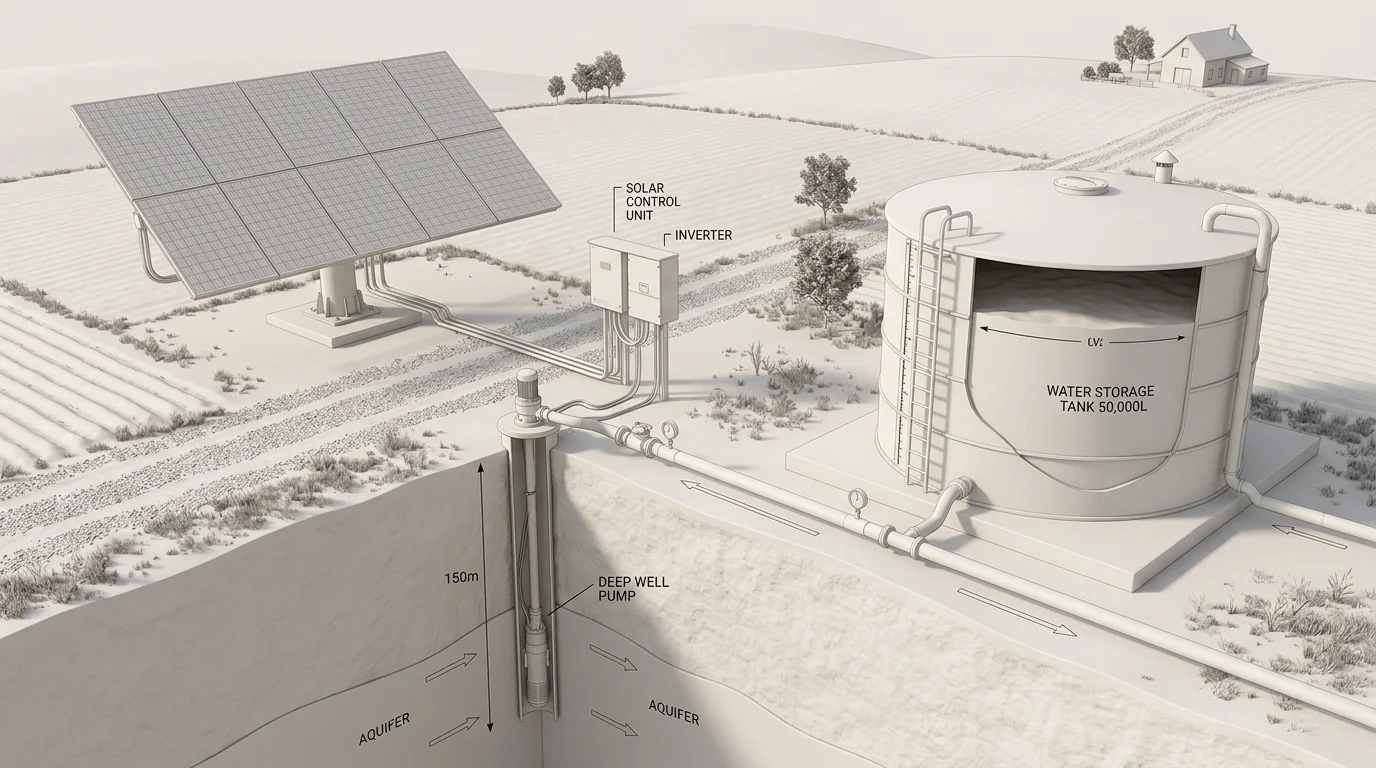
Water is essential for farming, livestock, and remote homes. For decades, running water pumps in off-grid locations required costly diesel generators or expensive grid extensions. Rising fuel prices and maintenance demands made these older systems hard to keep up.
Today, solar-powered water pumping systems offer a reliable, cost-effective replacement. By converting sunlight directly into pumping power, these systems lift water from deep underground wells or surface reservoirs without using grid electricity or fossil fuels.
How Solar Water Pumping Systems Work
A solar water pump converts solar energy directly into mechanical energy to move water. Unlike traditional residential solar setups that require complex battery banks, many solar pumping systems push water into an elevated storage tank whenever the sun shines. The stored gravity-fed water is then available whenever needed.
The core setup consists of four main parts:
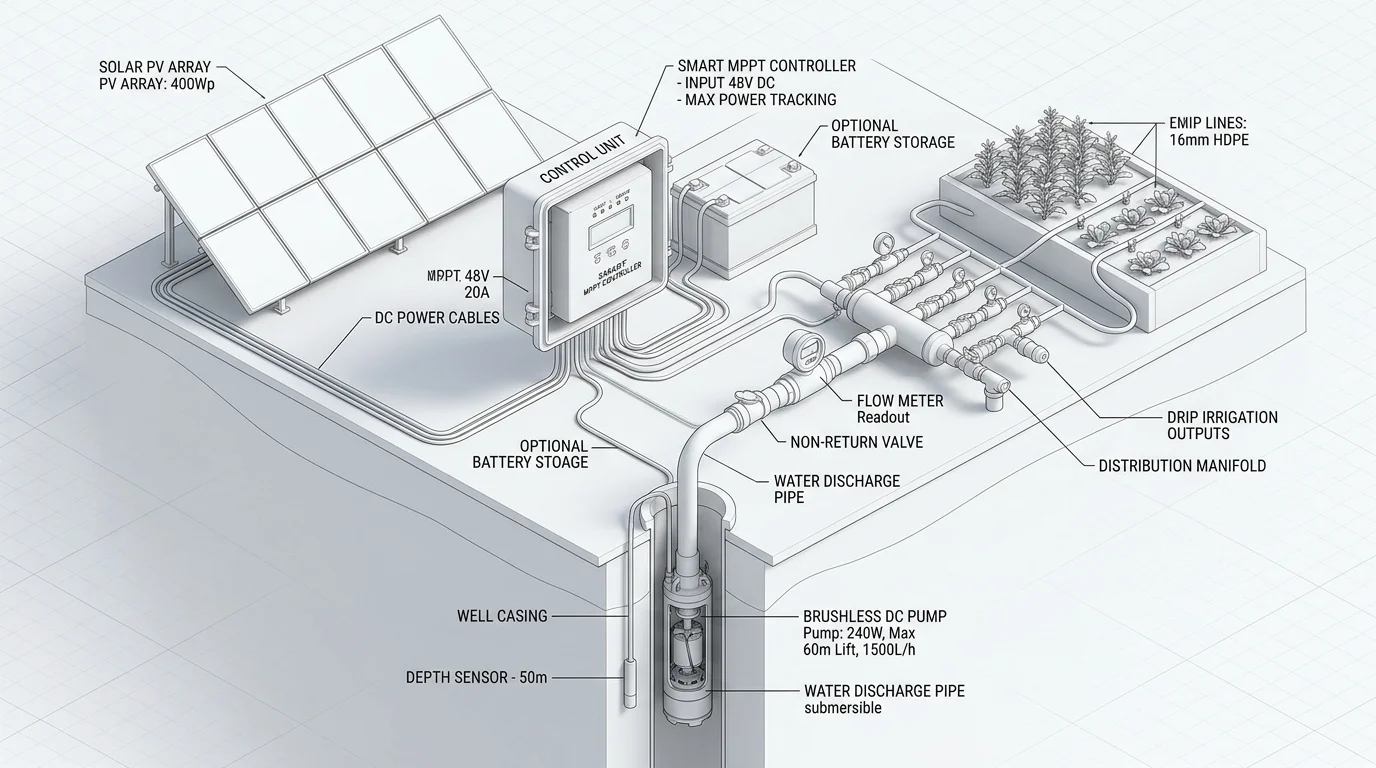
- Solar PV Array: High-efficiency solar panels absorb sunlight and produce direct current (DC) electricity.
- Smart MPPT Pump Controller: The Maximum Power Point Tracking (MPPT) controller adjusts electrical output to match changing sunlight intensity. It smoothly starts the pump in early morning light and stops it safely at dusk.
- Pumping Unit: A submersible or surface pump powered by a high-efficiency DC brushless motor or AC motor lifts water from the source.
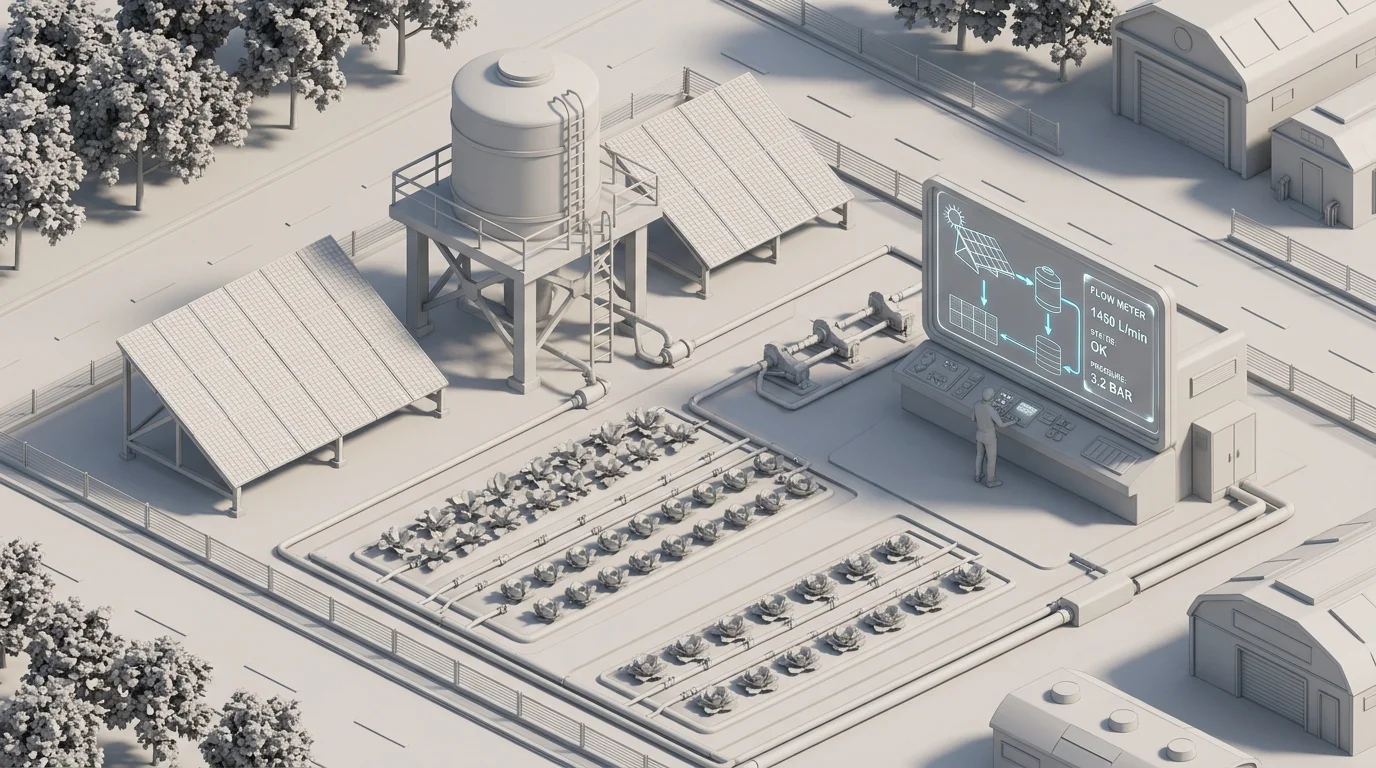
- Water Storage Tank or Distribution Lines: Water flows into elevated storage tanks, cisterns, or directly into drip irrigation lines.
Key Components: Direct DC vs. AC Solar Pumps
Choosing the right solar pump depends on your water source depth, daily volume requirement, and system scale.
Direct DC Brushless Pumps
AC Solar Inverter Pumps
Direct DC Submersible Pumps
Direct DC pumps run directly on DC power generated by solar panels. They use permanent magnet brushless motors that achieve high energy efficiency. They are ideal for shallow to medium deep wells up to 400 feet, making them standard for residential wells and livestock watering.
AC Inverter Pump Systems
Large agricultural operations requiring high flow rates often use standard AC induction pumps paired with a solar variable frequency drive (VFD). The drive converts DC solar power into variable AC power, allowing existing farm pumps to run on solar energy.
Sizing a Solar Water Pumping System
Proper sizing ensures your pump delivers enough daily water even during seasonal variations.
Determine Daily Water Volume
Calculate Total Dynamic Head (TDH)
Match Peak Sun Hours
Economics, Costs, and Payback Timeline
Solar water pumping systems feature lower lifetime operating costs compared to diesel generator setups.
- Small Residential Systems (under 1 HP): Typically cost $3,000 to $8,000 complete with panels, pump, and controller.
- Medium Farm & Livestock Systems (1 to 3 HP): Cost between $6,000 and $15,000.
- Large Agricultural Irrigation Systems (5 HP+): Range from $15,000 to $40,000 depending on depth and water volume.
Financial Insight: While a solar pump has a higher upfront cost than a diesel pump, it eliminates fuel costs entirely. Off-grid systems replacing diesel generators achieve full payback in 2 to 4 years.
Available Incentives
In the United States, solar water pumps qualify for key clean energy incentives:
- Federal Investment Tax Credit (ITC): Covers 30 percent of total equipment and installation costs.
- USDA REAP Grants: Agricultural producers and rural small businesses can apply for REAP grants covering up to 25 to 50 percent of total project costs.