Solar Energy for Schools and Universities: Benefits, Costs, and Financing Guide
Explore how K-12 schools and university campuses use solar energy, parking canopies, and battery microgrids to cut utility bills and fund classrooms.
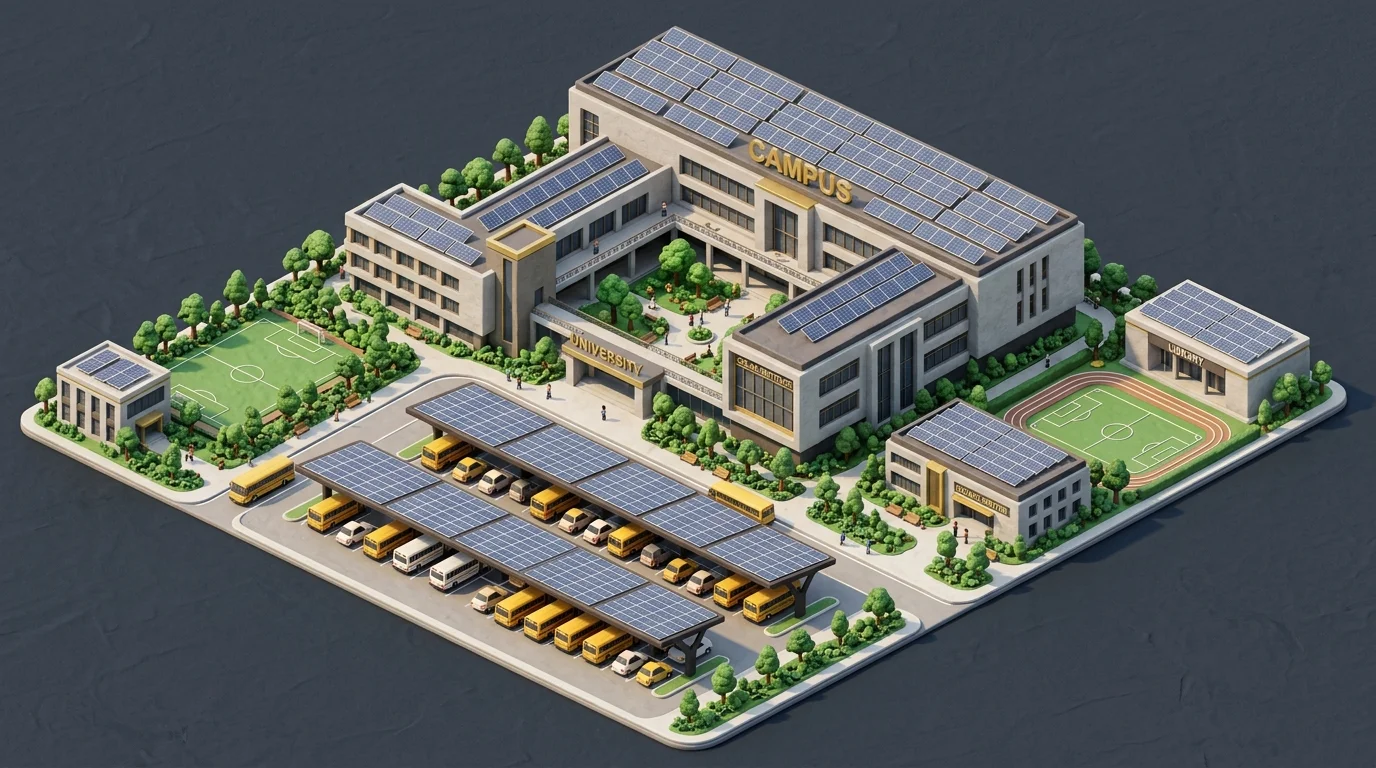
Energy bills are one of the largest budget expenses for school districts and universities, often ranking second only to teacher and staff salaries. Educational institutions spend billions of dollars each year heating, cooling, and lighting classrooms, auditoriums, and campus laboratories.
By adopting solar energy for schools, educational leaders are turning unused rooftops, open athletic fields, and parking lots into clean power generators. Going solar lowers monthly operating expenses, protects school budgets against rising utility rates, and frees up critical funding for books, technology, and classroom supplies.
In this guide, we break down how campus solar installations work, review zero-upfront financing models, explore campus microgrids, and explain how schools integrate clean energy into student STEM education.
Why Educational Campuses Are Built for Solar Energy
School districts and college campuses possess unique structural and operational characteristics that make them ideal candidates for solar photovoltaic (PV) power:
- Perfect Daylight Energy Alignment: Unlike residential homes where energy use peaks in the morning and evening, schools consume the vast majority of their electricity between 8:00 AM and 4:00 PM on weekdays. This schedule matches the exact hours when solar panels produce their maximum daily output.
- Abundant Flat Roof Real Estate: School buildings, gymnasiums, field houses, and libraries typically feature large, unobstructed flat roofs that can host hundreds of kilowatts of solar panels with minimal shading.
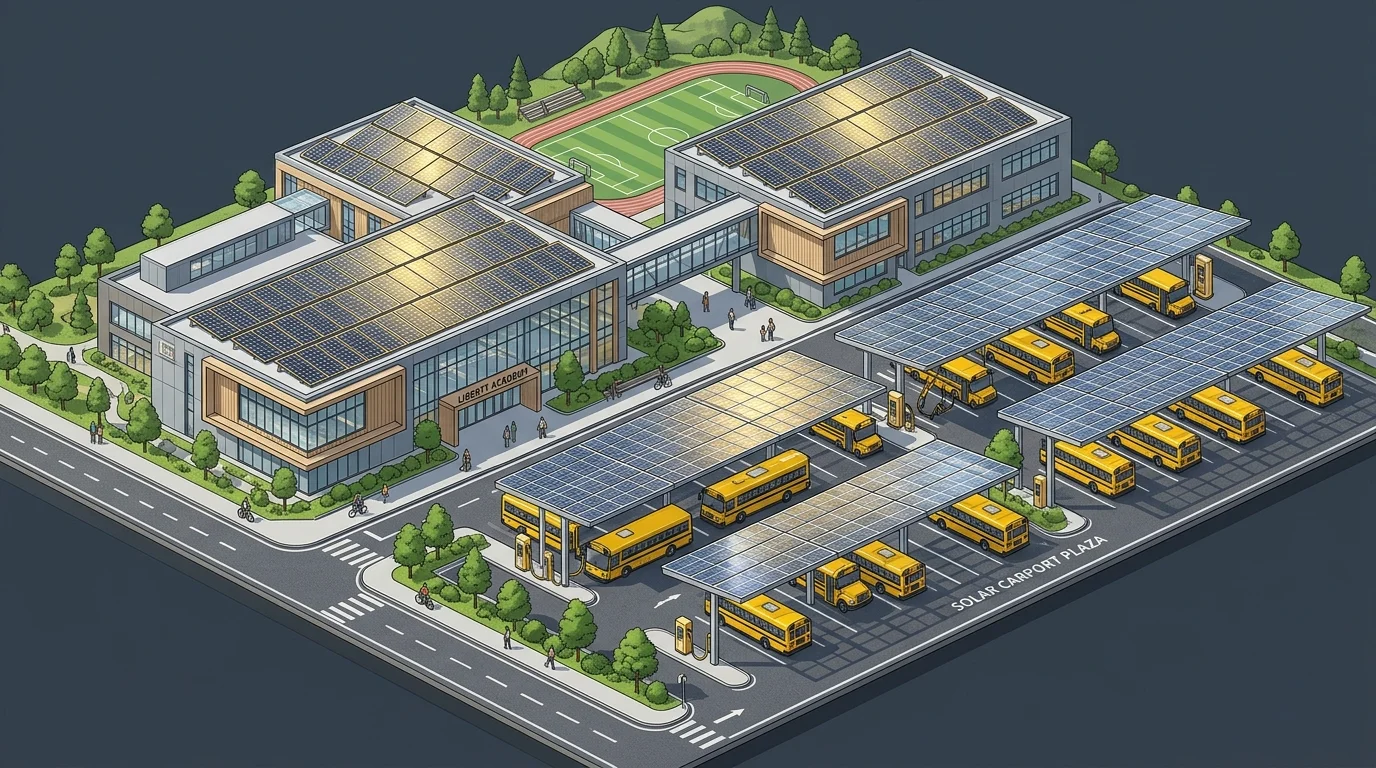
- Expansive Parking Lot Footprints: High schools and universities have large surface parking lots that are well suited for solar carports for schools. These structures generate electricity while keeping staff, student, and visitor vehicles cool in the shade.
- Long-Term Operational Horizon: Public school districts and universities plan facilities on multi-decade timelines. Solar panels with 25 to 30 year performance warranties offer predictable energy costs that align directly with long-term institutional planning.
How Campus Solar Microgrids Ensure Emergency Resilience
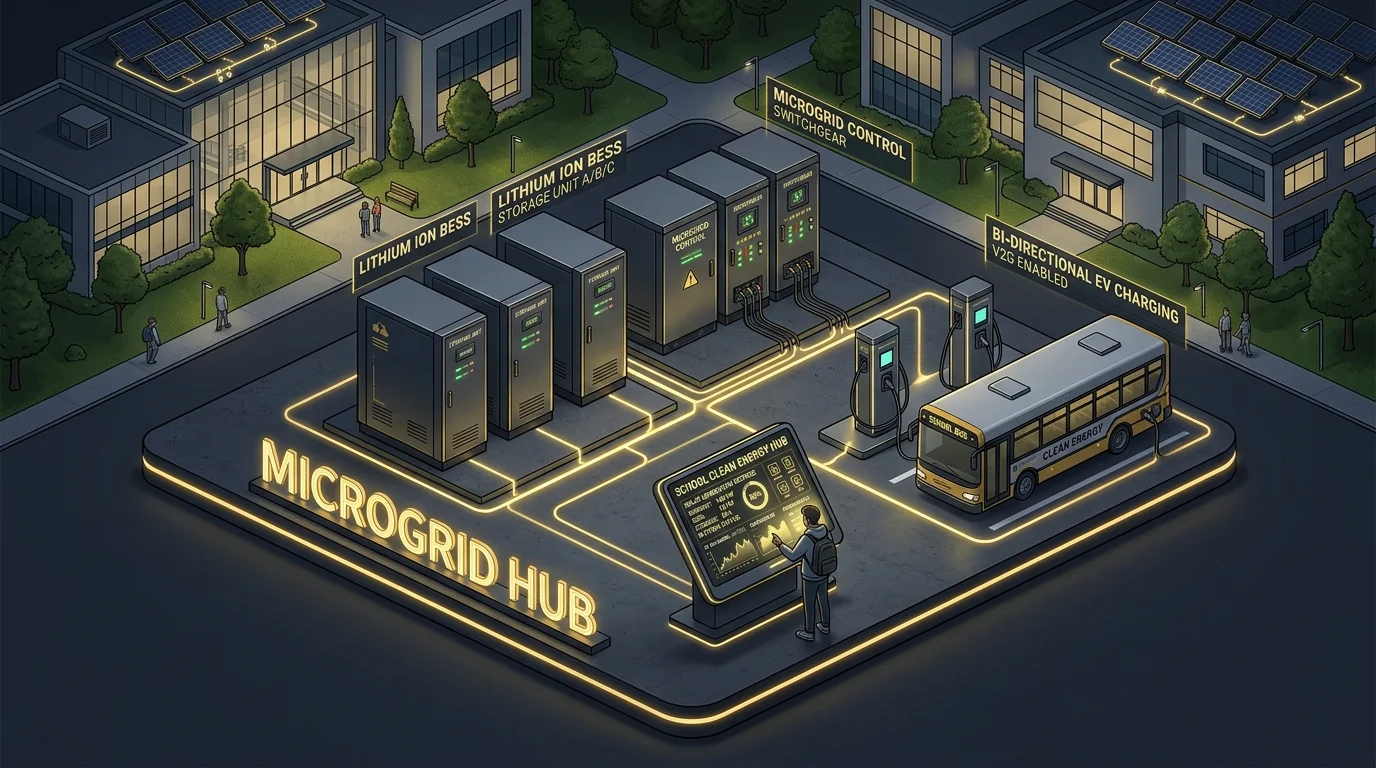
Modern schools serve as vital community anchors during storms, extreme heat events, and power outages. By combining rooftop solar arrays with battery energy storage systems (BESS), campuses transform into self-sustaining microgrids that can operate independently from the main electrical grid.
Rooftop and Canopy Solar Generation
High-output solar panels mounted on school roofs and parking canopies capture sunlight and generate direct current (DC) electricity throughout the day.
On-Site Battery Storage Buffering
Smart commercial battery cabinets store excess midday solar power, eliminating expensive utility demand charges and preparing backup capacity for nighttime use.
Community Emergency Shelter Islanding
During public utility blackouts, automatic transfer switches island the campus, keeping emergency lighting, cafeteria refrigeration, and medical shelters running smoothly.
Clean Fleet Bus Charging
Solar canopies provide dedicated high-speed charging for electric school buses, with bidirectional vehicle-to-grid (V2G) systems supplying extra emergency power back to the school when needed.
Comparing School Solar Financing Models
Public schools and non-profit universities historically faced challenges accessing clean energy tax incentives because they pay no federal income taxes. Today, updated direct pay rules and third-party ownership models make school solar power financing accessible for districts of every budget size.
Power Purchase Agreement (PPA)
A third-party solar developer finances, builds, owns, and maintains the solar array on school property. The district simply purchases the electricity at a fixed, discounted rate per kilowatt-hour, locking in immediate energy savings with zero financial risk or capital debt.
Direct Ownership (Direct Pay)
The school district purchases the solar system using capital bond funds or cash reserves. Under federal Elective Pay rules, tax-exempt public schools receive a direct cash payment covering 30% or more of total system costs, maximizing 30-year financial returns.
Energy Savings Performance Contract
An Energy Service Company (ESCO) bundles solar installation with LED lighting, smart thermostats, and HVAC upgrades. The guaranteed utility bill savings are used to pay off the project equipment financing over time.
Integrating Solar into Student STEM Education
One of the greatest benefits of campus solar is its ability to turn school facilities into interactive learning laboratories. When students observe clean energy technology operating in real time, science and engineering concepts come to life:
- Interactive Lobby Kiosks: Digital touch displays in school entryways show real-time solar generation, building energy consumption, and total carbon offset metrics.
- Hands-On STEM Curriculum: Teachers incorporate real school energy data into math, physics, environmental science, and computer science lesson plans.
- Career and Technical Education (CTE): High school vocational programs and community colleges use on-campus solar hardware to train students for high-paying careers as solar technicians, electrical engineers, and energy analysts.
Key Steps to Launch a School Solar Project
School boards, superintendents, and campus facility managers can follow this proven roadmap to bring solar energy to their institutions:
- Conduct a Campus Energy and Roof Audit: Inspect roof condition, age, structural load limits, and electrical panel capacities across all district facilities.
- Evaluate Financing Mechanisms: Decide whether a zero-down PPA, direct bond purchase with elective pay, or an energy performance contract best fits district financial goals.
- Issue a Competitive Request for Proposals (RFP): Solicit proposals from qualified commercial solar developers with proven track records in educational installations.
- Engage School Board and Community Stakeholders: Present projected utility savings, student safety protocols, and educational curriculum opportunities during public board hearings.
- Install, Commission, and Celebrate: Complete installation during scheduled summer breaks to minimize classroom disruption, followed by a campus ribbon-cutting ceremony.
Frequently Asked Questions
Public school districts and tax-exempt colleges can utilize direct pay (also known as elective pay) to receive a direct cash reimbursement from the federal government for 30% or more of project costs. Alternatively, schools can enter into a Power Purchase Agreement (PPA) where a private solar developer claims the tax credits and passes the savings to the school through lower electric rates.
During summer months, school buildings still consume baseline power for refrigeration, ventilation, and administrative offices. Any surplus electricity generated beyond building needs is exported to the local utility grid through net metering or clean energy tariff programs, earning valuable utility bill credits for the following school year.
Standard grid-tied solar systems automatically disconnect during utility outages to protect utility line workers. However, when paired with an on-site battery storage system and microgrid switchgear, the school can island itself and supply reliable backup electricity to keep emergency lighting, communications, and emergency shelter areas fully operational.
No. Professional commercial solar installers use non-penetrating ballasted racking systems on flat roofs, which hold panels securely in place using concrete pavers without puncturing the roof membrane. For pitched roofs, certified flashing and mounting brackets are installed in direct coordination with the roofing manufacturer to keep existing roof warranties 100% intact.