Solar Power for Manufacturing Plants: Cost Reduction and Peak Shaving
Learn how solar power systems, battery storage, and smart peak shaving cut energy costs, eliminate demand charges, and power modern manufacturing plants.
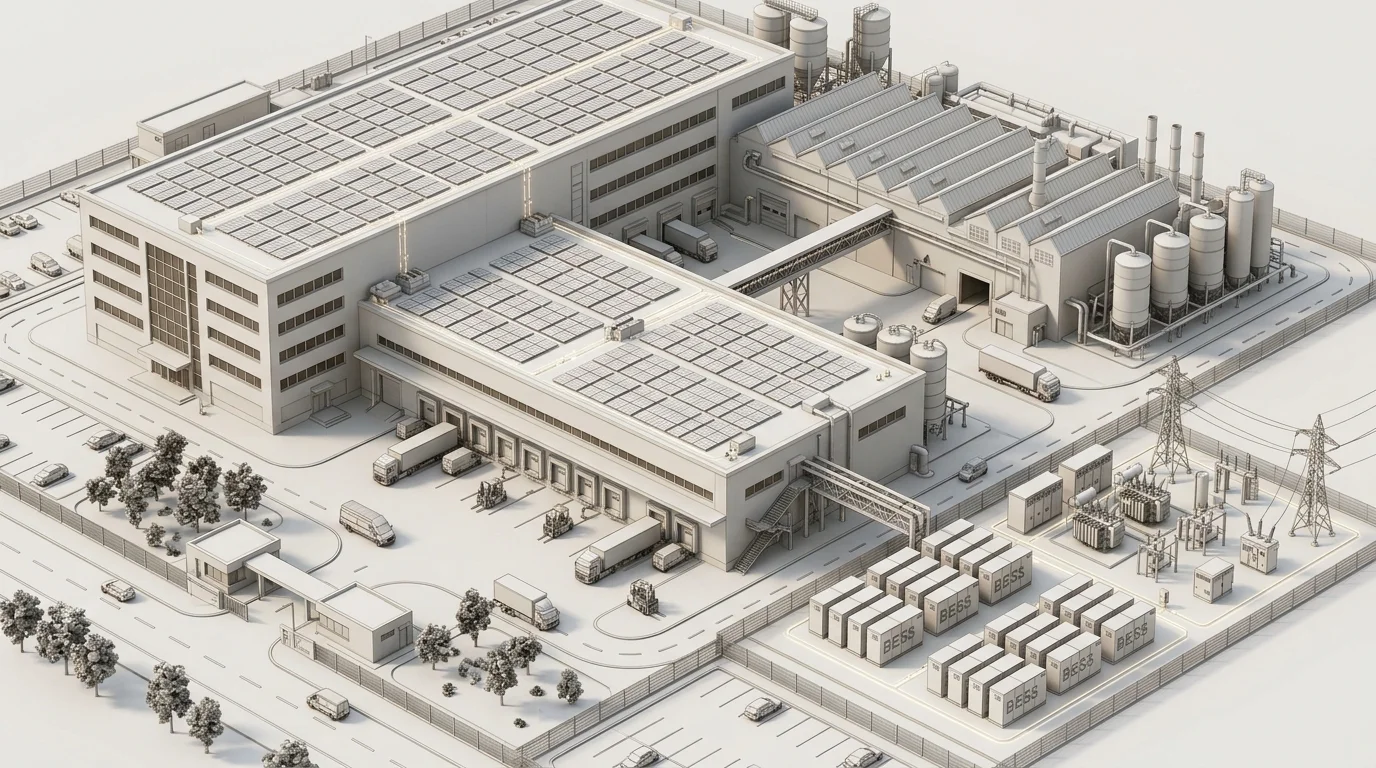
Manufacturing plants require tremendous amounts of electricity to keep production lines moving. From heavy stamping presses and injection molding machines to robotic welders and high-powered air compressors, factory operations run on intense electrical power. For many industrial operators, electricity costs account for 15% to 30% of total operating expenses.
At the same time, industrial facilities face rising utility electricity rates and unpredictable rate spikes. In response, plant owners and plant managers are turning to commercial on-site solar energy systems.
When combined with on-site battery storage and smart load management software, industrial solar turns an expensive recurring overhead cost into a predictable financial asset. Here is a complete guide to how industrial solar systems work, how peak shaving cuts electric bills, and what return on investment factory operators can expect.
The Manufacturing Energy Challenge: High Base Loads and Demand Charges
Manufacturing facilities face unique energy challenges that differ from standard office buildings or retail stores:
- Massive Energy Consumption: A typical 150,000 square foot manufacturing facility can consume tens of thousands of kilowatt-hours (kWh) of electricity each day. Continuous operations create a heavy baseline load that runs through entire shifts.
- Punishing Peak Demand Charges: Electric utilities bill industrial customers using two separate metrics: the total energy consumed (in kilowatt-hours) and the highest peak power demand recorded during any 15-minute interval during the month (in kilowatts). In many service territories, demand charges account for 40% to 70% of a factory monthly electric bill.
- Production Startup Surges: When high-horsepower motors, industrial kilns, and hydraulic presses start up simultaneously at the beginning of a shift, they pull massive spikes of electricity from the grid. Even a single 15-minute power spike can set an expensive demand charge rate for the entire billing cycle.
- Power Quality and Interruption Risks: Heavy precision manufacturing machinery requires clean, stable voltage. Voltage sags and brief utility outages cause expensive equipment shutdowns, material scrap, and lost assembly time.
How Solar and Energy Storage Solve Factory Power Demands
Industrial solar systems convert sunlight into direct electric power right at the point of consumption. Because factory production shifts naturally take place during daytime hours, solar panel generation matches factory electricity demand curves almost perfectly.
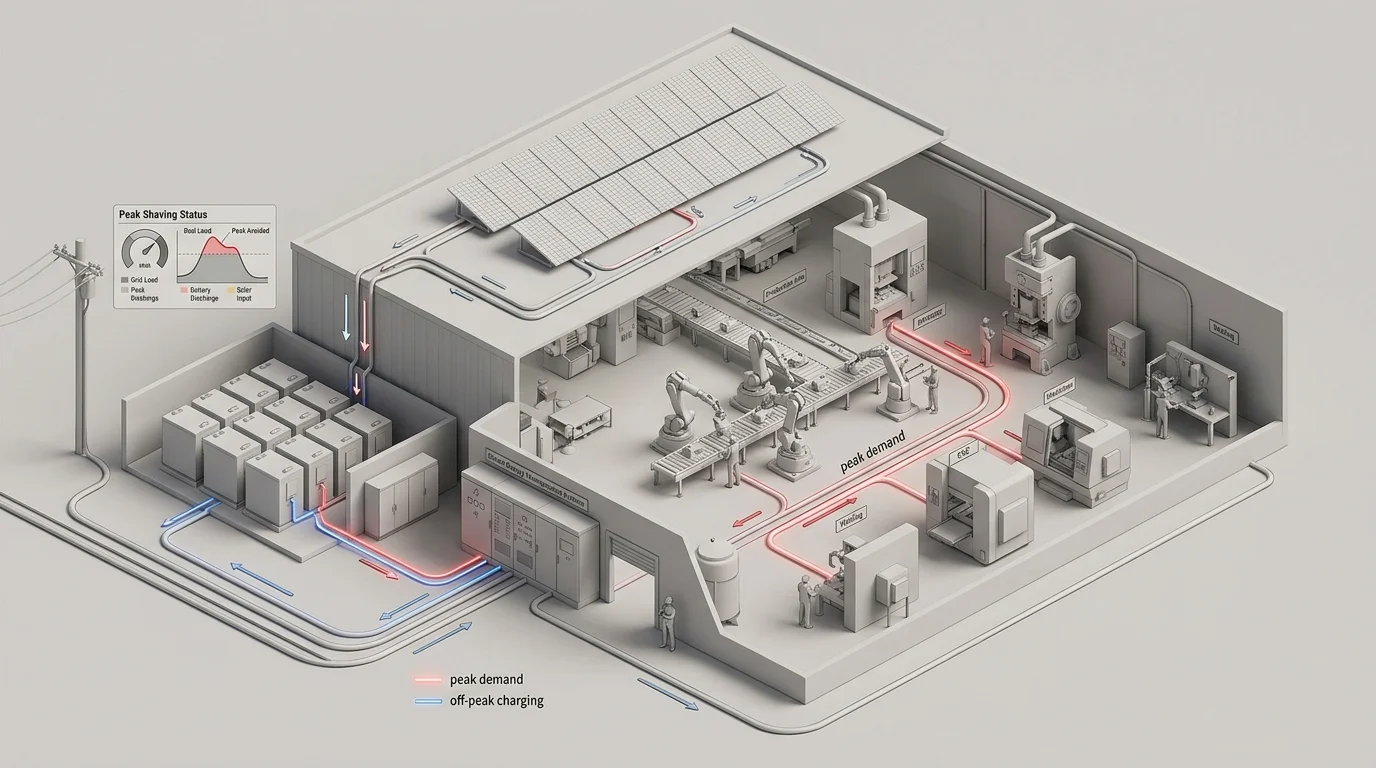
A complete industrial clean energy system combines four main elements:
- High-Efficiency Rooftop and Ground Solar Arrays: Multi-megawatt photovoltaic arrays capture sunlight and generate clean direct current (DC) electricity across factory roofs, parking canopies, or adjacent open land.
- Industrial Utility-Scale Inverters: High-voltage central or string inverters convert DC power into clean 480V three-phase alternating current (AC) electricity compatible with industrial plant switchgear.
- Battery Energy Storage Systems (BESS): Lithium iron phosphate (LFP) battery banks store excess solar power during midday and rapidly discharge energy when factory machinery starts up.
- Intelligent Energy Management Systems (EMS): AI-powered software monitors real-time factory power draw and controls when to use solar electricity, when to draw from battery storage, and when to pull power from the electric grid.
System Layouts: Comparing Rooftop, Carport, and Ground Installations
Industrial facilities usually have multiple spatial assets that can host solar equipment. Plant engineers choose between three main physical layouts:
Rooftop Ballasted Arrays
Mounts directly onto wide, flat industrial roofs with non-penetrating ballasted frames. Uses existing facility space without taking up factory staging zones, parking bays, or future expansion real estate.
Industrial Solar Carports
Built over employee parking lots and logistics staging yards. Delivers clean electricity while shading staff vehicles from the sun and providing direct power for workforce electric vehicle charging stalls.
Adjacent Ground-Mount Arrays
Installed on surplus acreage or buffer zones next to the plant. Allows optimal panel tilt angles, bifacial generation, and single-axis tracking systems that boost energy harvest by 15% to 25%.
Peak Shaving and Load Management in Action
The greatest financial benefit of pairing industrial solar with battery storage is peak shaving. Peak shaving is the deliberate reduction of grid power consumption during peak billing periods.
Here is how intelligent load management protects a manufacturing plant from utility peak charges:
- Morning Startup Buffering: When the morning shift arrives and major production lines switch on, energy demand surges. Rather than pulling this surge entirely from the local electric grid, the energy management system discharges battery storage to absorb the spike.
- Midday Solar Self-Consumption: From late morning through mid-afternoon, solar panels reach peak generation. The plant uses 100% of this clean power directly on factory lines, reducing utility grid draw to minimal levels.
- Late Afternoon Demand Shaving: Many electric utilities charge their highest time-of-use rates between 4 PM and 9 PM. As solar production declines in the late afternoon, on-site batteries discharge stored clean power to cover factory loads, bypassing expensive peak tariff windows.
- Power Quality Filtering: Industrial inverters and battery systems help regulate power factor and stabilize voltage sags caused by sudden motor cycling, protecting sensitive computerized electronics and CNC equipment.
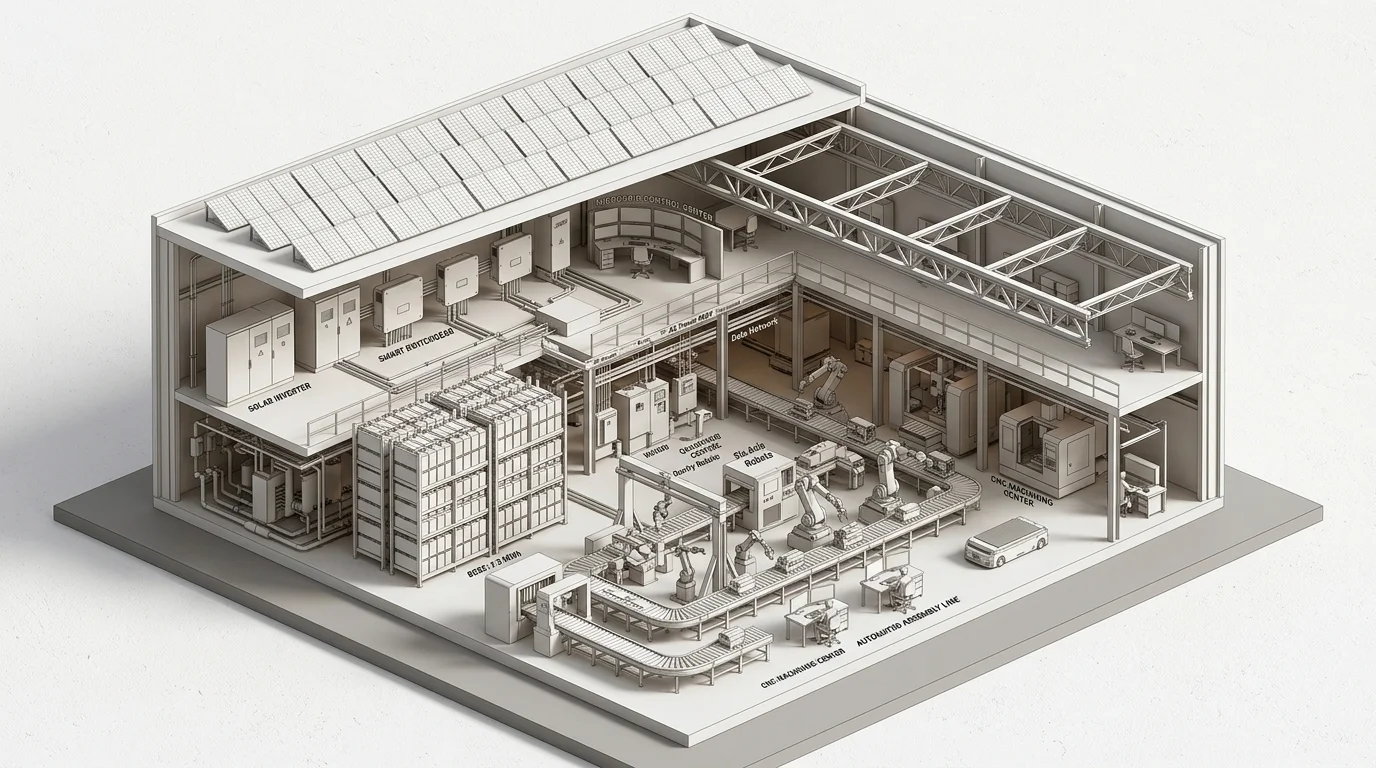
Step-by-Step Implementation for Factory Solar Systems
Developing a commercial solar project for a manufacturing facility requires careful engineering, structural review, and utility coordination to prevent disruptions to active production schedules:
Energy Profile Audit and Feasibility Study
Engineers analyze historical utility interval data to identify 15-minute demand spikes, base load requirements, and utility tariff structures. Structural engineers inspect roof trusses, deck strength, and available electrical breaker space.
System Engineering and Financial Modeling
Design teams create 3D CAD layouts that accommodate rooftop HVAC units, vents, and dust extraction systems. Financial models project total solar generation, demand charge savings, tax credits, and net cash flow.
Permitting and Utility Interconnection Filing
Engineers prepare detailed electrical single-line diagrams, fire safety access paths, and environmental reviews. The project team files interconnection applications with the regional electric utility.
Turnkey Installation and Switchgear Integration
Specialized commercial contractors install racking, panels, wiring conduits, and ground-level battery banks. Final electrical tie-ins are scheduled during planned factory maintenance shutdowns to prevent production downtime.
Commissioning and Automated Energy Management
Technicians perform safety testing, obtain utility permission to operate, and activate AI-driven energy management software for real-time monitoring and autonomous peak shaving.
Financial Analysis: Cost per Watt, Tax Incentives, and Return on Investment
Industrial-scale solar systems benefit from strong economies of scale. Because manufacturing installations are large (typically ranging from 500 kW to over 5 MW), the installed cost per watt is substantially lower than residential or light commercial systems.
- Installed Cost per Watt: Turnkey industrial solar systems cost between $1.30 and $1.90 per watt for multi-hundred-kilowatt rooftop installations. Ground-mounted arrays and battery-paired microgrids range from $1.60 to $2.40 per watt depending on storage capacity.
- Federal Clean Energy Investment Tax Credit (ITC): Under federal tax rules, commercial and industrial solar projects qualify for a baseline 30% clean energy tax credit. Projects that meet domestic content rules or sit in designated energy communities can earn additional 10% bonus credits, raising the total credit to 40% or 50%.
- MACRS Accelerated Depreciation: Commercial solar equipment qualifies for the 5-year Modified Accelerated Cost Recovery System (MACRS). Because businesses can write off the depreciable basis of solar assets on an accelerated schedule, tax deductions deliver substantial cash savings within the first several years of operation.
- Operating Expense Reduction: By generating power on site and eliminating steep utility demand charges, factory operators reduce ongoing electricity costs by 40% to 65%.
- Rapid Payback Period: Combining federal tax credits, MACRS depreciation, and direct utility bill savings produces a typical capital payback period of 3 to 6 years. With solar panels warrantied for 25 to 30 years, the system delivers decades of virtually free electricity after breakeven.
Frequently Asked Questions
Yes. Solar energy systems generate electrical power that connects directly into the main factory switchgear. The machinery cannot tell the difference between electricity produced by on-site solar panels and electricity supplied by the utility grid. When paired with inverters and battery storage, the system delivers clean, consistent voltage that easily handles heavy motor and machinery loads.
No. Professional commercial solar contractors perform almost all installation work on the roof exterior or in outdoor utility yards. Electrical tie-ins to the main plant switchboard are coordinated during scheduled weekend shifts or planned plant maintenance shutdowns, ensuring zero disruption to daily production lines.
Utilities calculate demand charges based on the highest 15-minute power surge during the billing month. When factories start heavy equipment simultaneously, energy draw spikes. A solar-plus-storage system detects these power surges instantly and discharges battery power to supply the surge locally, keeping grid draw low and preventing expensive utility penalty fees.
Solar panels continue generating electricity under cloudy skies, producing between 10% and 25% of their rated capacity. If solar output drops, the facility automatically supplements power by drawing from the local electric grid or using energy stored in on-site battery banks, maintaining continuous and seamless factory operations.
Factory operators can purchase systems with capital expenditure for maximum tax benefits, finance installations through low-interest commercial clean energy loans, or enter into Power Purchase Agreements (PPAs). Under a PPA, a third-party developer designs, builds, and maintains the system at zero upfront cost to the plant, and the factory buys the generated clean power at a fixed rate lower than the local utility.