Solar Power for Hotels and Resorts: Costs, ROI, and Commercial Feasibility
Learn how hotels and resorts cut energy costs by 35% to 60% with solar. Explore commercial installation costs, daytime load matching, tax incentives, and payback timelines.
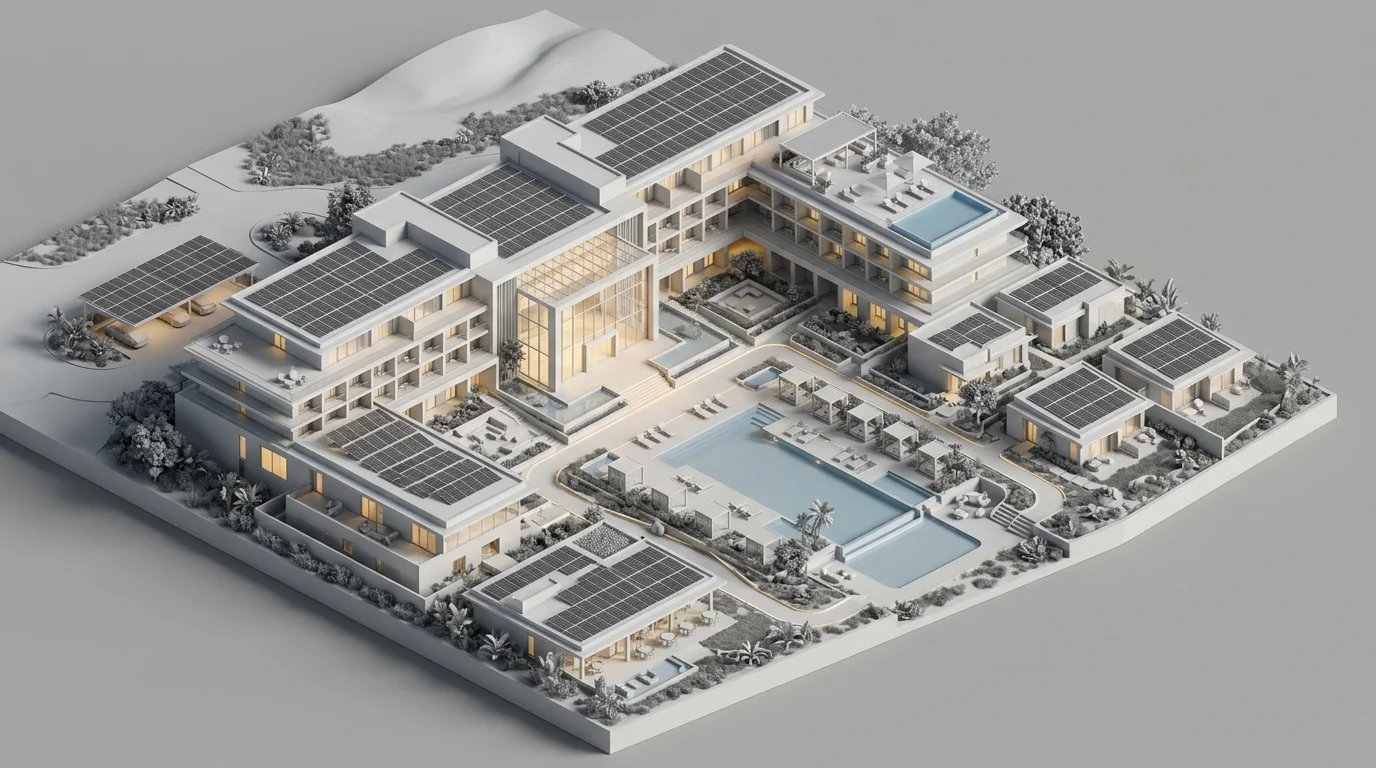
Hotels and luxury resorts operate around the clock. Unlike standard corporate offices that shut down on evenings and weekends, hospitality properties maintain continuous demand. Guest rooms, laundry machines, commercial kitchens, outdoor swimming pools, and central air conditioning systems consume vast amounts of electrical power every single day.
Energy costs typically account for 6% to 10% of total hotel operating expenses. In high-tariff utility regions, electrical bills can eat up even larger slices of operational revenue. At the same time, modern leisure and business travelers increasingly favor eco-friendly destinations with verified green practices.
Solar energy offers a powerful financial and environmental solution for the hospitality sector. By taking advantage of sunny rooftops, covered parking areas, and grounds, hotel owners can generate clean electricity on site. This lowers monthly power bills, provides a reliable hedge against rising utility tariffs, and elevates the guest experience.
Optimized Day-Part Load Matching Across Hotel Operations
Why Solar Fits Hotel Energy Patterns Perfectly
Solar generation is most productive during bright daylight hours. For many commercial buildings, this daytime curve creates excess electricity that must be sent back to the grid for lower credits. Hotels, however, present an ideal operational match for solar energy.
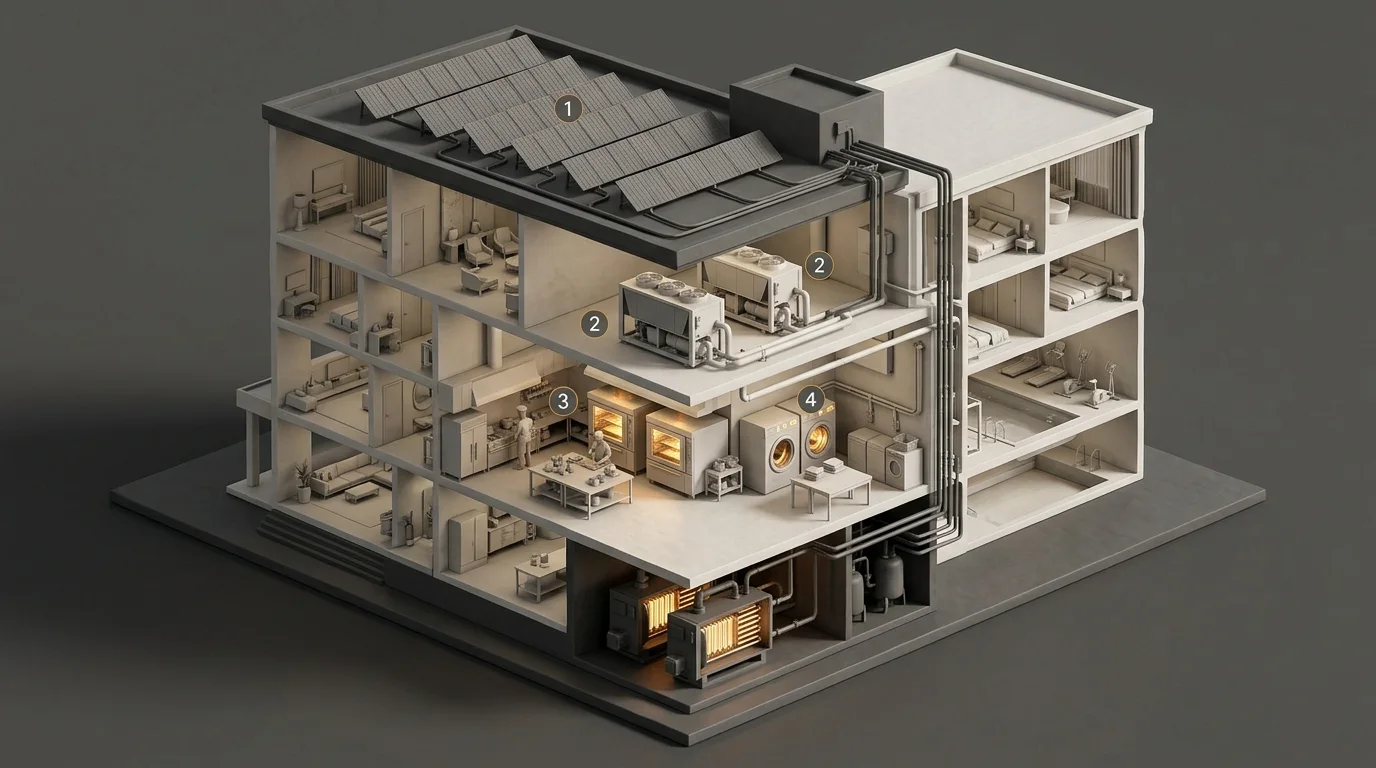
Hospitality properties draw substantial power exactly when the sun produces the most energy:
- Air Conditioning and Comfort Cooling: Chiller plants and heat pumps work hardest during hot summer afternoons when outdoor temperatures spike. This mirrors the peak output hours of a rooftop solar array.
- Commercial Laundry Operations: Hotel housekeeping crews wash, dry, and press hundreds of bedsheets and towels between 9:00 AM and 3:00 PM. This intense electrical load matches the rising solar generation curve.
- Kitchen and Culinary Services: Walk-in refrigerators, commercial ventilation hoods, and electric ovens run steadily through breakfast and lunch meal prep.
- Spa and Pool Circulation: Heating systems, pool water circulation pumps, and filtration equipment run continuously throughout the day. Water acts as a natural thermal buffer that absorbs variable clean energy.
Because of this constant daytime consumption, hotels achieve high self-consumption rates of 55% to 75%. Instead of selling surplus power back to the grid at low wholesale export rates, hotels consume the clean power directly. Every kilowatt-hour consumed on site directly offsets expensive retail utility power.
Commercial Hotel Solar System Costs
The total investment required to install solar panels on a hotel depends on property size, electrical infrastructure, and structural mounting requirements. Most mid-sized hotels with 50 to 150 rooms install systems ranging from 100 kilowatts (kW) to 350 kilowatts. Large destination resorts often install systems well over 1 megawatt (MW).
Commercial solar installation costs typically range from $1.65 to $2.15 per watt for rooftop and ground installations. Architectural solar carports with integrated lighting and charging stations run from $2.80 to $3.40 per watt due to structural steel requirements.
| System Capacity | Property Type | Usable Roof Area | Estimated Gross Cost |
|---|---|---|---|
| 100 kW | Boutique Hotel (30 to 60 Rooms) | 5,500 to 7,000 sq ft | $165,000 to $215,000 |
| 250 kW | Full-Service Hotel (80 to 150 Rooms) | 14,000 to 18,000 sq ft | $390,000 to $495,000 |
| 500 kW | Conference Hotel & Resort | 28,000 to 36,000 sq ft | $750,000 to $925,000 |
| 1,000 kW (1 MW) | Large Scale Destination Resort | 55,000+ sq ft / Land / Canopies | $1,450,000 to $1,850,000 |
Additional project costs may include electrical distribution panel upgrades, utility interconnection studies, and roof access staging that keeps work areas separated from guest circulation corridors.
Grid Reliance Only
Solar Powered Property
Financial Incentives, Tax Credits, and ROI
Commercial solar installations benefit from generous tax incentives that dramatically lower upfront capital expenditures. When structured properly, tax credits and depreciation benefits return roughly 45% to 55% of the total project cost within the first year of operation.
Key financial mechanisms include:
- Section 48E Clean Electricity Investment Tax Credit (ITC): Provides a 30% base tax credit for commercial systems. Systems using domestic American components or located in designated energy communities can earn bonus credits of 10% each, bringing the total federal credit up to 40% or 50%.
- Modified Accelerated Cost Recovery System (MACRS): Commercial solar equipment qualifies for 5-year accelerated depreciation. Hotel owners can deduct the depreciable basis from corporate income taxes, providing substantial early cash flow.
- Local Utility Rebates and Renewable Energy Certificates (SRECs): Many utility territories offer cash production incentives or let property owners sell renewable certificates to energy brokers for ongoing annual income.
With these incentives combined, a typical hotel solar project achieves full capital payback within 3.8 to 6.5 years. Because tier-one commercial solar panels carry 25 to 30 year performance warranties, the system delivers over two decades of virtually free operational power after the initial investment is recovered.
Solar Carports as a Premium Guest Amenity
Rooftops are not the only location for solar panels on hospitality properties. Extensive parking lots offer prime real estate for dual-purpose solar carports and canopies.
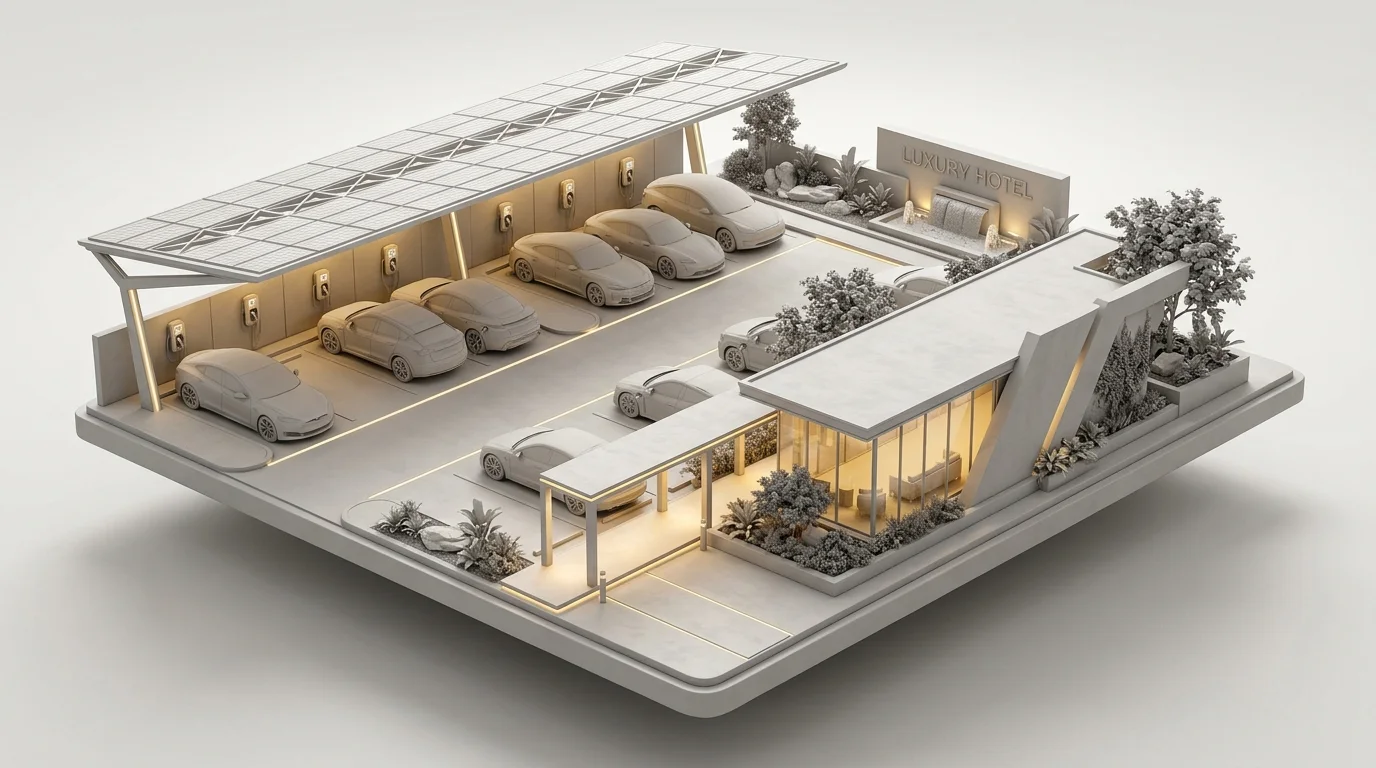
Solar carports offer several distinct advantages for hotels and resorts:
- Shaded Vehicle Parking: Guests appreciate shaded parking spaces that protect vehicles from sweltering summer heat, sun fading, and seasonal hail storms.
- Integrated EV Charging Stations: Hotels can install Level 2 and Level 3 DC fast charging stations directly under canopy structures. This attracts affluent EV drivers and creates an additional revenue stream through paid charging sessions.
- Covered Walkways and Valet Staging: Canopies can extend over arrival drop-off zones and pedestrian pathways to shelter guests from rain and intense sun.
- High-Visibility Sustainability: Rooftop panels are often invisible from the ground, but solar carports showcase your environmental commitment immediately upon guest arrival.
Implementation Roadmap for Hotel Operators
Installing solar on an active hospitality property requires careful planning to maintain uninterrupted operations and protect guest satisfaction.
1. Energy Audit & Interval Data
Engineers analyze twelve months of utility interval billing data to calculate daytime peak demand and identify optimal system sizing.
2. Roof and Structural Survey
Specialists evaluate roof age, membrane conditions, and structural load capacities to determine whether ballasted non-penetrating mounts can be used.
3. Staged Construction Plan
Installers schedule heavy crane lifts and noisy structural work during mid-week off-peak hours to avoid disturbing guest sleep and dining services.
4. Grid Interconnection & Activation
The local utility inspects the system, installs bidirectional metering hardware, and issues formal permission to operate.
Key Engineering and Operational Considerations
Before starting a solar installation, hotel general managers and facility directors should evaluate several technical points:
Roof Membrane Integrity and Warranties
Commercial flat roofs usually feature TPO, EPDM, or built-up asphalt membranes. Solar mounting systems must use ballasted, non-penetrating frames whenever possible. If mechanical roof attachments are necessary, work must be completed by certified roofing technicians to preserve existing roof warranties. If a roof is more than 15 years old, consider replacing the membrane before mounting solar panels.
Aesthetic Integration and Architectural Harmony
Luxury resorts invest heavily in landscape design and guest atmosphere. Solar arrays should blend smoothly into existing rooflines. Electrical conduit runs, cable trays, and inverter boxes must be neatly routed through mechanical shafts rather than exposed across exterior guest-facing facades.
Quiet Construction Logistics
Guest comfort remains the top priority during installation. Crane lifts, roof material staging, and electrical tie-ins should take place between 10:00 AM and 4:00 PM when most guests are exploring local attractions or attending conferences. Clear signage and safety barriers ensure guest areas stay secure.
Frequently Asked Questions
Most urban and suburban hotels generate between 30% and 65% of their total annual electrical needs from on-site rooftop and carport solar. Achieving 100% self-sufficiency usually requires large battery energy storage systems (BESS) or off-site solar farm subscriptions due to 24/7 guest consumption.
Professional commercial solar contractors plan installations to minimize noise and traffic. Heavy crane lifts and roof loading occur during mid-day hours when guest occupancy is lowest. Electrical tie-ins are scheduled during overnight maintenance windows with temporary backup generators if needed.
Hotel operators typically choose between direct capital purchase (using cash or commercial loans to capture all tax credits and depreciation) or third-party Power Purchase Agreements (PPAs). Under a PPA, an energy developer owns and maintains the equipment, and the hotel buys clean power at a fixed discounted rate with zero upfront capital outlay.
Commercial real estate appraisers evaluate hotels based on Net Operating Income (NOI). By lowering ongoing utility expenses, solar energy directly boosts annual NOI. Using standard commercial capitalization rates, a $50,000 annual reduction in electric bills can increase hotel property valuation by $600,000 to $800,000.