Solar Powered Hospitals: Microgrids, Reliability, and Cost Savings
Explore how hospitals and medical centers use solar microgrids and battery storage to cut utility bills and keep critical equipment running during outages.
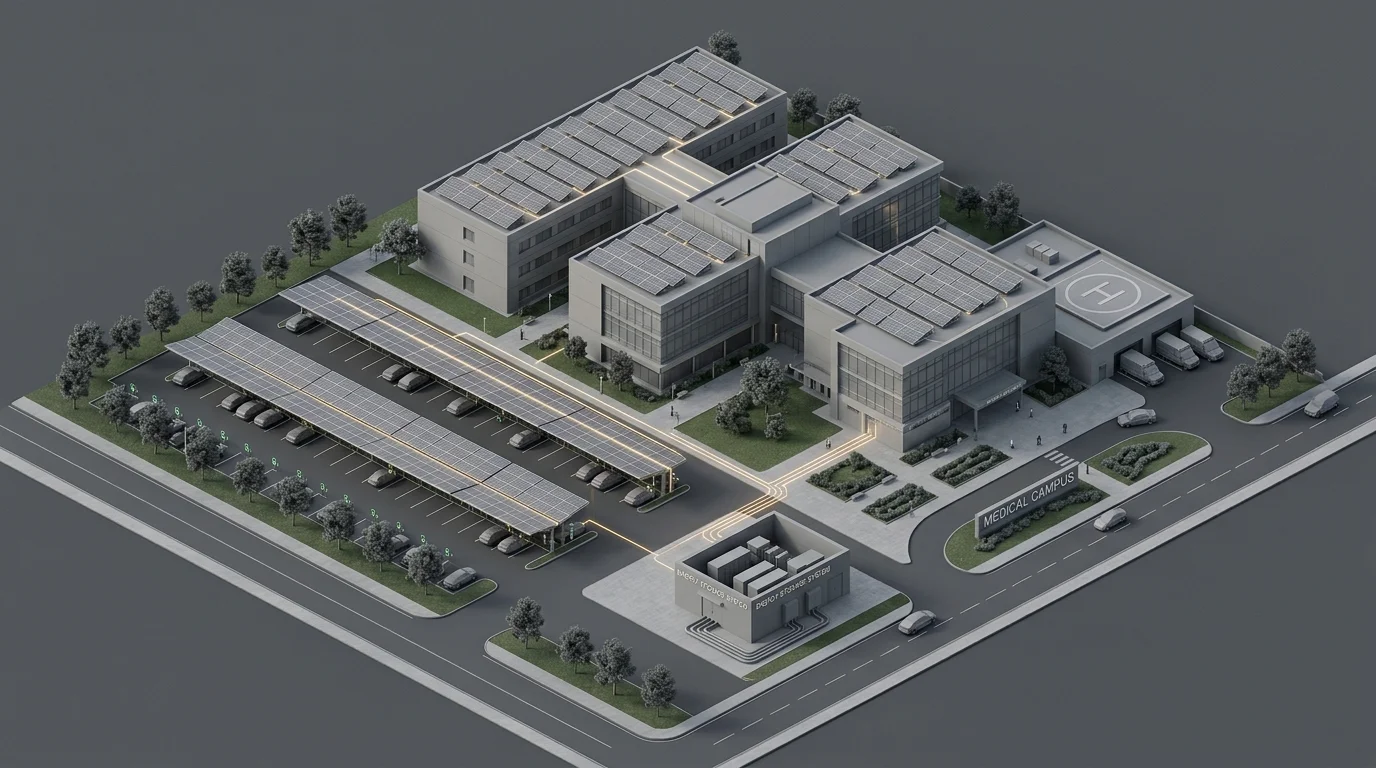
Hospitals never sleep. Operating rooms, intensive care units, imaging scanners, and life support systems run day and night. Because patient safety depends on constant power, healthcare facilities have some of the highest energy demands of any commercial sector.
To lower electric bills and ensure backup power during storms, healthcare systems are turning to on-site solar energy. By combining solar panels with large battery systems, hospitals can generate clean power and maintain continuous care during regional blackout events.
Here is how modern hospitals and medical centers are using solar microgrids to transform their energy infrastructure.
Why Healthcare Facilities Require Massive Power
Hospitals operate 24 hours a day, 365 days a year. Unlike regular office buildings that power down at night, medical centers must keep ventilators running, sterilize surgical tools, and run heavy medical equipment continuously.
Energy data from the Department of Energy shows that large hospitals consume nearly three times as much electricity per square foot as standard commercial offices. On average, a hospital uses about 31 kilowatt-hours of electricity and over 100 thousand BTUs of heating energy per square foot each year.
At the same time, utility electric rates and demand charges continue to rise. For a 500-bed regional hospital, electricity bills can easily exceed several million dollars each year. Adding solar arrays gives hospital managers a way to lock in predictable energy costs for 25 to 30 years.
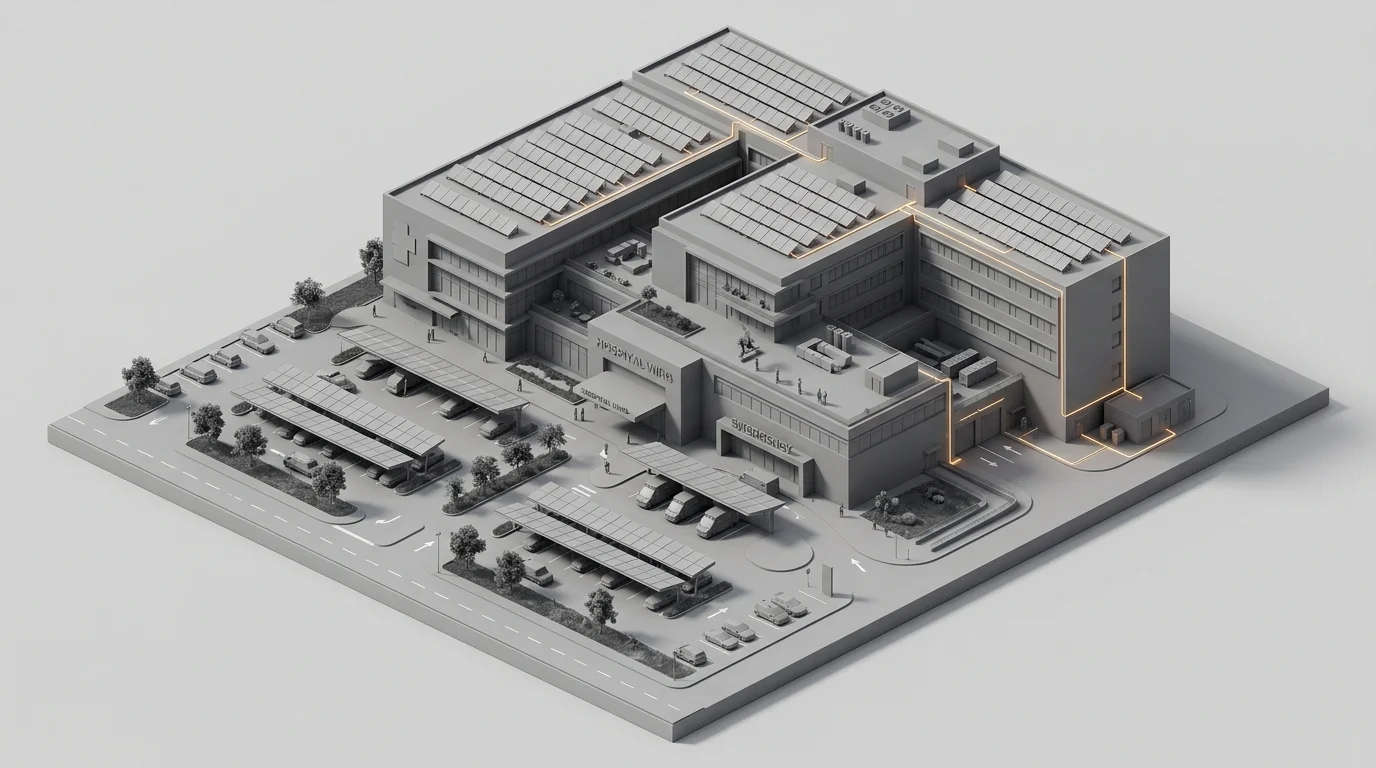
How Hospital Solar Microgrids Work
Traditional hospital backup systems rely on diesel generators. While diesel generators provide power during emergencies, they are noisy, produce dirty exhaust fumes, and take 10 to 15 seconds to start up. If fuel deliveries are delayed during a severe natural disaster, diesel generators can run out of fuel.
A solar microgrid solves these problems by creating an on-site, self-healing power network.
On-Site Solar Generation
High-efficiency solar panels are installed on flat hospital roofs, parking garage canopies, and shade structures over ambulance bays. These panels generate clean electricity throughout the daylight hours.
Battery Energy Storage Buffer
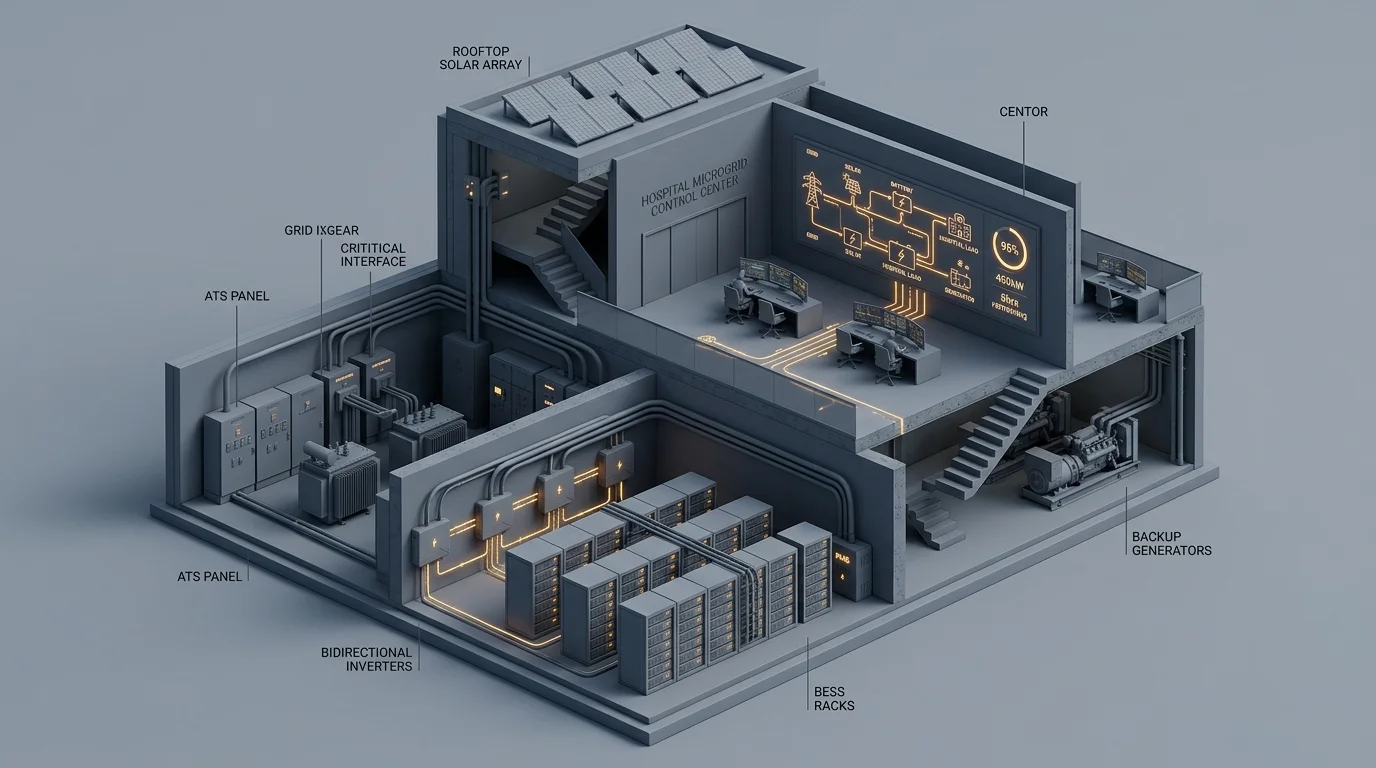
Excess solar power charges an on-site Battery Energy Storage System (BESS). These utility-scale lithium iron phosphate batteries store megawatt-hours of power and can discharge electricity in milliseconds if the grid fails.
Seamless Islanding and Backup
When a storm damages the public grid, automatic transfer switches instantly island the hospital. The solar and battery microgrid powers critical medical wings, operating rooms, and life support equipment without any voltage drops.
Economic Comparison: Solar vs. Traditional Utility Power
Hospitals pay both for the total amount of kilowatt-hours they consume and for peak demand charges. Demand charges are based on the highest 15-minute spike in electrical use during the billing month. In large healthcare centers, demand charges can represent 30 to 50 percent of the monthly power bill.
By using smart batteries to shave power peaks and rooftop solar to reduce grid purchases, hospitals achieve major annual savings:
Grid Electricity Only
Full exposure to rising utility rates, peak demand surcharges, and high monthly operational expenses without any price protection.
On-Site Solar Microgrid
Fixed, low-cost solar electricity combined with automated battery peak shaving to eliminate expensive utility demand surcharges.
Diesel Backup Power
High ongoing maintenance costs, mandatory monthly load testing, air quality permit compliance, and exposure to volatile diesel fuel prices.
Key Benefits of Healthcare Solar Installations
Investing in solar energy provides clinical, financial, and environmental advantages for healthcare organizations:
- Uninterrupted Life-Safety Power: Instantaneous battery response prevents sensitive surgical equipment and ventilators from rebooting during brief grid blips.
- Reduced Local Air Pollution: Displacing diesel generator runtime keeps toxic particulate matter and nitrous oxide away from patient rooms and emergency entrances.
- Protection for Cold-Chain Storage: Critical vaccines, medications, blood supplies, and biological samples remain safely refrigerated during extended utility blackouts.
- Capital Savings Reinvested in Patient Care: Millions of dollars saved on utility bills can be redirected into new medical technology, nursing staff, and patient facilities.
Building a Resilient Healthcare Future
As extreme weather events place greater strain on the public electric grid, healthcare organizations cannot afford electrical downtime. Solar microgrids paired with battery storage offer a clean, reliable, and cost-effective shield against grid failures.
By adopting on-site solar power, hospitals ensure that when emergencies strike their communities, their lights stay on, life-saving machines keep running, and patients receive the continuous care they need.