Solar-Powered EV Charging Infrastructure for Commercial Fleets
Explore how commercial solar microgrids and battery storage power electric vehicle fleets, lower utility demand charges, and bypass grid interconnection delays.
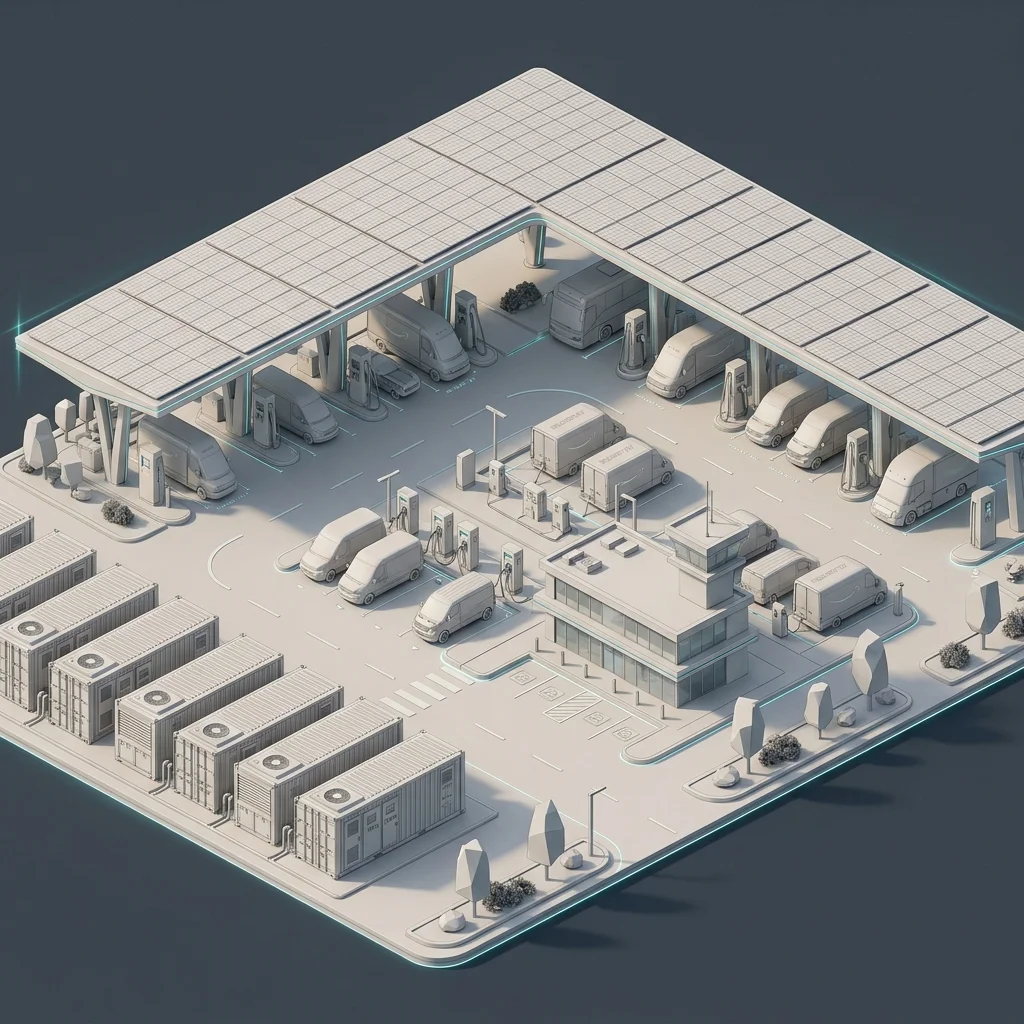
As businesses transition delivery trucks, transit buses, and service vans to electric power, charging infrastructure has become a critical operational priority. Heavy commercial electric vehicles require substantial power. Plugging dozens of trucks into high-speed chargers simultaneously creates massive electric loads.
Relying solely on traditional electric utility grids introduces severe challenges. High power demands can trigger expensive peak utility surcharges. In many regions, expanding utility grid capacity to accommodate high-power chargers requires years of delay.
To overcome these roadblocks, commercial fleet operators are turning to on-site solar microgrids paired with battery storage systems. By generating clean electricity right where vehicles park, companies secure reliable power, control operational costs, and accelerate vehicle deployment.
Here is how solar energy is powering the future of commercial fleet charging.
Overcoming Utility Grid Limits with On-Site Solar
When a commercial depot installs multiple Level 3 DC fast chargers, power demands instantly spike. A single high-speed fast charger can draw 150 to 350 kilowatts. A fleet depot charging twenty vehicles at once can pull several megawatts of power from the local grid.
Utility companies often require extensive infrastructure upgrades to support these heavy electrical loads. Upgrading substation transformers and high-voltage transmission lines can take two to four years.
On-site solar microgrids provide an immediate solution by operating independently or alongside existing utility connections.
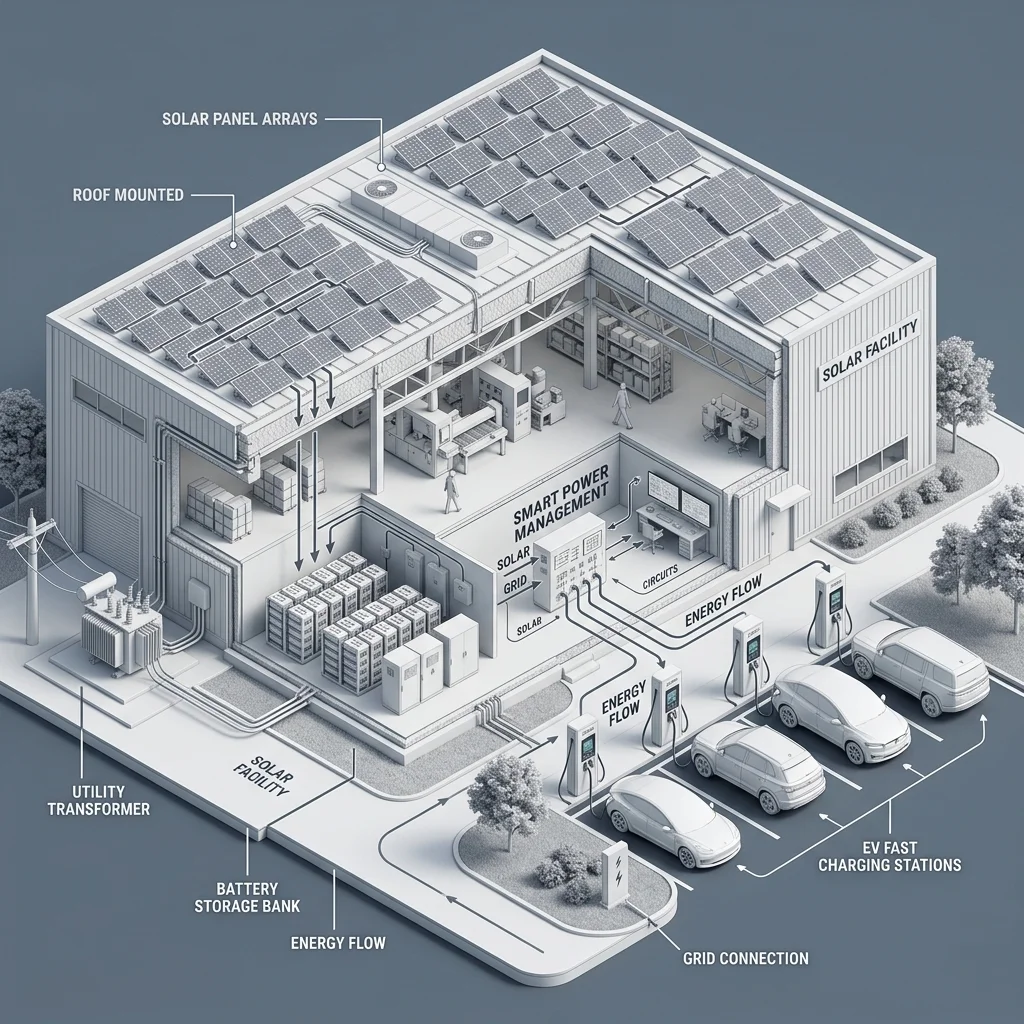
1. On-Site Solar Generation
Solar panel arrays are installed on warehouse rooftops and parking canopy structures. These arrays capture abundant sunlight during daytime hours, producing clean direct current power.
2. Battery Energy Storage Buffer
Excess solar power is stored in high-capacity lithium battery energy storage systems (BESS). The battery bank acts as a power buffer, ready to deliver instant high-kw bursts when fleet vehicles return to plug in.
3. Smart Power Distribution
Intelligent energy management software regulates power distribution. The system automatically balances solar generation, stored battery energy, and minimal grid electricity to charge vehicles at the lowest possible cost.
Mitigating Peak Demand Charges and Lowering TCO
Electricity bills for commercial facilities consist of two primary parts: volumetric energy consumption and peak demand charges. Peak demand charges are calculated based on the highest amount of electrical power drawn during a short fifteen-minute window in a billing cycle.
Unmanaged EV fast charging can double or triple a facility’s monthly electricity bill through demand charges alone. Solar microgrids solve this financial risk by performing demand charge management, also known as peak shaving.
When fleet trucks plug in during peak hours, smart battery storage discharges stored solar energy to absorb the load spike. As a result, the facility’s power pull from the utility grid remains smooth and predictable.
Unbuffered Grid Charging
Plugging commercial electric fleets directly into the grid exposes operators to massive peak demand surcharges and volatile commercial utility tariffs.
Solar + Battery Microgrid
On-site solar arrays coupled with battery storage shave peak power spikes, insulating fleet operations from expensive utility demand penalties.
Utility Grid Upgrade Path
Waiting for utility grid capacity upgrades delays vehicle deployment and keeps fleets dependent on conventional fuel while waiting for transformer capacity.
Fleet Logistics Depot Integration
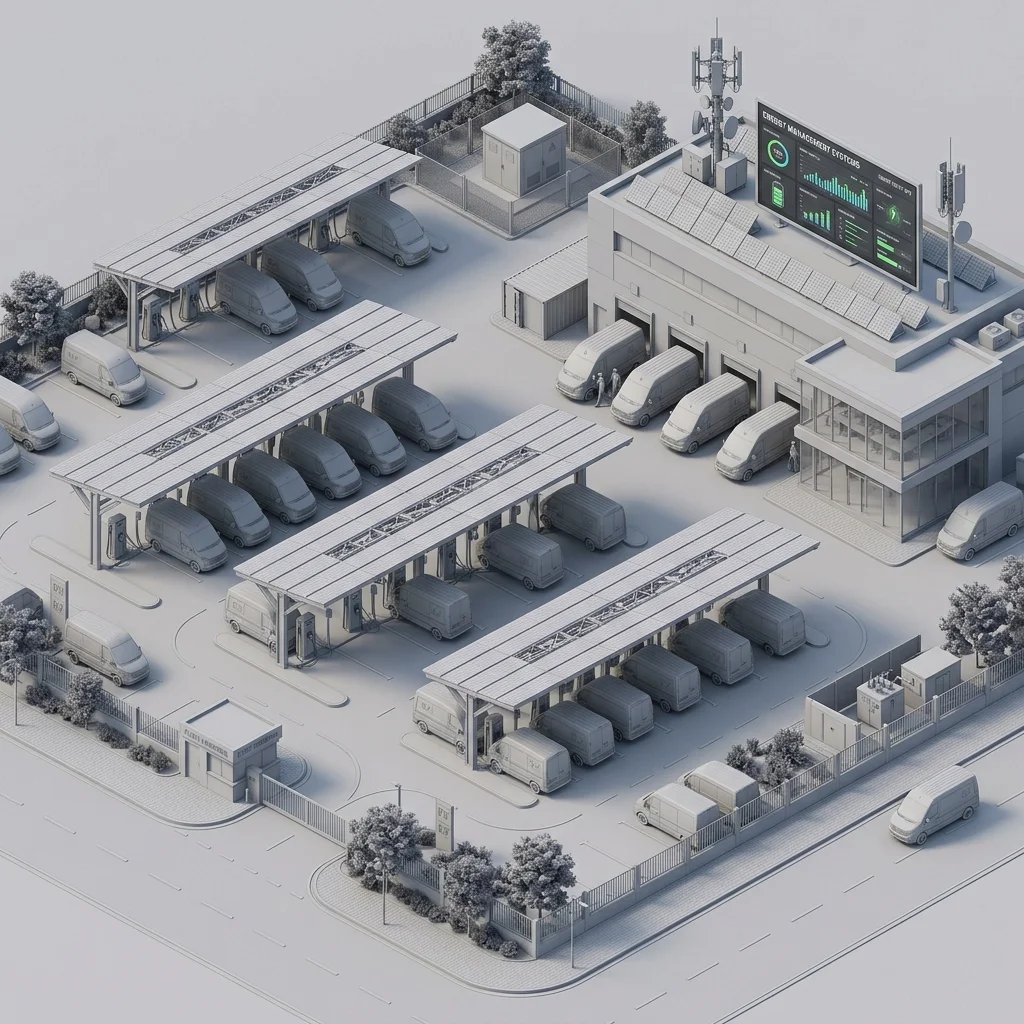
Modern fleet logistics depots maximize space efficiency by installing solar canopy structures directly over parking bays. Solar canopies serve a dual purpose: they generate clean electricity overhead while shielding parked vehicles and charging equipment from extreme weather.
Integrated fleet management software schedules vehicle charging based on daily route requirements. Delivery vans operating during daylight hours charge overnight using stored solar energy. Shift vehicles returning at noon plug directly into live daytime solar output.
Strategic Advantages for Fleet Electrification
Investing in solar-powered EV charging infrastructure provides long-term operational resilience and financial control for commercial fleet operators.
- Guaranteed Energy Cost Stability: Solar microgrids lock in predictable electricity costs for over twenty-five years, protecting fleet operating budgets from fossil fuel price hikes and rising utility rates.
- Business Continuity During Blackouts: Off-grid capable solar microgrids allow commercial fleets to continue charging and operating even during regional power grid blackouts.
- Rapid Vehicle Deployment: By building localized microgrids, fleet managers avoid multi-year utility queue delays and scale their electric vehicle fleets on their own timeline.
Pairing commercial solar microgrids with fleet charging is transforming logistics. Companies gain total control over their energy supply while powering sustainable transportation.