Solar Powered Desalination: Clean Water for Industrial Needs
Discover how solar water desalination is transforming water security. Learn about solar PV reverse osmosis, thermal evaporation, costs, and industrial scaling.
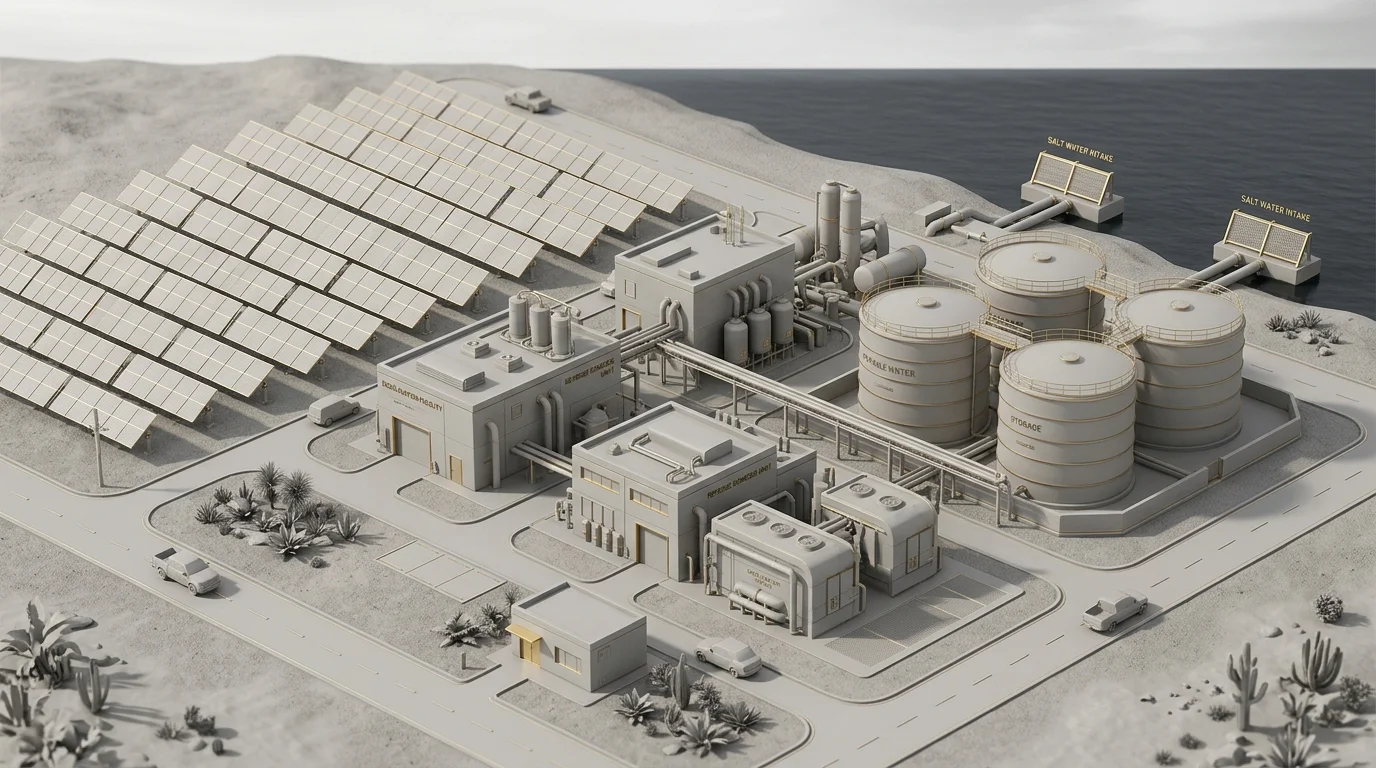
Freshwater is becoming scarce in many parts of the world. Climate change and growing populations are putting a strain on water resources. At the same time, industries like agriculture, mining, and manufacturing need huge amounts of water.
To secure their water supply, many regions turn to desalination. This process removes salt from seawater to make it drinkable. However, traditional desalination plants require massive amounts of fossil fuel electricity. This makes them expensive and bad for the environment.
Today, solar energy is solving this problem. By combining solar panels with advanced filtration systems, industries can produce clean water sustainably.
The Rise of Solar Water Desalination
Desalination has historically been a highly energy-intensive process. Using fossil fuels to power these plants creates a feedback loop. Burning fossil fuels drives climate change, which increases water scarcity, leading to the need for more desalination.
Solar water desalination breaks this loop. The industry is growing rapidly to meet clean water demands. Market studies show the solar desalination plant market will grow from 3.0 billion dollars to 6.2 billion dollars over the next ten years. This growth represents a steady annual increase of 7.5 percent.
Medium-scale plants that produce between 1,000 and 10,000 cubic meters of fresh water per day are leading this expansion. They make up nearly half of the new capacity being built.
Two Methods for Purifying Water with Solar
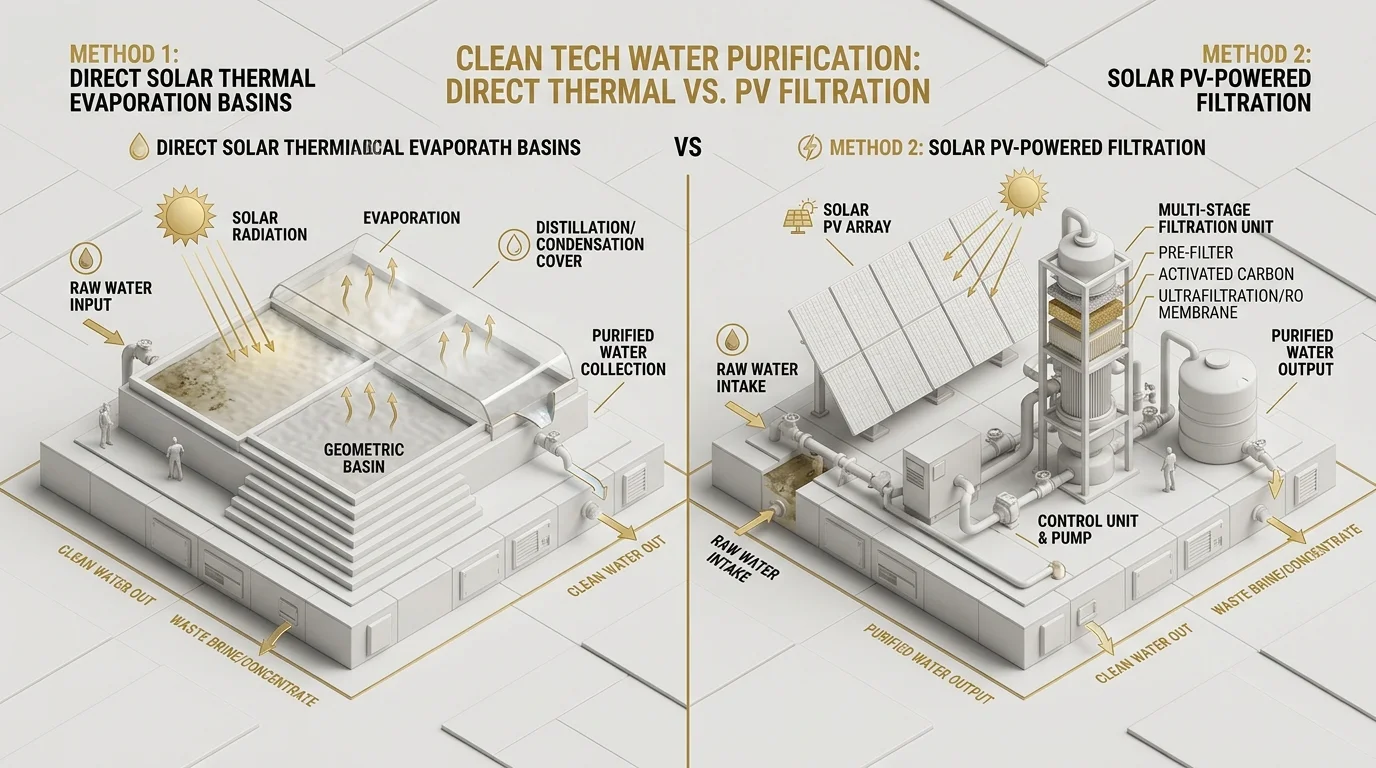
Solar energy can purify water in two main ways. The best method depends on the scale of the facility and the local climate.
1. Direct Solar Thermal Evaporation
This method mimics the natural water cycle. Saline water is placed in large basins covered by glass or plastic. Sunlight heats the water, causing it to evaporate. The water vapor condenses on the cover and flows into collection channels as pure water. This method is simple but requires a large land area.
2. Solar PV Powered Reverse Osmosis
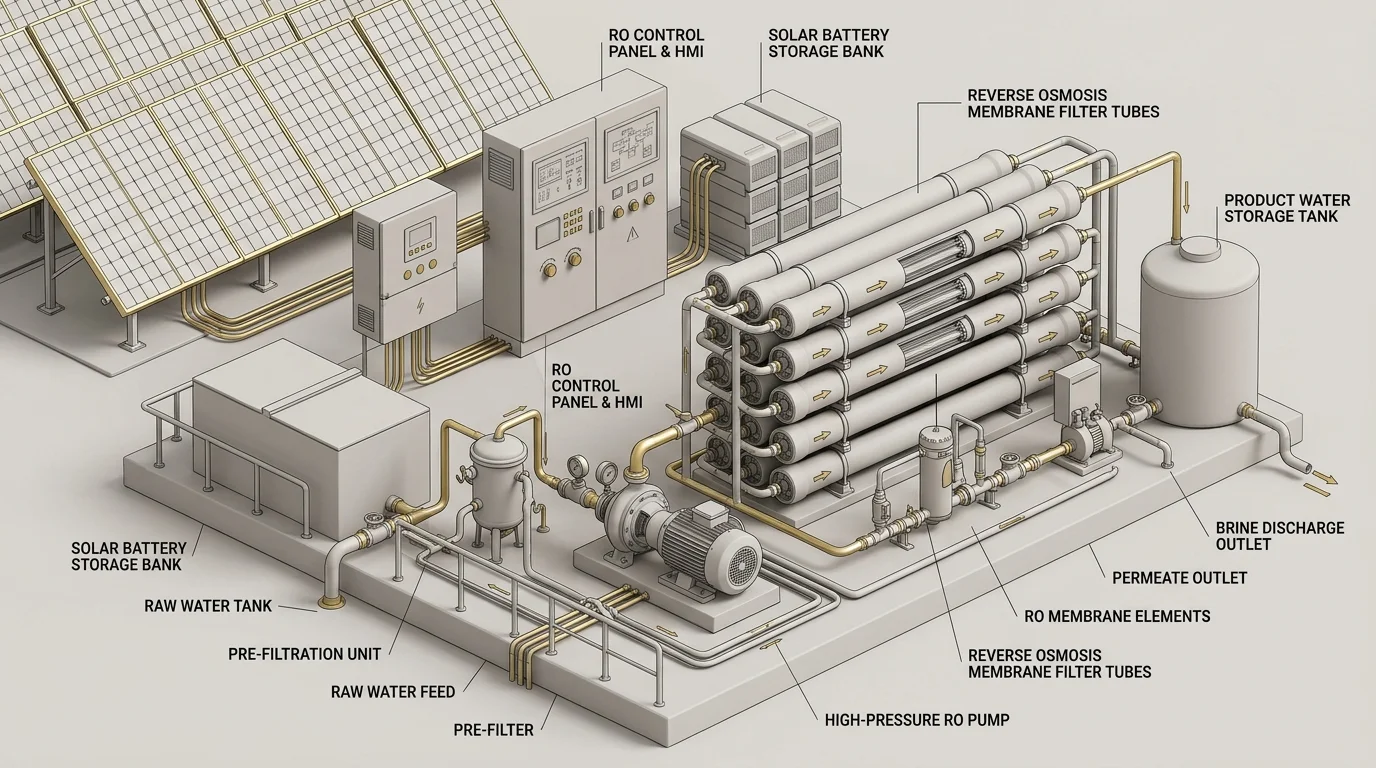
This method uses solar photovoltaic panels to generate electricity. This electricity powers high-pressure pumps. The pumps force saltwater through semi-permeable membranes. These membranes block salt and impurities, letting only clean water pass. This method is highly efficient and is used for large industrial plants.
3. Hybrid Solar Thermal and PV Systems
Modern plants often combine both technologies. They use solar thermal collectors to preheat the feedwater. This reduces the energy needed for the reverse osmosis pumps, which are powered by solar PV arrays.
Comparing the Economics of Solar Desalination
The cost of solar water desalination has dropped significantly. Thanks to cheaper solar panels and more efficient membranes, solar is now competitive with traditional energy sources.
Let us compare the average cost of producing clean water using different energy methods:
Solar PV Reverse Osmosis
Using solar panels to power reverse osmosis pumps. This is the most cost-effective option for large coastal cities and industrial sites.
Solar Thermal Desalination
Using solar collectors to evaporate water directly. It has higher initial setup costs but very low maintenance requirements.
Fossil Fuel Desalination
Powering desalination plants using grid electricity from coal or gas. Costs are highly sensitive to fluctuating fuel prices.
Sizing Solar and Storage for Continuous Water Flow
Water utilities and factories need water around the clock. However, solar panels only generate power during the day. To keep desalination plants running continuously, developers use oversized solar arrays and battery systems.
During peak sunlight hours, the solar panels generate more electricity than the pumps need. The extra power is stored in large battery banks or used to pump water into elevated storage tanks. During the night, the batteries power the pumps, or the water is gravity-fed from the tanks.
This setup ensures a steady supply of clean water. It also protects the facility from grid outages.
Clean Water for a Sustainable Future
The coupling of solar energy and desalination is a game changer for global water security. It allows water-stressed regions to produce fresh water without increasing carbon emissions.
By investing in solar PV reverse osmosis and thermal technologies, industries can protect their operations from water shortages. This clean energy transition ensures a reliable, cost-effective water supply for communities and businesses alike.