Solar Power for Commercial Greenhouses: Agrivoltaics, Lighting, and ROI
Learn how commercial greenhouses cut energy bills with solar agrivoltaics. Explore semi-transparent PV glass, crop yield impacts, USDA grants, and ROI.
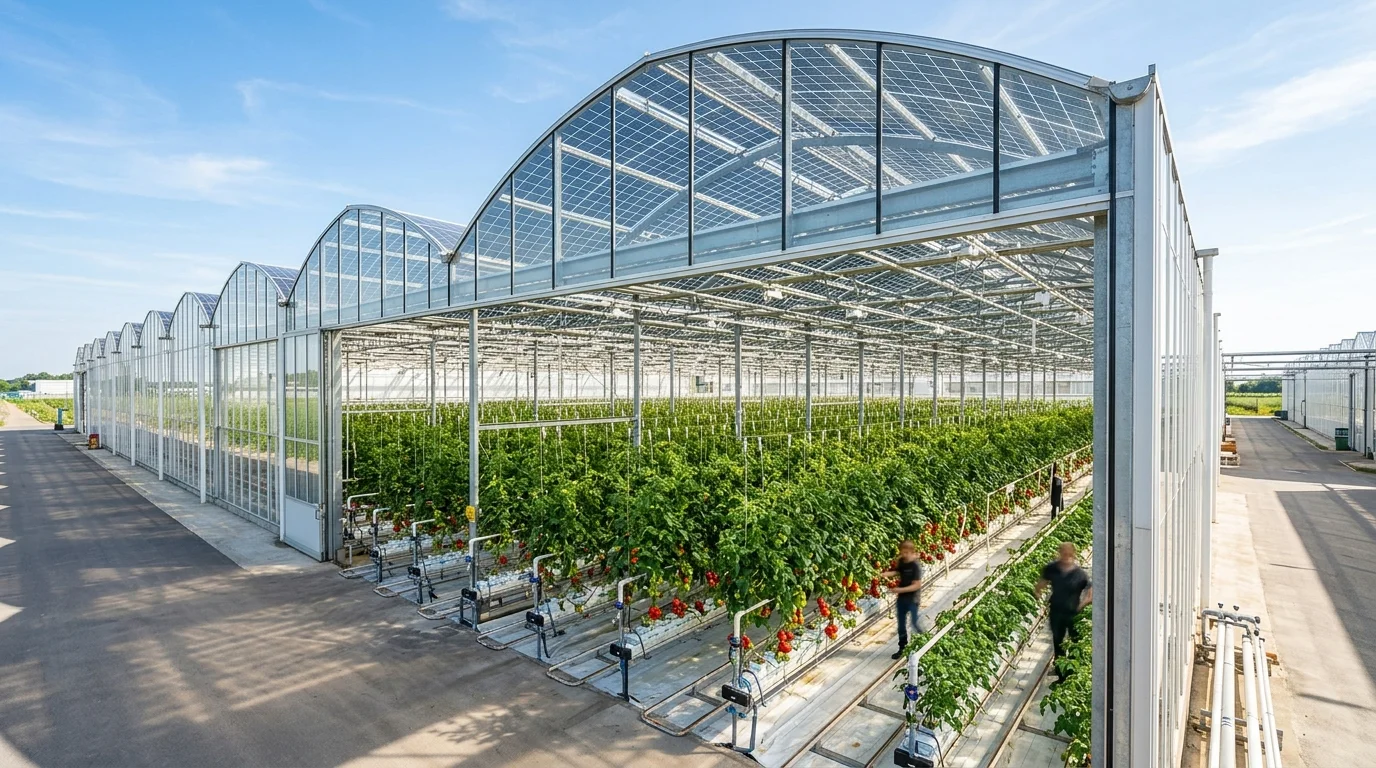
Commercial greenhouses and indoor farming operations are expanding rapidly around the world. By shielding crops from extreme weather, pests, and drought, controlled environment agriculture lets growers produce fresh food every month of the year. Yet keeping greenhouses running at peak productivity requires enormous amounts of power.
Energy costs often account for 20% to 35% of total greenhouse operating expenses. Powerful supplemental grow lights, heavy ventilation fans, dehumidifiers, irrigation pumps, and continuous heating systems consume huge amounts of power. When utility electricity rates climb or seasonal cooling demands spike, utility bills quickly cut into grower profit margins.
Solar agrivoltaics offers a proven solution to these high energy costs. By installing solar panels directly on greenhouse roofs, packhouse facilities, or adjacent farm fields, growers can produce their own clean power. Innovative semi-transparent solar glass even lets crops grow directly beneath photovoltaic panels while generating reliable renewable electricity.
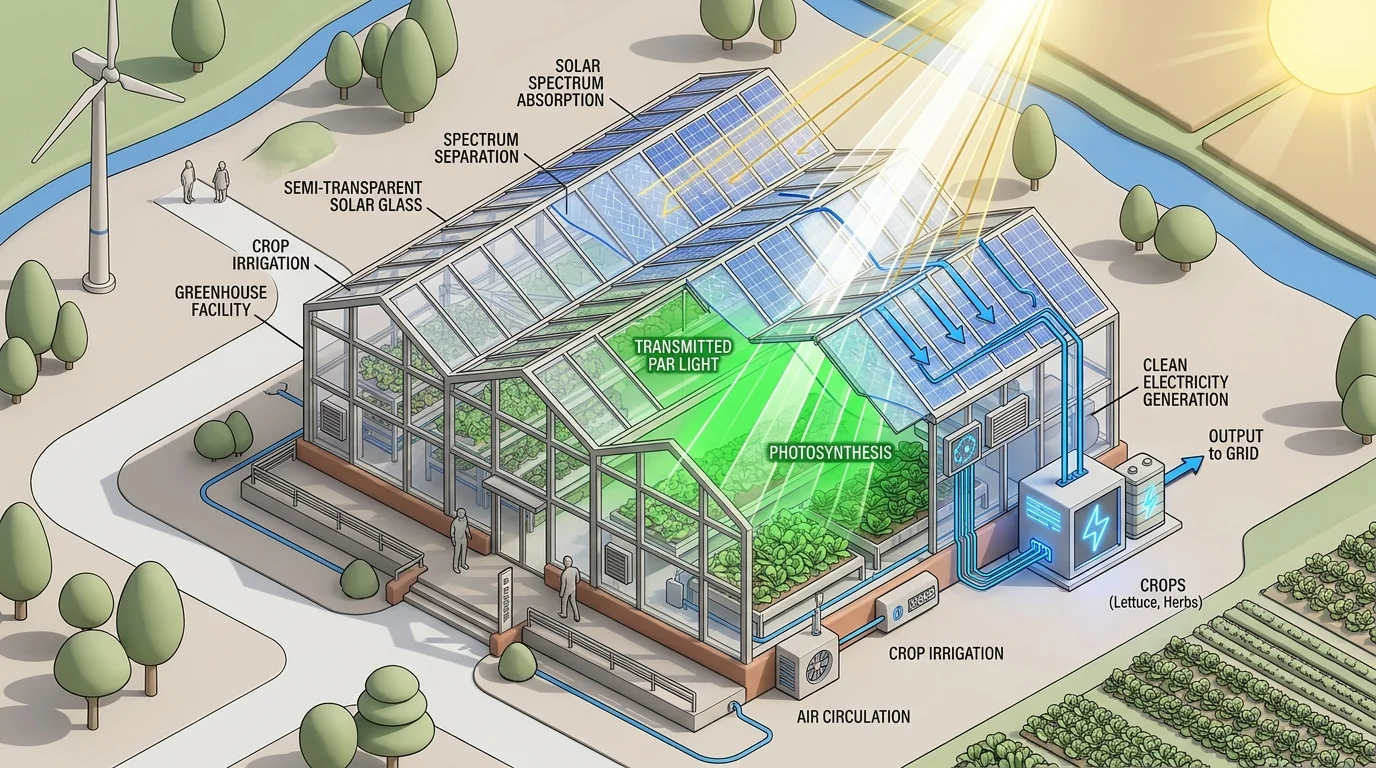
Optical Spectrum Separation and Photosynthetic Light Transmission
Why Commercial Greenhouses Need Solar Energy
Modern commercial greenhouses consume far more electricity than traditional open-field farms. Every piece of equipment inside the facility works constantly to protect plant health and maintain ideal growing conditions.
The primary electrical loads in a commercial greenhouse include:
- Supplemental Grow Lighting: High-output LED fixtures and high-pressure sodium lamps extend the daily photoperiod during short winter days. Lighting alone often accounts for 25% to 40% of total electrical demand.
- Heating and Thermal Climate Control: Electric heat pumps, hot water circulation loops, and infrared heaters maintain warm nighttime temperatures to prevent crop stress.
- Ventilation and Exhaust Fans: Large louvers and exhaust fans pull fresh outdoor air through the greenhouse to regulate interior humidity and heat levels.
- Evaporative Cooling Pads: Wet wall cooling pads run during hot summer afternoons, consuming steady electricity to lower air temperatures through evaporation.
- Automated Drip Irrigation and Fertigation: Precision pumps deliver water and liquid nutrients on strict schedules directly to crop root zones.
These heavy electrical loads create steep utility bills and expensive peak demand surcharges. Commercial solar systems allow greenhouse operators to cap their power costs and turn their large roof surfaces into clean energy generators.
How Agrivoltaic Greenhouses Work
For decades, growers assumed that covering a greenhouse roof with solar panels would starve crops of needed sunlight. Modern agrivoltaic technology completely changes that equation through smart optical engineering.
Plants do not use the entire spectrum of sunlight for photosynthesis. Crops primarily absorb blue light (around 400 to 500 nanometers) and red light (around 600 to 700 nanometers) to power growth. This narrow range is called Photosynthetically Active Radiation (PAR). Plants reflect green light, and they cannot convert infrared heat radiation into food.
Semi-transparent Building-Integrated Photovoltaic (BIPV) glass takes advantage of this plant biology:
- Selective Light Filtration: Nanoparticle coatings and thin-film photovoltaic layers absorb green light and infrared heat rays to generate electricity.
- PAR Light Transmission: The solar glass allows 40% to 75% of natural blue and red light to pass directly down to the crop canopy.
- Heat Stress Reduction: By blocking excess infrared rays, solar glass prevents the greenhouse interior from overheating during hot summer afternoons. This lowers cooling loads and protects delicate leaves from scorching.
- Light Diffusion: Solar glass naturally scatters direct sunlight into soft, omnidirectional light. Diffused light penetrates deeper into the crop canopy, reaching lower leaves that normally sit in heavy shade.
Three Solar Mounting Configurations for Greenhouses
Greenhouse operators can choose from three primary solar architectures based on crop light requirements and facility layouts:
| Solar Architecture | Best Suited For | Light Impact on Crops | Installation Cost Range |
|---|---|---|---|
| Semi-Transparent BIPV Glass | Tomatoes, cucumbers, peppers, leafy greens | 40% to 75% light transmission with diffusion | $2.40 to $3.10 per watt |
| Checkerboard Roof Layout | Shade-tolerant crops, herbs, nursery stock, microgreens | 30% to 50% partial roof coverage | $1.95 to $2.45 per watt |
| Packhouse and Ground Mounts | High-light crops (cut flowers, field berries) | Zero light reduction inside greenhouse bays | $1.50 to $1.95 per watt |
1. Semi-Transparent BIPV Glass
In this design, custom solar insulated glass units replace conventional glass or polycarbonate panels on south-facing roof slopes. The panels look like lightly tinted architectural glass. They generate clean electricity while delivering uniform, diffused PAR sunlight directly to the growing beds below.
2. Checkerboard Crystalline Silicon Layouts
Growers using standard glass can mount standard monocrystalline silicon panels in alternating checkerboard patterns across the roof frame. This approach lowers equipment costs while creating a mix of sun and partial shade. It works exceptionally well in hot desert regions where harsh sunlight normally damages tender nursery plants.
3. Packhouse Rooftops and Ground-Mounted Arrays
If a crop demands 100% unimpeded natural sunlight, growers can install solar panels on adjacent packhouses, cold storage warehouses, or field perimeters. The clean power travels through on-site microgrid wiring to run greenhouse LED lights and chiller pumps without shading a single plant.
Grid-Only Greenhouse
Solar Agrivoltaic Facility
Real-World Crop Yields Under Solar Panels
Agricultural researchers have conducted extensive field trials comparing crop yields under solar greenhouse glass versus conventional clear glass. The results prove that clean energy and high yields can thrive together.
- Tomatoes: University trials in high-light regions showed that 69% transparent crystalline solar glass boosted total tomato harvests by up to 38%. The solar panels shielded vines from excessive midday solar heat, keeping flowers from dropping and preventing fruit cracking.
- Leafy Greens and Lettuce: Lettuce crops grown under semi-transparent solar glass produced larger, thicker leaves with higher water content. The diffused light reduced tip-burn and slowed down premature bolting during summer heatwaves.
- Strawberries and Soft Berries: Berries grown under agrivoltaic glass ripened evenly with balanced sugar-to-acid ratios. Reduced direct sun exposure lowered surface berry temperatures and reduced sunburn damage.
- Culinary Herbs: Basil, mint, and cilantro performed well under partial solar shading. The protected microclimate reduced plant transpiration rates, cutting total irrigation water use by 18% to 25%.
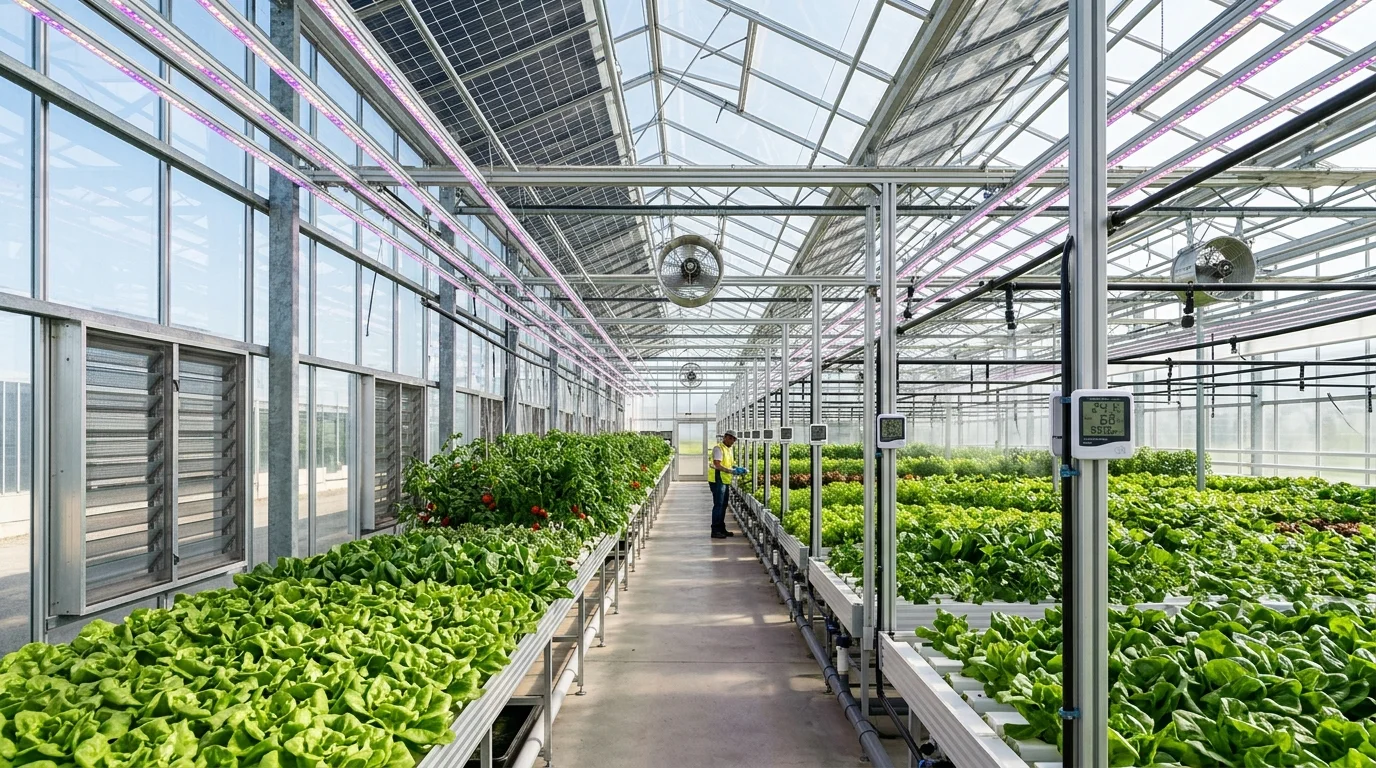
Growers monitor Daily Light Integral (DLI) to track the total light photons delivered each day. When natural light drops below ideal thresholds on cloudy days, automated solar-powered LED lights turn on to keep crop growth on schedule.
Financial Incentives, Tax Credits, and USDA Grants
Installing commercial solar on an agricultural facility unlocks substantial federal and state financial incentives. When growers combine available tax benefits with federal grants, project payback periods drop dramatically.
1. USDA REAP Grants
The United States Department of Agriculture offers the Rural Energy for America Program (REAP). Agricultural producers and rural small businesses can receive competitive cash grants covering up to 50% of total project costs. These grants do not need to be repaid and significantly reduce upfront investment expenses.
2. Federal Section 48 Clean Electricity Tax Credit
Commercial solar installations qualify for the Section 48 Clean Electricity Investment Tax Credit (ITC). This credit covers 30% of eligible project costs. Projects using domestic American components or built in designated energy communities can earn bonus credits of 10% each, bringing the potential federal credit up to 40% or 50%.
3. Five-Year MACRS Accelerated Depreciation
Commercial greenhouse solar hardware qualifies for 5-year accelerated depreciation under the Modified Accelerated Cost Recovery System (MACRS). This allows growers to deduct the bulk of equipment value early in the system lifespan, creating immediate tax savings.
4. Peak Demand Charge Reduction
Many electric utilities charge steep fees based on the highest 15-minute power spike recorded during each billing month. In a greenhouse, turning on chiller pumps and grow lights at the same time can trigger huge demand charges. By pairing solar panels with battery storage, growers can smooth out load spikes and eliminate expensive demand penalties.
Step-by-Step Implementation Roadmap
Building a solar-powered commercial greenhouse requires close coordination between horticultural specialists, structural engineers, and solar contractors.
1. Energy Audit & Light Modeling
Horticultural engineers analyze twelve months of utility bills, assess crop DLI targets, and calculate optimal panel transparency levels.
2. Structural Load Engineering
Specialists evaluate greenhouse frame capacity, wind uplift ratings, and snow loads to confirm roof framing can support solar glass or racking.
3. Smart Microgrid Integration
Electricians connect solar inverters, battery storage banks, and computerized climate controllers to match generation with lighting loads.
4. Grid Interconnection & Activation
The local electric utility conducts safety inspections, installs net metering equipment, and grants formal permission to operate.
Key Engineering Considerations for Greenhouse Operators
Before investing in solar, commercial greenhouse operators should review several practical engineering details:
Structural Weight and Truss Capacity
Standard glass greenhouses are built with lightweight aluminum and steel trusses designed to hold lightweight glazing and crop support trellises. Retrofitting conventional heavy solar panels onto an older greenhouse roof can exceed weight limits. Semi-transparent solar glass replaces existing glass directly, avoiding excess structural strain. For older poly-tunnel houses, ground-mounted solar arrays are usually the safest choice.
Moisture and Condensation Sealing
Greenhouses maintain high indoor relative humidity levels, often between 65% and 85%. Electrical wiring, junction boxes, and inverter equipment must have weather-tight IP67 or IP68 ratings. Wiring conduit runs must be properly sealed to prevent warm, humid air from causing internal corrosion.
Panel Cleaning and Dust Maintenance
Greenhouse roofs collect dust, pollen, and algae over time. Installers should include dedicated service walkways or automated rooftop spray nozzles so maintenance teams can wash panels easily without damaging glass or disturbing growing crops below.
Frequently Asked Questions
No. Modern semi-transparent solar glass is specifically engineered to let 40% to 75% of visible photosynthetically active radiation (PAR) pass through to the crop canopy. The panels primarily absorb green light and infrared heat rays to generate electricity, protecting plants from excess heat stress while delivering the red and blue photons needed for healthy growth.
Most commercial greenhouses produce between 40% and 75% of their total annual electricity from on-site solar panels. Running completely off-grid requires large battery energy storage systems to power intensive nighttime heating loops and supplemental winter grow lights. Most operators choose grid-tied solar systems with battery storage to maximize financial returns.
With the 30% Federal Clean Electricity Investment Tax Credit and 5-year MACRS depreciation, standard commercial greenhouse solar systems pay for themselves in 5 to 7 years. When growers also secure a USDA REAP grant covering up to 50% of capital costs, the payback period drops to 3.5 to 4.5 years.
Yes. Agricultural producers who earn at least 50% of their gross income from agricultural operations qualify for USDA REAP grants. These grants can cover up to 50% of total project costs for renewable energy systems, including rooftop solar, ground arrays, and battery storage.