Solar-Powered Cold Storage: Technology, Thermal Batteries, and Agriculture ROI
Explore solar-powered cold storage. Learn how off-grid solar refrigeration, phase change thermal batteries, and DC compressors protect food and lower costs.
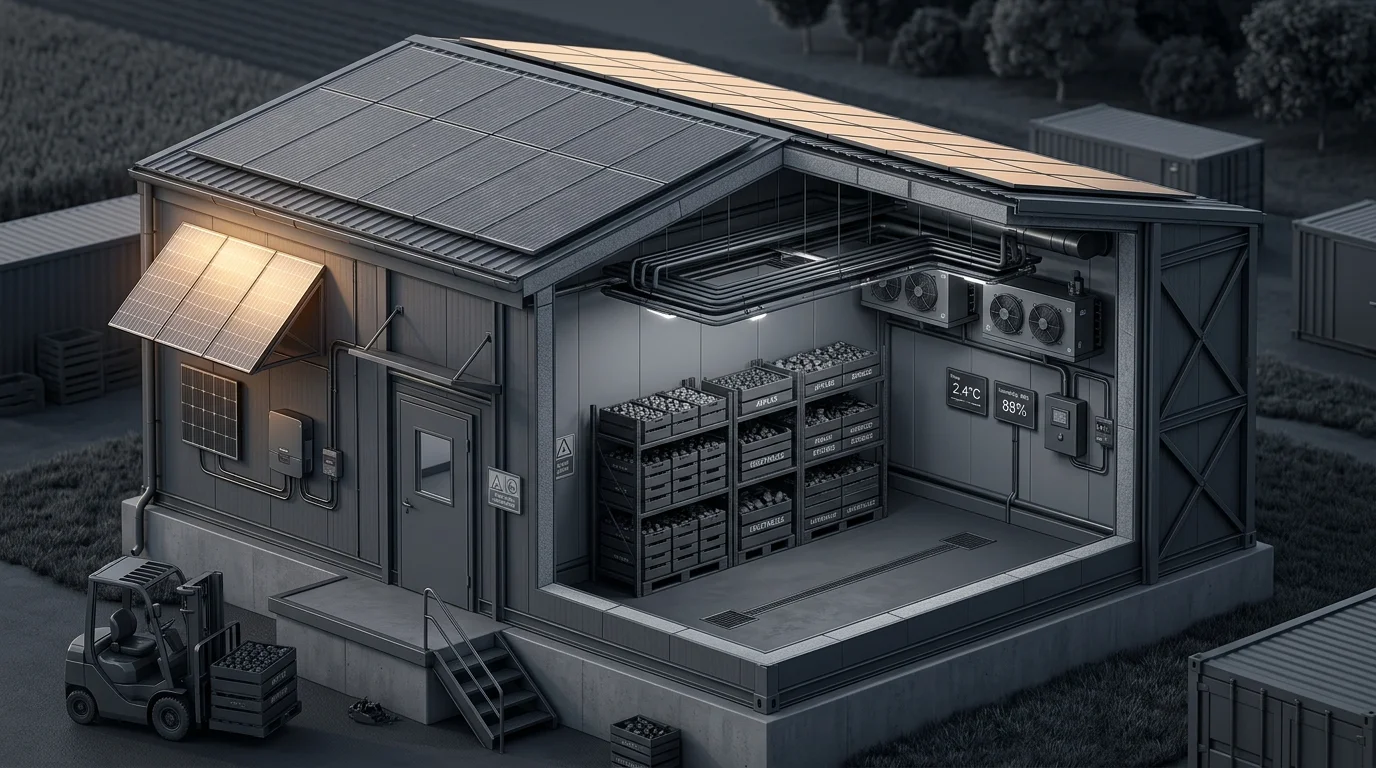
Keeping food fresh after harvest is one of the biggest challenges for global agriculture. Between 30 and 50 percent of perishable fruits, vegetables, and dairy products spoil before ever reaching consumers. In rural farming regions and remote communities, the lack of reliable electrical grid power makes conventional refrigeration impossible or expensive to run with diesel generators.
Solar-powered cold storage systems solve this challenge directly at the source. By combining rooftop solar photovoltaic (PV) panels with smart variable-speed DC compressors and innovative thermal energy storage, modern solar cold rooms keep farm produce fresh for weeks without relying on fossil fuels or unstable power grids.
In this guide, we explore how solar cold storage works, compare phase change thermal batteries to traditional chemical batteries, examine real-world economics, and review how decentralized cooling is transforming agricultural supply chains.
How Solar-Powered Cold Storage Works
A solar cold storage unit is an insulated walk-in refrigeration room powered primarily by solar electricity. Unlike standard home refrigerators that switch on and off at fixed speeds, solar cold rooms use brushless DC inverter compressors that modulate their speed based on available sunlight and internal cooling demands.
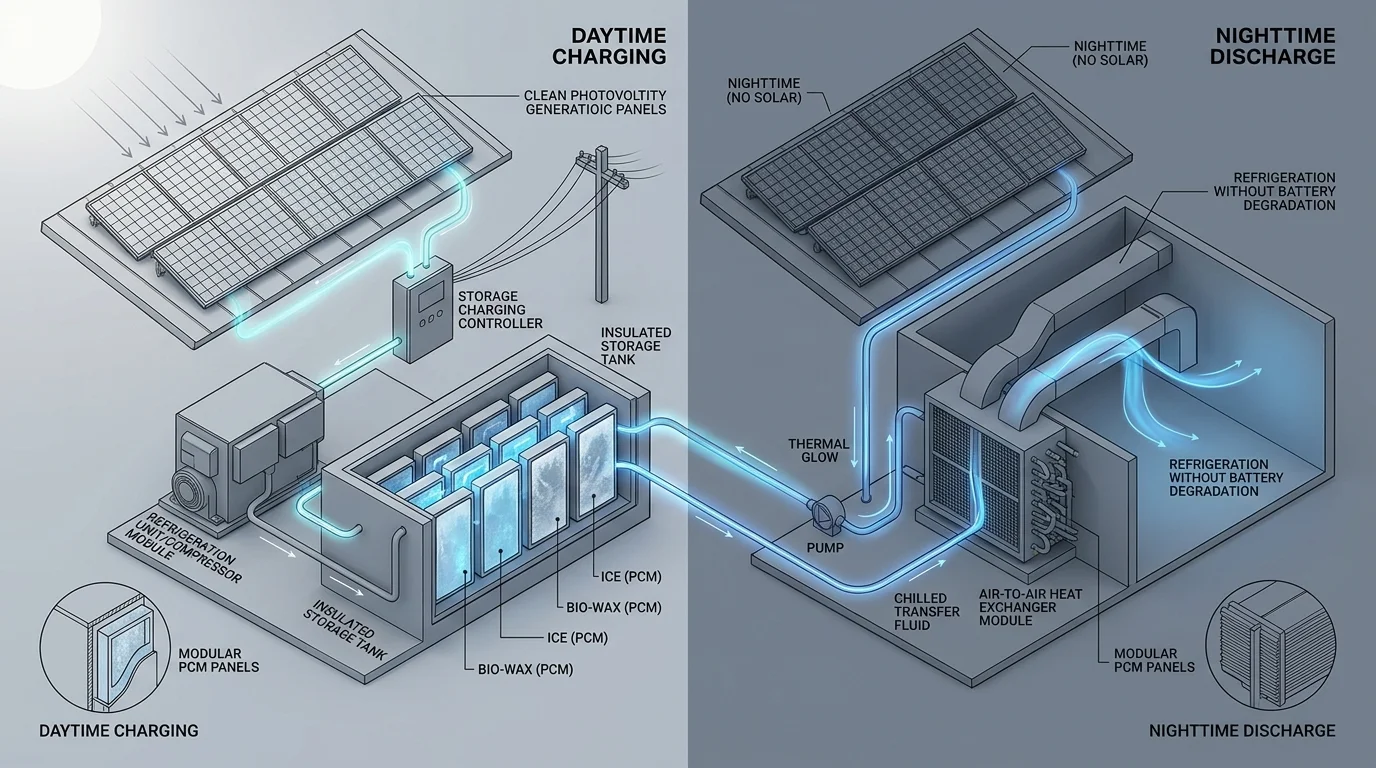
The operation follows a streamlined four-stage process:
Solar PV Power Capture
High-efficiency solar panels installed on the roof of the cold room or an adjacent canopy capture daylight and produce direct current (DC) electricity during peak sun hours.
Direct DC Variable-Speed Compression
Instead of losing 10 to 15 percent of energy converting DC to AC power, modern systems run variable-capacity DC compressors directly from solar power, cooling the chamber rapidly when sunlight is strongest.
Thermal Energy Ice Banking
Excess daytime solar energy freezes modular Phase Change Material (PCM) panels or water-ice tanks lining the walls, storing thermal cold energy without requiring chemical batteries.
Passive Nighttime Temperature Hold
During nighttime and cloudy periods, the frozen PCM panels slowly melt, absorbing heat and maintaining temperatures between 2°C and 8°C (35°F to 46°F) for up to 48 hours without grid power.
Energy Storage: Phase Change Materials vs. Chemical Batteries
One of the most important engineering advances in solar cold storage is the transition from heavy lithium-ion or lead-acid batteries to Phase Change Material (PCM) thermal batteries.
Chemical batteries are expensive, sensitive to high ambient temperatures, and degrade after 3,000 to 5,000 charge cycles. In contrast, thermal PCM systems store cold energy by freezing bio-based waxes or inorganic salt hydrate solutions during the day. When the compressor shuts off at night, the PCM absorbs ambient heat as it melts, keeping the room cold for thousands of cycles without degradation.
PCM Thermal Energy Storage
- Zero chemical degradation over 10,000+ freeze-thaw cycles
- Unaffected by high outdoor ambient heat up to 50°C (122°F)
- Zero fire risk, non-toxic, and fully recyclable materials
- Lowers total system capital cost by 25 to 40 percent
- Provides 24 to 48 hours of autonomous cooling holdover
Lithium / Lead-Acid Batteries
- Subject to capacity loss from daily deep charge cycling
- Requires air-conditioned enclosures in hot tropical climates
- Higher initial capital expense and costly mid-life replacements
- Stores electricity to run pumps, fans, and external lighting
- Enables universal power for auxiliary farm equipment
System Sizing and Technical Specifications
Solar cold storage facilities range from small 5 metric ton (MT) modular farm units to large commercial distribution warehouses holding over 500 metric tons.
Below is a breakdown of technical specifications for standard modular solar cold rooms used in agricultural hubs:
| System Parameter | 5 Metric Ton Unit | 10 Metric Ton Unit | 25 Metric Ton Unit |
|---|---|---|---|
| Storage Volume | 20 to 25 m³ (700 ft³) | 45 to 55 m³ (1,700 ft³) | 110 to 130 m³ (4,200 ft³) |
| Solar PV Capacity | 3.5 kWp to 5.0 kWp | 7.0 kWp to 9.5 kWp | 16 kWp to 22 kWp |
| Operating Temperature | 2°C to 8°C (Fruits/Vegetables) | 2°C to 8°C (Produce/Dairy) | -2°C to 6°C (Multi-Zone) |
| PCM Thermal Holdover | 30 to 36 hours | 36 to 48 hours | 40 to 52 hours |
| Wall Insulation | 100 mm to 120 mm PUF | 120 mm to 150 mm PUF | 150 mm PIR / PUF |
| Typical Daily Crate Intake | 40 to 60 crates (20 kg each) | 90 to 130 crates (20 kg each) | 220 to 300 crates (20 kg each) |
High-density Polyurethane Foam (PUF) or Polyisocyanurate (PIR) insulated sandwich panels with a thermal conductivity rating of 0.022 W/(m·K) ensure minimal heat leakage through walls, floor, and ceilings.
Economic Benefits and Payback Period
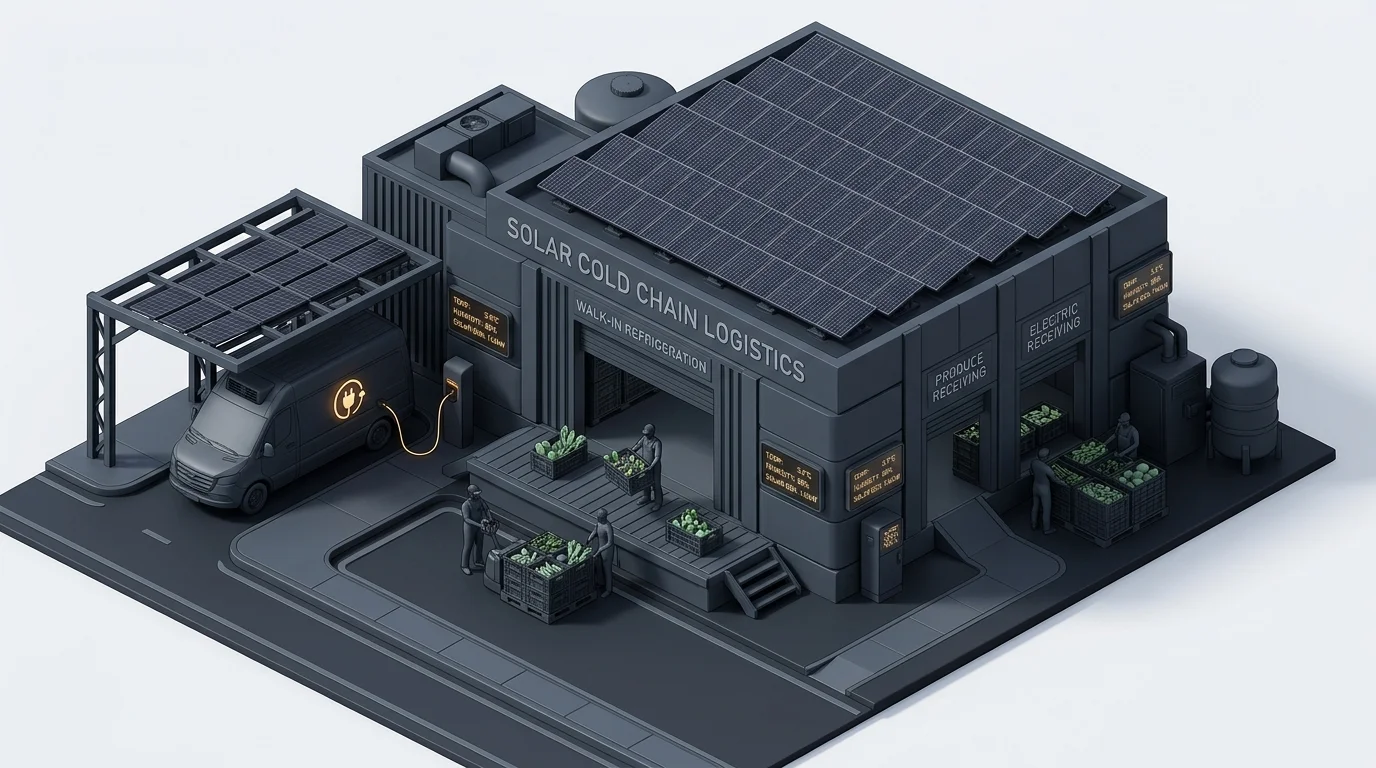
Investing in solar-powered cold storage offers strong financial returns for farming cooperatives, agribusinesses, and commercial cold chain operators.
1. Drastic Reduction in Post-Harvest Crop Loss
In regions without cold storage, farmers must sell harvested tomatoes, leafy greens, and berries within 24 to 48 hours, often accepting rock-bottom prices from middlemen to avoid total spoilage. Solar cold rooms extend shelf life from 2 days to over 21 days for tomatoes, cabbage, and apples. This allows farmers to wait for optimal market pricing and reduces product loss from 40 percent down to under 4 percent.
2. Elimination of Diesel Fuel Expenses
Conventional off-grid refrigeration relies on diesel generators that consume 2 to 4 liters of fuel per hour. At current fuel prices, running a diesel generator costs between $450 and $900 per month, plus engine servicing expenses. Solar systems replace fuel bills with free sunlight.
3. Cooling-as-a-Service (CaaS) Business Models
Many modern installations use a Cooling-as-a-Service structure. Third-party energy developers install and maintain the solar cold room at zero capital cost to local growers. Farmers pay a modest daily rental fee (such as $0.50 per 20 kg crate per day), gaining institutional-grade refrigeration while keeping their operating costs predictable.
4. Typical Return on Investment (ROI)
For owner-operators, a complete 5 to 10 metric ton solar cold storage room costs between $14,000 and $28,000 fully installed. With post-harvest savings and avoided diesel costs, most commercial and cooperative systems achieve full payback within 2.2 to 3.8 years.
Frequently Asked Questions
Solar cold rooms use two layers of protection. First, the high-density insulated walls and Phase Change Material (PCM) thermal storage hold internal temperatures below 8°C for 36 to 48 hours without active power. Second, modern systems include grid or small backup hybrid inputs to trickle charge when extended multi-day storms occur.
Standard agricultural solar cold rooms operate between 2°C and 8°C (35°F to 46°F) for fresh horticulture, fruits, vegetables, flowers, and dairy. Specialized dual-stage solar refrigeration units can reach frozen temperatures down to -18°C (0°F) for seafood, meat, and frozen poultry storage.
Yes. Commercial walk-in coolers and refrigerated warehouses can be retrofitted with rooftop solar panels and variable-frequency drives (VFDs). Because cold storage facilities operate at peak cooling demand during hot sunny afternoons, they achieve direct solar self-consumption rates of 75 to 90 percent.
Unlike electrochemical batteries that degrade over time, inorganic salt hydrate and bio-wax phase change materials undergo physical phase transitions (freezing and melting) without chemical decomposition. Most PCM systems maintain full thermal storage capacity for more than 15 to 20 years with zero maintenance.