Solar Energy for Churches and Non-Profits: Installation and Direct Pay Guide
Discover how churches, houses of worship, and non-profits install solar panels, receive IRS Direct Pay cash refunds, and slash energy expenses.
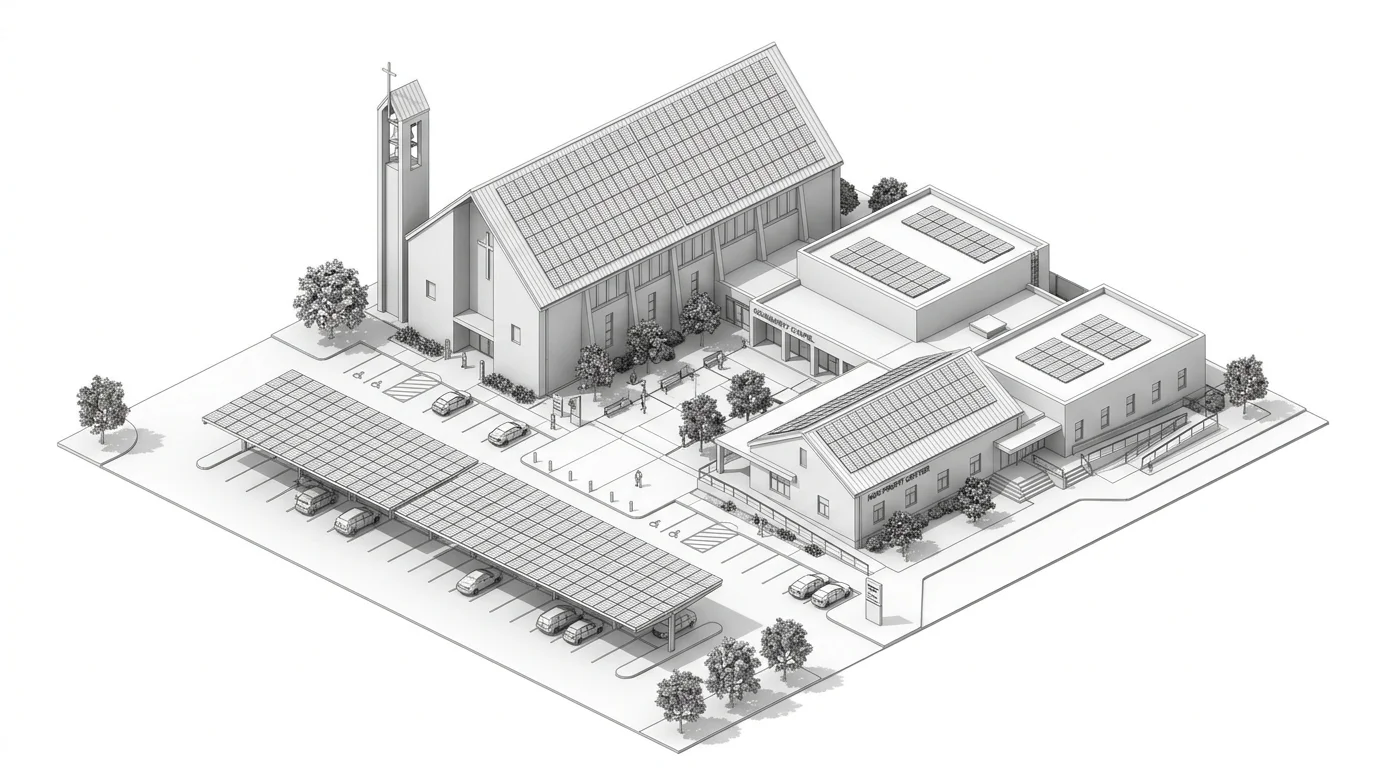
High energy bills are a heavy burden for faith-based communities, charitable organizations, and non-profit centers. Heating a massive sanctuary, cooling fellowship halls, and running community food pantries can consume thousands of dollars each month. Every dollar spent on utility bills is a dollar that cannot go toward community missions, youth programs, or charitable outreach.
Adopting solar energy allows faith institutions and non-profit organizations to take control of their electricity expenses. By transforming unused rooftops, open grounds, or parking lots into clean power stations, organizations can reduce operating costs and shield their budgets from unpredictable utility rate hikes.
A major regulatory shift has made solar power more affordable than ever for tax-exempt organizations. Through federal Direct Pay rules, non-profits and churches can receive direct cash payments from the federal government to fund their clean energy installations.
Why Houses of Worship and Non-Profits Are Ideal for Solar
Religious buildings and non-profit campuses have distinct architectural and operating schedules that align naturally with solar power generation:
- Expansive Roofs and Quiet Midday Hours: Many faith facilities have large roof surfaces across sanctuaries, classrooms, and community centers. During sunny weekdays, these buildings often use modest amounts of power, allowing the solar panels to export excess electricity to the grid for valuable utility credits.
- Weekend Peak Energy Demand: Sanctuaries experience their heaviest energy consumption during weekend services, community dinners, and choir rehearsals. Solar energy directly offsets high weekend cooling and lighting demands.
- Decades of Local Presence: Unlike retail businesses that may relocate every few years, churches and non-profits often occupy the same property for generations. Solar panels carry 25 to 30 year warranties, making them a natural fit for long-term stewardship.
- Community Leadership and Environmental Stewardship: Caring for natural resources and protecting the environment are core values for many congregations. Going solar demonstrates these principles in action, inspiring congregants and neighborhood residents to adopt clean energy practices.
Understanding the Game-Changing Direct Pay Incentive
For decades, non-profit groups and houses of worship were locked out of federal solar tax credits because they paid no income taxes. To access clean energy, organizations had to rely on complex third-party leases or pass-through arrangements where outside investors claimed the financial benefits.
The federal clean energy law changed this dynamic completely through Section 6417 Elective Pay, commonly known as Direct Pay.
Under Direct Pay, the Internal Revenue Service (IRS) treats tax-exempt organizations as if they paid taxes equal to the value of the clean energy credit. When the organization files its annual return, the government issues a direct cash refund check or electronic deposit.
Stacking Base Credits and Bonus Adders
Direct Pay is not just a standard flat discount. It is a modular framework that allows non-profits to stack multiple bonus credits:
- Base Investment Credit (30%): Any clean energy project under one megawatt built by a tax-exempt entity qualifies for a baseline cash reimbursement equal to 30% of total project costs.
- Domestic Content Bonus (+10%): Organizations receive an extra 10% cash reimbursement when the project uses certified domestic steel, iron, and manufactured components.
- Energy Community Bonus (+10%): Facilities located in regions with historic fossil fuel employment, recent coal plant retirements, or designated brownfield parcels qualify for another 10% bonus.
- Low-Income Community Bonus (+10% to +20%): Projects located in qualifying low-income areas or serving affordable housing initiatives can receive up to 20% in additional federal support.
By stacking these incentives, qualifying non-profit organizations can recover 40% to 50% or more of their total installation expenses directly from the federal government.
How the Direct Pay Process Works for Non-Profits
The process of claiming Direct Pay requires proper planning, electronic registration, and annual tax-exempt filings. Here is the step-by-step path:
Design and Place System in Service
Work with an experienced commercial solar installer to design, permit, and install your solar array. The project must be fully operational and turned on before the tax year closes.
Complete IRS Pre-Filing Registration
Register the clean energy project through the IRS online portal before filing. The IRS reviews the asset details and issues an official registration number for each solar installation.
File Form 990-T and Form 3468
Submit Form 990-T along with Form 3468 during your organization’s standard annual filing window. Enter your registration number to formally claim the elective payment credit.
Receive Direct Cash Refund
The IRS processes your documentation and disburses the cash payment directly into your organization bank account, repaying your upfront capital outlay.
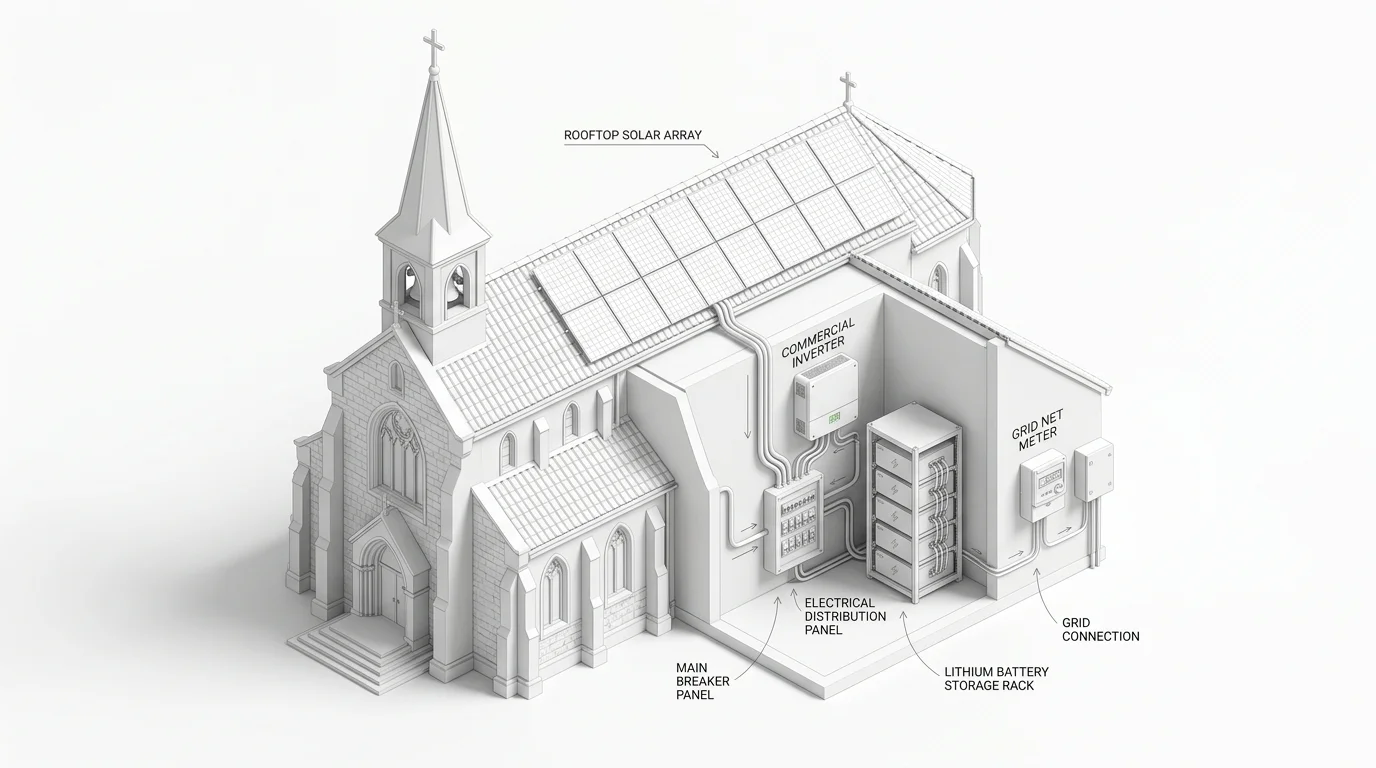
Comparing Solar Financing Options for Congregations
Faith-based organizations have unique financial structures. Some have healthy endowment reserves, while others rely on weekly tithes and pledge drives. Here is how the most popular financing methods compare:
Direct Ownership with Direct Pay
The organization funds the installation using building reserves, member donations, or a green bank loan. The non-profit receives the full IRS Direct Pay cash refund and owns all solar power output for the lifetime of the system, maximizing financial returns.
Power Purchase Agreement (PPA)
A third-party solar provider finances, owns, and maintains the solar system on your building. Your organization buys the electricity generated at a fixed rate that is significantly lower than current utility prices, securing instant bill savings without capital debt.
Community Green Bank Financing
Clean energy credit unions and state green banks provide low-interest loans tailored specifically for faith-based non-profits. The incoming Direct Pay refund is used to pay down the loan balance in year one, leaving low monthly payments easily covered by utility savings.
Overcoming Architectural and Roofing Hurdles
Houses of worship frequently feature ornate, historic architecture that presents specific installation considerations. Modern solar engineering provides clean solutions for every building style:
Delicate Slate and Pitched Tile Roofs
Many historic chapels have steeply pitched roofs covered in natural slate, Spanish tile, or wooden shingles. Drilling into these fragile materials can lead to leaks or structural cracking. In these situations, engineers place the solar array on modern addition wings, flat fellowship hall roofs, or detached educational centers that use standard commercial membranes.
Solar Carports and Parking Lot Canopies
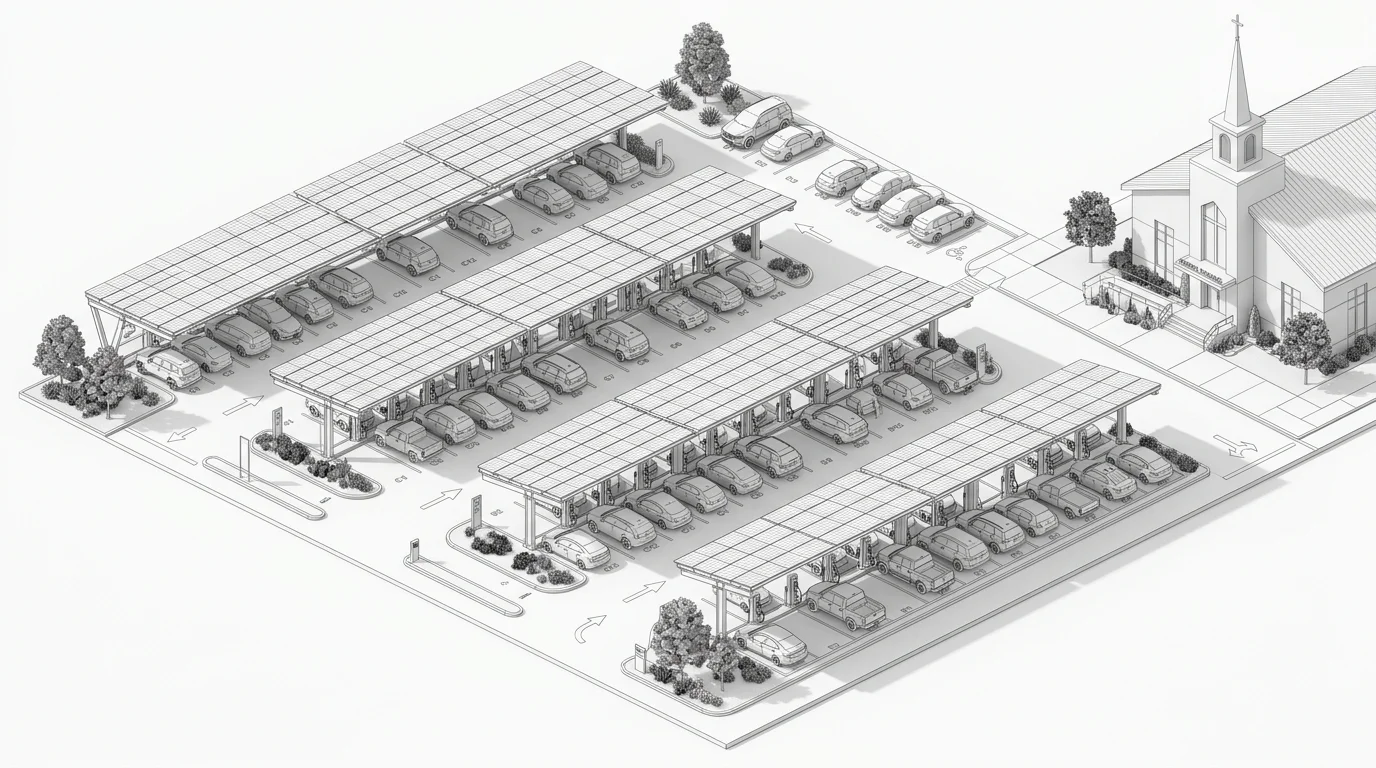
Churches with limited roof space or historic preservation restrictions often turn to parking lot solar carports. Steel canopies topped with solar panels shade congregant vehicles from the summer heat and protect them from winter snow while producing substantial electricity. Carports also provide an ideal structure for mounting electric vehicle charging stations for church visitors and community members.
Ground-Mounted Solar Arrays
Congregations situated on suburban or rural parcels with surplus acreage can install ground-mounted solar arrays. Ground mounts offer optimal sun exposure angles, easy ground-level maintenance access, and zero impact on building roofs.
Roadmap to Board and Congregation Approval
Moving a non-profit or faith organization toward solar requires consensus, clear communication, and financial transparency. Successful projects follow this proven checklist:
- Form an Energy Stewardship Committee: Gather passionate church members, including accountants, facility managers, and engineers, to spearhead initial research.
- Review Historical Electric Bills: Collect twelve months of utility bills to establish baseline energy consumption, demand charges, and seasonal peak usage patterns.
- Solicit Multiple Turnkey Bids: Request proposals from commercial solar contractors experienced with non-profit installations, Direct Pay compliance, and local utility interconnection.
- Prepare a Clear Financial Pro Forma: Present a conservative 25-year financial forecast detailing the initial investment, anticipated Direct Pay cash refund, ongoing utility savings, and simple payback timeline.
- Host an Informational Town Hall: Share the proposal with the entire congregation. Highlight how utility savings will be redirected into missions, charitable outreach, and youth programs, while answering questions with complete openness.
- Execute Agreement and Celebrate: Complete the installation and host a community dedication service to celebrate the clean energy milestone.
Frequently Asked Questions
Yes. Under Section 6417 Elective Pay (also known as Direct Pay), tax-exempt entities such as 501(c)(3) charities, churches, synagogues, mosques, and community non-profits receive a direct cash refund from the IRS covering 30% or more of eligible solar project costs.
Churches with delicate or historic roofs frequently install solar arrays on adjacent fellowship halls, flat gymnasium roofs, or parking lot solar carports. Solar carports shade congregant vehicles, avoid touching historic roof structures, and produce substantial clean electricity.
The entire timeline typically takes between six and twelve months after placing the system into service. The organization registers through the IRS electronic pre-filing portal, submits Form 990-T with Form 3468 during its regular tax-exempt filing window, and receives payment via direct deposit.
Yes. In states with net metering or value-of-solar billing programs, any excess electricity generated on sunny weekdays when the facility is quiet flows directly back into the local grid, generating bill credits that offset electricity used during weekend services.
No. The Direct Pay reimbursement is classified as an elective payment credit of tax, not taxable revenue. It operates as a direct cash refund of capital expenditures spent on clean energy infrastructure.