Solar Power in Mining Operations: Costs, ROI, and Microgrids
Discover how solar energy and battery storage microgrids are transforming mining operations, reducing diesel reliance, and cutting energy costs by up to 40%.
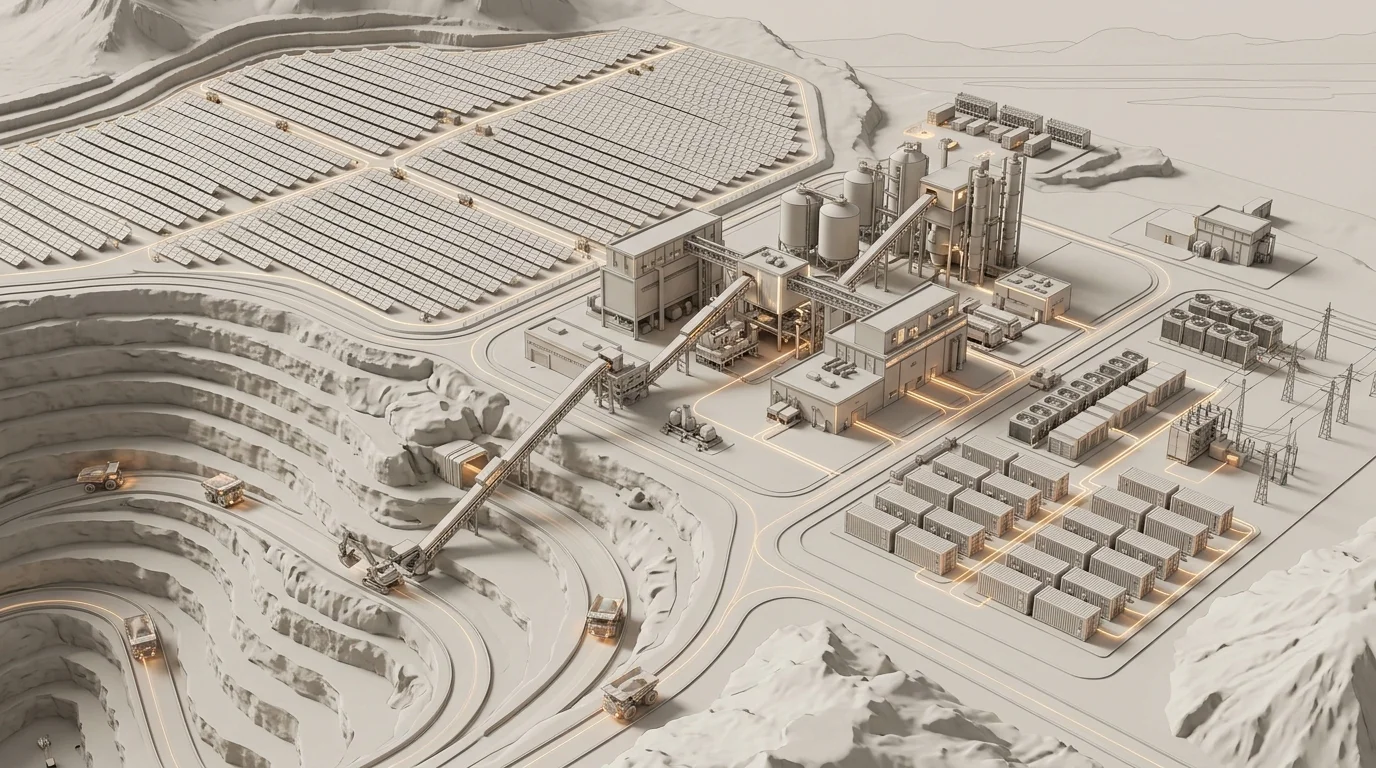
Mining is an industry that uses a very large amount of energy. Running heavy machines, ventilation systems, and processing plants requires constant electricity. In fact, energy costs make up nearly 40 percent of a mine’s total operating budget.
In remote locations, mines cannot easily connect to the public power grid. They have historically relied on large diesel generators. This requires shipping millions of gallons of fuel over rough roads, which is expensive and risky.
To solve this problem, mining companies are building their own solar power microgrids. These systems cut costs, protect against fuel shortages, and reduce air pollution.
Industrial Solar Mining Microgrids
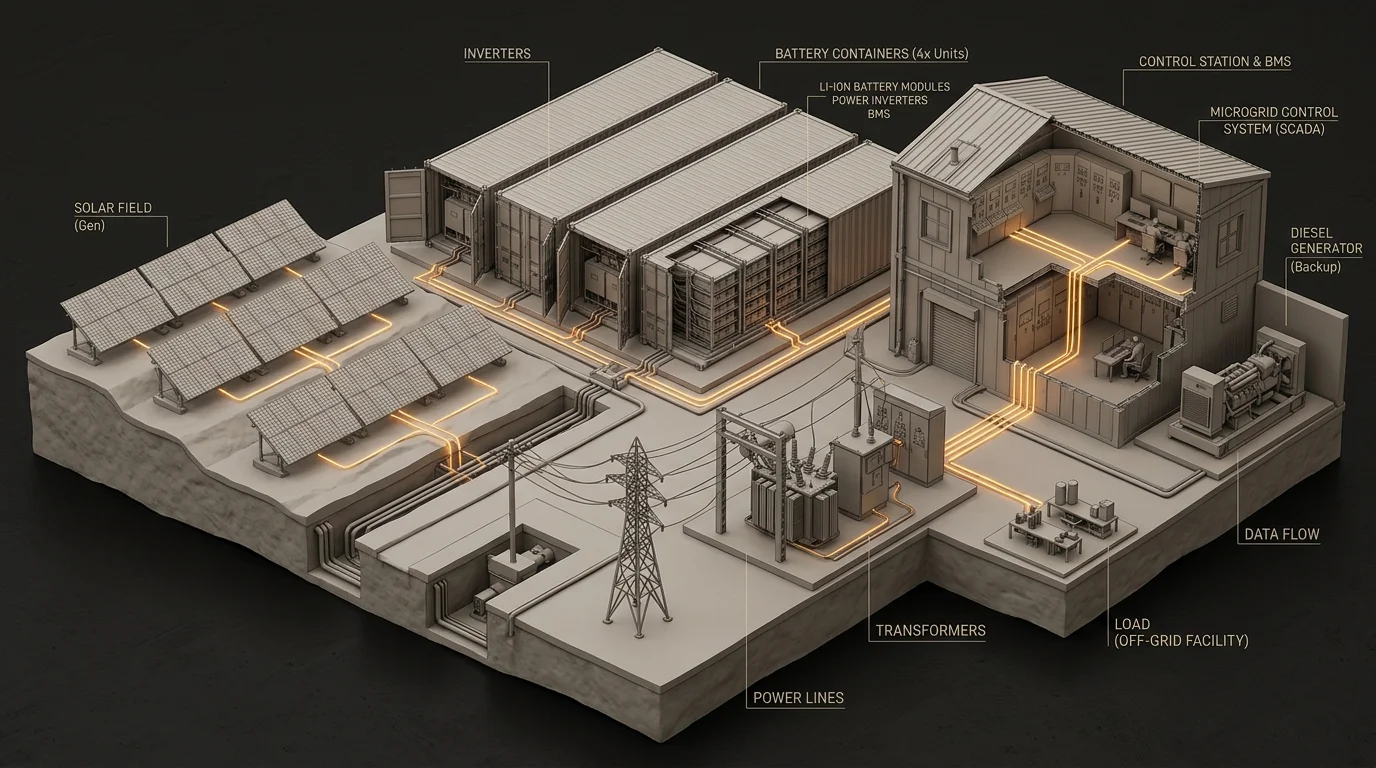
Modern industrial microgrids combine large solar arrays with high-capacity battery systems. These systems operate independently from the main utility grid. They use smart software to balance power generation and demand in real time. This ensures that heavy mining machinery receives steady, clean electricity.
Key Stages of Solar Integration
Switching a mining site to solar power requires careful planning. Most projects follow three main stages to transition safely without stopping active operations.
1. Site Analysis
Engineers evaluate the local sun exposure, energy usage patterns, and available land area. They design the system to match the peak demand of the mining equipment.
2. Microgrid Design
Developers design a hybrid system. This includes solar panels, smart inverters, battery storage banks, and backup diesel generators. The components are built to withstand harsh, dusty environments.
3. Automated Balancing
Smart software automatically shifts power sources. During the day, the system uses solar power. At night, it switches to stored battery energy. Backup generators only run when needed.
Comparing Mining Energy Options
Building a solar microgrid requires an upfront investment, but it offers massive savings compared to traditional power sources.
Diesel Generators Only
Requires shipping millions of gallons of diesel fuel annually. The operational cost is high and varies with global oil prices.
Solar + Battery Microgrid
Provides free fuel from the sun. The system stabilizes energy costs for decades and typically pays for itself within three to seven years.
Utility Grid Connection
Often unavailable in remote areas. Where available, mines face high demand charges and risk expensive shutdowns during grid failures.
Battery Storage and 24/7 Operations
Mines operate all day and night. To maintain continuous production, solar systems must be paired with battery energy storage systems.
These battery systems typically range from 20 to 100 megawatt-hours. They can supply power for 4 to 12 hours at full load. With response times of under 100 milliseconds, batteries prevent power drops that could damage sensitive machinery.
Pairing solar with battery storage also allows mines to adopt electric heavy machinery. Instead of diesel haul trucks, operators are introducing battery-electric trucks. These vehicles can charge directly at solar-powered stations, eliminating tailpipe emissions and saving fuel.
Environmental and Local Benefits
Beyond saving money, solar power helps mines meet strict environmental goals:
- Carbon Reductions: A typical 10-megawatt solar installation eliminates 50,000 metric tons of carbon dioxide emissions annually. This is equivalent to taking over 10,000 passenger cars off the road.
- Less Noise: Solar panels operate silently. Transitioning away from diesel generators reduces site noise levels from 95 decibels to an average of 12 decibels at the site boundary. This improves conditions for workers and wildlife.
- Water Conservation: Unlike traditional fossil fuel plants, solar panels do not require water for cooling. This saves millions of gallons of water in dry areas.
Frequently Asked Questions
Most mining solar systems pay for themselves within three to seven years. This depends on local diesel fuel prices, shipping costs, and solar conditions. After this payback period, the electricity generated is virtually free.
Microgrids use real-time weather tracking. If cloud cover reduces solar output, the system instantly draws power from the battery banks. If the low-light period lasts for multiple days, backup generators automatically start to maintain safety and production.