Space-Based Solar Power: How Orbital Arrays Beam Energy to Earth
Discover how space-based solar power collects sunlight in orbit, beams electricity to Earth rectennas, and delivers clean 24/7 continuous baseload power.
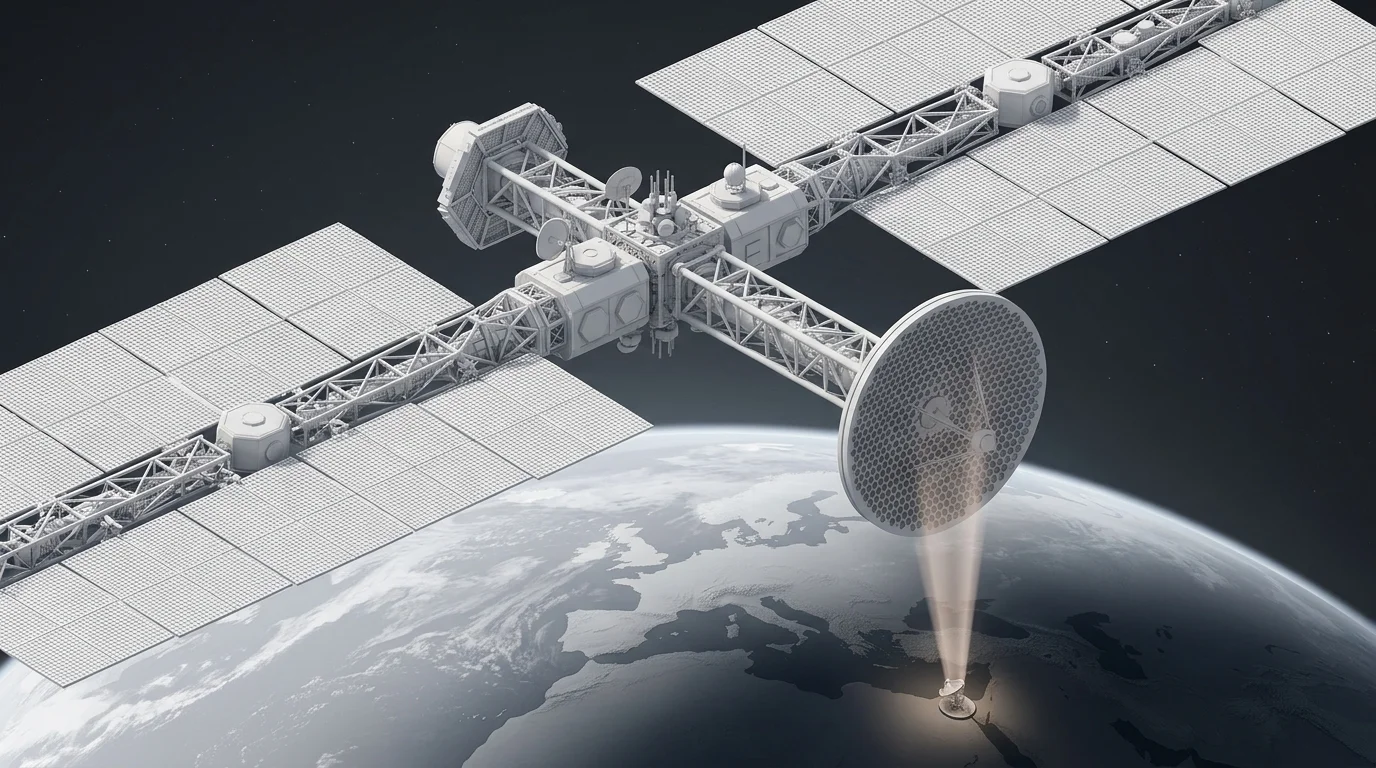
Solar panels on rooftops and desert solar farms are now common sights across the world. They generate clean, affordable electricity whenever the sun shines. However, terrestrial solar faces two natural limits: the sun sets every evening, and clouds block sunlight during stormy weather.
To keep the lights on around the clock, electrical grids still rely on backup battery banks or fossil fuel power plants. But what if solar panels could float in permanent sunlight high above Earth’s clouds and night sky?
That is the vision of space-based solar power (SBSP). By placing solar collectors thousands of miles above Earth, orbital power stations can collect sunlight uninterrupted, 24 hours a day, 365 days a year. The satellites convert that energy into wireless microwave beams and send it straight down to receiving stations on Earth.
With recent breakthroughs in reusable heavy-lift rockets, wireless power transmission, and lightweight solar materials, space-based solar power is moving rapidly from science fiction into engineering reality.
Why Orbiting Solar Panels Produce More Energy
On Earth, sunlight must pass through thick layers of air, dust, and moisture before reaching a solar panel. This atmospheric filtration weakens the sun’s rays.
In space, there is no air, no dust, and no weather:
- Unfiltered Solar Irradiance: At the edge of Earth’s atmosphere, raw solar irradiance measures approximately 1,361 to 1,366 watts per square meter. On the ground, direct sunlight drops to roughly 1,000 watts per square meter at peak noon, and averages only 200 to 250 watts per square meter over a full day.
- Continuous Sunshine: Satellites placed in Geostationary Earth Orbit (GEO), located 35,786 kilometers (22,236 miles) above the equator, stay illuminated by sunlight for more than 99 percent of the year. They only pass through Earth’s brief shadow during short equinox periods.
- Higher Annual Energy Yield: Because an orbital solar array never faces nighttime or cloudy days, a single solar panel in space generates five to eight times more total electricity each year than the same panel installed on the sunniest rooftop in California or Arizona.
The Three Core Parts of a Space Solar System
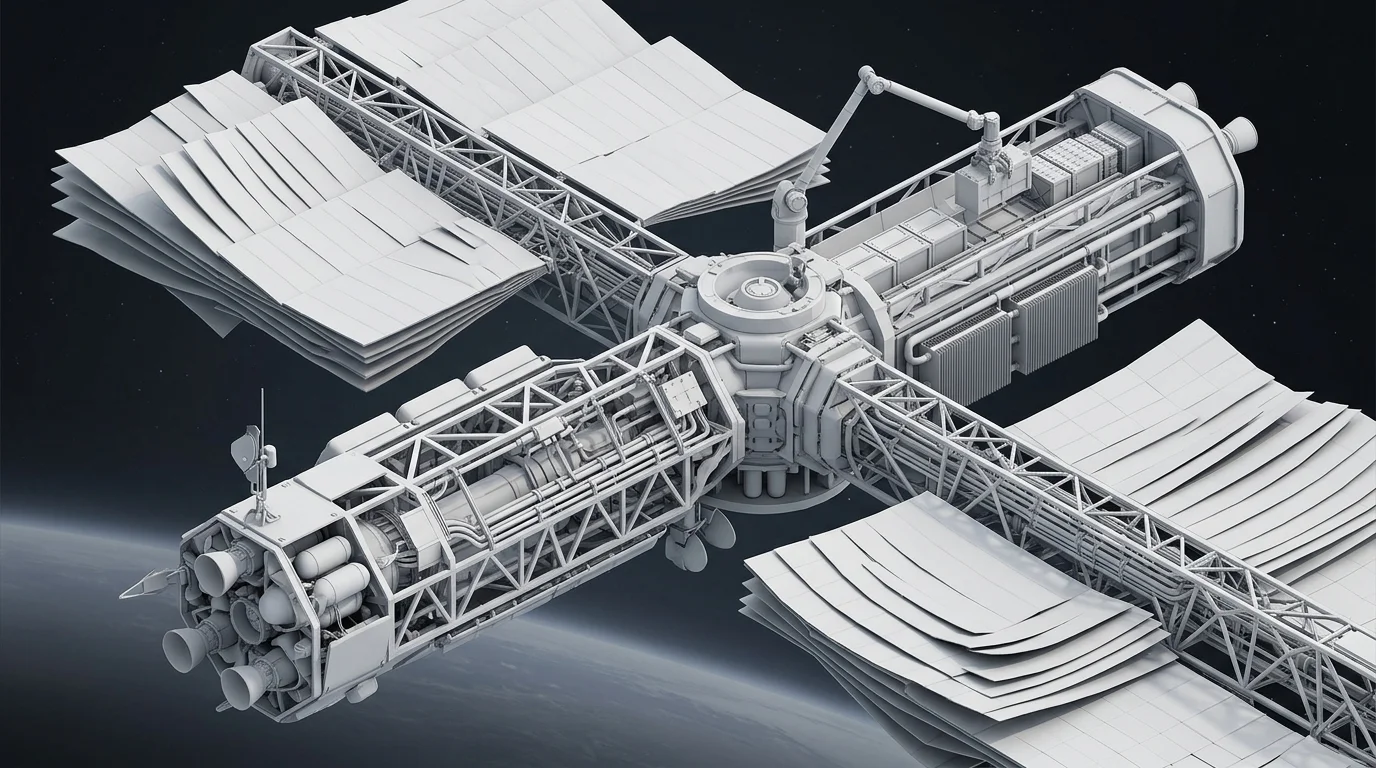
A complete space solar infrastructure consists of three interconnected engineering systems:
1. The Orbital Solar Collector
The satellite itself is a massive, lightweight structure spanning hundreds of meters or even multiple kilometers. It uses advanced multi-junction gallium arsenide (GaAs) or tandem perovskite-silicon solar cells that deliver electrical efficiencies between 35 percent and 45 percent.
Because space structures cannot be launched in one piece, autonomous construction robots assemble modular trusses in orbit. The structure also includes infrared radiator panels to vent away excess heat, preventing electronics from overheating in the vacuum of space.
2. The Wireless Power Transmitter
Once the solar panels create direct current (DC) electricity, solid-state transmitters convert that power into high-frequency electromagnetic waves. Engineers focus primarily on microwaves operating at 2.45 gigahertz (GHz) or 5.8 gigahertz (GHz).
A phased-array transmitter antenna steers the microwave beam electronically using thousands of synchronized micro-antennas. Because there are no moving mechanical hinges, the steering is instant, precise, and highly reliable.
3. The Ground Receiving Station (Rectenna)
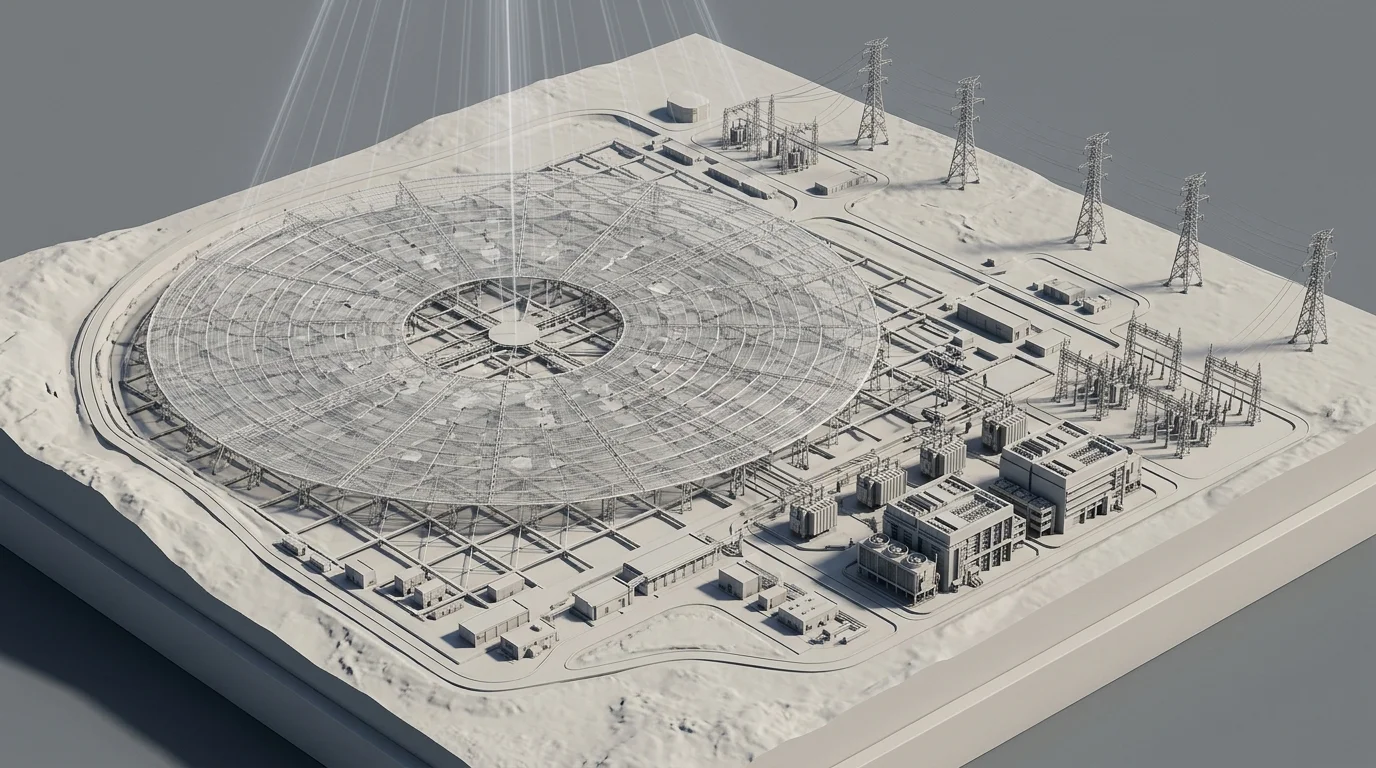
On Earth, a specialized receiving antenna called a rectifying antenna or rectenna captures the incoming beam.
A rectenna is built as an open wire mesh elevated several meters above the ground. It uses tiny semiconductor diodes to convert incoming radio microwaves back into direct current electricity. Step-up transformers and utility inverters then feed that power directly into regional high-voltage transmission lines.
Because the rectenna uses an open mesh that lets 80 percent of sunlight through, farmland, sheep pastures, or native flora can thrive underneath the structure.
How Energy Travels from Space to Your Living Room
The complete process of gathering solar energy in space and delivering it to homes involves four clear stages:
Continuous Orbital Harvesting
Solar collector satellites in geostationary orbit absorb raw, unfiltered sunlight at 1,366 watts per square meter with 99 percent annual uptime.
Microwave Power Conversion
High-efficiency power electronics convert direct current electricity into radio microwaves tuned to 2.45 GHz or 5.8 GHz.
Wireless Atmospheric Transmission
A phased-array antenna directs the focused energy beam through Earth’s atmosphere, passing easily through clouds, rain, fog, and dust.
Rectenna Grid Integration
The ground rectenna captures the microwaves, converts them back to electricity with over 85 percent efficiency, and feeds the power into the local utility grid.
Comparing Space Solar with Ground Solar Systems
To understand where space solar fits into our clean energy transition, let us compare how it performs against traditional ground solar systems:
Space-Based Solar Power
Produces constant, dispatchable electricity day and night without requiring massive battery backup banks or large land footprints.
Rooftop & Ground Solar
Extremely inexpensive and simple to install on existing buildings, but depends on daylight hours and clear skies to produce power.
Solar Plus Large Battery Storage
Stores daytime surplus energy in lithium or flow batteries, but faces supply chain constraints, higher system costs, and limited multiday backup during winter storms.
Is Wireless Energy Transmission Safe?
Whenever people hear about wireless power beams sent from space, they often imagine a dangerous death ray from a movie. In real life, the physics are completely different.
Here is why space solar transmission is safe for people, animals, and airplanes:
Safe Energy Density
The microwave beam is designed to be very wide, measuring several kilometers across when it reaches the ground. Because the energy is spread over such a large area, the intensity at the very center of the rectenna is limited to roughly 250 watts per square meter.
For comparison, natural midday sunlight on a bright summer afternoon hits Earth at roughly 1,000 watts per square meter. The microwave beam carries only a quarter of that intensity. It cannot burn skin, incinerate birds, or ignite vegetation.
Cloud and Rain Penetration
Engineers select frequencies like 2.45 GHz because Earth’s atmosphere is transparent to them. Unlike optical lasers, which scatter in heavy clouds or dense fog, microwaves pass right through storm clouds and rain showers with less than two percent signal loss.
Fail-Safe Pilot Beams
The satellite cannot aim blindly. Ground stations send a low-power pilot signal up to the satellite. The phased-array transmitter uses this pilot signal to lock its beam onto the rectenna.
If an airplane passes through the beam path, or if the satellite loses lock with the ground station, the pilot beam is interrupted. The transmitter instantly loses coherence, causing the beam to defuse safely within milliseconds into harmless background radio noise.
What Has Changed: Why Space Solar is Feasible Now
Peter Glaser first proposed the concept of space solar power in 1968. For decades, the technology stayed on the drawing board because the launch costs were too steep.
During the Space Shuttle era, launching cargo into orbit cost upwards of $50,000 per kilogram. At that rate, building a gigawatt-scale space solar station would have cost hundreds of billions of dollars.
Today, three major technological shifts have unlocked the economics:
- Plummeting Launch Costs: Next-generation reusable heavy-lift rockets, such as SpaceX Starship, are driving launch costs down toward $100 to $200 per kilogram. This dramatic 99 percent price drop turns space power plants into practical infrastructure projects.
- Modular In-Orbit Robotics: Space agencies no longer need astronauts to assemble arrays bolt by bolt. Automated robotic arms and modular self-assembling space structures can construct kilometer-wide platforms autonomously.
- Hardware Demonstrations: Real hardware has already operated in orbit:
- Caltech’s MAPLE Experiment: In 2023 and 2024, the California Institute of Technology demonstrated wireless power transfer in space with its Space Solar Power Demonstrator (SSPD-1), successfully steering microwave beams to ground sensors.
- ESA’s SOLARIS Initiative: The European Space Agency is working with aerospace leaders on the Cassiopeia concept, preparing orbital verification flights for commercial power beaming.
- JAXA and China Space Programs: Japan and China have conducted high-accuracy ground wireless power transfers across multiple kilometers, proving beam stability and high-efficiency rectenna conversion.
Frequently Asked Questions
Demonstration satellites transmitting tens of kilowatts to megawatts are scheduled for orbital testing before 2030. Commercial gigawatt-scale stations capable of powering hundreds of thousands of homes are projected to connect to utility grids in the 2030s as heavy-lift rocket flights reach regular cadence.
Yes. One of the greatest benefits of space-based solar is beam steerability. If a hurricane or earthquake destroys ground power lines, the satellite can redirect its wireless energy beam to an emergency rectenna deployed in the disaster zone, restoring hospital and water pumping power within hours.
Orbital stations use modular architecture divided into thousands of independent sub-panels. If a micrometeoroid or tiny piece of space debris hits one sub-panel, the remaining 99.9 percent of the station continues generating electricity without interruption. Robotic repair drones can also replace damaged modules in orbit.
Space solar power produces true zero-emission electricity around the clock. By providing firm baseload power, it can replace coal and natural gas plants without requiring vast expanses of wild land or thousands of acres of battery storage systems.