Solar Panels Over Canals: The Power and Water Nexus
Discover how solar panels installed over water canals prevent evaporation, boost solar panel efficiency, and protect valuable land resources.
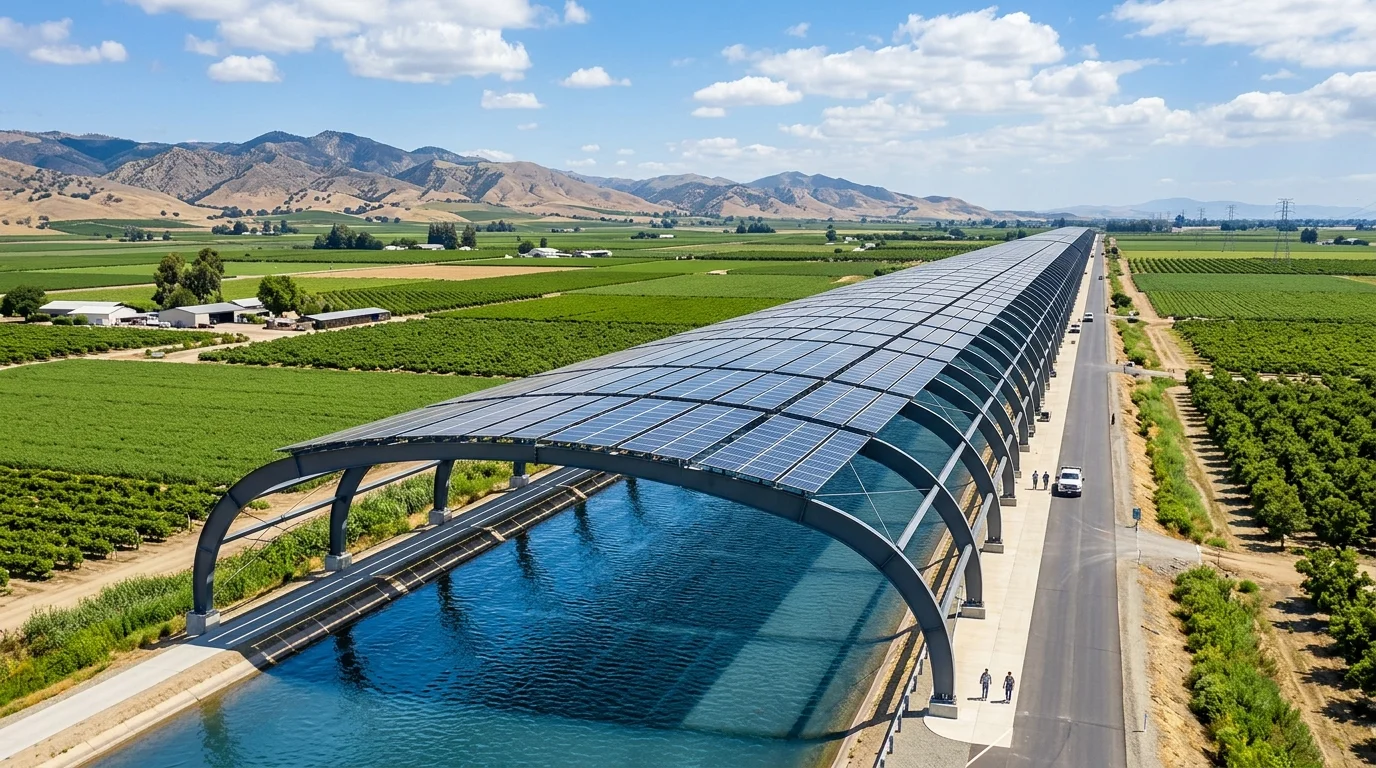
Water and clean energy are two of the most critical resources on the planet. In sunny, dry regions around the world, open aqueducts and irrigation canals carry freshwater across hundreds of miles of farmland and desert. However, direct exposure to intense sunlight causes billions of gallons of precious water to evaporate before it ever reaches farms or cities.
Installing solar panels over canals provides an elegant engineering solution known as the energy-water nexus. By building solar canopies over open waterways, communities generate clean electricity while simultaneously shading the water underneath. This dual-purpose infrastructure cuts water evaporation, keeps solar equipment running cooler, and avoids consuming valuable agricultural land.
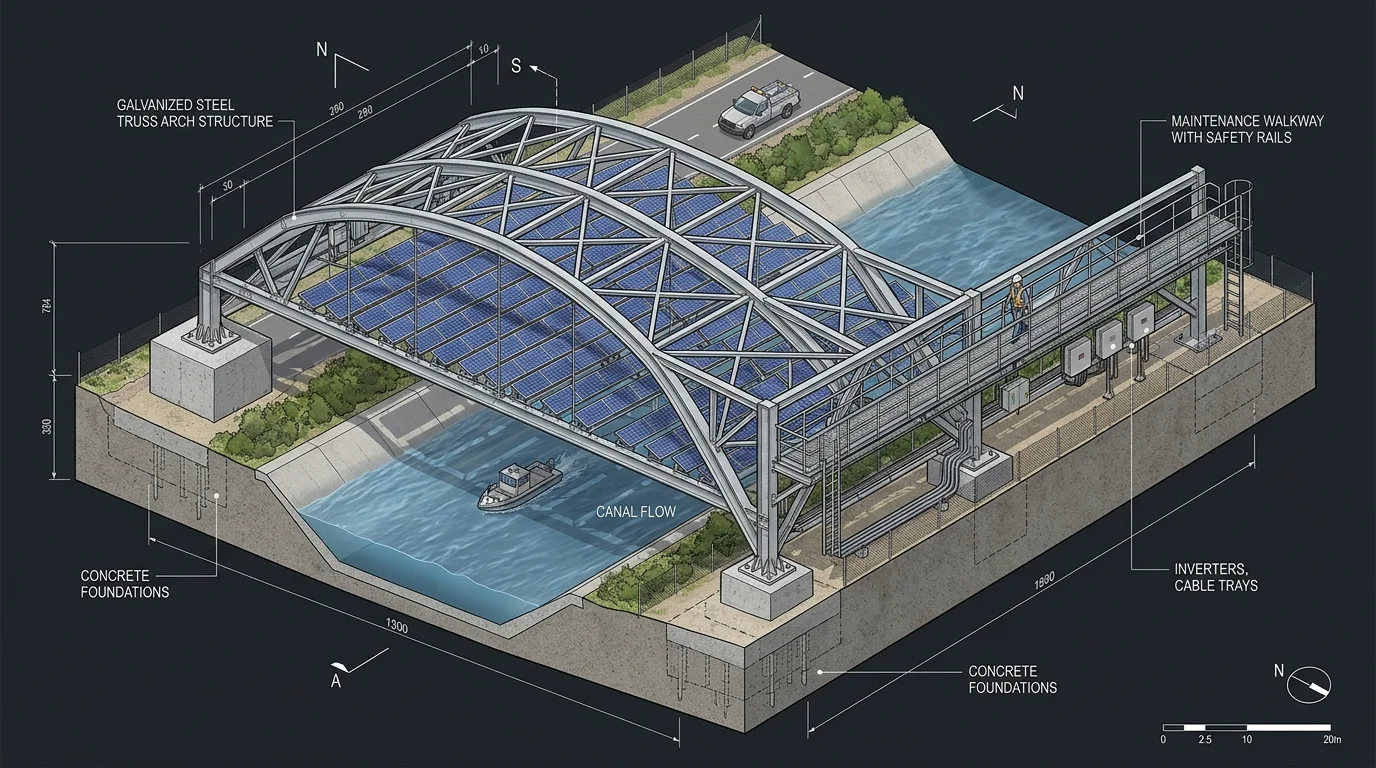
Engineered Canal Racking and Structural Framing
Canal-top solar arrays utilize heavy-duty galvanized steel truss arches and tensioned cable networks. These structures securely span across wide waterways without disturbing the underlying canal banks or impeding water flow.
Why Canal Solar Panels Deliver Double the Value
Covering man-made canals with photovoltaic modules creates a natural partnership between water and power. Each system solves a major weakness of the other:
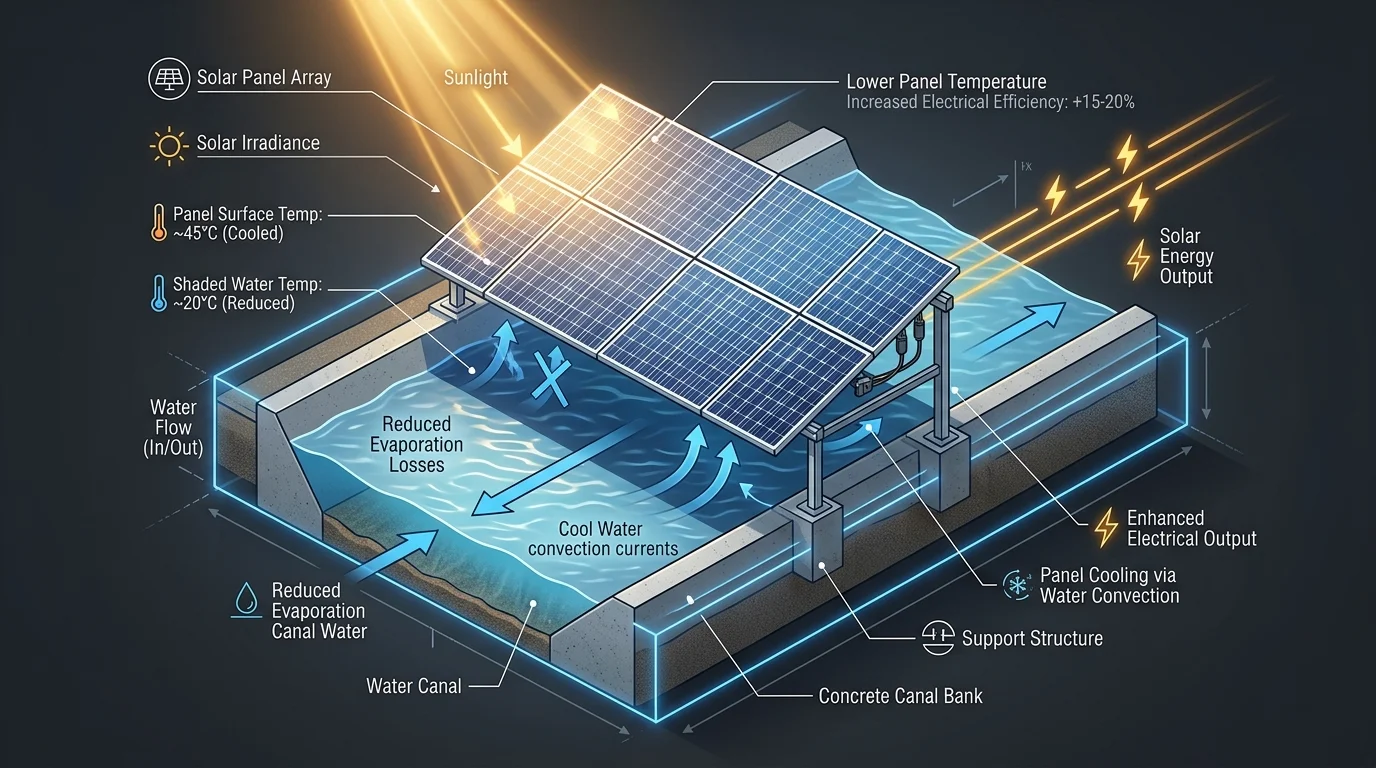
- Evaporation Mitigation: Shading open water surfaces blocks direct solar radiation and wind contact. Studies show that over-canal solar canopies reduce water evaporation by up to 80 to 82 percent along covered canal sections.
- Thermal Cooling for Higher Panel Output: Photovoltaic solar panels lose efficiency when they get too hot in the summer sun. Water flowing underneath creates a cool microclimate that lowers panel operating temperatures by 5 to 10 degrees Celsius, boosting electricity generation by 2.5 to 5 percent.
- Algae and Weed Control: Sunlight penetrating shallow, nutrient-rich canal water triggers rapid algae blooms and aquatic weed growth. By blocking sunlight, solar canopies starve algae of light, reducing maintenance costs, pump clogging, and chemical herbicide use.
- Zero Farmland Consumption: Large utility-scale solar farms typically require thousands of acres of flat ground. Placing solar panels directly on existing water easements eliminates land-use conflicts with agriculture and preserves natural wildlife habitats.
The Microclimate Cooling and Evaporation Cycle
Continuous water flow absorbs excess heat from the solar panels above through natural air convection. In return, the shaded canal retains vital water volume that would otherwise be lost to rapid evaporation.
How Canal Solar Systems Are Built and Operated
Constructing a solar array over an active waterway requires specialized civil and structural engineering. The project lifecycle follows five key phases:
Hydraulic and Geotechnical Survey
Engineers evaluate canal width, flow rates, sediment levels, and bank soil stability to ensure the support piers will withstand seasonal flooding and heavy wind loads.
Bank Anchor and Foundation Pouring
Concrete footing pads or deep drilled shafts are installed on both banks outside the canal lining to avoid puncturing the waterproof concrete or clay barrier.
Spanning Truss and Cable Installation
Crews lift modular galvanized steel trusses or string high-tensile stainless steel suspension cables across the canal span, creating a rigid platform.
Module Mounting and Electrical Routing
Technicians mount high-efficiency bifacial solar panels and install waterproof DC conduit along structural raceways to bankside string inverters and battery storage.
Operations and Waterway Maintenance
Integrated catwalks and elevated clearance allow maintenance boats and dredging equipment to pass beneath the array for periodic canal cleaning and inspection.
Structural Mounting Options: Steel Trusses vs. Catenary Cables
Engineers select different mounting systems depending on the width of the waterway, local wind profiles, and project budget.
Canal Solar Engineering Approaches
Compare the two primary structural mounting methods used for over-canal solar installations.
Galvanized Steel Truss Arches
Steel trusses form rigid arch bridges across canal banks. They provide dedicated walking platforms for easy panel maintenance and can support heavy snow and high wind loads without flexing.
Tensioned Catenary Cable Systems
High-strength steel cables suspend panels across very wide aqueducts with minimal steel tonnage. This lowers material costs for large irrigation networks while maintaining necessary water clearance.
Real-World Solar Canal Projects Around the World
Canal-top solar is moving rapidly from pilot research to large-scale infrastructure deployment:
- Gujarat Canal Solar Project (India): India pioneered the world’s first canal-top solar plant along the Narmada canal network in Gujarat. The initial 1-megawatt pilot proved that covering just one mile of canal saves millions of liters of water each year while delivering reliable power to rural farming communities.
- Project Nexus (California, USA): A public-private partnership between the Turlock Irrigation District and California water authorities to test solar canopies across key Central Valley canals. UC Merced research estimates that covering California’s 4,000 miles of public canals could save over 63 billion gallons of water annually while generating 13 gigawatts of renewable power.
- Gila River Indian Community Solar Canal (Arizona, USA): A landmark tribal infrastructure project in the American Southwest designed to protect vital Colorado River allocations from evaporation while powering tribal water pumps and community buildings.
Environmental and Economic Considerations
While over-canal solar systems provide immense benefits, they also present specific engineering considerations that planners must manage:
- Upfront Capital Costs: Spanning wide waterways with structural steel or cables increases initial construction costs by 15 to 30 percent compared to standard ground-mounted arrays. However, land savings and water conservation value help balance the overall lifecycle return on investment.
- Humidity and Corrosion Protection: Proximity to evaporating water requires marine-grade coatings, corrosion-resistant fasteners, and IP67-rated electrical enclosures to ensure a 25 to 30-year operating lifespan.
- Maintenance Access: System designers must maintain adequate vertical clearance beneath the panels so that canal maintenance crews can safely run weed harvesters, dredgers, and inspection boats.
Frequently Asked Questions
Covering canals with solar panels can reduce evaporative water loss by 80 to 82 percent over the shaded sections. In arid agricultural valleys, this translates to millions of gallons saved per mile of canal every single year.
Yes. Water flowing beneath the panels provides a natural evaporative cooling effect. This cooler microclimate lowers solar cell operating temperatures, improving electrical generation efficiency by 2.5 to 5 percent compared to hot ground-mounted panels in the same area.
Engineers design canal solar structures with substantial vertical clearance, typically 8 to 15 feet above the maximum water line. This allows standard service boats, weed cutters, and dredging equipment to operate underneath without obstruction.
Yes. Bifacial solar modules generate power from both sides. When installed over canals, the water surface reflects sunlight upward, allowing the underside of the panels to capture additional reflected light and increase total system energy yield.