Solar Panels on Landfills: Turning Brownfields into Clean Energy Brightfields
Discover how solar panels on landfills turn contaminated brownfields into clean energy brightfields, ballasted mounting engineering, and IRA tax incentives.
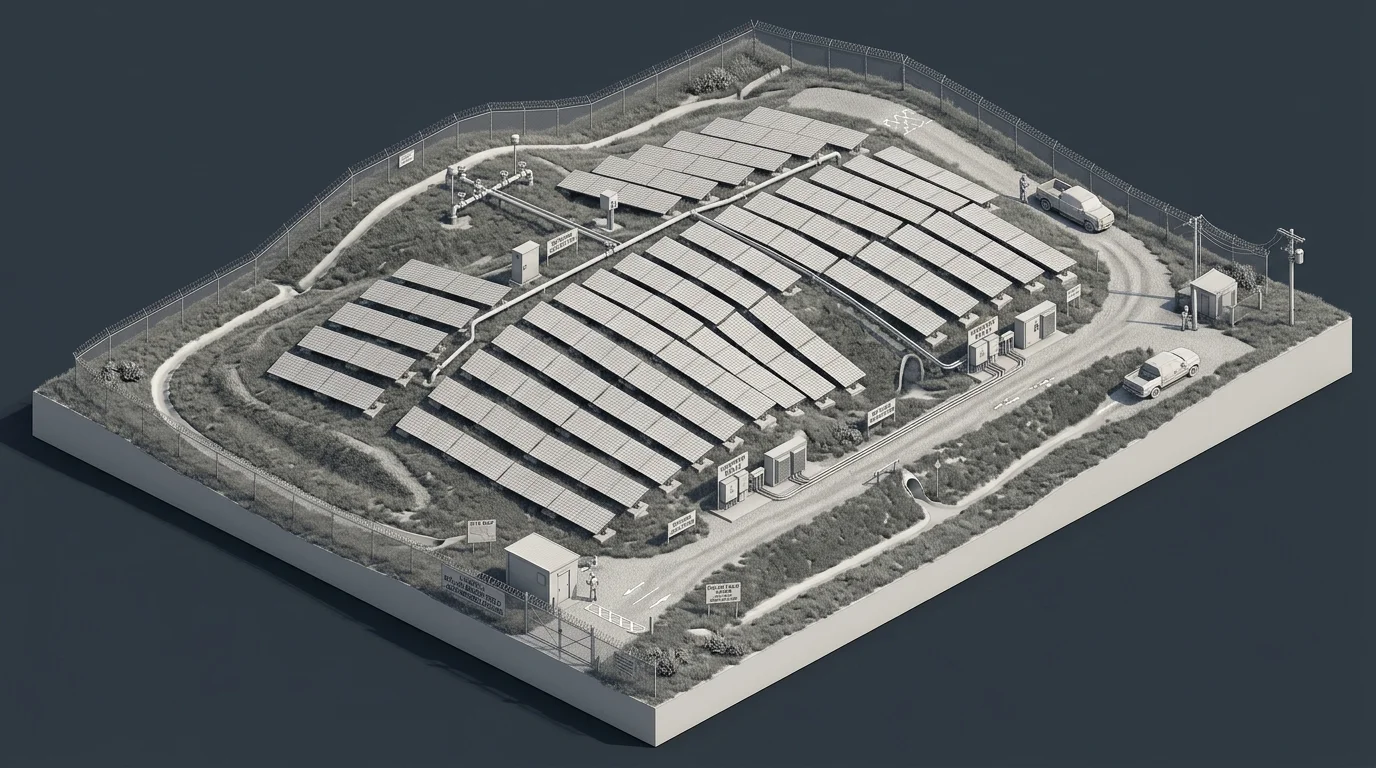
Finding open land for clean energy projects is getting harder every day. Big solar farms need lots of flat ground. When builders use open farmland, they often compete with food crops, disturb wildlife, or upset neighbors. At the same time, thousands of closed landfills and empty industrial brownfields sit unused near our cities.
Turning closed trash sites into solar brightfields solves both problems. Workers place solar panels across sealed landfills and old factory parcels. This turns polluted land into clean power stations. It makes renewable electricity, pays local town taxes, and keeps green open spaces wild.
Ballasted Non-Penetrating Mounting on Landfill Caps
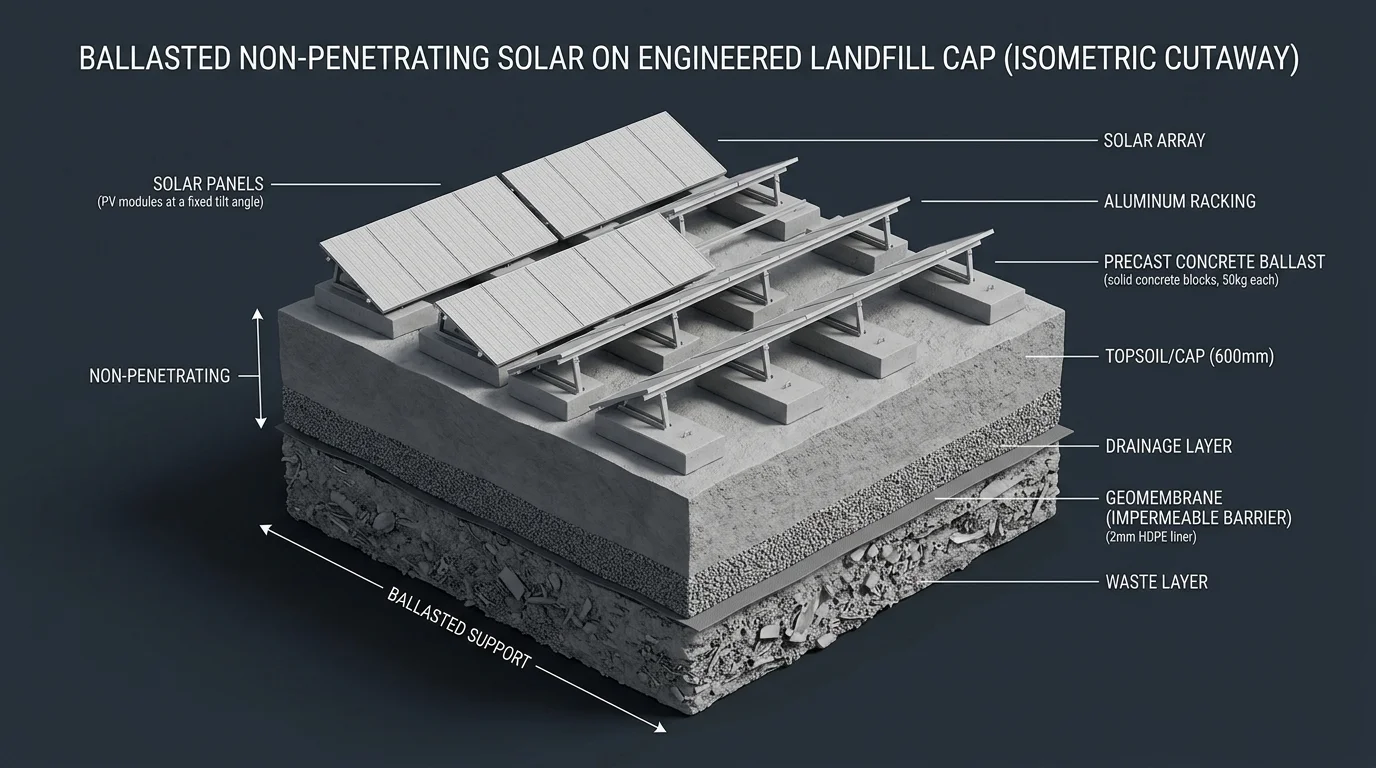
Closed landfills are sealed with thick plastic liners and clay to trap waste and gases. Solar racks sit on heavy concrete blocks so steel posts never pierce the protective liner.
Why Landfills Make Great Solar Hubs
Landfills have big advantages that make them great homes for solar energy:
- Zero Land Conflicts: Capped landfills cannot support new homes or office buildings. Buried waste slowly settles over time. Building solar panels gives unusable land a useful second life for thirty years or more.
- Close to Power Grids: Landfills were built close to big cities and factories. Because of this, most closed landfills sit near major power lines and substations. This cuts the cost of hooking up to the grid.
- Strong Community Support: People like seeing dirty, fenced-off waste sites put to good use. Landfill solar arrays rarely face the zoning fights that rural solar farms face.
- Bonus Clean Energy Tax Credits: Federal clean energy rules offer a bonus 10 percent tax credit for projects built on brownfields and closed landfills. This bonus can boost total federal tax savings to 40 or 50 percent.
Power Collection and Utility Substation Grid Routing
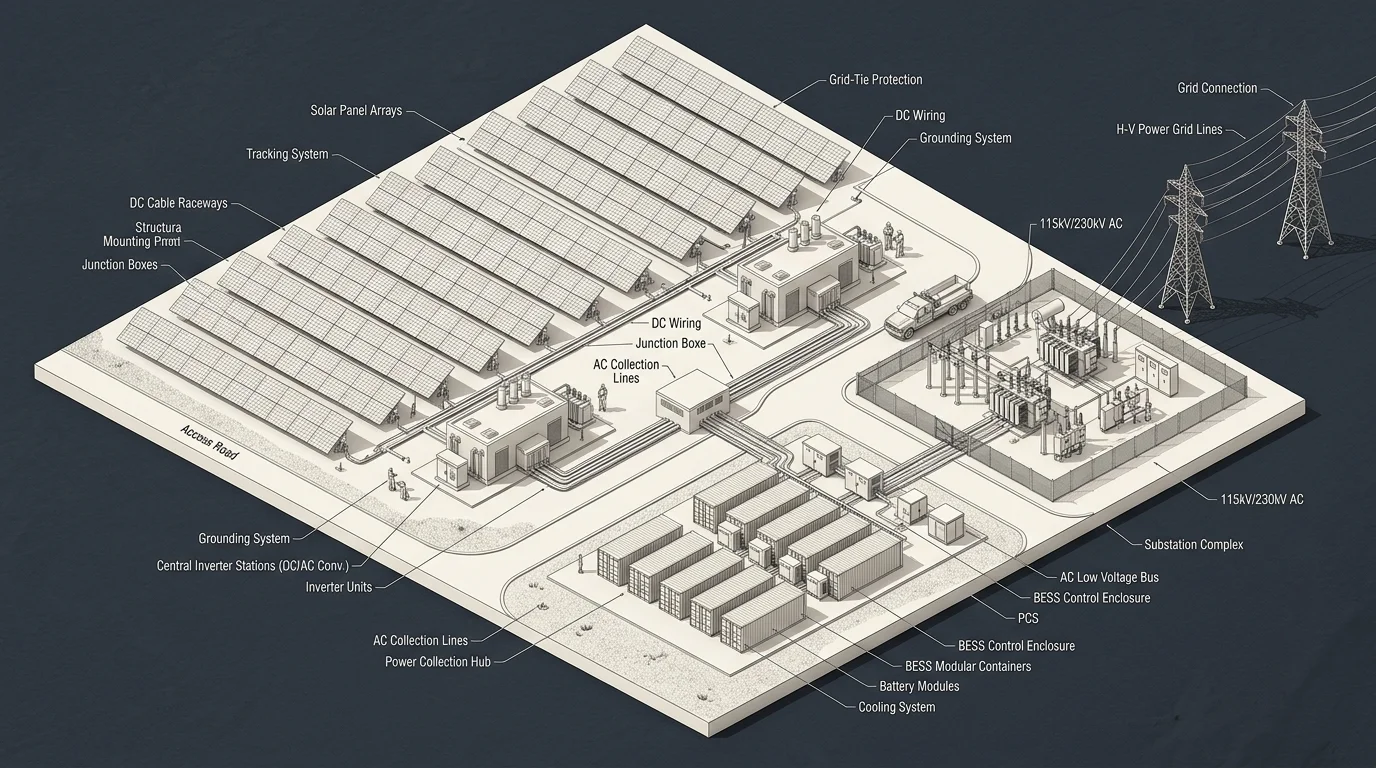
Surface cable trays carry direct current power from landfill panels to central inverters and battery storage containers. From there, clean power flows into the local utility grid at nearby substations.
Engineering Innovations for Landfill Solar Arrays
Building solar arrays on decades of buried waste takes smart civil engineering. Solar installers cannot pound steel posts into the ground like they do on open farm fields.
1. Ballasted Mounting Racks
Every modern landfill has a protective cap. This cap uses a thick plastic liner covered by gravel and topsoil. If builders puncture this liner, rain can seep into buried trash. This creates dirty runoff called leachate, or lets smelly methane gas leak into the air.
To stop this risk, engineers use ballasted ground mounts. Instead of driving posts into the ground, panel frames rest on heavy concrete blocks. Gravity holds the panels down against strong winds. This keeps the protective liner completely safe.
2. Handling Uneven Ground Settling
Buried trash rots and settles at uneven rates over decades. Rigid steel racks could bend or snap if the ground sinks unevenly. Brightfield racking uses flexible joints and adjustable legs. These joints flex as the ground shifts. This keeps the solar panels safe from damage.
3. Aboveground Wiring Trays
On typical solar farms, power cables run through deep underground trenches. Digging into a landfill cap is not allowed. Because of this, electricians run wires inside surface cable trays. These durable trays protect wiring from weather and sun. They also let technicians inspect cables easily.
4. Gas Well and Flare Safety
Landfills release methane and carbon dioxide gas. Operators pull this gas out through vertical wells and pipes. Solar layouts leave wide clear paths around all gas pipes and valves. This lets technicians service the gas systems safely.
Comparing Foundation Methods: Ballasted Blocks vs. Driven Piles
Picking the right mount keeps the site safe and meets environmental rules.
Solar Mounting Foundations on Contaminated Land
Examine the engineering differences between non-penetrating ballasts and conventional driven steel posts.
Precast Ballasted Concrete Mounts
Heavy concrete ballast blocks sit directly on topsoil or fabric mats. Their weight holds solar panels down against strong winds. Workers never dig into buried waste, keeping waterproof liners intact.
Conventional Driven Steel Piles
Long steel beams driven deep into the ground. While cheap on open farmland, driven piles are banned on landfills because they can puncture the protective cap.
How a Landfill Solar Project Is Built
Turning a closed waste site into a clean brightfield follows five key steps:
Environmental Review and Site Audit
Engineers study closure records, cap thickness, gas pipe maps, and ground settling logs to make sure the site is safe for solar.
Geotechnical Settlement Modeling
Engineers test the soil. They make sure the weight of concrete blocks and solar panels will not crush the cap.
Racking and Cable Tray Layout
Workers level topsoil and place concrete blocks. They align rows to stay clear of gas wells and water runoff slopes.
Module Mounting and Electrical Hookup
Electricians mount solar modules, wire cable trays, and connect power inverters and battery storage units.
Commissioning and Grid Interconnection
Crews test electrical safety systems before sending clean solar power into the local grid to power homes and stores.
Real-World Landfill Solar Success Stories
Communities and clean energy developers worldwide have proven the value of brightfields:
- Mount Olive Solar Farm (New Jersey, USA): Built on an old toxic landfill site by CEP Renewables, this huge 25.6-megawatt facility features over 56,000 solar panels on concrete mounts. It is one of the largest landfill solar sites in North America, turning bad land into clean power and local tax funds.
- Cleveland Brightfield Initiative (Ohio, USA): The City of Cleveland partnered with clean energy groups to build community solar arrays on closed waste sites. This provides lower power rates to local families.
- Ockendon Solar Farm (Essex, United Kingdom): Built on an old waste dump, this project features more than 100,000 solar panels across 70 hectares. It makes enough clean electricity to power up to 15,000 homes each year.
- Veolia Restored Landfill Program (France): Veolia launched a program across France to build 40 solar farms on closed landfills. It delivers 400 megawatts of clean electricity.
Key Costs and Site Planning
Brightfields offer great land benefits, but developers must plan for special costs:
- Higher Equipment Costs: Ballasted racks and concrete blocks add 10 to 20 percent to upfront equipment costs compared to driven piles. Federal tax bonuses and lower land lease rates often balance out these costs.
- Stormwater Runoff Control: Solar panels shed rainwater along their lower edges. Engineers plant deep-rooted native grasses and build water ditches to protect topsoil and stop cap erosion.
- Routine Site Care: Landfills require regular cap checks, grass mowing, and groundwater tests for thirty years after closure. Solar rows leave wide open lanes so mowing tractors and service trucks can drive through safely.
Frequently Asked Questions
No. Landfill solar arrays use non-penetrating ballasted mounts. Heavy concrete blocks rest on top of the soil. Since no metal posts pierce the ground, the plastic cap stays safe and sealed.
Landfill solar racking systems have flexible joints and adjustable legs. These parts flex as the ground settles. This protects panel frames and solar glass from cracks. Technicians also check and level footings during yearly maintenance visits.
Closed landfills avoid fights over using farm fields or forest land. Because landfills sit near cities, they are already close to big power lines and substations. Also, federal rules grant bonus tax credits for building clean power on brownfields.
Yes. Modern solar panels make electricity even on cloudy or rainy days. While output is lower than on sunny days, bifacial panels catch light from both sides and absorb reflections from ground grass.