Pollinator-Friendly Solar: Restoring Bees, Soil, and Habitats
Discover how pollinator-friendly solar farms replace gravel with native wildflowers, boosting bee populations, soil health, and solar panel efficiency.
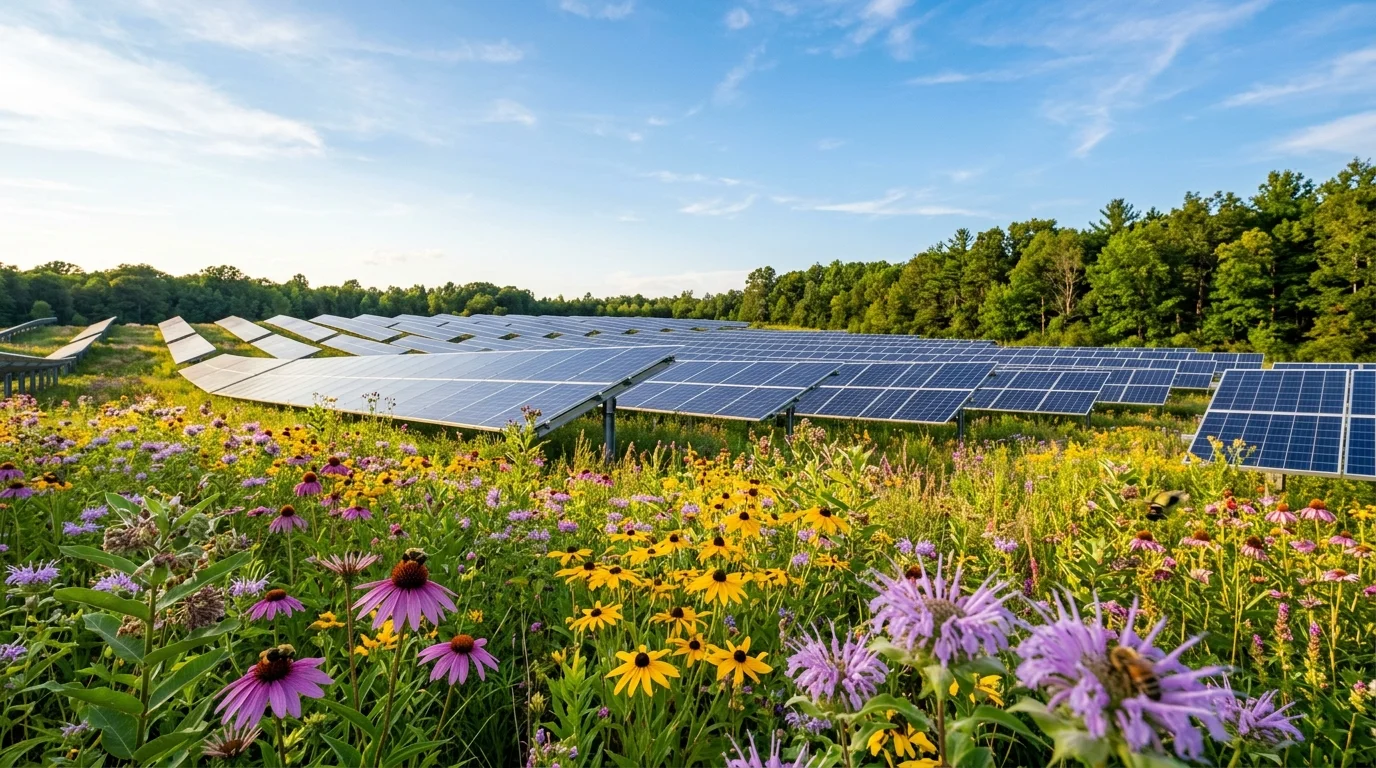
When people imagine large solar farms, they often picture rows of dark silicon panels sitting on beds of crushed gravel or mowed turf grass. While these traditional ground covers keep weeds down, they do little to support local wildlife. In fact, standard turf grass and gravel can turn valuable open land into an ecological desert.
Today, a smarter approach called pollinator-friendly solar is transforming utility-scale and community solar fields. By cultivating native wildflowers, flowering legumes, and deep-rooted prairie grasses beneath solar panels, developers turn clean energy projects into thriving biodiversity sanctuaries.
This dual-use practice restores disappearing bee and butterfly populations, enriches depleted soil, and prevents stormwater runoff. Even better, scientific field studies show that planting native vegetation actually cools the surrounding air, helping the solar panels operate at higher efficiency.
In this guide, we explore how pollinator solar arrays work, examine the environmental and financial benefits, and show why clean energy and ecosystem restoration make the perfect team.
What Is a Pollinator-Friendly Solar Farm?
A pollinator-friendly solar installation is a ground-mounted solar array designed specifically to provide habitat for bees, butterflies, moths, birds, and other beneficial insects.
Instead of stripping topsoil and covering the land with rocks or non-native turf grass, developers seed the ground with native plant mixes. These seed blends include flowering perennials such as purple coneflower, black-eyed Susan, milkweed, wild bergamot, and clover.
Key features of a verified pollinator solar farm include:
- Native Perennial Species: Plants that are indigenous to the local region and naturally adapted to local rainfall, soils, and climate conditions.
- Continuous Bloom Cycles: A balanced variety of flowers that bloom from early spring through late autumn, providing nectar and pollen all season long.
- Low-Growing Plant Varieties: Plants selected to grow no taller than two to three feet so they never cast shade on the lower edges of the solar panels.
- Zero Neonicotinoids or Harsh Pesticides: Freedom from toxic chemical sprays that harm beneficial insects and contaminate groundwater.
More than a dozen states have established official pollinator solar scorecard standards. These scorecards reward clean energy developers who meet strict botanical standards with expedited permits, state incentives, and strong local community support.
Soil Health and Stormwater: The Deep-Root Difference
The environmental impact of native prairie plants goes far deeper than the flowers visible on the surface. The secret lies underground in their extensive root systems.
Standard turf grass has shallow root structures that only penetrate two to three inches into the earth. When heavy rains hit a traditional solar farm, the compacted soil cannot absorb the deluge quickly. This leads to muddy gullies, topsoil erosion, and contaminated runoff entering nearby streams.
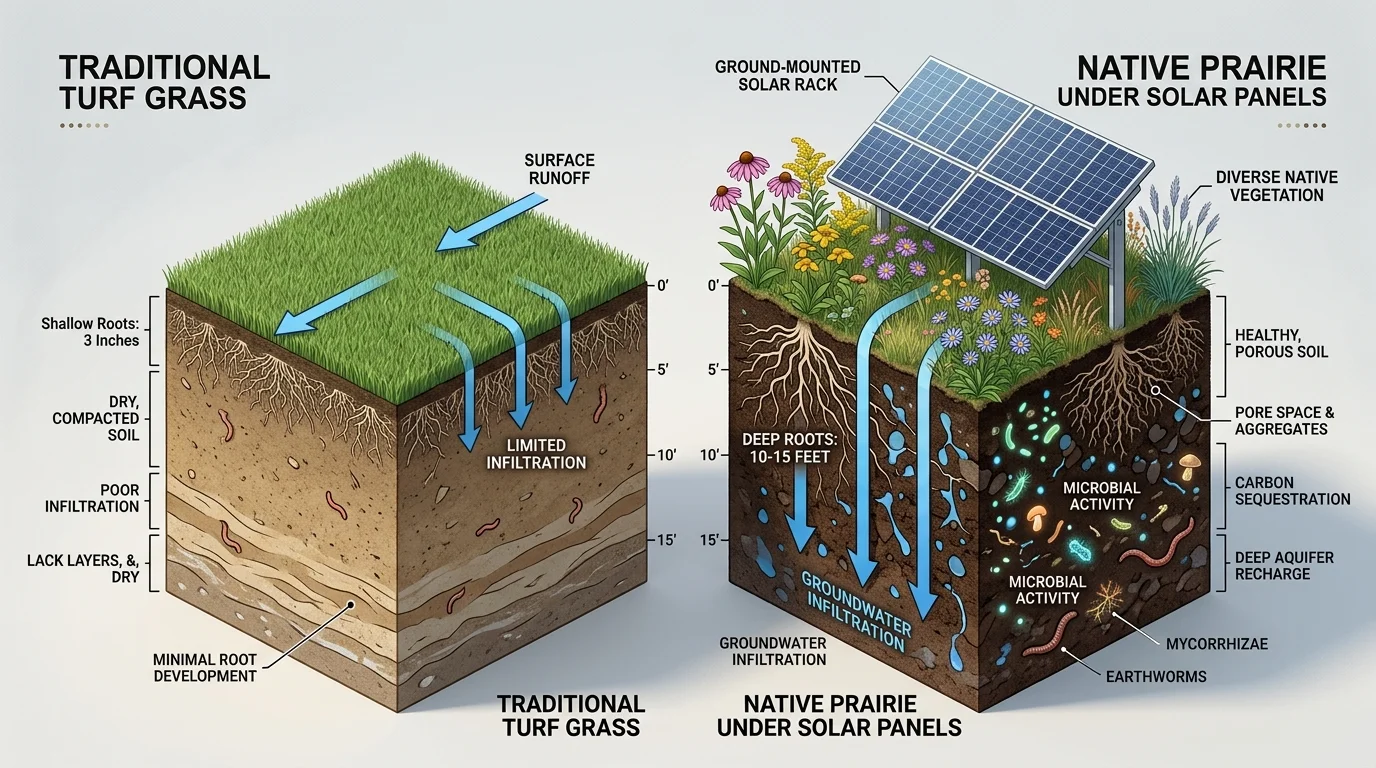
In contrast, native prairie wildflowers and grasses develop massive root systems reaching ten to fifteen feet deep into the subsoil. These deep roots create a host of natural benefits:
- Exceptional Water Infiltration: The massive underground root channels act like natural sponges. They pull rainfall deep into underground aquifers, cutting surface runoff and soil erosion by up to eighty percent.
- Carbon Sequestration: Prairie roots deposit organic carbon deep underground, turning solar farms into long-term carbon sinks that build fertile topsoil year after year.
- Microbial Life and Soil Regeneration: As roots naturally cycle through growth and decay, they nourish beneficial fungi and earthworms, reviving farmland that may have been worn out by decades of intensive monoculture farming.
When the solar project reaches the end of its thirty-year lifespan, the underlying land is richer, cleaner, and more fertile than the day the panels were installed.
Ground Cover Comparison: Native Prairie vs. Turf Grass and Gravel
Choosing the right ground cover during solar farm development has a profound effect on biodiversity, maintenance expenses, and long-term land stewardship:
Native Pollinator Prairie
- Deep 10-15 foot roots prevent soil erosion and absorb heavy stormwater
- Provides continuous nectar and nesting for wild bees and monarch butterflies
- Requires rotational mowing only once every one to two years after establishment
- Transpires moisture to naturally cool solar panels and raise power output
- Boosts pollination and fruit set on neighboring agricultural farms
Turf Grass & Crushed Gravel
- Shallow root structure offers minimal stormwater infiltration
- Frequent bi-weekly mowing burns diesel and risks flying rock panel damage
- Compacted dirt and gravel accelerate heat buildup on hot summer days
- Provides virtually zero food or shelter for bees, birds, and pollinators
- Frequent weed growth often requires repeated chemical herbicide treatments
While installing native seed mixes requires careful soil prep during the first two years, it saves substantial money over time. Solar operators eliminate the expense and emissions of bi-weekly mowing crews, making pollinator meadows a winning investment for developers and the environment alike.
How Plants Cool Solar Panels to Increase Electricity Generation
One of the most surprising discoveries from research by the National Renewable Energy Laboratory (NREL) is that native plants improve the electrical performance of solar panels.
Solar photovoltaic panels are sensitive to high temperatures. On hot summer days, dark solar panels can heat up to over one hundred and forty degrees Fahrenheit. As solar cells get hotter, their electrical resistance climbs, causing their energy conversion efficiency to drop significantly.
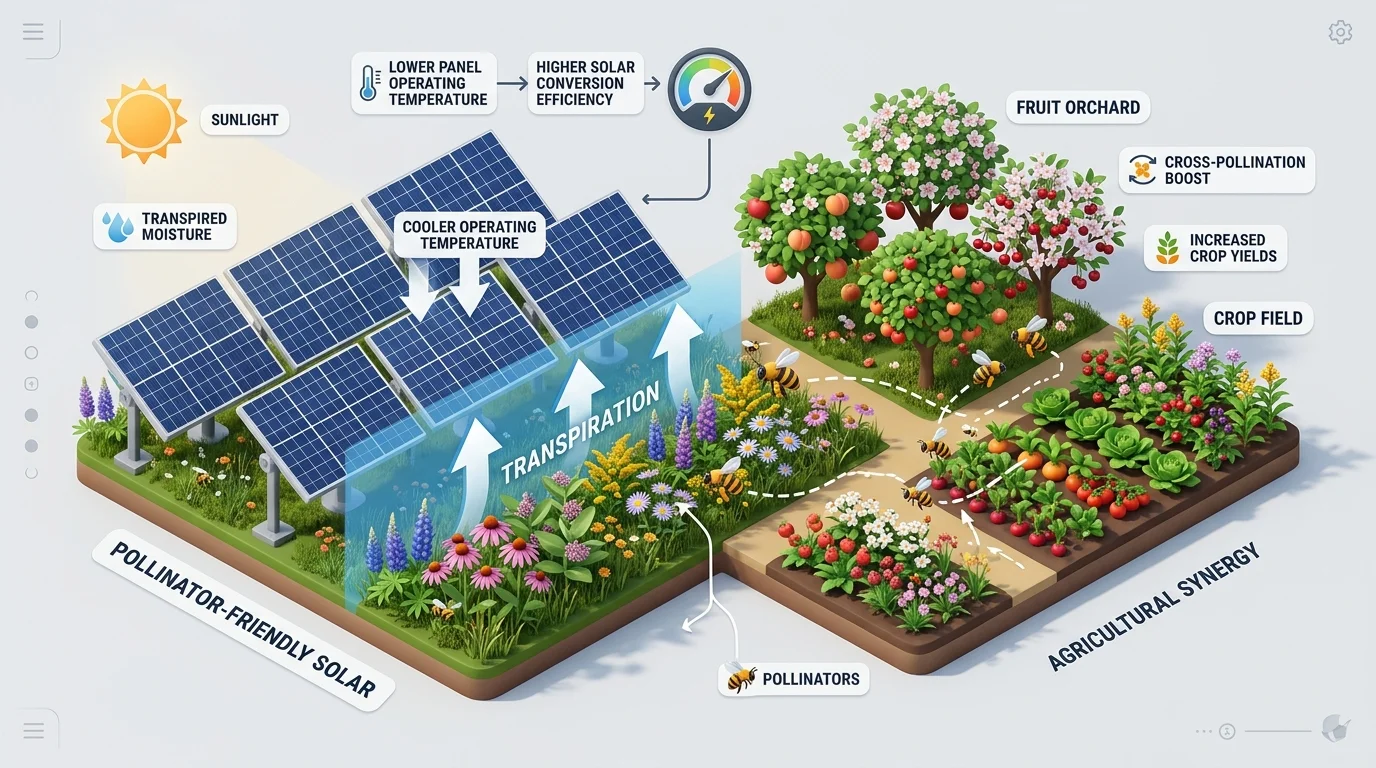
Gravel and bare dirt absorb solar heat and radiate it back upward, creating a hot thermal blanket around the solar arrays.
Native vegetation does the exact opposite through a natural process called evapotranspiration. Plants draw moisture from deep underground and release cool water vapor through their leaves into the surrounding air.
This natural plant evaporative cooling produces measurable gains:
- Lower Operating Temperatures: Air temperatures directly beneath and around the panels stay three to five degrees Celsius cooler compared to bare ground or gravel.
- Higher Energy Output: Because silicon solar cells maintain lower operating temperatures, their energy generation efficiency increases by one to two percent during the hottest hours of the day.
- Agricultural Cross-Pollination: Bees and beneficial insects nesting in the solar meadow forage outward into nearby orchards and crop fields. Nearby farms growing soybeans, berries, and apples experience significant increases in crop yield and fruit quality.
This creates a true closed-loop benefit: clean electricity generation, improved panel efficiency, healthier soils, and greater regional food security.
4 Essential Steps to Establish a Thriving Pollinator Habitat
Creating a healthy, self-sustaining pollinator sanctuary under solar arrays requires thoughtful planning and execution:
Site Preparation and Weed Suppression
Before spreading native seed, developers must remove competitive invasive weeds. Using mechanical cover crops, targeted disking, or solarization clears the seed bed without leaving persistent chemical residues in the topsoil.
Native Shade-Tolerant Seed Selection
Botanists create tailored seed mixes that account for solar shadow patterns. Low-profile native wildflowers and shade-tolerant fescues are planted directly under panels, while sun-loving flowering perennials thrive in the open rows between panel racks.
Low-Impact Seeding and Early Care
Specialized drill seeders press native seeds into the soil at shallow depths to ensure strong germination. During years one and two, plants establish deep root networks before pushing their most vibrant blooms to the surface.
Long-Term Rotational Maintenance
Once established in year three, native prairie plants outcompete invasive weeds on their own. Maintenance shifts to high-mower passes or controlled rotational grazing once every couple of years after late autumn frost, allowing seeds to scatter naturally.
Overcoming Local Opposition and NIMBYism
Across many rural communities, utility-scale solar projects face resistance from local residents. Neighbors often worry about lost agricultural heritage, unsightly industrial fencing, stormwater drainage problems, and declining wildlife.
Pollinator-friendly solar directly answers these community concerns:
- Preserving Agricultural Heritage: Pollinator habitats help local farming families by boosting the wild bee populations that pollinate adjacent crops.
- Visual Beauty and Screening: Replacing bare dirt and weed-strewn gravel with waves of golden, purple, and white blossoms dramatically improves the aesthetic view from public roads.
- Smoother Permitting: Local zoning boards and county planning commissions are far more eager to approve clean energy applications that include certified pollinator commitments and local conservation scorecards.
When developers invite local beekeepers to place honeybee hives along the perimeter, the solar farm can even produce local “solar honey,” creating an authentic point of pride and local commerce for the entire town.
Frequently Asked Questions
No. Professional solar seed blends are specifically formulated with low-profile, slow-growing native species. These plants grow to an average height of eighteen to twenty-four inches, ensuring they stay well below the lower edge of tilted panels.
Initial seeding and soil prep may cost twenty to thirty percent more during the first two years. However, because native perennials do not need weekly mowing, synthetic fertilizers, or irrigation, long-term operations and maintenance costs drop sharply, saving money over the life of the project.
Yes. Many solar developers practice solar grazing alongside pollinator conservation. Sheep can graze the vegetation in late autumn or early spring after flowering seasons, which keeps woody brush down naturally while providing fresh forage for local livestock.
A pollinator solar scorecard is an official state-level evaluation tool developed by conservation biologists and universities. It awards points based on the diversity of native flowering plants, bloom duration across all seasons, nesting habitat quality, and chemical-free management practices.