Offshore Solar Farms: Marine Photovoltaics and Clean Energy at Sea
Discover how offshore solar farms overcome land scarcity, harness ocean cooling for higher efficiency, and co-locate with offshore wind turbines.
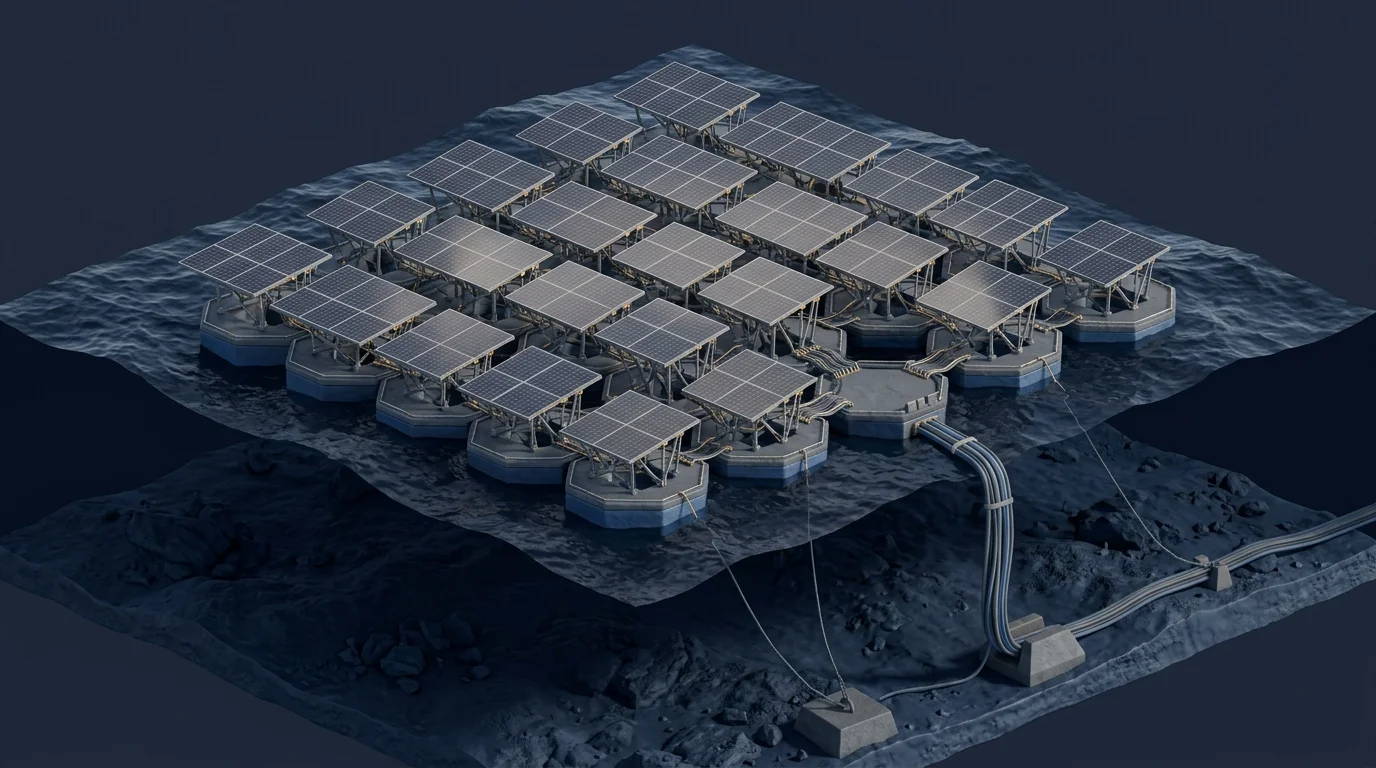
As clean electricity demand expands across the globe, utility developers encounter a shared limitation on land: space. Densely populated coastal zones, agricultural heartlands, and mountainous regions often lack the open ground required for multi-gigawatt solar arrays.
To solve this challenge, renewable energy engineering is advancing into the open sea. Known as offshore solar farms or marine floating photovoltaics, these installations position solar arrays directly over marine waters.
By utilizing coastal waters and open ocean territory, offshore solar preserves valuable dry land for farming and forestry. At the same time, the natural cooling effect of ocean water improves panel electrical efficiency. When paired with existing offshore wind turbines, marine solar helps build balanced clean energy hubs that deliver power around the clock.
In this guide, we examine how offshore solar farms operate, review key engineering systems designed to withstand ocean storms, compare marine solar with land-based systems, and explore real-world installations supplying electricity to coastal communities.
What Are Offshore Solar Farms?
Offshore solar farms are utility-scale photovoltaic systems installed in marine environments. While early floating solar projects focused on calm inland lakes and freshwater reservoirs, offshore installations operate in coastal bays, tidal flats, and open ocean waters.
Marine solar installations fall into two primary structural categories:
- Fixed-Pile Near-Shore Arrays: Installed in shallow tidal zones and coastal waters with depths under five meters. Solar platforms sit on heavy-duty steel truss pilings driven securely into the seabed.
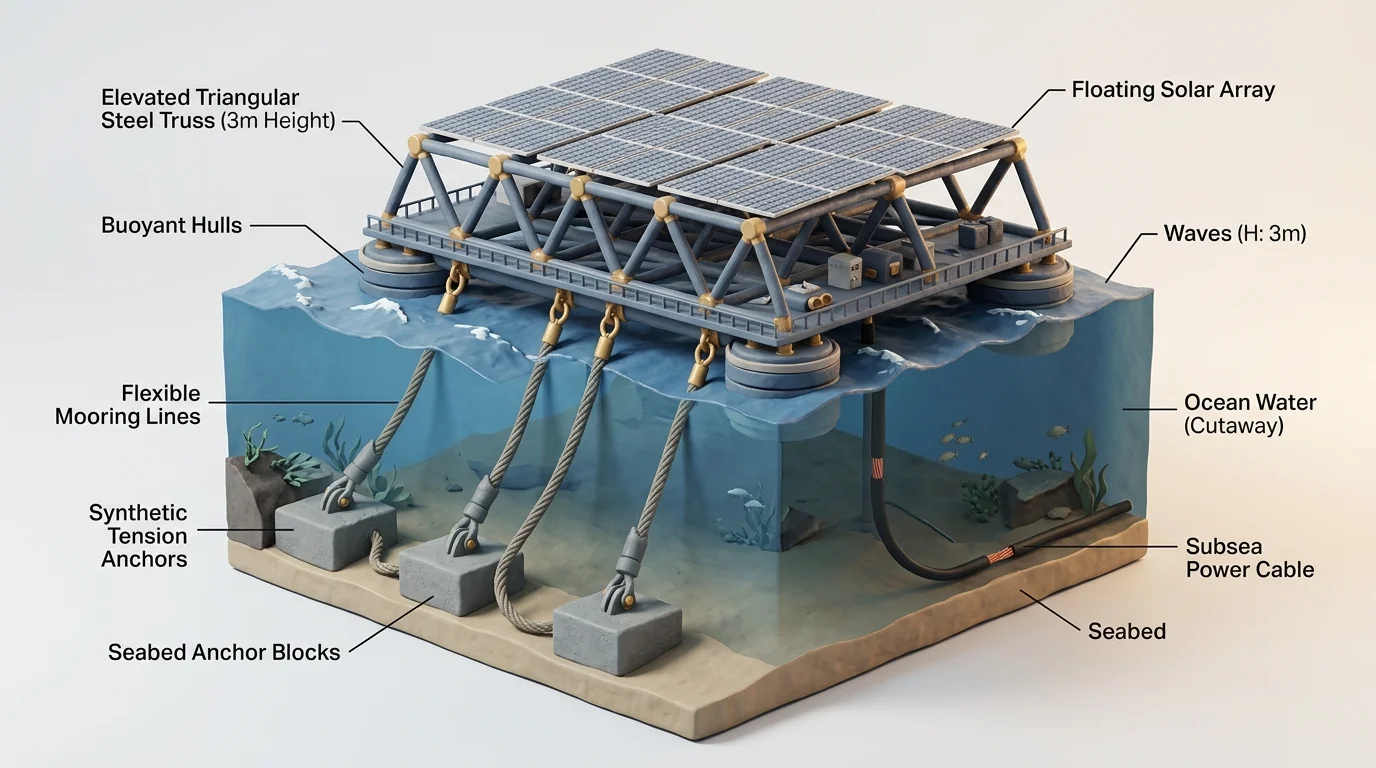
- Floating Marine Platforms: Installed in deeper open waters. Solar panels rest on elevated buoyant platforms anchored to the ocean floor with flexible mooring cables, allowing structures to rise and fall with ocean swells.
These ocean installations connect to onshore electric grids through high-voltage subsea power cables buried beneath the seafloor, delivering clean electricity directly to major coastal cities.
Engineering Resilience: Surviving the Harsh Marine Environment
Placing electrical equipment in salt water presents unique engineering hurdles. Offshore solar designs incorporate specialized marine technology to overcome heavy waves, salt corrosion, and changing tides:
1. Elevated Wave Clearance
Unlike calm freshwater reservoirs where solar panels float close to the surface, ocean waves can swamp flat panels. Modern offshore designs feature elevated tubular trusses that lift solar modules three to five meters above the water line. This gap prevents breaking storm waves from smashing directly into the glass faces of the panels.
2. Salt Mist Corrosion Protection
Seawater mist rapidly corrodes standard electronics. Marine solar arrays utilize components certified to C5-M marine atmospheric corrosion standards:
- Marine-Grade Aluminum and Stainless Steel: Racks and trusses use anodized 6000-series marine aluminum or 316-grade stainless steel to resist rust.
- Hermetically Sealed Junctions: Inverters and wiring junction boxes feature IP68 ingress protection ratings, preventing moisture and fine salt crystals from reaching electrical contacts.
- Double-Glass Modules: Glass-glass solar panels replace plastic backsheets, preventing salt permeation and moisture degradation over decades of service.
3. Dynamic Mooring and Tension Anchoring
Open-sea platforms cannot remain rigid against shifting currents. Systems use synthetic polymer mooring ropes paired with heavy concrete gravity anchor blocks or suction piles set in the seabed. These flexible lines allow platforms to pitch, roll, and heave safely with ocean currents while keeping the overall array locked securely in place.
The Ocean Cooling Advantage: Higher Panel Efficiency
Solar photovoltaic cells operate through the photovoltaic effect, converting photons of light into direct electric current. However, solar panels are sensitive to extreme heat. For every degree Celsius a solar cell heats up above standard test conditions, its power output decreases by approximately 0.35 to 0.40 percent.
On land, solar panels installed in hot climates regularly reach surface temperatures between 60 and 70 degrees Celsius (140 to 158 degrees Fahrenheit).
Marine environments provide a major operating advantage:
- Natural Water Cooling: Constant contact with ocean water keeps surrounding air temperatures significantly cooler than inland air.
- Persistent Ocean Breezes: Strong offshore thermal winds circulate across the underside of elevated solar panels, carrying heat away quickly.
- Efficiency Gains: Because panels run 10 to 15 degrees Celsius cooler than land-based counterparts, offshore solar arrays produce between 5% and 12% more electricity per watt of installed capacity.
Land vs. Offshore Solar: Structural and Economic Comparison
Deploying solar in open water involves higher initial engineering investments, but offers unique structural and operational benefits compared to terrestrial arrays:
Comparing Solar Environments
How marine offshore installations compare to standard terrestrial solar farms
Offshore Marine Solar
Offshore solar installations operate in underutilized marine territories, offering distinct operational features:
- Zero Land Consumption: No conflict with farming, housing, or terrestrial conservation zones.
- Thermal Cooling Boost: Sea breezes and water cooling significantly increase electrical conversion efficiency.
- High Capital Expenditure: Requires specialized marine piling, elevated trusses, and subsea cables.
- Co-location Potential: Connects directly to existing offshore wind substations and shared grid lines.
Terrestrial Solar Farms
Standard land-based ground-mounted solar installations remain the current global volume standard:
- Established Supply Chains: Standardized racking components, ground mounts, and simple road access.
- Land Use Friction: High acreage costs and potential pushback from local agricultural communities.
- Heat Derating: High summer temperatures reduce panel efficiency and limit peak power generation.
- Grid Interconnection Delays: Remote inland sites often require costly overland transmission expansions.
Co-Location: Pairing Offshore Solar with Offshore Wind Farms
One of the most attractive opportunities in ocean renewables is the co-location of offshore floating solar with offshore wind turbines.
Wind farms built far out at sea already feature extensive, high-cost electrical infrastructure. This includes offshore transformer substations, high-voltage alternating current (HVAC) or direct current (HVDC) export cables, and dedicated maintenance harbors.
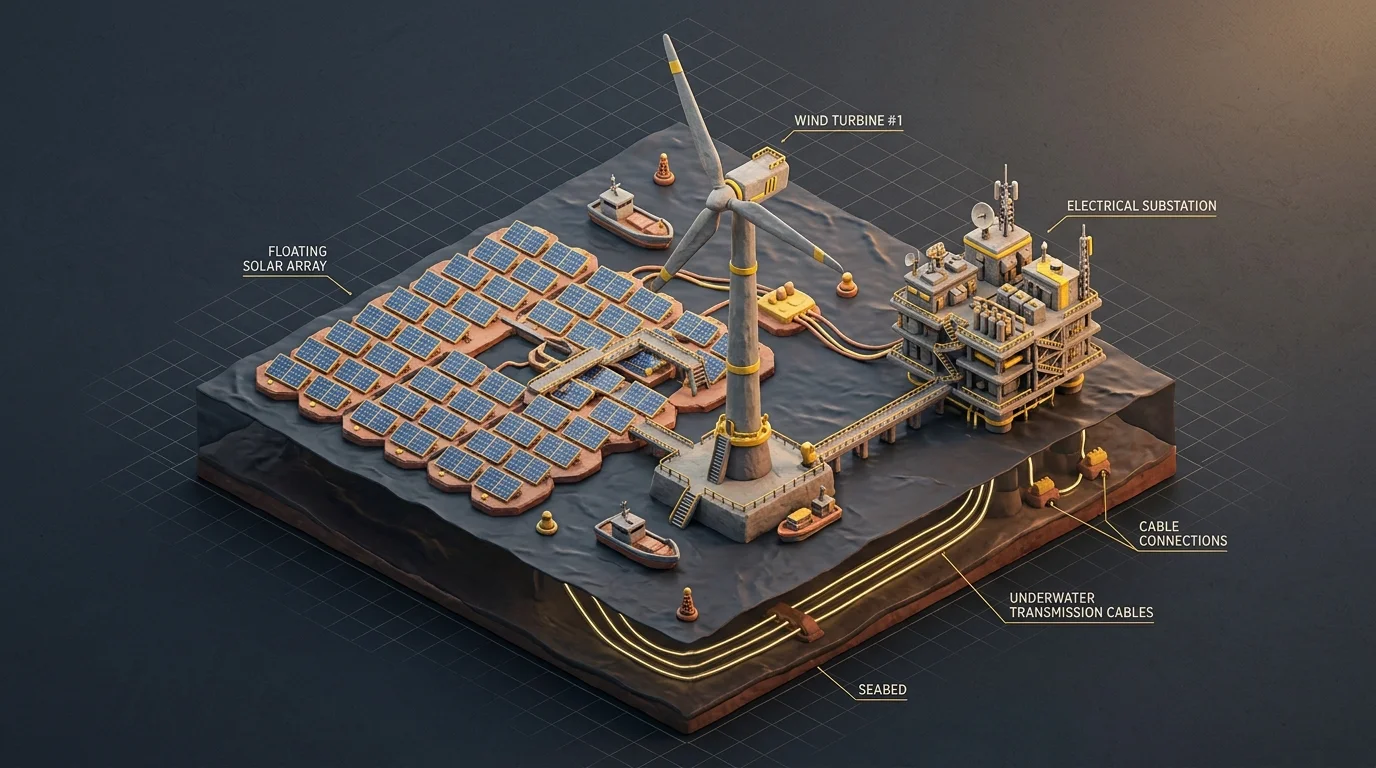
Placing floating solar arrays within the safety buffer zones between offshore wind turbines creates significant technical synergies:
1. Shared Subsea Electrical Infrastructure
Grid export cables often represent up to fifteen percent of an offshore wind project budget. Because floating solar modules share the existing offshore substation and subsea cables, developers eliminate the need to construct duplicate transmission lines to the coast.
2. Complementary Daily and Seasonal Generation Profiles
Wind and solar power naturally balance each other out over time:
- Seasonal Balance: Offshore wind generation peaks during cold, windy, overcast winter months. Offshore solar output reaches its highest levels during calm, sunny summer months.
- Daily Balance: Solar delivers maximum electricity during daylight midday hours, while coastal winds often pick up in late afternoon and night hours.
- Smooth Transmission: Combining both resources stabilizes energy flow through subsea cables, maximizing cable capacity factor and delivering consistent green power to the grid.
3. Integrated Marine Aquaculture
Innovative offshore solar facilities are pairing energy production with sustainable fish and shellfish farming. By suspending mussel lines or fish pens beneath offshore platforms, operators create dual-use marine facilities that produce both clean electricity and sustainable seafood.
4 Steps to Developing an Offshore Solar Installation
Building clean power projects in marine waters requires a systematic engineering approach:
MetOcean Site Analysis
Engineers evaluate meteorological and oceanographic data over multi-year periods. Key parameters include maximum wave heights, tidal variations, storm surge probabilities, seabed soil composition, and solar irradiation levels.
Structural Platform Selection
Project teams determine whether to use rigid fixed-pile foundations for shallow near-shore locations or modular floating platforms with synthetic mooring lines for deeper coastal waters.
Subsea Power Interconnection
Armored subsea export cables are laid across the seabed using specialized cable-laying vessels. Cables are trenched into the sediment to protect against anchor dragging and marine vessel traffic.
Marine Ecology and Environmental Care
Environmental scientists monitor water quality, sunlight penetration beneath arrays, and local fish habitats. Ensuring adequate spacing between platforms maintains dissolved oxygen levels and marine life health.
Landmark Global Offshore Solar Projects
Marine solar technology has advanced from university test tanks into utility-scale operations around the world:
- Shandong Open-Sea Solar Project (China): Spanning over 1,200 hectares eight kilometers off the coast of Dongying City, this facility represents one of the largest offshore solar developments in existence. Featuring nearly 3,000 elevated steel truss platforms connected by a 66-kilovolt subsea cable network, the project produces 1.78 billion kilowatt-hours annually, supplying clean power to millions of urban homes while integrating marine aquaculture.
- North Sea Demonstration Platforms (Netherlands): Pioneering offshore developers like Oceans of Energy and SolarDuck have deployed certified offshore floating prototypes in the North Sea. These hexagonal modular platforms have demonstrated survivability in extreme storm conditions with waves exceeding eleven meters.
- Tropical Island Systems (Maldives & Southeast Asia): Island nations with limited land area are deploying marine solar lagoons to replace expensive diesel generator fuel. Coastal floating arrays power local resorts, desalination units, and island municipal microgrids directly from protected coastal waters.
Frequently Asked Questions
Yes. Offshore solar systems are engineered to meet strict maritime standards. Platforms utilize elevated trusses that position panels several meters above average water levels to avoid wave impact. Mooring systems feature flexible synthetic lines and shock-absorbing bridles that disperse dynamic wave forces during storm surges.
Marine solar panels use specialized double-glass construction with zero plastic backsheets to prevent moisture penetration. Structural framing is built from marine-grade anodized aluminum and stainless steel, while electrical junctions are hermetically sealed to IP68 standards to prevent salt mist corrosion.
Solar panels lose efficiency when they become hot. The natural evaporative cooling of ocean water and constant sea breezes keep solar cell operating temperatures significantly lower than on land, boosting overall electrical generation by five to twelve percent.
When properly designed with spacing between platforms, sunlight still penetrates into the water column to support marine ecosystems. The floating platforms can act as artificial reefs, providing sheltered nurseries for fish and supporting integrated aquaculture like mussel and seaweed farming.